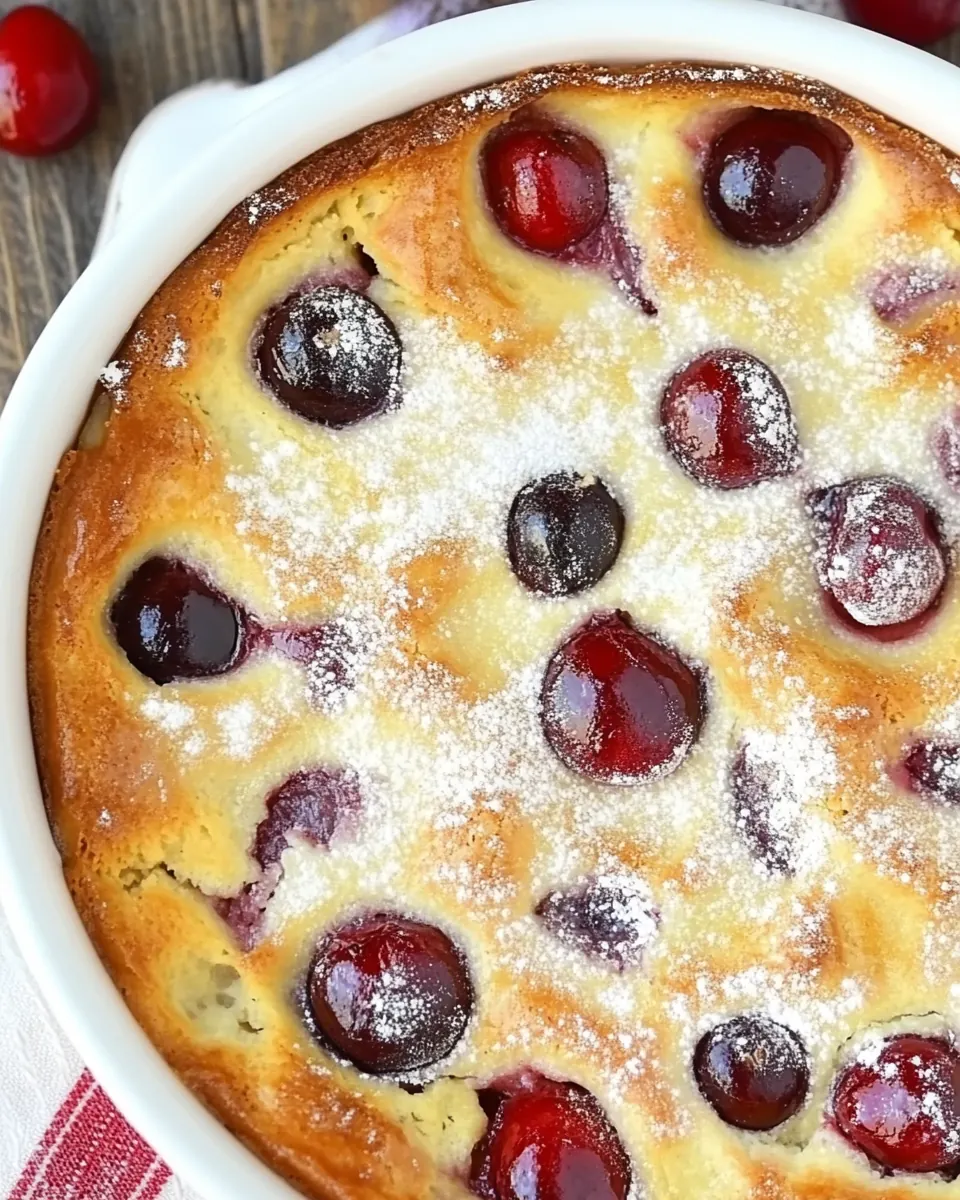
Cherry Clafoutis
Cherry Clafoutis is one of those dishes I reach for when I want something that feels both casual and a touch elegant, the kind of dessert that announces itself with a warm, fragrant presence without a lot of fuss.
I remember the first time I made Cherry Clafoutis for a small summer gathering, arriving home with a basket of cherries and a stubbornly full day behind me. I wanted a dessert that would feel thoughtful but not precious, something I could make while sipping tea and tidying the table. The batter is forgiving, the cherries do most of the personality work, and the oven does the rest. By the time guests sat down, the kitchen smelled of caramel and baked fruit, and the clafoutis wobble told me it was perfectly set.
Another memory of Cherry Clafoutis comes from a rainy morning when I wanted something to restore a slow pace to the day. I swapped a few cherries for frozen ones that had been thawed and drained, and the result was just as satisfying. The texture sits between custard and pancake, delicate yet substantial, and it pairs beautifully with a spoonful of whipped cream or a little scoop of vanilla custard. Each bite is a reminder that simple ingredients treated with care can be quietly transformative.
Recipe Snapshot
40 mins
10 mins
30 mins
Easy
300 kcal
French
Gluten-Free, Low FODMAP
Desserts
Oven, Blender, 1 1/2 quart baking dish
The Charm of This Cherry Clafoutis
Comfort in its simplicity
I love Cherry Clafoutis because it uses everyday pantry staples to produce a dessert that feels homemade and honest. The texture is creamy yet light, not heavy, and the cherries offer bright bursts of flavor that keep every mouthful interesting. When I want a dessert that is effortlessly impressive, this is my go to.
Flexible with fruit
One reason I keep making this is how adaptable it is. While cherries are classic, the technique tolerates changes in ripeness and even frozen fruit, which makes it reliable across seasons. I often swap fruit without worrying about the batter failing, which is freeing when my produce haul is unpredictable.
Quick to pull together
The few minutes it takes to blend the batter are some of the best minutes in baking, because the payoff comes so quickly. You do not need prolonged prep to get excellent results, which makes the recipe a favorite for last minute gatherings or a spontaneous weekend treat.
Visual and textural appeal
When the top turns that rich golden brown and the interior remains just slightly jiggly, it signals success. I enjoy watching the contrast of glossy cherries against a pale, custardy base, and the light crackle on top adds a rustic charm. People always comment first on how it looks, then on how it tastes.
Minimal equipment, maximum impact
Finally, I appreciate that Cherry Clafoutis demands minimal gear. A blender, a baking dish, and an oven deliver a dessert that feels special without a lot of cleanup. For me, recipes that reward attention rather than complexity are the most satisfying.
Shopping List for Cherry Clafoutis
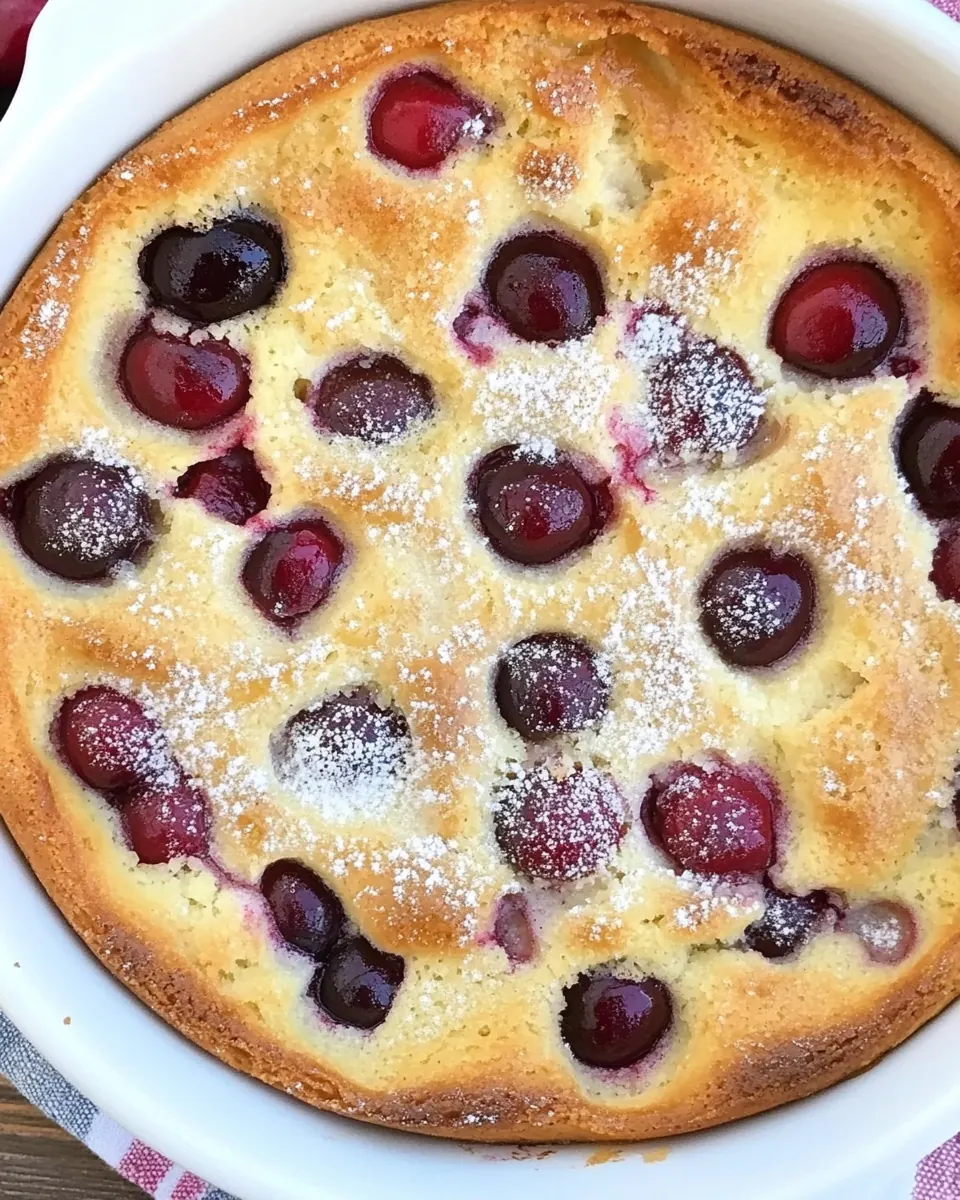
The ingredient list for Cherry Clafoutis reads like a short poem of dairy and pantry basics paired with ripe fruit. Each item earns its place, contributing to the custardy batter, tender texture, and that glossy cherry finish. The key players are the cherries for bright acid and juicy pockets, the eggs and milk for structure and silkiness, and a touch of butter and extracts for aroma and richness.
- 3/4 cup whole milk: Provide a creamy liquid base that hydrates the batter and contributes to a tender crumb; warm slightly for best incorporation with eggs and flour to prevent lumps.
- 1/2 cup heavy cream: Add rich fat and a silky mouthfeel while increasing custard richness; fold in after eggs are beaten to create a smooth, luxurious batter consistency.
- 3 large eggs, room temperature: Whisk until pale and slightly thickened to incorporate air and structure; eggs set the custard, bind the flour and dairy, and give the clafoutis its signature custardy texture.
- 1/2 cup all-purpose flour: Whisk in gradually to form the batter and provide structure and lightness; flour thickens the mixture and helps the clafoutis hold together while baking.
- 1/2 cup granulated sugar: Sweeten and help with browning during baking; sugar balances tart cherries and enhances the custard’s flavor when melted into the wet ingredients.
- 2 tablespoons melted butter: Melt and incorporate to add buttery flavor and tenderize the crumb; butter also helps with browning and adds a subtle richness to the finished dish.
- 1 teaspoon quality pure vanilla extract: Impart warm, aromatic vanilla notes that deepen overall flavor; add toward the end of mixing to preserve the extract’s delicate fragrance.
- 1/2 teaspoon quality pure almond extract: Contribute a concentrated nutty-almond aroma that complements cherries; use sparingly to avoid overpowering the vanilla and custard base.
- 1/4 teaspoons salt: Enhance overall flavor by balancing sweetness and intensifying other tastes; dissolve fully into the wet ingredients to ensure even seasoning.
- 3 cups cherries, pitted (fresh or frozen; if frozen thaw and drain completely): Provide juicy bursts of fruit flavor and pleasant texture contrast; pit thoroughly and drain if frozen to prevent excess moisture from thinning the batter.
- powdered (confectioner's) sugar for sprinkling: Dust lightly over the finished clafoutis to add a delicate sweetness and an attractive presentation; sift just before serving to avoid melting into the warm surface.
Step by Step Guide for Cherry Clafoutis
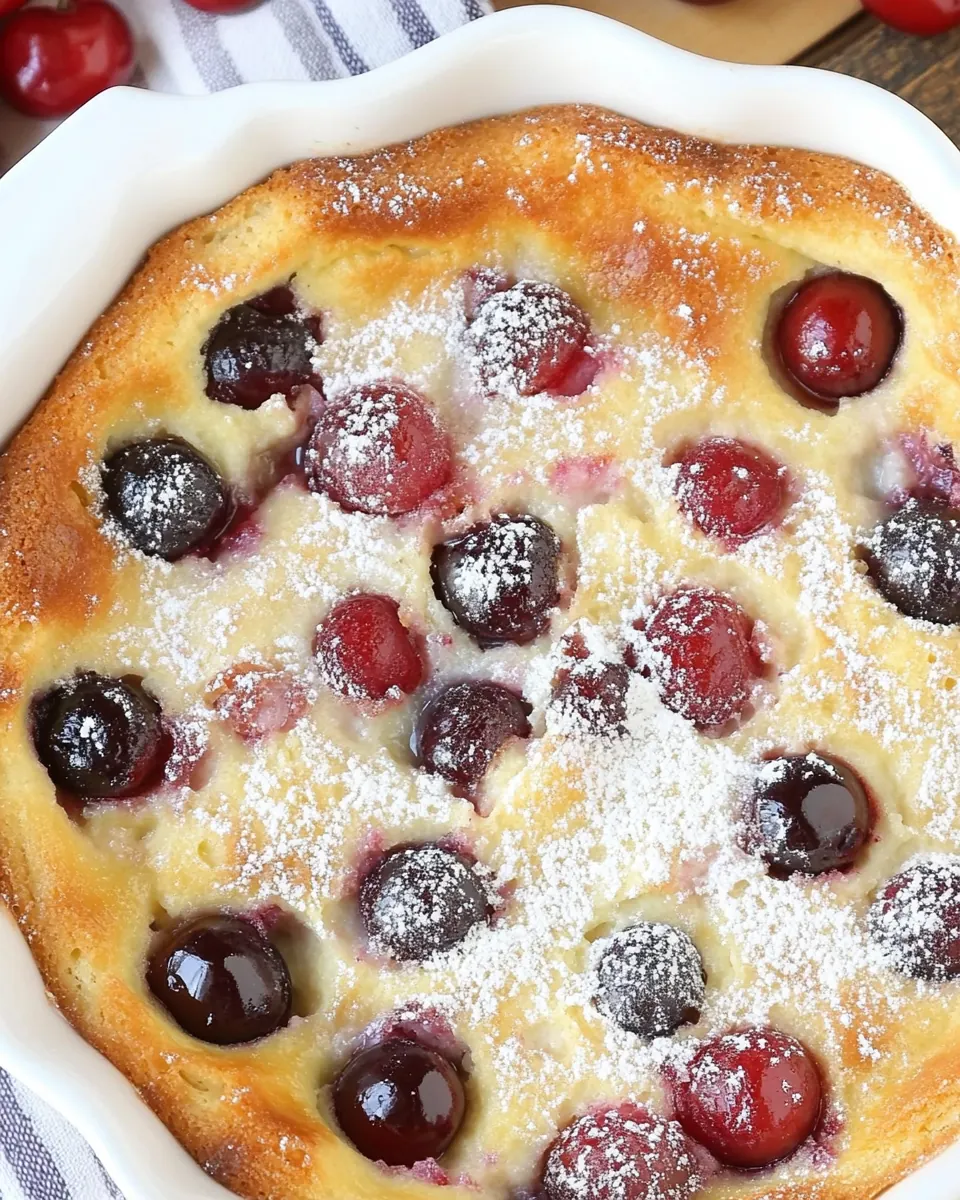
I like to think of the steps as a short ritual rather than a checklist, each moment contributing to that tender, slightly jiggly center and caramelized top. Read through once, gather your tools, and you will find the process calming and reliably rewarding.
- Preheat the oven to 375 degrees F. Butter a 1 1/2 quart baking dish. Place the cherries in the bottom of the baking dish. Put all remaining ingredients (except for the powdered sugar) in a blender and blend until smooth. Pour the batter over the cherries, place the baking dish on the middle oven rack, and bake for 30-40 minutes until the top is a rich golden brown, the clafoutis is set but still slightly jiggly. Remove it from the oven and let it cool for 5-10 minutes before serving. Sprinkle with powdered sugar. Serve warm with whipped cream or vanilla custard.: You will notice a warm, dry heat filling the oven, which is key for encouraging a golden top without overbaking the center. A properly preheated oven ensures the batter begins to set quickly around the fruit, helping the clafoutis hold its shape. A common mistake is putting the dish into an oven that is not fully heated, which can lead to longer bake times and a denser texture. If your oven runs hot or cool, use an oven thermometer to confirm the temperature, because consistent heat affects browning and doneness.
- Butter a 1 1/2 quart baking dish: The scent of warm butter rubbing into the dish is small but satisfying, and it creates a thin barrier that prevents sticking and encourages a slightly crisp edge. Make sure to coat the bottom and up the sides evenly. If you skimp on butter, the edges may cling and tear when you serve, so be generous. Use softened butter spread with your fingertips for an even coat, or melt and brush it on for thorough coverage.
- Place the cherries in the bottom of the baking dish: As you arrange the cherries, listen for the faint plop of fruit settling into place and enjoy the burst of red across the surface, which will peek through the batter after baking. Space them evenly so each slice gets a few pieces. Overcrowding can cause the cherries to sink and create wet pockets, while too sparse placement may leave some bites without fruit, so aim for an even layer.
- Put all remaining ingredients except for the powdered sugar in a blender and blend until smooth: When you blend the milk , heavy cream , eggs , flour , sugar , melted butter , vanilla , almond extract , and salt , you will see a velvety pale batter form, with no lumps of flour. This smoothness translates to an even custard in the oven. A typical error is underblending, which leaves tiny pockets of flour that create a gritty mouthfeel, so blend until uniform but do not overmix to the point of incorporating excess air. Scrape the blender once to ensure everything is combined.
- Pour the batter over the cherries: Pour slowly so the cherries remain distributed and do not float wildly to one side. The batter slips around the fruit and begins to nestle them in, and you will see the surface even out. If you pour too quickly from high up, you risk disproportionate movement of cherries and little air bubbles forming on top; pour close to the dish and use a spatula to coax the batter into any nooks.
- Place the baking dish on the middle oven rack: Positioning on the middle rack helps the top brown evenly while the center sets at a moderate pace. The location also prevents the bottom from cooking too fast. Avoid placing the dish too close to the top element, because that can cause the top to darken before the center finishes; conversely, too low can underbrown the surface.
- Bake for 30 to 40 minutes until the top is a rich golden brown, the clafoutis is set but still slightly jiggly: As it bakes you will notice a sweet, toasty aroma and the surface taking on a warm golden color. The dessert should still have a gentle wobble in the center when you tap the pan; that indicates a tender custard. A common mistake is overbaking until it is completely firm, which yields a dry texture. Check early at the lower end of the time range and watch for that slight jiggle to avoid overcooking.
- Remove it from the oven and let it cool for 5 to 10 minutes before serving: Cooling allows the custard to finish setting and makes it easier to slice or spoon. You will notice the wobble settle and the edges pull slightly from the dish, signaling readiness. Cutting too soon can cause the portions to run and lose shape, while waiting too long cools the clafoutis completely; aim for that warm window for the best texture.
- Sprinkle with powdered sugar: The powdered sugar dusting softens the visual contrast and adds a delicate sweetness on top. It also gives the clafoutis a bakery finish that feels celebratory. If you dust too heavily, it can become cloying, so use a light hand and sift it evenly for a refined look.
- Serve warm with whipped cream or vanilla custard: The warmth brings out the cherries natural juices and enhances the custard mouthfeel, while a spoonful of whipped cream or custard adds creaminess and an extra layer of comfort. If you serve it cold, it will still be pleasant, but you lose that immediate contrast between warm fruit and cool cream. A typical oversight is skipping the accompaniment entirely; even a small dollop elevates the experience.
Recipe Variations about Cherry Clafoutis
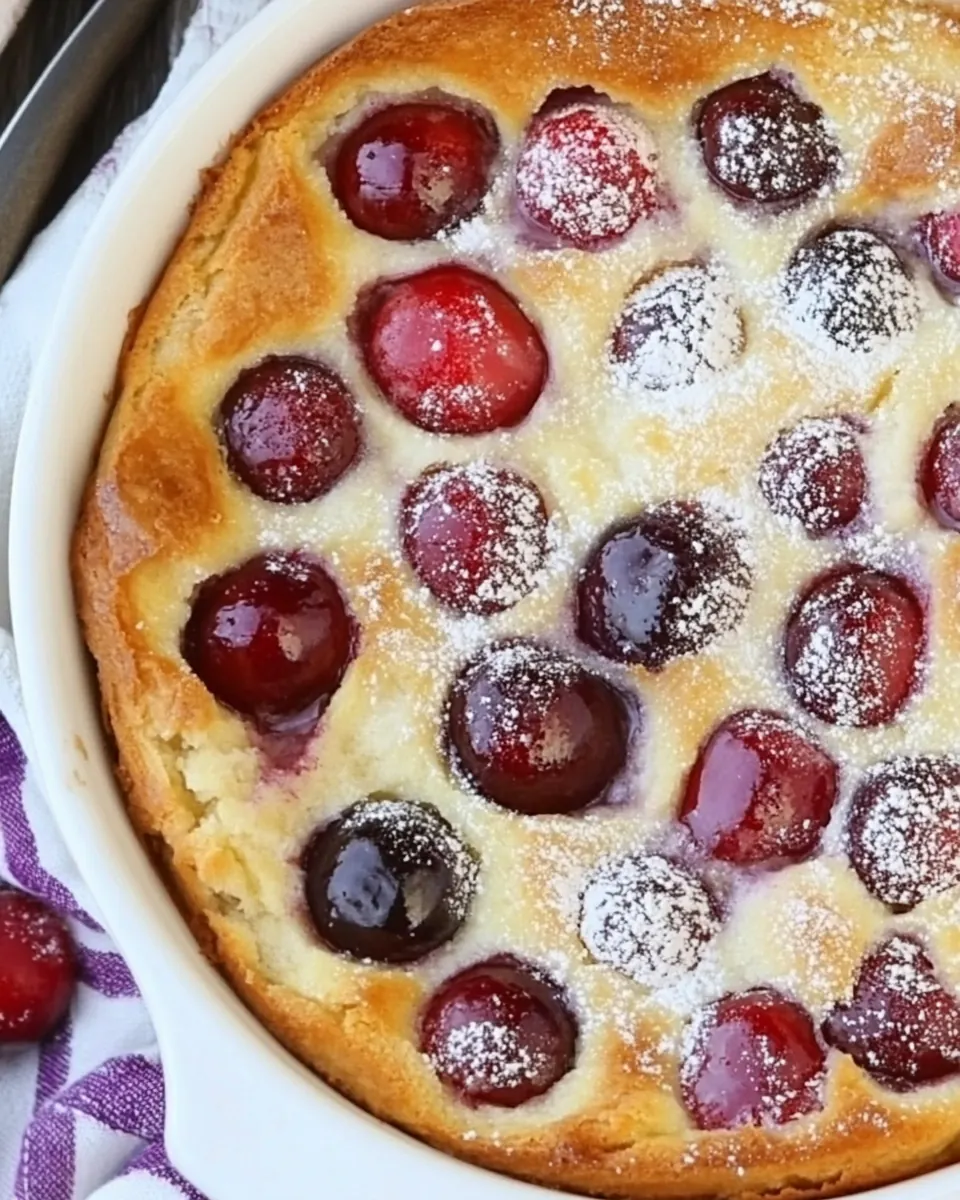
There are simple ways to make small changes that shift flavor and texture while keeping the spirit of Cherry Clafoutis intact. Here are creative, tested variations to personalize the recipe without breaking the structure.
- Swap the fruit: Use the same batter with stone fruit like peaches or plums for a summery twist, adjusting sweetness if the fruit is very ripe.
- Texture lift: Fold a tablespoon of powdered sugar into the batter for a slightly lighter surface crust and more tender crumb.
- Extract balance: Reduce the almond extract to a quarter teaspoon if you prefer a subtler almond note, or omit it to let vanilla shine.
- Fresh versus frozen: For frozen cherries, thaw and drain completely, then pat dry so the batter does not become watery during baking.
- Serving warmth: Serve warm straight from the oven with a spoonful of whipped cream, or let it cool slightly for easier slicing and a firmer texture.
- Pan choices: Use a ceramic or metal baking dish; ceramic keeps heat steady, while metal can brown the edges a touch more quickly.
- Presentation: Dust with powdered sugar right before serving to keep the top looking fresh, and use a fine sieve to ensure an even snowfall.
Serving Options for Cherry Clafoutis
Cherry Clafoutis works across occasions, from relaxed brunch to an intimate dinner dessert. Below are thoughtful ways to present and serve it, with pairing suggestions and storage notes to keep leftovers tasting fresh.
- Casual brunch: Serve warm slices of Cherry Clafoutis with a jug of coffee and a bowl of yogurt for a relaxed morning meal.
- After dinner: Plate small portions with a spoonful of vanilla custard or whipped cream for an elegant end to a meal.
- Seasonal pairing: In summer, pair the clafoutis with fresh berries or a light fruit salad to echo the bright notes of the cherries.
- Special occasions: Dust with powdered sugar and add a sprig of mint for a pretty, understated presentation suitable for gatherings.
- Storage: Store cooled leftovers covered in the refrigerator for up to three days; rewarm gently in a low oven to revive the texture before serving.
- Make ahead: You can assemble and refrigerate before baking for up to several hours, but bake just before serving for best texture and warmth.
- Portioning: Use a wide serving spoon to maintain the custard structure and offer even portions that include cherries in every helping.
FAQ
Conclusion
Cherry Clafoutis stands out for its effortless elegance, combining a tender, custard like batter with bright pockets of cherries for a dessert that feels both rustic and refined. The recipe is forgiving, quick to pull together, and wonderfully adaptable to fresh or frozen fruit, making it a go to for summer gatherings or an impromptu treat. I hope you give it a try: gather a few simple pantry items, pit some cherries, and let the oven do the gentle work. Serve it warm with a light dusting of powdered sugar or a spoonful of cream, and enjoy the cozy, nostalgic warmth this dish brings to the table.
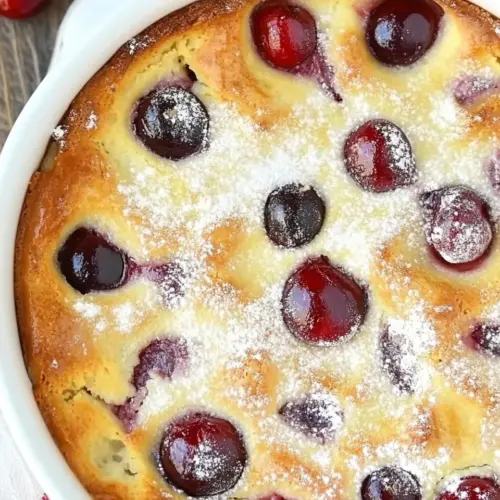
Cherry Clafoutis
Equipment
- Oven
- Blender
- 1 1/2 quart baking dish
Ingredients
- 3/4 cup whole milk Provide a creamy liquid base that hydrates the batter and contributes to a tender crumb; warm slightly for best incorporation with eggs and flour to prevent lumps.
- 1/2 cup heavy cream Add rich fat and a silky mouthfeel while increasing custard richness; fold in after eggs are beaten to create a smooth, luxurious batter consistency.
- 3 large eggs, room temperature Whisk until pale and slightly thickened to incorporate air and structure; eggs set the custard, bind the flour and dairy, and give the clafoutis its signature custardy texture.
- 1/2 cup all-purpose flour Whisk in gradually to form the batter and provide structure and lightness; flour thickens the mixture and helps the clafoutis hold together while baking.
- 1/2 cup granulated sugar Sweeten and help with browning during baking; sugar balances tart cherries and enhances the custard’s flavor when melted into the wet ingredients.
- 2 tablespoons melted butter Melt and incorporate to add buttery flavor and tenderize the crumb; butter also helps with browning and adds a subtle richness to the finished dish.
- 1 teaspoon quality pure vanilla extract Impart warm, aromatic vanilla notes that deepen overall flavor; add toward the end of mixing to preserve the extract’s delicate fragrance.
- 1/2 teaspoon quality pure almond extract Contribute a concentrated nutty-almond aroma that complements cherries; use sparingly to avoid overpowering the vanilla and custard base.
- 1/4 teaspoons salt Enhance overall flavor by balancing sweetness and intensifying other tastes; dissolve fully into the wet ingredients to ensure even seasoning.
- 3 cups cherries, pitted (fresh or frozen; if frozen thaw and drain completely) Provide juicy bursts of fruit flavor and pleasant texture contrast; pit thoroughly and drain if frozen to prevent excess moisture from thinning the batter.
- powdered (confectioner's) sugar for sprinkling Dust lightly over the finished clafoutis to add a delicate sweetness and an attractive presentation; sift just before serving to avoid melting into the warm surface.
Instructions
- Preheat the oven to 375 degrees F. Butter a 1 1/2 quart baking dish. Place the cherries in the bottom of the baking dish. Put all remaining ingredients (except for the powdered sugar) in a blender and blend until smooth. Pour the batter over the cherries, place the baking dish on the middle oven rack, and bake for 30-40 minutes until the top is a rich golden brown, the clafoutis is set but still slightly jiggly. Remove it from the oven and let it cool for 5-10 minutes before serving. Sprinkle with powdered sugar. Serve warm with whipped cream or vanilla custard.: You will notice a warm, dry heat filling the oven, which is key for encouraging a golden top without overbaking the center. A properly preheated oven ensures the batter begins to set quickly around the fruit, helping the clafoutis hold its shape. A common mistake is putting the dish into an oven that is not fully heated, which can lead to longer bake times and a denser texture. If your oven runs hot or cool, use an oven thermometer to confirm the temperature, because consistent heat affects browning and doneness.
- Butter a 1 1/2 quart baking dish: The scent of warm butter rubbing into the dish is small but satisfying, and it creates a thin barrier that prevents sticking and encourages a slightly crisp edge. Make sure to coat the bottom and up the sides evenly. If you skimp on butter, the edges may cling and tear when you serve, so be generous. Use softened butter spread with your fingertips for an even coat, or melt and brush it on for thorough coverage.
- Place the cherries in the bottom of the baking dish: As you arrange the cherries, listen for the faint plop of fruit settling into place and enjoy the burst of red across the surface, which will peek through the batter after baking. Space them evenly so each slice gets a few pieces. Overcrowding can cause the cherries to sink and create wet pockets, while too sparse placement may leave some bites without fruit, so aim for an even layer.
- Put all remaining ingredients except for the powdered sugar in a blender and blend until smooth: When you blend the milk , heavy cream , eggs , flour , sugar , melted butter , vanilla , almond extract , and salt , you will see a velvety pale batter form, with no lumps of flour. This smoothness translates to an even custard in the oven. A typical error is underblending, which leaves tiny pockets of flour that create a gritty mouthfeel, so blend until uniform but do not overmix to the point of incorporating excess air. Scrape the blender once to ensure everything is combined.
- Pour the batter over the cherries: Pour slowly so the cherries remain distributed and do not float wildly to one side. The batter slips around the fruit and begins to nestle them in, and you will see the surface even out. If you pour too quickly from high up, you risk disproportionate movement of cherries and little air bubbles forming on top; pour close to the dish and use a spatula to coax the batter into any nooks.
- Place the baking dish on the middle oven rack: Positioning on the middle rack helps the top brown evenly while the center sets at a moderate pace. The location also prevents the bottom from cooking too fast. Avoid placing the dish too close to the top element, because that can cause the top to darken before the center finishes; conversely, too low can underbrown the surface.
- Bake for 30 to 40 minutes until the top is a rich golden brown, the clafoutis is set but still slightly jiggly: As it bakes you will notice a sweet, toasty aroma and the surface taking on a warm golden color. The dessert should still have a gentle wobble in the center when you tap the pan; that indicates a tender custard. A common mistake is overbaking until it is completely firm, which yields a dry texture. Check early at the lower end of the time range and watch for that slight jiggle to avoid overcooking.
- Remove it from the oven and let it cool for 5 to 10 minutes before serving: Cooling allows the custard to finish setting and makes it easier to slice or spoon. You will notice the wobble settle and the edges pull slightly from the dish, signaling readiness. Cutting too soon can cause the portions to run and lose shape, while waiting too long cools the clafoutis completely; aim for that warm window for the best texture.
- Sprinkle with powdered sugar: The powdered sugar dusting softens the visual contrast and adds a delicate sweetness on top. It also gives the clafoutis a bakery finish that feels celebratory. If you dust too heavily, it can become cloying, so use a light hand and sift it evenly for a refined look.
- Serve warm with whipped cream or vanilla custard: The warmth brings out the cherries natural juices and enhances the custard mouthfeel, while a spoonful of whipped cream or custard adds creaminess and an extra layer of comfort. If you serve it cold, it will still be pleasant, but you lose that immediate contrast between warm fruit and cool cream. A typical oversight is skipping the accompaniment entirely; even a small dollop elevates the experience.
Notes
- Swap the fruit: Use the same batter with stone fruit like peaches or plums for a summery twist, adjusting sweetness if the fruit is very ripe.
- Texture lift: Fold a tablespoon of powdered sugar into the batter for a slightly lighter surface crust and more tender crumb.
- Extract balance: Reduce the almond extract to a quarter teaspoon if you prefer a subtler almond note, or omit it to let vanilla shine.
- Fresh versus frozen: For frozen cherries, thaw and drain completely, then pat dry so the batter does not become watery during baking.
- Serving warmth: Serve warm straight from the oven with a spoonful of whipped cream, or let it cool slightly for easier slicing and a firmer texture.
- Pan choices: Use a ceramic or metal baking dish; ceramic keeps heat steady, while metal can brown the edges a touch more quickly.
- Presentation: Dust with powdered sugar right before serving to keep the top looking fresh, and use a fine sieve to ensure an even snowfall.
