Cheesy Asparagus Shrimp Casserole
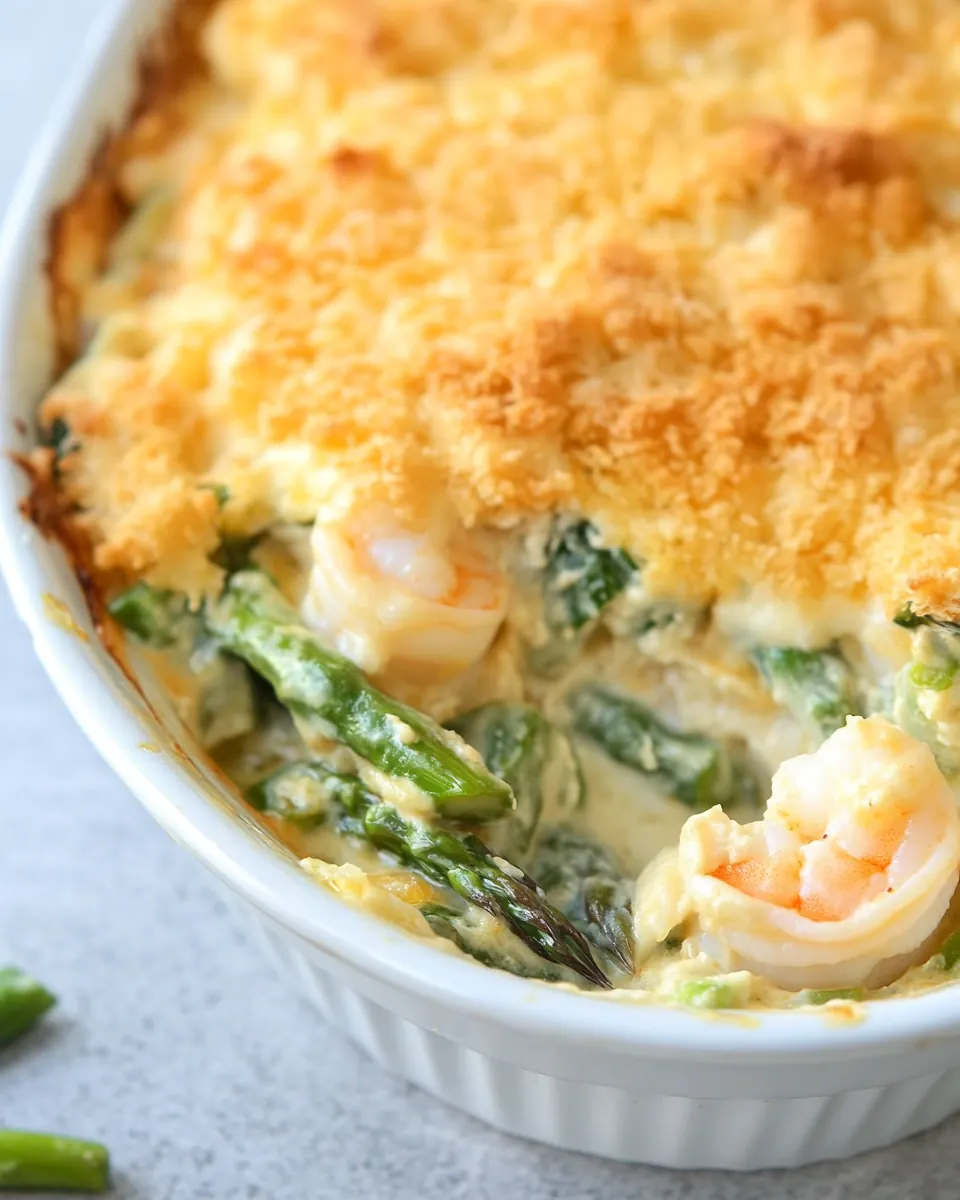
Cheesy Asparagus Shrimp Casserole is one of those dishes I turn to when I want something comforting yet bright, a combination that always makes weeknight company feel special.
The first time I made Cheesy Asparagus Shrimp Casserole I was juggling a sleepy toddler and a late grocery run, and somehow the simplicity of canned asparagus and a block of cream cheese felt like culinary magic. I remember the sound of the onions as they crisped, and the way the kitchen smelled warm and savory while the casserole bubbled at the edges. That day I learned this is forgiving food, the sort of recipe that lets you improvise without punishment.
Over the years I refined small habits while preparing Cheesy Asparagus Shrimp Casserole. I began to drain the asparagus thoroughly, because soggy vegetables dull everything. I also learned that cooked shrimp folded gently into a creamy base keeps texture lively instead of limp. These tiny adjustments made a big difference when serving a hungry crowd, and now I keep the components handy for impromptu dinners.
Recipe Snapshot
45 mins
10 mins
35 mins
Medium
300 kcal
American
Keto, Gluten-Free
Dinner
Oven, Casserole dish, Mixing bowl, Hand held mixer, Skillet
What Sets This Cheesy Asparagus Shrimp Casserole Apart
Smart, approachable ingredients
I love that Cheesy Asparagus Shrimp Casserole uses pantry friendly items like canned asparagus and condensed soup, yet it tastes elevated. The combination of creamy cream cheese and melty condensed cheddar soup creates a luscious base while the shrimp and asparagus add distinct textures that keep the dish from feeling heavy.
Fast to assemble, forgiving to errors
I often say this casserole is a chef friendly recipe because it forgives small mistakes. Over salt, slightly overcooked shrimp, or a rushed draining step can be softened by the creamy filling. That relaxed quality makes it a go to for busy evenings when I need dependable results without stress.
Great for gatherings
I use Cheesy Asparagus Shrimp Casserole for casual dinners and holiday sides alike. It scales up easily so the same method that serves my family of four works for a larger crowd. The crunchy topping provides an exciting contrast to the bubbly interior, which guests always notice first.
Textural harmony
The juxtaposition of creamy filling, tender asparagus, meaty shrimp, and crispy fried onions on top creates a satisfying mouthfeel. That variety in each bite is why I keep coming back to this recipe, it never feels one note.
Simple techniques, big payoff
I appreciate recipes where a few straightforward techniques yield strong results. In this casserole, mixing the softened cream cheese, properly draining the asparagus, and a short bake with a final crisping step make the flavors and textures shine. Those little actions are easy to master and deliver consistent, comforting food.
What to Gather for Cheesy Asparagus Shrimp Casserole
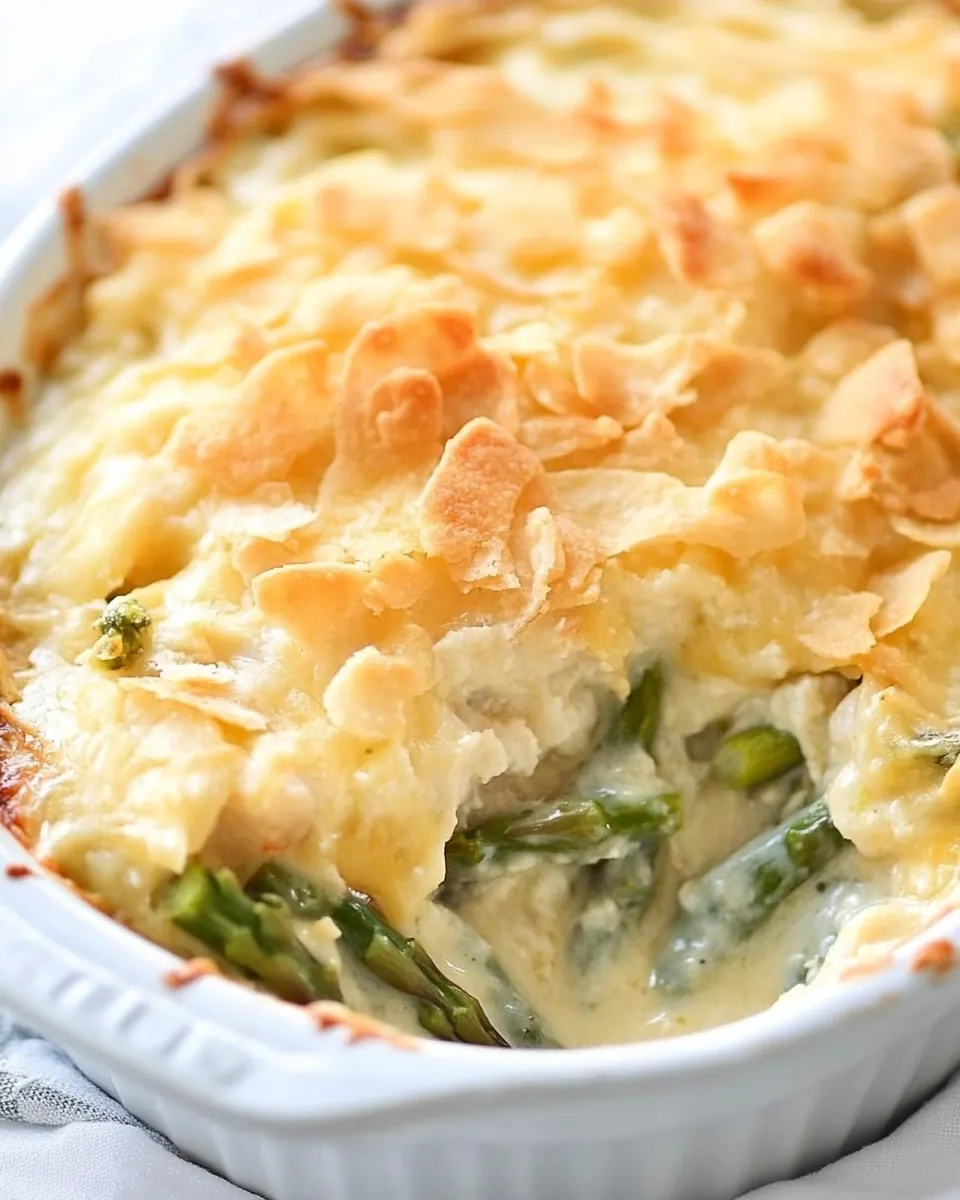
These ingredients are deliberately chosen to balance creaminess, seafood savor, and vegetable freshness. The dairy elements bind the casserole into a silky filling, the shrimp brings a briny, meaty presence, and the asparagus lends a light, vegetal lift. The crispy onions on top provide contrast, and simple seasoning with salt and pepper finishes the profile so nothing overwhelms the principal flavors.
- 12 oz softened cream cheese: Soften to a spreadable consistency and provide a rich, creamy base that binds other components while adding tangy dairy flavor and smooth texture to the casserole.
- 1 can 10.5 oz, cream of cheddar cheese soup: Add concentrated cheesy savory depth and creamy body to enhance overall flavor; pour evenly to meld with cream cheese and shrimp while creating a cohesive sauce that keeps the dish moist.
- 8 oz shrimp: Contribute tender, slightly sweet seafood flavor and protein; distribute throughout the casserole for bites of texture and umami that balance the richness of the cheeses and cream-based soup.
- 3 cans 10.5 oz each, cut asparagus, drained: Drain thoroughly to remove excess liquid and supply tender, green vegetable bites that add mild earthy flavor and a pop of color; layer or fold into the mixture so asparagus remains distinct without making the casserole watery.
- 1 package 6 oz, french fried onions: Provide a crunchy, golden topping when sprinkled over the finished casserole; add contrast in texture and a savory fried onion note that complements the creamy interior and enhances visual appeal.
- salt and pepper: Season to taste, enhancing and balancing flavors throughout the dish; add small amounts gradually to avoid overpowering the delicate seafood and cream components while highlighting savory and aromatic notes.
Step by Step Guide for Cheesy Asparagus Shrimp Casserole
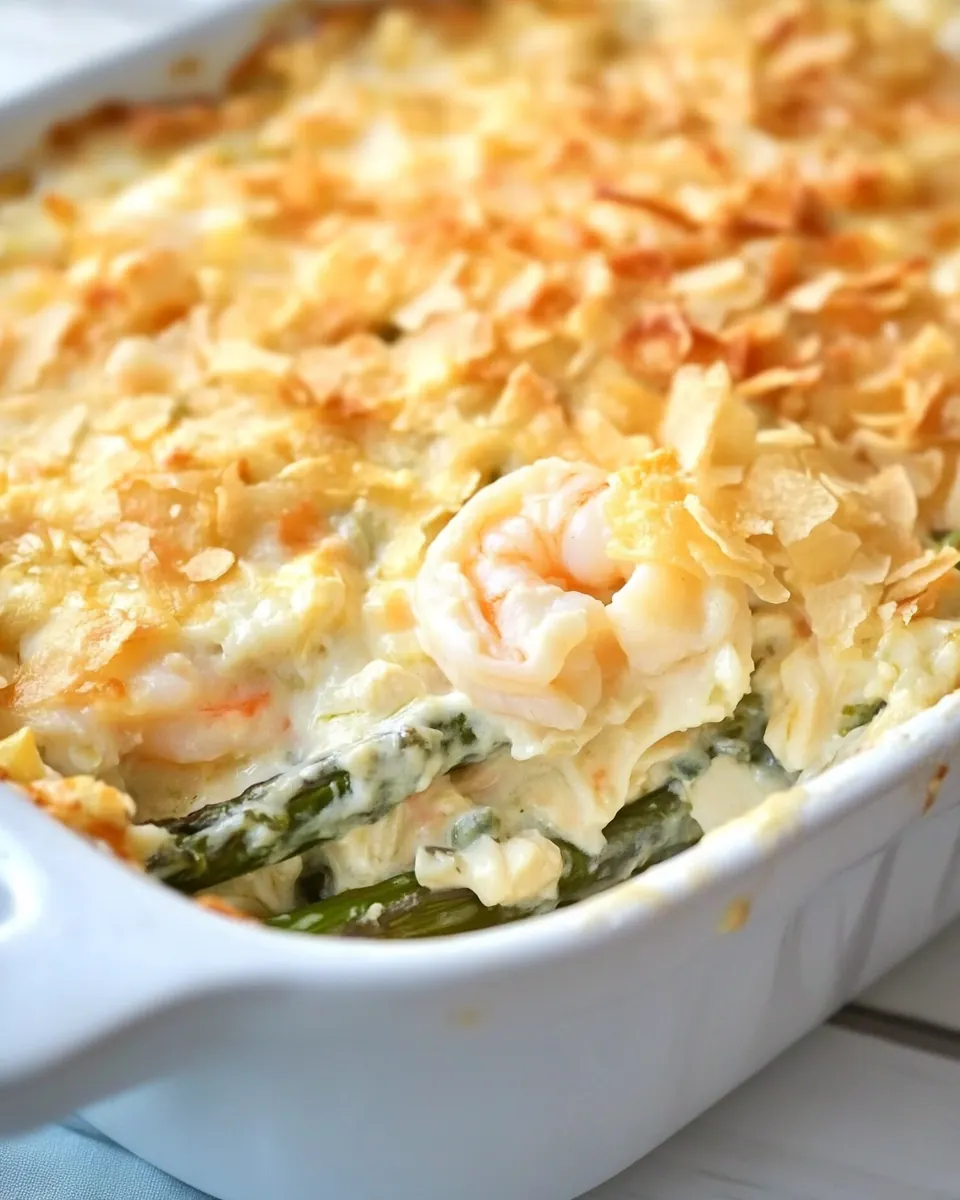
These steps will walk you through the full assembly and baking process. I like to move methodically, prepping each component so the final assembly goes smoothly and the textures are right.
- Preheat oven to 400 and grease a casserole dish with nonstick cooking spray. Set aside.: The kitchen will fill with warmth quickly as the oven reaches 400 degrees, and you may notice a slight dry heat smell as the racks and pan preheat. This is important because a preheated oven ensures even browning during the timed bake, producing the bubbly edges that indicate doneness. A common mistake is skipping greasing, which can cause sticking and make serving messy; use nonstick spray or a light brush of oil so portions lift cleanly from the dish.
- THIS STEP ONLY IF COOKING FRESH SHRIMP: Cook 8 oz of shrimp, sauteing in butter, for casserole. Fresh shrimp equals approx 18 large shrimp or 20 medium shrimp. Its not a big deal if you are off too much as this is a casserole dish.: Cook 8 oz of shrimp, sauteing in butter, for casserole. Fresh shrimp equals approx 18 large shrimp or 20 medium shrimp. Its not a big deal if you are off too much as this is a casserole dish. : You will hear the shrimp sizzle as they hit the pan, and they will turn from translucent to an opaque pink, releasing a mild ocean aroma. Saute in a small amount of butter until just cooked to preserve tenderness, then let them cool so they don’t make the filling watery. Overcooking here is the most common error, which results in rubbery shrimp in the finished casserole, so remove them from heat at the first sign of doneness.
- In a mixing bowl, add softened cream cheese and cream of cheddar soup and mix well – hand held mixer works well when working with cream cheese blocks.: As you beat the cream cheese and condensed soup together the texture should become smooth and glossy, releasing a rich, cheesy aroma. A handheld mixer helps eliminate lumps and creates an even, spreadable mixture that bakes consistently. If you skip thorough mixing you risk pockets of unmelted cream cheese that disrupt the final texture, so take time to fully integrate the two.
- Stir in cooked shrimp and season bowl with salt and pepper.: As you fold the cooked shrimp into the creamy base you’ll feel bite sized pieces nestle into the mixture and see pink accents against the pale cheese. Season lightly with salt and pepper , tasting carefully because the soup adds saltiness. A frequent misstep is over salting at this stage, so season conservatively and adjust after baking if necessary.
- Place asparagus into the bottom of the casserole dish. If you are using canned, make sure asparagus is drained completely to avoid extra moisture. If you are using frozen, make sure asparagus is properly steamed, drained of excess water, and cooled before next step.: Lay the asparagus evenly across the dish so each slice of casserole has a balanced vegetable portion; the visual of green spears peeking out is also appealing. Draining and patting dry prevents a watery center and helps the filling set properly. The common error is neglecting drainage, which leads to a soupy casserole that needs extra bake time to firm up.
- Spread cream cheese mixture evenly across the top of the asparagus in the casserole dish.: Use a spatula to smooth the creamy mixture until it forms an even layer over the asparagus ; you should see gentle peaks that settle during baking and edges that touch the dish sides where bubbling will occur. Even spreading ensures uniform cooking and attractive presentation when sliced. If you crowd the filling unevenly, some parts may be too dense and others too thin, causing inconsistent texture.
- Cover casserole with foil and bake for 35 minutes.: With foil tented over the dish steam will circulate, heating the interior without overly browning the topping, and you may notice soft bubbling at the edges after about 25 to 30 minutes. This covered bake allows the filling to heat through and meld flavors, producing a cohesive creaminess. A mistake here is leaving the foil too tight against the topping which can trap condensation and make the surface soggy; tent the foil slightly so steam can escape.
- Remove foil and discard.: Removing the foil reveals the surface so the topping can brown and the edges can crisp, and you will likely see vigorous bubbling near the rim. This step exposes the casserole to dry heat which brings out toasted notes and caramelization in the cheese. If you forget to remove the foil you miss the critical crisping phase and the texture will remain flat instead of developing delightfully browned spots.
- Top with crispy fried onions and return to oven for 10 minutes.: Sprinkle the 6 oz package of french fried onions evenly so each serving gets a crunchy portion, then return the dish to bake so the topping becomes golden. The sound of the oven and the new scent of toasted onions is an instant signal the casserole is nearly ready. Add the onions only at this stage, because adding them earlier makes them soggy and loses the contrast that lifts the dish.
- Asparagus Casserole will be hot and bubbly around the edges.: You should see the filling bubbling gently and hear small pops as pockets of steam escape, and the edges should be slightly browned. That bubbling indicates the interior has reached sufficient temperature and the flavors have melded. A mistake is cutting too soon while it is still violently bubbling, which makes the slices fall apart instead of holding shape.
- Let stand 5 minutes before serving to firm.: Allow the casserole to rest so the filling can set, which makes slicing cleaner and the texture more satisfying, and you will notice steam evaporating slowly as it cools to a pleasant serving temperature. This short wait helps the layers bind and keeps portions from collapsing. Serving immediately is tempting, but doing so often results in a loose, runny plate rather than neat portions.
- Serves 10-12: Once rested, the casserole slices hold together and present nicely for a crowd, delivering a balance of creamy filling, tender asparagus , and crunchy topping. This yield makes it a reliable choice for gatherings or potlucks where you need consistent servings. Misjudging portion size can leave guests either unsatisfied or wasteful, so remember this yield when planning sides.
Tips for Success
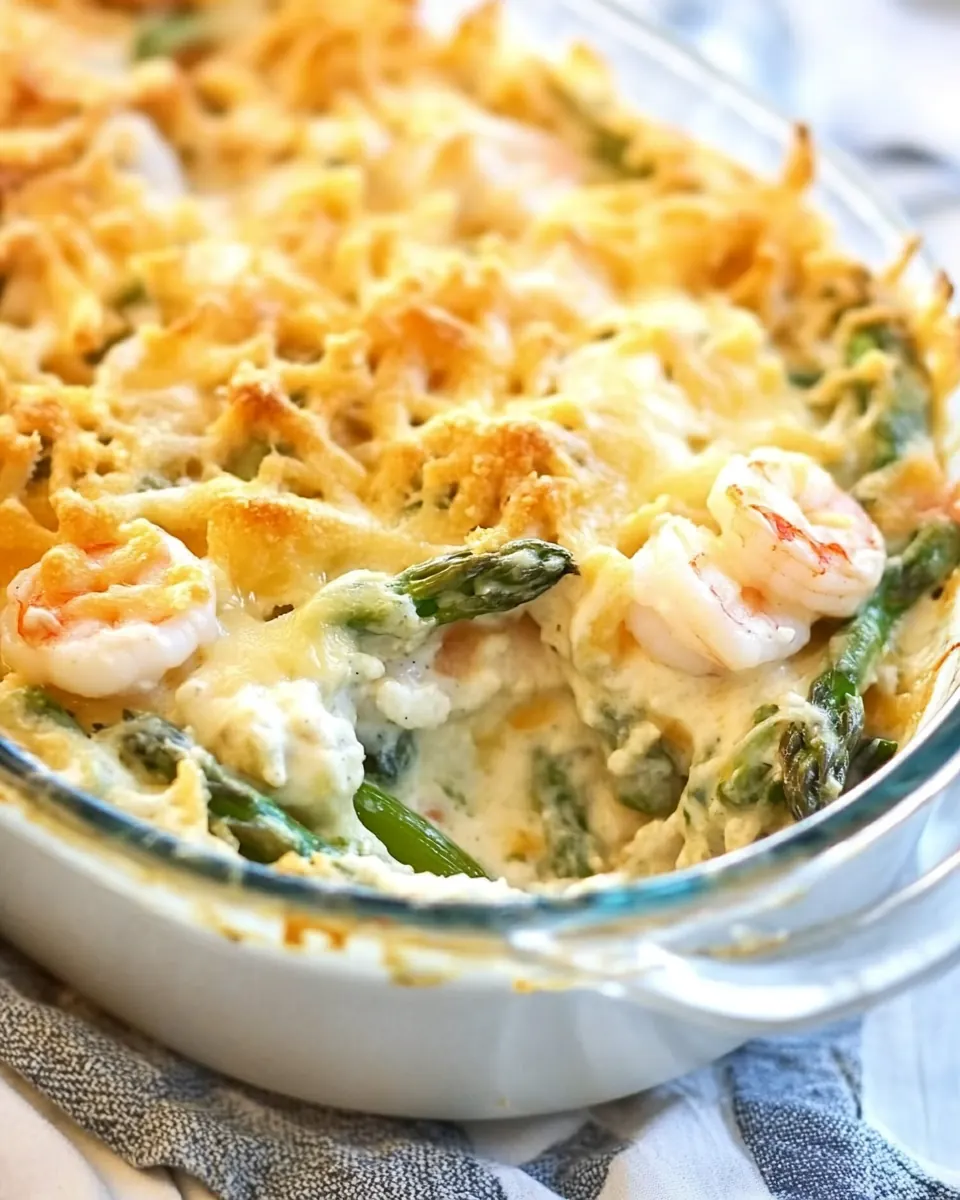
I like to keep a few practical tips in mind when making Cheesy Asparagus Shrimp Casserole so the result is reliably tasty and well textured. The following list expands on the note about crunchy toppings and ingredient prep to help you avoid common pitfalls.
- Soften your cream cheese fully: Room temperature cream cheese blends smoothly with the condensed soup, preventing lumps and ensuring an even bake.
- Drain asparagus well: Excess liquid from canned or thawed frozen asparagus can make the casserole soupy, so pat dry or let drain in a colander before layering.
- Cook shrimp briefly: Sauté shrimp until just opaque to preserve tenderness, then cool before folding into the mixture to avoid adding steam.
- Add fried onions late: Top with the crispy fried onions at the final bake stage so they stay crunchy and provide textural contrast.
- Cover, then uncover: Baking covered first allows the center to heat through, and uncovering at the end creates a bubbly, browned finish.
- Season cautiously: The condensed cheddar soup contains salt, so season the filling sparingly and adjust after baking if needed.
Serve This Cheesy Asparagus Shrimp Casserole With
This casserole can be a centerpiece or an elegant side depending on the occasion. Below are serving ideas, pairings, and storage tips to help you present it well and keep leftovers tasting great.
- Family dinners: Serve slices of Cheesy Asparagus Shrimp Casserole alongside a simple green salad for a balanced plate that still feels indulgent.
- Potlucks and gatherings: This dish scales easily, so bring it to communal meals where it acts as a comforting, shareable casserole that most people enjoy.
- Holiday sides: The blend of creamy cheese and tender asparagus makes this casserole suitable for spring holiday tables where lighter vegetables are welcome.
- Storage tips: Store leftovers in an airtight container in the refrigerator for up to three days; reheat gently in a low oven to revive the crunchy topping as much as possible.
- Make ahead: Assemble the casserole up to the point of topping, cover, and refrigerate for a few hours; add the fried onions and bake when ready to serve.
- Seasonal pairing: This recipe shines in spring when asparagus is in season, pairing well with bright salads or steamed vegetables that echo its freshness.
FAQ
Conclusion
Cheesy Asparagus Shrimp Casserole stands out for its creamy filling, tender shrimp, and bright asparagus finished with a crunchy topping. It’s a forgiving, crowd pleasing dish that scales easily and is ideal for family dinners or gatherings. Try this recipe when you want something comforting that still feels a bit special, and enjoy the mix of textures that make each bite satisfying. Once you master the simple assembly, it becomes a reliable favorite I return to again and again.
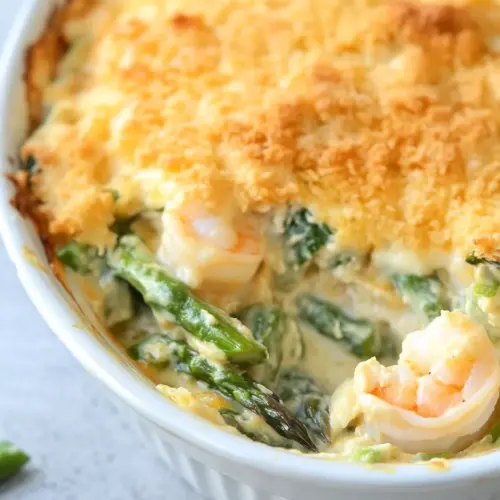
Cheesy Asparagus Shrimp Casserole
Equipment
- Oven
- Casserole Dish
- Mixing Bowl
- Hand Held Mixer
- Skillet
Ingredients
- 12 oz softened cream cheese Soften to a spreadable consistency and provide a rich, creamy base that binds other components while adding tangy dairy flavor and smooth texture to the casserole.
- 1 can 10.5 oz, cream of cheddar cheese soup Add concentrated cheesy savory depth and creamy body to enhance overall flavor; pour evenly to meld with cream cheese and shrimp while creating a cohesive sauce that keeps the dish moist.
- 8 oz shrimp Contribute tender, slightly sweet seafood flavor and protein; distribute throughout the casserole for bites of texture and umami that balance the richness of the cheeses and cream-based soup.
- 3 cans 10.5 oz each, cut asparagus, drained Drain thoroughly to remove excess liquid and supply tender, green vegetable bites that add mild earthy flavor and a pop of color; layer or fold into the mixture so asparagus remains distinct without making the casserole watery.
- 1 package 6 oz, french fried onions Provide a crunchy, golden topping when sprinkled over the finished casserole; add contrast in texture and a savory fried onion note that complements the creamy interior and enhances visual appeal.
- salt and pepper Season to taste, enhancing and balancing flavors throughout the dish; add small amounts gradually to avoid overpowering the delicate seafood and cream components while highlighting savory and aromatic notes.
Instructions
- Preheat oven to 400 and grease a casserole dish with nonstick cooking spray. Set aside.: The kitchen will fill with warmth quickly as the oven reaches 400 degrees, and you may notice a slight dry heat smell as the racks and pan preheat. This is important because a preheated oven ensures even browning during the timed bake, producing the bubbly edges that indicate doneness. A common mistake is skipping greasing, which can cause sticking and make serving messy; use nonstick spray or a light brush of oil so portions lift cleanly from the dish.
- THIS STEP ONLY IF COOKING FRESH SHRIMP: Cook 8 oz of shrimp, sauteing in butter, for casserole. Fresh shrimp equals approx 18 large shrimp or 20 medium shrimp. Its not a big deal if you are off too much as this is a casserole dish.: Cook 8 oz of shrimp, sauteing in butter, for casserole. Fresh shrimp equals approx 18 large shrimp or 20 medium shrimp. Its not a big deal if you are off too much as this is a casserole dish. : You will hear the shrimp sizzle as they hit the pan, and they will turn from translucent to an opaque pink, releasing a mild ocean aroma. Saute in a small amount of butter until just cooked to preserve tenderness, then let them cool so they don’t make the filling watery. Overcooking here is the most common error, which results in rubbery shrimp in the finished casserole, so remove them from heat at the first sign of doneness.
- In a mixing bowl, add softened cream cheese and cream of cheddar soup and mix well – hand held mixer works well when working with cream cheese blocks.: As you beat the cream cheese and condensed soup together the texture should become smooth and glossy, releasing a rich, cheesy aroma. A handheld mixer helps eliminate lumps and creates an even, spreadable mixture that bakes consistently. If you skip thorough mixing you risk pockets of unmelted cream cheese that disrupt the final texture, so take time to fully integrate the two.
- Stir in cooked shrimp and season bowl with salt and pepper.: As you fold the cooked shrimp into the creamy base you’ll feel bite sized pieces nestle into the mixture and see pink accents against the pale cheese. Season lightly with salt and pepper , tasting carefully because the soup adds saltiness. A frequent misstep is over salting at this stage, so season conservatively and adjust after baking if necessary.
- Place asparagus into the bottom of the casserole dish. If you are using canned, make sure asparagus is drained completely to avoid extra moisture. If you are using frozen, make sure asparagus is properly steamed, drained of excess water, and cooled before next step.: Lay the asparagus evenly across the dish so each slice of casserole has a balanced vegetable portion; the visual of green spears peeking out is also appealing. Draining and patting dry prevents a watery center and helps the filling set properly. The common error is neglecting drainage, which leads to a soupy casserole that needs extra bake time to firm up.
- Spread cream cheese mixture evenly across the top of the asparagus in the casserole dish.: Use a spatula to smooth the creamy mixture until it forms an even layer over the asparagus ; you should see gentle peaks that settle during baking and edges that touch the dish sides where bubbling will occur. Even spreading ensures uniform cooking and attractive presentation when sliced. If you crowd the filling unevenly, some parts may be too dense and others too thin, causing inconsistent texture.
- Cover casserole with foil and bake for 35 minutes.: With foil tented over the dish steam will circulate, heating the interior without overly browning the topping, and you may notice soft bubbling at the edges after about 25 to 30 minutes. This covered bake allows the filling to heat through and meld flavors, producing a cohesive creaminess. A mistake here is leaving the foil too tight against the topping which can trap condensation and make the surface soggy; tent the foil slightly so steam can escape.
- Remove foil and discard.: Removing the foil reveals the surface so the topping can brown and the edges can crisp, and you will likely see vigorous bubbling near the rim. This step exposes the casserole to dry heat which brings out toasted notes and caramelization in the cheese. If you forget to remove the foil you miss the critical crisping phase and the texture will remain flat instead of developing delightfully browned spots.
- Top with crispy fried onions and return to oven for 10 minutes.: Sprinkle the 6 oz package of french fried onions evenly so each serving gets a crunchy portion, then return the dish to bake so the topping becomes golden. The sound of the oven and the new scent of toasted onions is an instant signal the casserole is nearly ready. Add the onions only at this stage, because adding them earlier makes them soggy and loses the contrast that lifts the dish.
- Asparagus Casserole will be hot and bubbly around the edges.: You should see the filling bubbling gently and hear small pops as pockets of steam escape, and the edges should be slightly browned. That bubbling indicates the interior has reached sufficient temperature and the flavors have melded. A mistake is cutting too soon while it is still violently bubbling, which makes the slices fall apart instead of holding shape.
- Let stand 5 minutes before serving to firm.: Allow the casserole to rest so the filling can set, which makes slicing cleaner and the texture more satisfying, and you will notice steam evaporating slowly as it cools to a pleasant serving temperature. This short wait helps the layers bind and keeps portions from collapsing. Serving immediately is tempting, but doing so often results in a loose, runny plate rather than neat portions.
- Serves 10-12: Once rested, the casserole slices hold together and present nicely for a crowd, delivering a balance of creamy filling, tender asparagus , and crunchy topping. This yield makes it a reliable choice for gatherings or potlucks where you need consistent servings. Misjudging portion size can leave guests either unsatisfied or wasteful, so remember this yield when planning sides.
Notes
- Soften your cream cheese fully: Room temperature cream cheese blends smoothly with the condensed soup, preventing lumps and ensuring an even bake.
- Drain asparagus well: Excess liquid from canned or thawed frozen asparagus can make the casserole soupy, so pat dry or let drain in a colander before layering.
- Cook shrimp briefly: Sauté shrimp until just opaque to preserve tenderness, then cool before folding into the mixture to avoid adding steam.
- Add fried onions late: Top with the crispy fried onions at the final bake stage so they stay crunchy and provide textural contrast.
- Cover, then uncover: Baking covered first allows the center to heat through, and uncovering at the end creates a bubbly, browned finish.
- Season cautiously: The condensed cheddar soup contains salt, so season the filling sparingly and adjust after baking if needed.