Cheesecake Lemon Bars
Cheesecake Lemon Bars is the kind of dessert I reach for when I want something bright, creamy, and a little bit nostalgic.
My first time making Cheesecake Lemon Bars was for a spring potluck, and I remember juggling a tray while chasing a toddler and laughing with friends. The bars cooled on the counter as the sun warmed the kitchen, and the aroma of lemon juice and baking butter made everyone pause conversation and grab a plate. That mix of tangy and rich, the way a thin lemon layer cuts through a velvet cheesecake, felt like a small celebration in each bite.
I like recipes that let me multitask, and these bars are forgiving enough to chat with guests while the oven does most of the work. Over the years I adjusted the method so the layers hold together when sliced, and I learned simple tricks to keep the filling silky. When friends ask for the recipe, they tell me it’s the balance of tart lemon zest and creamy cream cheese that keeps them coming back for more.
Recipe Snapshot
1 hr 15 mins
30 mins
45 mins
Medium
210 kcal
American
Gluten-Free, Low FODMAP
Desserts
13 by 9 inch baking dish, Mixing bowl, Pastry cutter, Electric hand mixer, Spatula
Why This Cheesecake Lemon Bars Stands Out
Bright and balanced flavor
I love how Cheesecake Lemon Bars combine tart lemon juice with rich cream cheese. The contrast is lively, each bite delivering a clean citrus pop followed by smooth, luxurious texture. That tension between tang and cream keeps people reaching for seconds, and I swear it elevates simple gatherings into memorable moments.
Layered texture that sings
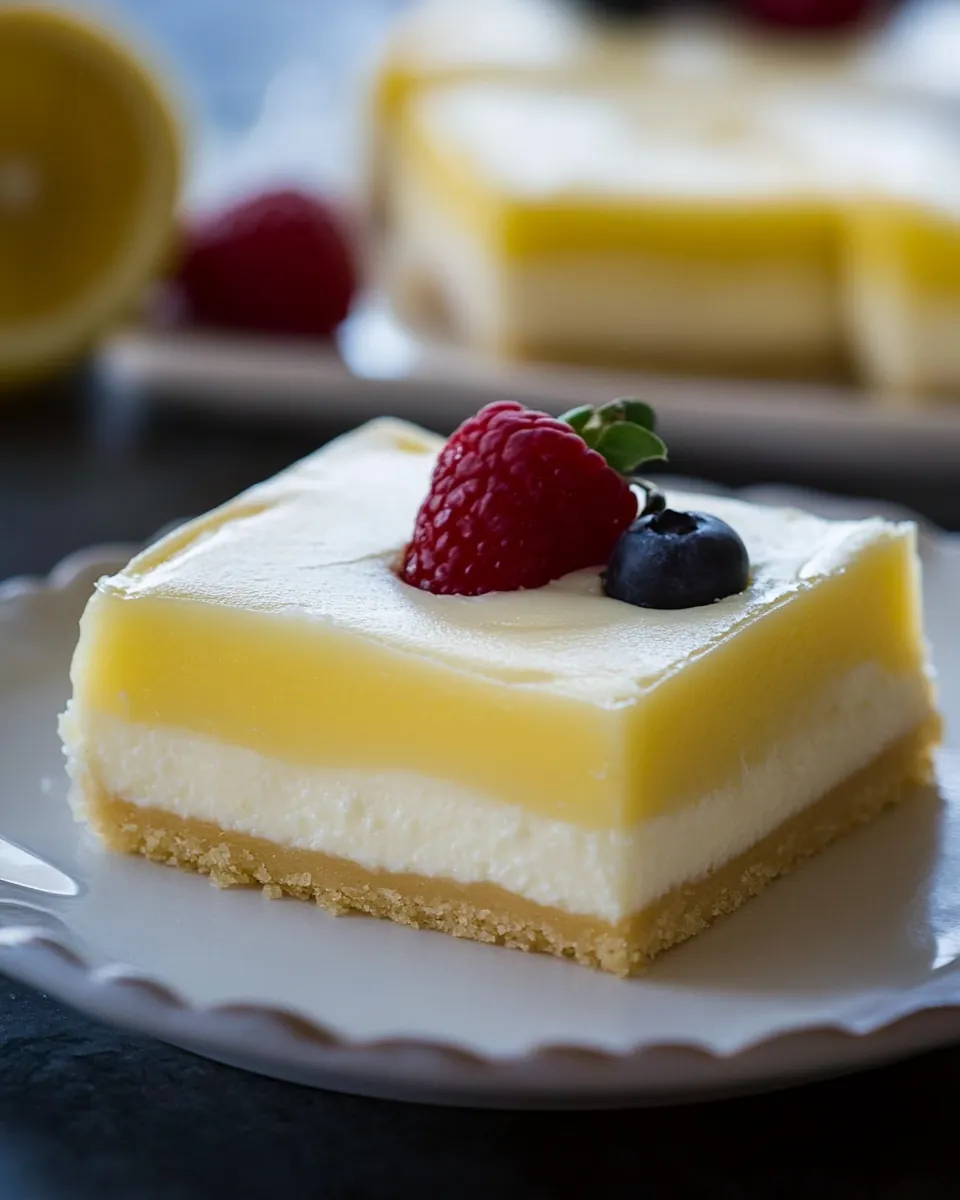
The three layers create such an enjoyable mouthfeel. The shortbread crust offers a firm, buttery base, the lemon layer is silky and slightly custardy, and the cheesecake topping adds a dense, velvety finish. I appreciate how each component is distinct but harmonious, so you get crumb, custard, and cream in a single square.
Great make ahead dessert
These bars play well with planning. You can prepare the crust and fillings, bake, chill, and add the sour cream topping later. I often make them a day ahead; chilling improves slicing and melds the flavors. When you need a dessert for a gathering, they save time and reduce last minute stress.
Accessible ingredients and technique
What I love is how accessible the pantry staples are. With basic items like all purpose flour, butter, eggs, and powdered sugar, you can create something that feels special. The techniques are straightforward, so even bakers who are a bit cautious with layered desserts can succeed.
Flexible for serving and presentation
Finally, these bars are easy to dress up or keep simple. Dust with extra powdered sugar, garnish with a thin lemon slice, or serve plain alongside coffee. They work for casual afternoons, holiday dessert tables, and potlucks. I adore that versatility, it means I can rely on them for many occasions.
Essential Ingredients for Cheesecake Lemon Bars
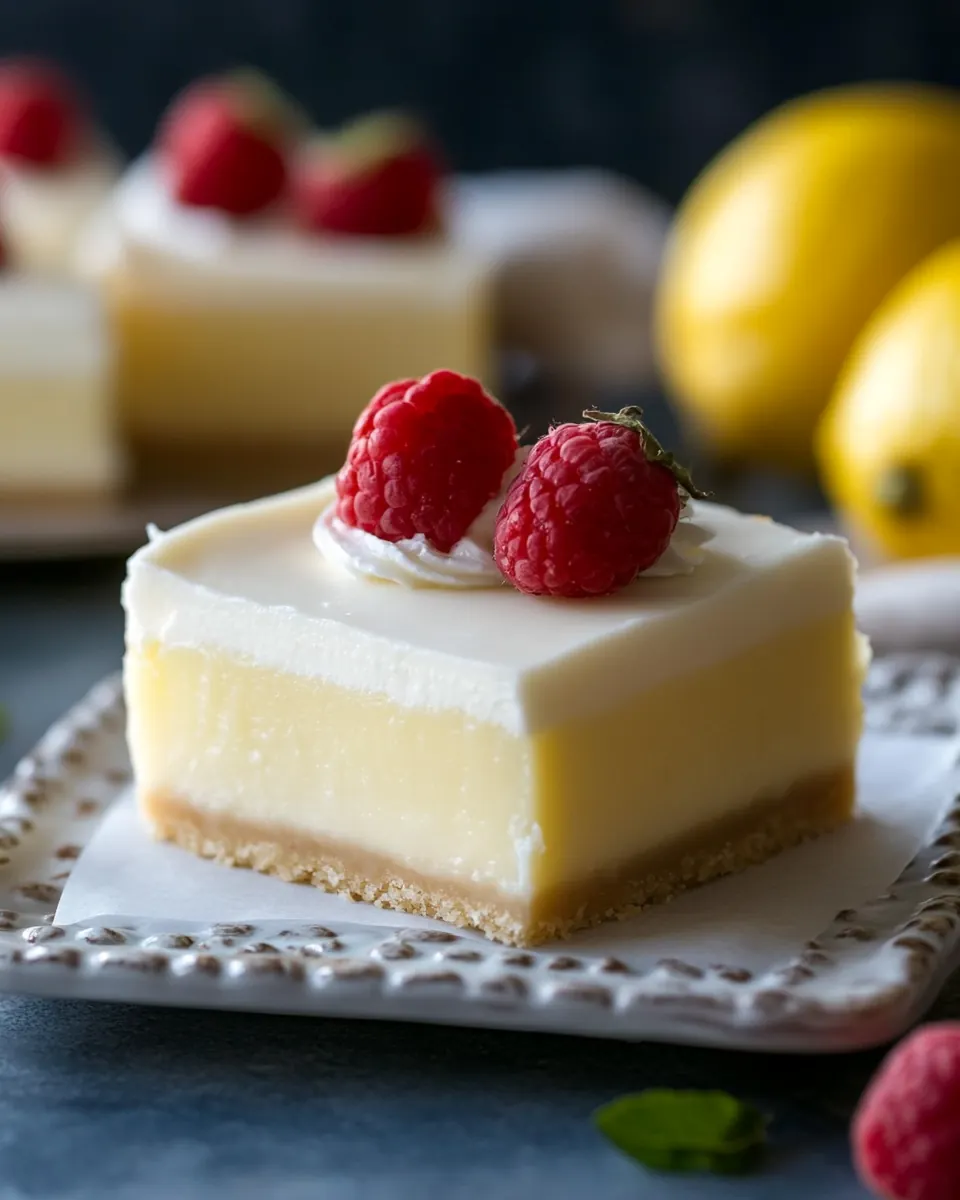
These ingredients are chosen to build distinct but complementary layers. The shortbread crust relies on sturdy all purpose flour and cold butter for flakiness, while the lemon layer uses bright lemon juice and zest for acidity. The cheesecake layer depends on soft, creamy cream cheese and eggs for structure. Together, they create a dessert that is at once tangy, rich, and pleasantly textural.
- 1 1/2 cup s (213 g) all-purpose flour (scoop and level to measure): Provide structure and bulk to the crust and filling; use spoon-and-level measuring for accuracy to ensure consistent texture. Combine with fats to create tenderness while also contributing to the overall crumb and chew of the bars.
- 1/2 cup (68 g) powdered sugar: Add delicate sweetness and fine texture to the crust; powdered form blends smoothly with flour for an even base. Helps balance flavors without adding graininess, contributing to a tender shortbread-like layer.
- 1/4 tsp salt: Enhance overall flavor by balancing sweetness and brightening other ingredients; a small amount strengthens the dough slightly. Also controls yeast growth if present and regulates chemical reactions during baking.
- 3/4 cup (6 oz) unsalted butter, cold and diced into small cubes: Incorporate cold butter cut into small cubes to create a flaky, tender crust by distributing fat throughout the flour. Keeping it cold prevents over-softening so the butter steams during baking and produces light layers in the base.
- 1 1/2 cup s (300 g) granulated sugar: Provide bulk sweetness to the lemon curd layer and contribute to structure during baking; granulated sugar dissolves and caramelizes slightly for flavor. Also helps set the custard-like filling by interacting with eggs and thickeners.
- 1 tbsp all-purpose flour: Act as a lightening agent in the filling by slightly thickening and stabilizing the lemon layer for proper set and texture. Small flour addition prevents excessive runniness and aids in achieving a firm, sliceable consistency.
- 1 1/2 tbsp lemon zest: Deliver concentrated citrus oils to brighten both crust and filling; finely grate to avoid bitter pith. Zest intensifies lemon aroma and adds a fresh flavor note that complements the sweet and tangy layers.
- 1/2 cup (4.6 oz) lemon juice: Provide strong citrus acidity and liquid for the lemon layer, balancing sweetness with tartness; freshly squeezed juice yields the best flavor. Acid also helps set the custard filling and enhances overall brightness.
- 4 large eggs: Set and enrich the lemon custard by providing structure and creaminess; whole eggs coagulate with heat to thicken the filling. Beaten eggs also incorporate air and contribute to a smooth, cohesive texture when baked.
- 2 (8 oz) pkgs. cream cheese, softened well: Create a rich, creamy cheesecake layer when softened and mixed thoroughly; cream cheese contributes fat, tang, and density. Properly softened cream cheese ensures a lump-free, silky filling that bakes evenly with the lemon layer.
- 3/4 cup (165 g) granulated sugar: Sweeten the cheesecake layer and help control its sweetness level; granulated sugar dissolves into the cheese mixture for a smooth consistency. Also interacts with eggs to influence the final texture and tenderness of the baked filling.
- 2 large eggs: Bind and help thicken the cheesecake mixture by adding protein and structure; eggs provide coagulation during baking for a firm but creamy result. Incorporate gradually to avoid curdling and ensure a homogeneous filling.
- 1 tsp vanilla extract: Add a warm, sweet aroma and subtle flavor complexity to the cheesecake layer; vanilla rounds out citrus notes and enhances perceived sweetness. Use pure extract for the best depth of flavor in this custard-based component.
- 1/4 cup (2 oz) sour cream: Contribute tang and a slight looseness to the cheesecake filling while adding moisture and acidity for balance. Small amounts smooth the texture and help offset richness, making the filling feel lighter on the palate.
- 1 cup (8 oz) sour cream: Provide additional tang and creaminess for the topping or swirl, enhancing richness and mouthfeel; full cup of sour cream creates a silky finish. Helps balance sweetness and contributes to a smooth, slightly tangy final bite.
- 4 tbsp (34 g) powdered sugar: Dust on top as a light finish to add subtle sweetness and a decorative touch; powdered sugar dissolves quickly and looks attractive when sifted. Also helps temper tartness on the surface and gives a delicate powdered appearance.
Cooking Method for Cheesecake Lemon Bars
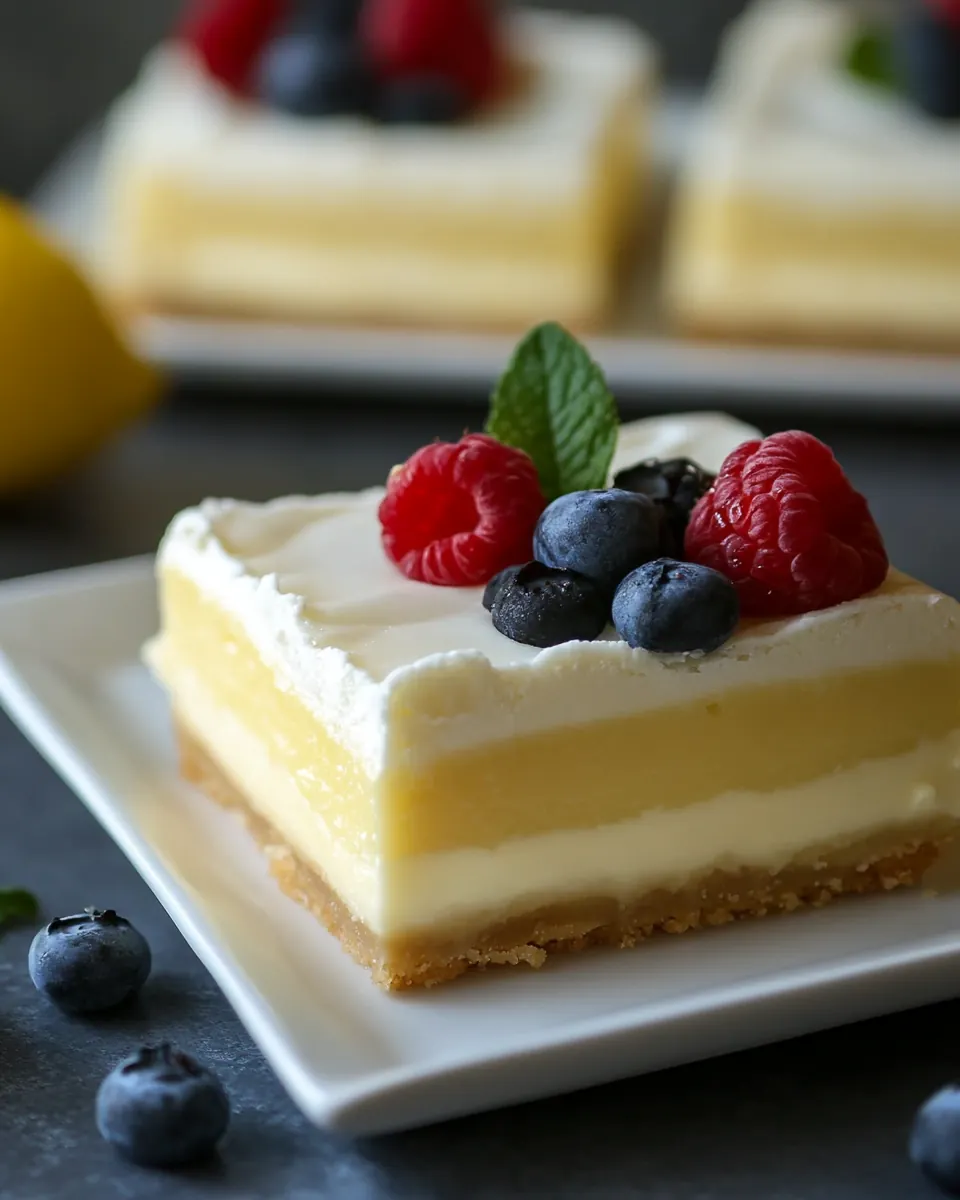
These directions walk you through building each layer and getting the right texture from crust to topping. The process focuses on temperature control, gentle mixing, and timing so the bars set properly. Read each step and follow the sensory cues to know when to move to the next stage.
- Preheat oven to 350 degrees. Butter a 13 by 9-inch baking dish, set aside.: As the oven warms, you should smell the faint warmth of the appliance and hear the quiet click as it cycles. Preheating is essential so the crust starts baking immediately on placement, which helps it set before the fillings are added. A common mistake is placing the pan in a cool oven, which can lead to an underbaked, soggy base; always wait until the oven reaches temperature. Use a light coating of butter so the shortbread releases easily after baking, and make sure the baking dish feels evenly warmed when you slide it in.
- For the shortbread layer: In a mixing bowl whisk together flour, powdered sugar and salt. Using a pastry cutter or fork, cut butter into flour mixture until it resembles coarse meal.: In a mixing bowl whisk together flour, powdered sugar and salt. Using a pastry cutter or fork, cut butter into flour mixture until it resembles coarse meal. : You will notice the dry ingredients are pale and powdery before the butter is cut in, then transform into a crumbly, sandy mixture with small pea sized bits of butter . Those butter pockets melt in the oven, creating a tender, flaky texture. If you overwork the mixture so it becomes paste like, the crust can turn dense; stop when the texture looks like coarse meal. The sound changes from dry whisking to a softer, cohesive crumble as the fat incorporates.
- Pour mixture into prepared baking dish and spread and pat into an even layer. Bake in preheated oven until set, about 15 – 18 minutes. Set aside to cool slightly while preparing fillings.: Pressing the crust evenly ensures uniform baking and prevents thin spots that can burn. As it bakes you'll see the edges take on a light golden hue and the aroma of warm butter will rise. Underbaking yields a doughy center, overbaking makes it brittle, so watch for a firm top that remains slightly pale. Letting it cool a bit stabilizes the base so it supports the wet fillings without sinking.
- For the lemon layer: In a mixing bowl whisk sugar and flour, then add in lemon zest, lemon juice and eggs whisk until well blended. Set aside.: In a mixing bowl whisk sugar and flour, then add in lemon zest, lemon juice and eggs whisk until well blended. Set aside. : After whisking, the mixture should be glossy and smooth, and the bright citrus scent becomes prominent. The added flour and eggs help the layer thicken in the oven, creating a custardy texture. If the mixture seems separated or curdled, whisk briskly to homogenize; avoid overwhisking which can incorporate excess air and lead to bubbles on the surface during baking. Use fresh lemon juice for the best flavor profile.
- For the cheesecake layer: In a mixing bowl, using an electric hand mixer set on low speed, cream together cream cheese and granulated sugar until smooth, about 30 seconds.: In a mixing bowl, using an electric hand mixer set on low speed, cream together cream cheese and granulated sugar until smooth, about 30 seconds. : When properly creamed, the cream cheese and sugar will become soft and satiny, with a faint sheen. Low speed prevents splatter and keeps the mixture dense rather than whipped. If lumps remain, scrape the bowl and continue briefly; large pieces of cream cheese will give a grainy texture in the final bake. Avoid high speed which can introduce too much air and cause cracks.
- Mix in eggs one at a time adding in vanilla with second egg. Mix in 1/4 cup sour cream. Tap bowl against countertop about 10 times to release any large air bubbles.: The batter should look cohesive and glossy after each egg, and the vanilla will add a warm aroma. Tapping releases large bubbles that expand in the oven and cause uneven texture or holes in the final layer. A common error is adding eggs too quickly, which can create a curdled appearance; add them slowly and mix until incorporated. The small amount of sour cream smooths the filling and enhances creaminess.
- Pour lemon filling over crust, then evenly drizzle cheesecake filling by the spoonful over lemon layer (work to evenly distribute, layers will separate once baked). Skim off any air bubbles.: When you pour, you should see the lemon layer settle into a glossy sheet. Drizzling the cheesecake filling creates pockets that will spread slightly, forming distinct layers after baking. Use a spoon to smooth any large peaks, and pop surface bubbles with a toothpick to prevent crater like imperfections. If you pour too forcefully you could disturb the crust, so work gently and keep the layers balanced.
- Gently spread cheesecake filling into an even layer. Bake in preheated oven until filling only jiggles slightly, about 29 – 33 minutes.: As it bakes the top will set while retaining a faint wobble, and the kitchen will fill with a warm, rich scent. The slight jiggle indicates the center is set but still creamy, which yields a tender texture after chilling. Overbaking will dry the filling and produce a cracked surface, while underbaking causes a runny center. Aim for a uniform, gentle wobble across the pan.
- Remove from oven and allow to cool at room temperature 45 minutes then transfer to refrigerator and chill at least 2 hours.: Cooling at room temperature reduces stress from rapid temperature shifts, preventing cracks. The refrigerator firming step solidifies layers for clean slicing. A common mistake is cutting too soon; if the bars are not chilled enough they will crumble and smear. Patience here yields neat squares and better mouthfeel.
- For the sour cream layer: In a small mixing bowl whisk together sour cream and powdered sugar. Spread into an even layer over chilled bars.: In a small mixing bowl whisk together sour cream and powdered sugar. Spread into an even layer over chilled bars. : The topping should be smooth and slightly glossy, and spreading it over chilled bars keeps it from melting into the filling. The powdered sugar blends seamlessly, avoiding grainy texture. If the topping is too loose, blot with a paper towel and chill briefly; too stiff a topping can tear the surface when spreading, so aim for a spreadable consistency.
- Cut into squares. Store in an airtight container in refrigerator.: Use a sharp knife warmed under hot water and wiped dry for clean cuts, wiping between slices to prevent dragging crumbs. Stored chilled in an airtight container, the bars keep their texture and flavor for several days. A mistake to avoid is leaving them at room temperature too long, which can soften the layers and reduce shelf life.
Expert Tips about Cheesecake Lemon Bars
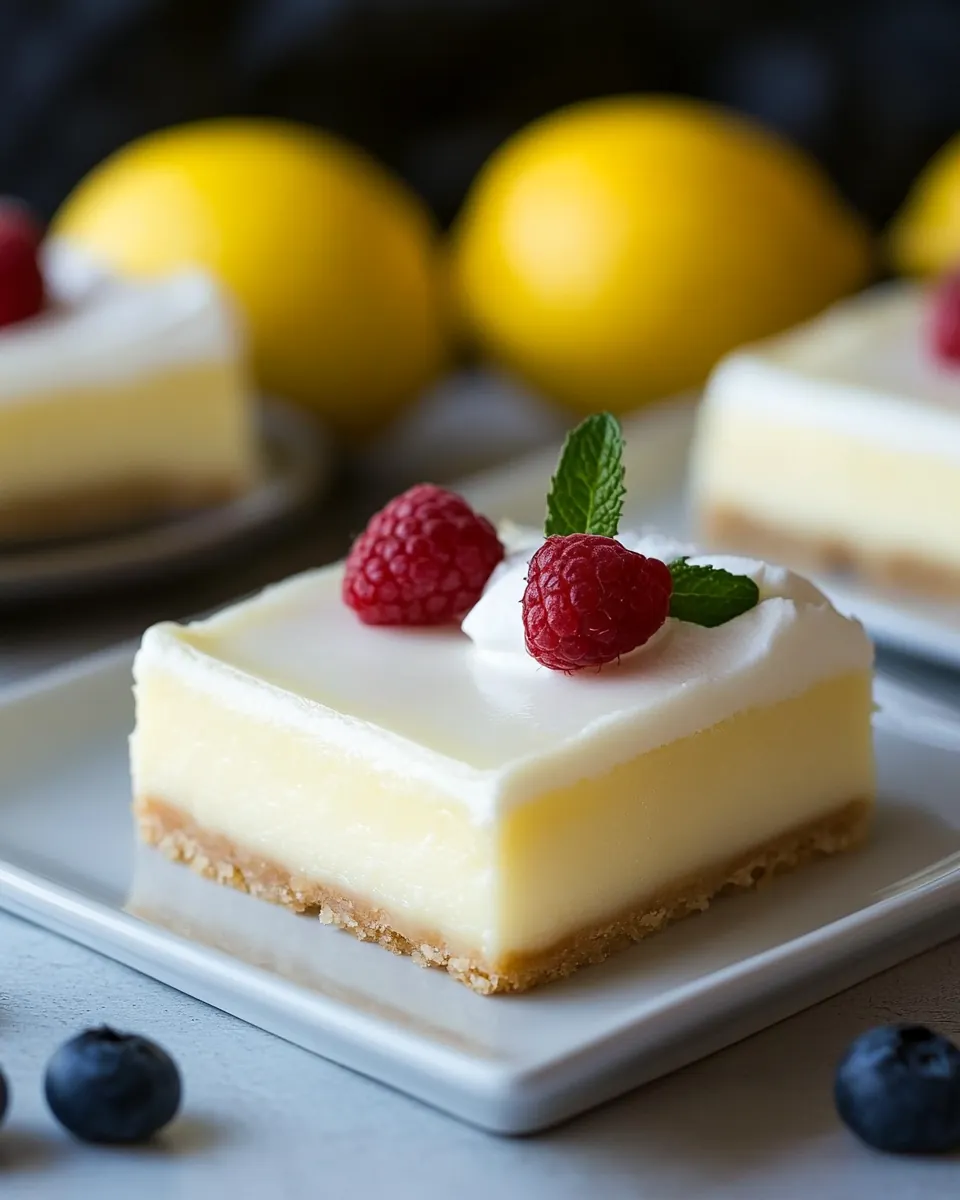
These tips are what I use every time I make this dessert, they help with texture, slicing, and flavor clarity. Each tip is practical and focused on making the process easier and more reliable.
- Soften but do not melt cream cheese Use a gentle room temperature softening method so the cream cheese becomes pliable but not warm and runny; over softened packages can create a soupy filling and uneven texture.
- Cold butter for the crust Keep the butter cold and cubed, this gives the shortbread its flaky, tender crumb that contrasts nicely with the creamy layers above.
- Tap to release air bubbles After combining the cheesecake batter, tapping the bowl helps push up large bubbles; this reduces holes in the baked surface and yields a smoother appearance.
- Use a sharp, warmed knife to slice Warm the blade briefly and wipe it clean between cuts so each square looks neat and the layers remain distinct.
- Chill fully before topping Make sure the bars are cold before spreading the sour cream layer, otherwise the topping can sink into the filling and lose its smooth finish.
Accompaniments for Cheesecake Lemon Bars
These bars pair well with light drinks and simple garnishes. I like to think about texture and temperature when serving, and how small touches can elevate a casual dessert into a centerpiece. Here are ideas for occasions, sides, and storage, formatted for easy reading.
- Serve with a cup of coffee or tea The warm bitterness of coffee or an herbal tea balances the bright citrus and creamy richness of the bars, perfect for afternoon gatherings.
- Garnish with fresh lemon zest A tiny sprinkle of zest just before serving adds perfume and a fresh visual cue of the lemon flavor inside.
- Offer powdered sugar dusting A light dusting of powdered sugar adds a pretty finish and a touch more sweetness, especially nice for special occasions or dessert tables.
- Bring to potlucks and picnics These bars travel well chilled in an airtight container, making them ideal for spring and summer outings or holiday dessert spreads.
- Storage tips Keep bars refrigerated in an airtight container for up to four days for best texture, and freeze individual squares wrapped tightly for longer storage.
- Occasions They work beautifully for brunch, spring celebrations, or as a light dessert after a heavy meal; the bright citrus lifts the palate.
FAQ
Conclusion
What makes these Cheesecake Lemon Bars special is the bright interplay of citrus and creamy cheesecake layered over a buttery shortbread base, creating a complex yet approachable dessert. Give them a try the next time you want a make ahead treat for a gathering or a springtime celebration, they’re forgiving and rewarding. I hope you enjoy the balance of textures and flavors as much as I do, and that they become a reliable favorite for your entertaining repertoire.
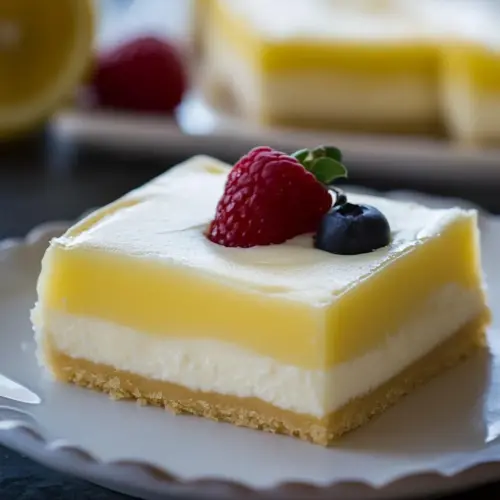
Cheesecake Lemon Bars
Equipment
- 13 by 9 inch baking dish
- Mixing Bowl
- Pastry Cutter
- electric hand mixer
- Spatula
Ingredients
- 1 1/2 cup s (213 g) all-purpose flour (scoop and level to measure) Provide structure and bulk to the crust and filling; use spoon-and-level measuring for accuracy to ensure consistent texture. Combine with fats to create tenderness while also contributing to the overall crumb and chew of the bars.
- 1/2 cup (68 g) powdered sugar Add delicate sweetness and fine texture to the crust; powdered form blends smoothly with flour for an even base. Helps balance flavors without adding graininess, contributing to a tender shortbread-like layer.
- 1/4 tsp salt Enhance overall flavor by balancing sweetness and brightening other ingredients; a small amount strengthens the dough slightly. Also controls yeast growth if present and regulates chemical reactions during baking.
- 3/4 cup (6 oz) unsalted butter, cold and diced into small cubes Incorporate cold butter cut into small cubes to create a flaky, tender crust by distributing fat throughout the flour. Keeping it cold prevents over-softening so the butter steams during baking and produces light layers in the base.
- 1 1/2 cup s (300 g) granulated sugar Provide bulk sweetness to the lemon curd layer and contribute to structure during baking; granulated sugar dissolves and caramelizes slightly for flavor. Also helps set the custard-like filling by interacting with eggs and thickeners.
- 1 tbsp all-purpose flour Act as a lightening agent in the filling by slightly thickening and stabilizing the lemon layer for proper set and texture. Small flour addition prevents excessive runniness and aids in achieving a firm, sliceable consistency.
- 1 1/2 tbsp lemon zest Deliver concentrated citrus oils to brighten both crust and filling; finely grate to avoid bitter pith. Zest intensifies lemon aroma and adds a fresh flavor note that complements the sweet and tangy layers.
- 1/2 cup (4.6 oz) lemon juice Provide strong citrus acidity and liquid for the lemon layer, balancing sweetness with tartness; freshly squeezed juice yields the best flavor. Acid also helps set the custard filling and enhances overall brightness.
- 4 large eggs Set and enrich the lemon custard by providing structure and creaminess; whole eggs coagulate with heat to thicken the filling. Beaten eggs also incorporate air and contribute to a smooth, cohesive texture when baked.
- 2 (8 oz) pkgs. cream cheese, softened well Create a rich, creamy cheesecake layer when softened and mixed thoroughly; cream cheese contributes fat, tang, and density. Properly softened cream cheese ensures a lump-free, silky filling that bakes evenly with the lemon layer.
- 3/4 cup (165 g) granulated sugar Sweeten the cheesecake layer and help control its sweetness level; granulated sugar dissolves into the cheese mixture for a smooth consistency. Also interacts with eggs to influence the final texture and tenderness of the baked filling.
- 2 large eggs Bind and help thicken the cheesecake mixture by adding protein and structure; eggs provide coagulation during baking for a firm but creamy result. Incorporate gradually to avoid curdling and ensure a homogeneous filling.
- 1 tsp vanilla extract Add a warm, sweet aroma and subtle flavor complexity to the cheesecake layer; vanilla rounds out citrus notes and enhances perceived sweetness. Use pure extract for the best depth of flavor in this custard-based component.
- 1/4 cup (2 oz) sour cream Contribute tang and a slight looseness to the cheesecake filling while adding moisture and acidity for balance. Small amounts smooth the texture and help offset richness, making the filling feel lighter on the palate.
- 1 cup (8 oz) sour cream Provide additional tang and creaminess for the topping or swirl, enhancing richness and mouthfeel; full cup of sour cream creates a silky finish. Helps balance sweetness and contributes to a smooth, slightly tangy final bite.
- 4 tbsp (34 g) powdered sugar Dust on top as a light finish to add subtle sweetness and a decorative touch; powdered sugar dissolves quickly and looks attractive when sifted. Also helps temper tartness on the surface and gives a delicate powdered appearance.
Instructions
- Preheat oven to 350 degrees. Butter a 13 by 9-inch baking dish, set aside.: As the oven warms, you should smell the faint warmth of the appliance and hear the quiet click as it cycles. Preheating is essential so the crust starts baking immediately on placement, which helps it set before the fillings are added. A common mistake is placing the pan in a cool oven, which can lead to an underbaked, soggy base; always wait until the oven reaches temperature. Use a light coating of butter so the shortbread releases easily after baking, and make sure the baking dish feels evenly warmed when you slide it in.
- For the shortbread layer: In a mixing bowl whisk together flour, powdered sugar and salt. Using a pastry cutter or fork, cut butter into flour mixture until it resembles coarse meal.: In a mixing bowl whisk together flour, powdered sugar and salt. Using a pastry cutter or fork, cut butter into flour mixture until it resembles coarse meal. : You will notice the dry ingredients are pale and powdery before the butter is cut in, then transform into a crumbly, sandy mixture with small pea sized bits of butter . Those butter pockets melt in the oven, creating a tender, flaky texture. If you overwork the mixture so it becomes paste like, the crust can turn dense; stop when the texture looks like coarse meal. The sound changes from dry whisking to a softer, cohesive crumble as the fat incorporates.
- Pour mixture into prepared baking dish and spread and pat into an even layer. Bake in preheated oven until set, about 15 - 18 minutes. Set aside to cool slightly while preparing fillings.: Pressing the crust evenly ensures uniform baking and prevents thin spots that can burn. As it bakes you'll see the edges take on a light golden hue and the aroma of warm butter will rise. Underbaking yields a doughy center, overbaking makes it brittle, so watch for a firm top that remains slightly pale. Letting it cool a bit stabilizes the base so it supports the wet fillings without sinking.
- For the lemon layer: In a mixing bowl whisk sugar and flour, then add in lemon zest, lemon juice and eggs whisk until well blended. Set aside.: In a mixing bowl whisk sugar and flour, then add in lemon zest, lemon juice and eggs whisk until well blended. Set aside. : After whisking, the mixture should be glossy and smooth, and the bright citrus scent becomes prominent. The added flour and eggs help the layer thicken in the oven, creating a custardy texture. If the mixture seems separated or curdled, whisk briskly to homogenize; avoid overwhisking which can incorporate excess air and lead to bubbles on the surface during baking. Use fresh lemon juice for the best flavor profile.
- For the cheesecake layer: In a mixing bowl, using an electric hand mixer set on low speed, cream together cream cheese and granulated sugar until smooth, about 30 seconds.: In a mixing bowl, using an electric hand mixer set on low speed, cream together cream cheese and granulated sugar until smooth, about 30 seconds. : When properly creamed, the cream cheese and sugar will become soft and satiny, with a faint sheen. Low speed prevents splatter and keeps the mixture dense rather than whipped. If lumps remain, scrape the bowl and continue briefly; large pieces of cream cheese will give a grainy texture in the final bake. Avoid high speed which can introduce too much air and cause cracks.
- Mix in eggs one at a time adding in vanilla with second egg. Mix in 1/4 cup sour cream. Tap bowl against countertop about 10 times to release any large air bubbles.: The batter should look cohesive and glossy after each egg, and the vanilla will add a warm aroma. Tapping releases large bubbles that expand in the oven and cause uneven texture or holes in the final layer. A common error is adding eggs too quickly, which can create a curdled appearance; add them slowly and mix until incorporated. The small amount of sour cream smooths the filling and enhances creaminess.
- Pour lemon filling over crust, then evenly drizzle cheesecake filling by the spoonful over lemon layer (work to evenly distribute, layers will separate once baked). Skim off any air bubbles.: When you pour, you should see the lemon layer settle into a glossy sheet. Drizzling the cheesecake filling creates pockets that will spread slightly, forming distinct layers after baking. Use a spoon to smooth any large peaks, and pop surface bubbles with a toothpick to prevent crater like imperfections. If you pour too forcefully you could disturb the crust, so work gently and keep the layers balanced.
- Gently spread cheesecake filling into an even layer. Bake in preheated oven until filling only jiggles slightly, about 29 - 33 minutes.: As it bakes the top will set while retaining a faint wobble, and the kitchen will fill with a warm, rich scent. The slight jiggle indicates the center is set but still creamy, which yields a tender texture after chilling. Overbaking will dry the filling and produce a cracked surface, while underbaking causes a runny center. Aim for a uniform, gentle wobble across the pan.
- Remove from oven and allow to cool at room temperature 45 minutes then transfer to refrigerator and chill at least 2 hours.: Cooling at room temperature reduces stress from rapid temperature shifts, preventing cracks. The refrigerator firming step solidifies layers for clean slicing. A common mistake is cutting too soon; if the bars are not chilled enough they will crumble and smear. Patience here yields neat squares and better mouthfeel.
- For the sour cream layer: In a small mixing bowl whisk together sour cream and powdered sugar. Spread into an even layer over chilled bars.: In a small mixing bowl whisk together sour cream and powdered sugar. Spread into an even layer over chilled bars. : The topping should be smooth and slightly glossy, and spreading it over chilled bars keeps it from melting into the filling. The powdered sugar blends seamlessly, avoiding grainy texture. If the topping is too loose, blot with a paper towel and chill briefly; too stiff a topping can tear the surface when spreading, so aim for a spreadable consistency.
- Cut into squares. Store in an airtight container in refrigerator.: Use a sharp knife warmed under hot water and wiped dry for clean cuts, wiping between slices to prevent dragging crumbs. Stored chilled in an airtight container, the bars keep their texture and flavor for several days. A mistake to avoid is leaving them at room temperature too long, which can soften the layers and reduce shelf life.
Notes
- Soften but do not melt cream cheese Use a gentle room temperature softening method so the cream cheese becomes pliable but not warm and runny; over softened packages can create a soupy filling and uneven texture.
- Cold butter for the crust Keep the butter cold and cubed, this gives the shortbread its flaky, tender crumb that contrasts nicely with the creamy layers above.
- Tap to release air bubbles After combining the cheesecake batter, tapping the bowl helps push up large bubbles; this reduces holes in the baked surface and yields a smoother appearance.
- Use a sharp, warmed knife to slice Warm the blade briefly and wipe it clean between cuts so each square looks neat and the layers remain distinct.
- Chill fully before topping Make sure the bars are cold before spreading the sour cream layer, otherwise the topping can sink into the filling and lose its smooth finish.