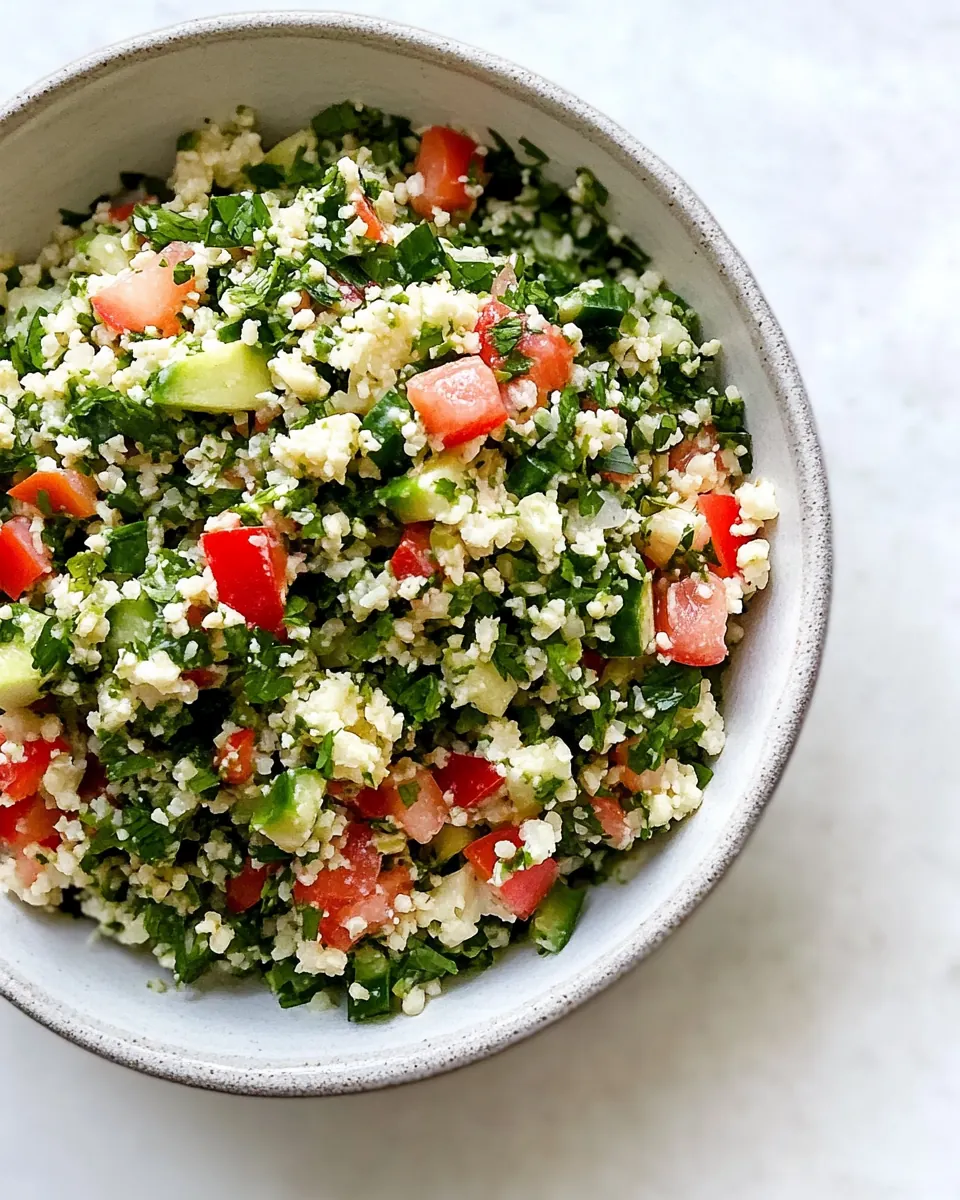
Cauliflower Tabbouleh Salad
Cauliflower Tabbouleh Salad arrived in my kitchen the day I decided to swap the usual wheat bulgur for something lighter and more vegetable forward, and I have not looked back since.
That first weekend I was elbow deep in market finds and wanted a salad that felt bright, fresh, and just a little bit rebellious. I loved how the crunchy cauliflower transformed into tiny pearls when pulsed in the food processor, soaking up a punchy dressing of extra virgin olive oil and lemon juice. Each bite had a contrast I craved, crisp cucumber, juicy tomato, and an herbaceous lift from a generous pile of parsley and mint.
I remember serving a bowl at a small gathering, and the room went quiet for a beat before the compliments started. People expected a traditional tabbouleh vibe and were pleasantly surprised by the lighter texture and fresh aroma. Over time I adjusted the garlic and salt to suit different palates, and learned that this salad is forgiving, which I appreciate after long days when I want big flavor with little fuss.
What keeps me coming back is how well this recipe adapts to the seasons, yet stays true to the idea of bright, herbal salad. I often double the parsley because its grassy notes marry beautifully with the lemon, and I never skip the tiny bit of minced garlic that gives the dressing an edge. If you want color and crunch that feels both modern and rooted in tradition, this version of Cauliflower Tabbouleh Salad is worth making again and again.
Recipe Snapshot
10 mins
10 mins
Easy
150 kcal
Mediterranean
Vegan, Gluten-Free
Salads
Food processor, Large bowl
Why This Cauliflower Tabbouleh Salad Shines
Fresh and vegetable forward
I love that Cauliflower Tabbouleh Salad leans on fresh produce as the star. The riced cauliflower gives a satisfying mouthfeel that mimics grains without the heaviness, so you get volume and texture while keeping things light. The combination of herbs and crisp vegetables makes every forkful lively, and I often reach for this salad when I want something that feels restorative after a busy week.
Bold but simple dressing
The dressing, a straightforward mix of extra virgin olive oil, lemon juice, and minced garlic, is where this recipe shines. It is bold enough to coat the riced cauliflower and vegetables, yet simple enough to let the herbs sing. I rely on this formula because it enhances natural flavors without masking them, and it is so quick to whisk together that it encourages me to make the salad more often.
Versatile for many occasions
Whether you need a bright side for weeknight dinners or a stunning addition to a weekend mezze spread, Cauliflower Tabbouleh Salad fits the bill. I love bringing it to potlucks because it travels well when chilled, and it pairs beautifully with things like hummus or grilled vegetables. Its adaptability makes it a go to for casual lunches and more festive gatherings alike.
Easy to prep and store
This salad is practically designed for leftovers that improve over time. The flavors meld in the fridge, and after a few hours the herbs permeate the riced cauliflower so each bite becomes more integrated. I appreciate recipes that reward patience, and this one keeps for several days when stored airtight, making weekday lunches effortless.
Main Ingredients for Cauliflower Tabbouleh Salad
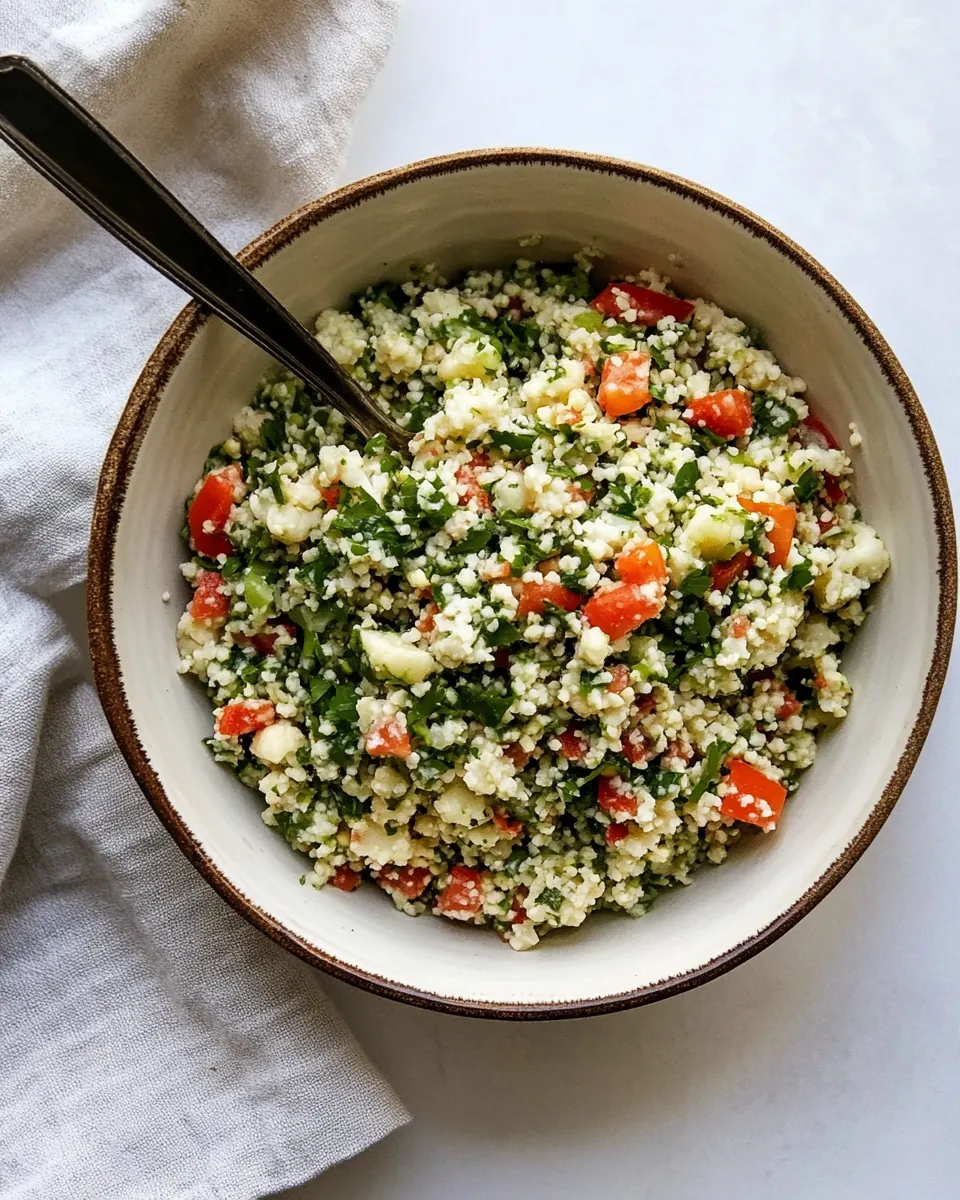
These ingredients are deliberately chosen to replicate classic tabbouleh flavors while keeping the dish grain free. The key players are the riced cauliflower that offers body and texture, the bright citrus from lemon juice, and the duo of parsley and mint which provide the herbal backbone. Each component supports the others so the salad is balanced, refreshing, and full of contrasting textures.
- 1 pound cauliflower florets: Roasted or lightly steamed to soften while retaining some bite, provides the bulk and mild nutty base for the salad and stands in for traditional bulgur in tabbouleh. Breaks into small rice-like pieces to soak up the dressing and mingle with herbs for texture contrast.
- 2 tablespoons extra virgin olive oil: Adds fruity, peppery richness and helps emulsify the lemon dressing; a little coats the cauliflower and vegetables to bring flavors together. Uses healthy monounsaturated fats to carry aromatic compounds from herbs and garlic.
- 3 tablespoons fresh lemon juice: Brightens and acidifies the salad, balancing the oil and enhancing herb flavors while cutting through the cauliflower's earthiness. Fresh lemon juice also helps slightly soften vegetables and lift the overall brightness of the dish.
- 1 garlic clove, minced: Pours in pungent aromatics and savory depth when minced finely, infusing the dressing and salad with a sharp, garlicky note. Adds complexity and pairs especially well with lemon and parsley to create a classic Mediterranean flavor profile.
- 1 teaspoon fine sea salt, plus more to taste: Season gently to enhance all components while drawing out juices from vegetables; initial addition provides baseline seasoning with room to adjust before serving. Fine sea salt also helps break down and tenderize vegetables subtly while amplifying herb aromas.
- 1 cucumber, chopped: Offers cool crunch and a refreshing, watery texture that contrasts with the cauliflower, contributing mild sweetness and a bright, crisp bite. Chopped cucumber also adds a pleasant mouthfeel and balances richer components in the salad.
- 1 large tomato, chopped (see notes): Contributes juicy acidity and subtle sweetness when chopped, adding color and a fresh tomato flavor that complements herbs and lemon. Choosing a firm, ripe tomato prevents excess wateriness while supplying pleasant juiciness to the mixture.
- 3 green onions, chopped: Supplies mild oniony flavor and crunchy texture when sliced, offering a sweeter, gentler bite than raw red onion and blending smoothly with herbs and dressing. Green onions also add visual contrast and a delicate sharpness throughout the salad.
- 1 cup fresh parsley, finely chopped: Provides the dominant herbaceous backbone with bright, slightly bitter, and citrusy notes; finely chopping ensures even distribution and maximum surface area for flavor release. Parsley also lends freshness and traditional tabbouleh character while pairing seamlessly with lemon and olive oil.
- 1/4 cup fresh mint, chopped: Contributes cooling, sweet, and slightly pungent minty notes that elevate the salad's freshness and create aromatic lift. Chopped mint complements the parsley to produce the classic fragrant herb combination typical of tabbouleh-style salads.
Cauliflower Tabbouleh Salad Instructions
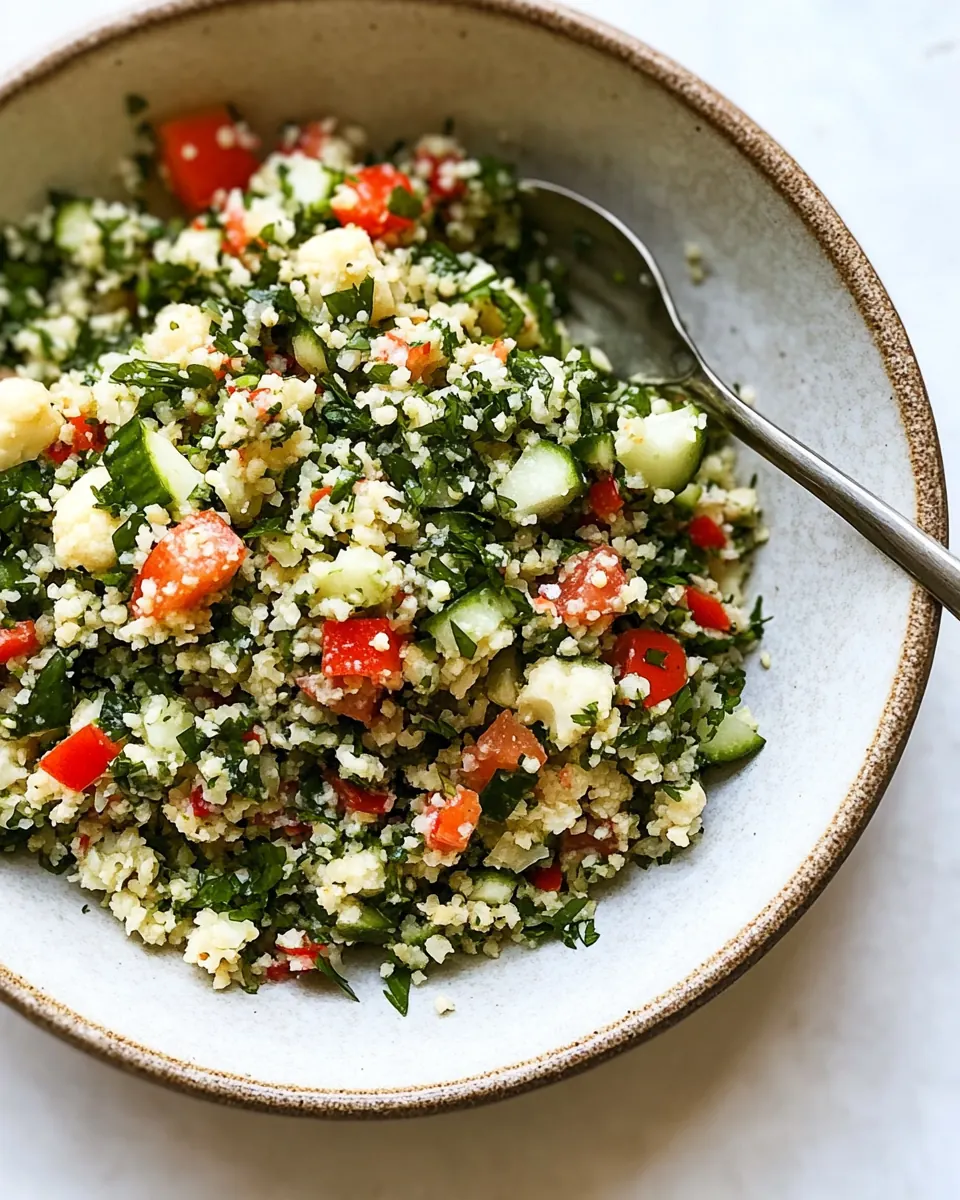
This salad comes together quickly once the cauliflower is riced, and the technique is forgiving. The directions below walk you through ricing, dressing, and combining so the texture and flavors develop beautifully. Take your time with the pulse and tasting steps so the seasoning lands just right.
- Add the cauliflower to a food processor fitted with an 'S' blade. Secure the lid and process briefly, just until the cauliflower looks crumbly and resembles rice. Set it aside.: The smell at this stage is mild, a fresh green scent with a faint cruciferous note, and the sound of the processor pulsing is a quick, rhythmic staccato. You want to aim for tiny, rice like grains that hold their shape, not a paste, because intact bits will give you the pleasant chew and a surface that catches dressing. A common error is over processing, which makes a wet, mushy texture that does not resemble tabbouleh; pulse in short bursts, checking after each set. If you notice any large florets, give one or two additional short pulses. When you scoop a spoonful it should feel airy and separate rather than clumping together, and this texture will allow the lemon juice and olive oil to distribute evenly across many small pieces. If your processor is small, work in batches so each piece gets uniform processing. Let the riced cauliflower rest briefly in a bowl so any large bits settle while you prepare the dressing.
- In a large bowl, combine the olive oil, lemon juice, garlic, and salt. Then pour in the riced cauliflower, cucumber, tomato, green onion, parsley, and fresh mint. Stir well so everything is well coated in the dressing.: Right away you will notice the aroma of garlic and citrus as the dressing emulsifies lightly when whisked. The visual is gorgeous, with green herbs and colorful vegetables contrasted against the pale riced cauliflower . Use a large bowl so you can toss gently without bruising the herbs. Stirring should feel smooth, and you should see tiny droplets of dressing clinging to the grains of cauliflower , which indicates good coating. A typical misstep here is over mixing aggressively, which can tear the herbs and release excess moisture; fold gently so everything remains distinct. If the mixture seems dry, add a splash more extra virgin olive oil or a squeeze of lemon juice , tasting as you go. The salad should look glossy but not drenched, and the herbs should remain lively and green rather than limp.
- Taste the mixture and season with additional salt or lemon juice, as needed. (I usually add another 1/2 teaspoon of salt, but this will vary depending on the size of your veggies.): This tasting moment is where the salad comes together, and you should focus on balance, not just saltiness. The first thing to notice is acidity from the lemon juice , then the savory lift from the garlic and salt , and finally the freshness of the herbs. Adjust in small increments, letting the flavors settle a few moments before tasting again because the herbs will continue to infuse. One mistake is oversalting in a single addition; instead, add small amounts and re taste. If the salad lacks brightness, add a tiny squeeze more lemon juice ; if it tastes flat, a pinch more salt will sharpen it. The goal is lively, layered flavor where no single note dominates.
- Serve this salad right away, or let it marinate in an airtight container in the fridge. It will keep well for up to 5 days in the fridge and pairs perfectly with hummus, falafel, and more.: When served immediately the texture is crisp and the herbs are vivid, with a fresh citrus perfume. If you let it rest, the flavors integrate and the cauliflower softens slightly as it absorbs the dressing, producing a more cohesive bite. Storing in an airtight container preserves brightness, but be aware of odor transfer in the fridge as raw cauliflower can take on strong aromas; wrap tightly. A common oversight is leaving it at room temperature for extended periods; keep it chilled if not eaten soon. When reheating is not needed, serve cold or at a gentle room temperature so the herbal notes remain pronounced. The salad pairs wonderfully with Mediterranean dishes and makes a lovely, healthy make ahead option for meals throughout the week.
Making Adjustments
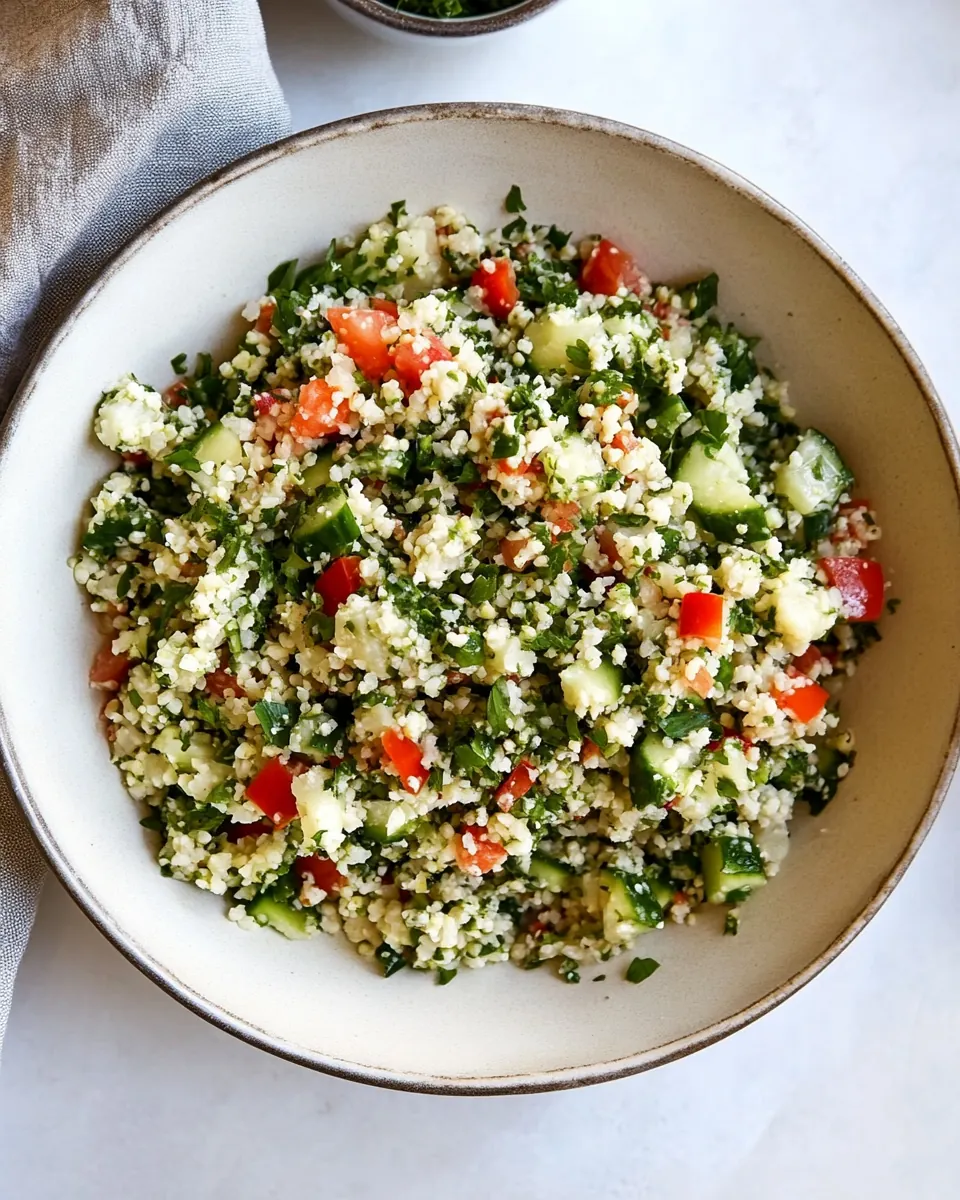
This section helps you tailor Cauliflower Tabbouleh Salad while keeping its bright, herb forward spirit. Below are practical suggestions for texture, seasoning, and storage so you can make the salad suit your taste and schedule.
- Adjust the herb ratio. If you prefer a greener, more parsley forward profile, increase the amount of parsley modestly while keeping the mint at the stated amount so the salad stays balanced. Finely chop herbs for even distribution and toss gently to avoid bruising.
- Control moisture from tomatoes. If your tomato is particularly juicy, remove seeds or use halved cherry tomatoes to reduce water in the salad. Drain seeded pieces briefly on a paper towel before adding to prevent diluting the dressing.
- Mild garlic option. If raw garlic is too assertive, grate it or smash and let it sit with the lemon juice for a few minutes to mellow its sharpness before mixing with the oil and vegetables.
- Make ahead timing. You can prepare the riced cauliflower a day in advance and keep it refrigerated, then toss with herbs and dressing shortly before serving to maintain optimal texture.
- Boost richness. For a silkier mouthfeel, add an extra teaspoon of extra virgin olive oil when tossing, tasting afterward to ensure it does not overwhelm the herbs.
Serving This Cauliflower Tabbouleh Salad
Cauliflower Tabbouleh Salad is versatile on the plate, offering both bright contrast and refreshing palate cleanses. Below are thoughtful serving suggestions, suitable pairings, and storage practices to get the most from this salad.
- As a side for Mediterranean meals. Serve chilled alongside dishes like grilled vegetables or small plates to provide a fresh herbal counterpoint that refreshes the palate.
- For packed lunches. Keep the salad chilled in an airtight container and place in an insulated bag, bearing in mind that cauliflower can develop a strong aroma when stored in the fridge for long periods.
- At gatherings and potlucks. Present in a wide shallow bowl so the herbs and colors are visible, and offer lemon wedges on the side for guests to add extra brightness.
- Seasonal pairings. In spring, pair with young greens and radishes for a crisp plate; in warmer months, complement with grilled vegetables and light proteins for balanced plates.
- Storage tips. Store in an airtight container for up to five days; expect the texture to soften and flavors to meld, which many people prefer after a day of marinating.
FAQ
Conclusion
This Cauliflower Tabbouleh Salad is special because it captures the bright, herb forward soul of traditional tabbouleh while using riced cauliflower for a lighter, grain free texture. Give it a try and you might find it becomes a regular side or make ahead favorite in your rotation. It is forgiving, quick to assemble, and delivers bold flavor with minimal fuss, making it ideal for busy evenings or casual entertaining.
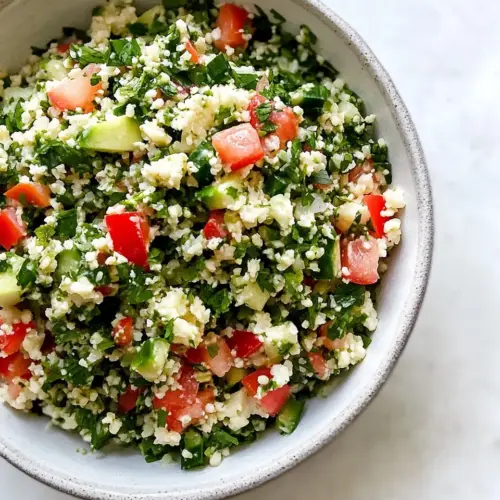
Cauliflower Tabbouleh Salad
Equipment
- Food Processor
- Large Bowl
Ingredients
- 1 pound cauliflower florets Roasted or lightly steamed to soften while retaining some bite, provides the bulk and mild nutty base for the salad and stands in for traditional bulgur in tabbouleh. Breaks into small rice-like pieces to soak up the dressing and mingle with herbs for texture contrast.
- 2 tablespoons extra virgin olive oil Adds fruity, peppery richness and helps emulsify the lemon dressing; a little coats the cauliflower and vegetables to bring flavors together. Uses healthy monounsaturated fats to carry aromatic compounds from herbs and garlic.
- 3 tablespoons fresh lemon juice Brightens and acidifies the salad, balancing the oil and enhancing herb flavors while cutting through the cauliflower's earthiness. Fresh lemon juice also helps slightly soften vegetables and lift the overall brightness of the dish.
- 1 garlic clove, minced Pours in pungent aromatics and savory depth when minced finely, infusing the dressing and salad with a sharp, garlicky note. Adds complexity and pairs especially well with lemon and parsley to create a classic Mediterranean flavor profile.
- 1 teaspoon fine sea salt, plus more to taste Season gently to enhance all components while drawing out juices from vegetables; initial addition provides baseline seasoning with room to adjust before serving. Fine sea salt also helps break down and tenderize vegetables subtly while amplifying herb aromas.
- 1 cucumber, chopped Offers cool crunch and a refreshing, watery texture that contrasts with the cauliflower, contributing mild sweetness and a bright, crisp bite. Chopped cucumber also adds a pleasant mouthfeel and balances richer components in the salad.
- 1 large tomato, chopped (see notes) Contributes juicy acidity and subtle sweetness when chopped, adding color and a fresh tomato flavor that complements herbs and lemon. Choosing a firm, ripe tomato prevents excess wateriness while supplying pleasant juiciness to the mixture.
- 3 green onions, chopped Supplies mild oniony flavor and crunchy texture when sliced, offering a sweeter, gentler bite than raw red onion and blending smoothly with herbs and dressing. Green onions also add visual contrast and a delicate sharpness throughout the salad.
- 1 cup fresh parsley, finely chopped Provides the dominant herbaceous backbone with bright, slightly bitter, and citrusy notes; finely chopping ensures even distribution and maximum surface area for flavor release. Parsley also lends freshness and traditional tabbouleh character while pairing seamlessly with lemon and olive oil.
- 1/4 cup fresh mint, chopped Contributes cooling, sweet, and slightly pungent minty notes that elevate the salad's freshness and create aromatic lift. Chopped mint complements the parsley to produce the classic fragrant herb combination typical of tabbouleh-style salads.
Instructions
- Add the cauliflower to a food processor fitted with an 'S' blade. Secure the lid and process briefly, just until the cauliflower looks crumbly and resembles rice. Set it aside.: The smell at this stage is mild, a fresh green scent with a faint cruciferous note, and the sound of the processor pulsing is a quick, rhythmic staccato. You want to aim for tiny, rice like grains that hold their shape, not a paste, because intact bits will give you the pleasant chew and a surface that catches dressing. A common error is over processing, which makes a wet, mushy texture that does not resemble tabbouleh; pulse in short bursts, checking after each set. If you notice any large florets, give one or two additional short pulses. When you scoop a spoonful it should feel airy and separate rather than clumping together, and this texture will allow the lemon juice and olive oil to distribute evenly across many small pieces. If your processor is small, work in batches so each piece gets uniform processing. Let the riced cauliflower rest briefly in a bowl so any large bits settle while you prepare the dressing.
- In a large bowl, combine the olive oil, lemon juice, garlic, and salt. Then pour in the riced cauliflower, cucumber, tomato, green onion, parsley, and fresh mint. Stir well so everything is well coated in the dressing.: Right away you will notice the aroma of garlic and citrus as the dressing emulsifies lightly when whisked. The visual is gorgeous, with green herbs and colorful vegetables contrasted against the pale riced cauliflower . Use a large bowl so you can toss gently without bruising the herbs. Stirring should feel smooth, and you should see tiny droplets of dressing clinging to the grains of cauliflower , which indicates good coating. A typical misstep here is over mixing aggressively, which can tear the herbs and release excess moisture; fold gently so everything remains distinct. If the mixture seems dry, add a splash more extra virgin olive oil or a squeeze of lemon juice , tasting as you go. The salad should look glossy but not drenched, and the herbs should remain lively and green rather than limp.
- Taste the mixture and season with additional salt or lemon juice, as needed. (I usually add another 1/2 teaspoon of salt, but this will vary depending on the size of your veggies.): This tasting moment is where the salad comes together, and you should focus on balance, not just saltiness. The first thing to notice is acidity from the lemon juice , then the savory lift from the garlic and salt , and finally the freshness of the herbs. Adjust in small increments, letting the flavors settle a few moments before tasting again because the herbs will continue to infuse. One mistake is oversalting in a single addition; instead, add small amounts and re taste. If the salad lacks brightness, add a tiny squeeze more lemon juice ; if it tastes flat, a pinch more salt will sharpen it. The goal is lively, layered flavor where no single note dominates.
- Serve this salad right away, or let it marinate in an airtight container in the fridge. It will keep well for up to 5 days in the fridge and pairs perfectly with hummus, falafel, and more.: When served immediately the texture is crisp and the herbs are vivid, with a fresh citrus perfume. If you let it rest, the flavors integrate and the cauliflower softens slightly as it absorbs the dressing, producing a more cohesive bite. Storing in an airtight container preserves brightness, but be aware of odor transfer in the fridge as raw cauliflower can take on strong aromas; wrap tightly. A common oversight is leaving it at room temperature for extended periods; keep it chilled if not eaten soon. When reheating is not needed, serve cold or at a gentle room temperature so the herbal notes remain pronounced. The salad pairs wonderfully with Mediterranean dishes and makes a lovely, healthy make ahead option for meals throughout the week.
Notes
- Adjust the herb ratio. If you prefer a greener, more parsley forward profile, increase the amount of parsley modestly while keeping the mint at the stated amount so the salad stays balanced. Finely chop herbs for even distribution and toss gently to avoid bruising.
- Control moisture from tomatoes. If your tomato is particularly juicy, remove seeds or use halved cherry tomatoes to reduce water in the salad. Drain seeded pieces briefly on a paper towel before adding to prevent diluting the dressing.
- Mild garlic option. If raw garlic is too assertive, grate it or smash and let it sit with the lemon juice for a few minutes to mellow its sharpness before mixing with the oil and vegetables.
- Make ahead timing. You can prepare the riced cauliflower a day in advance and keep it refrigerated, then toss with herbs and dressing shortly before serving to maintain optimal texture.
- Boost richness. For a silkier mouthfeel, add an extra teaspoon of extra virgin olive oil when tossing, tasting afterward to ensure it does not overwhelm the herbs.