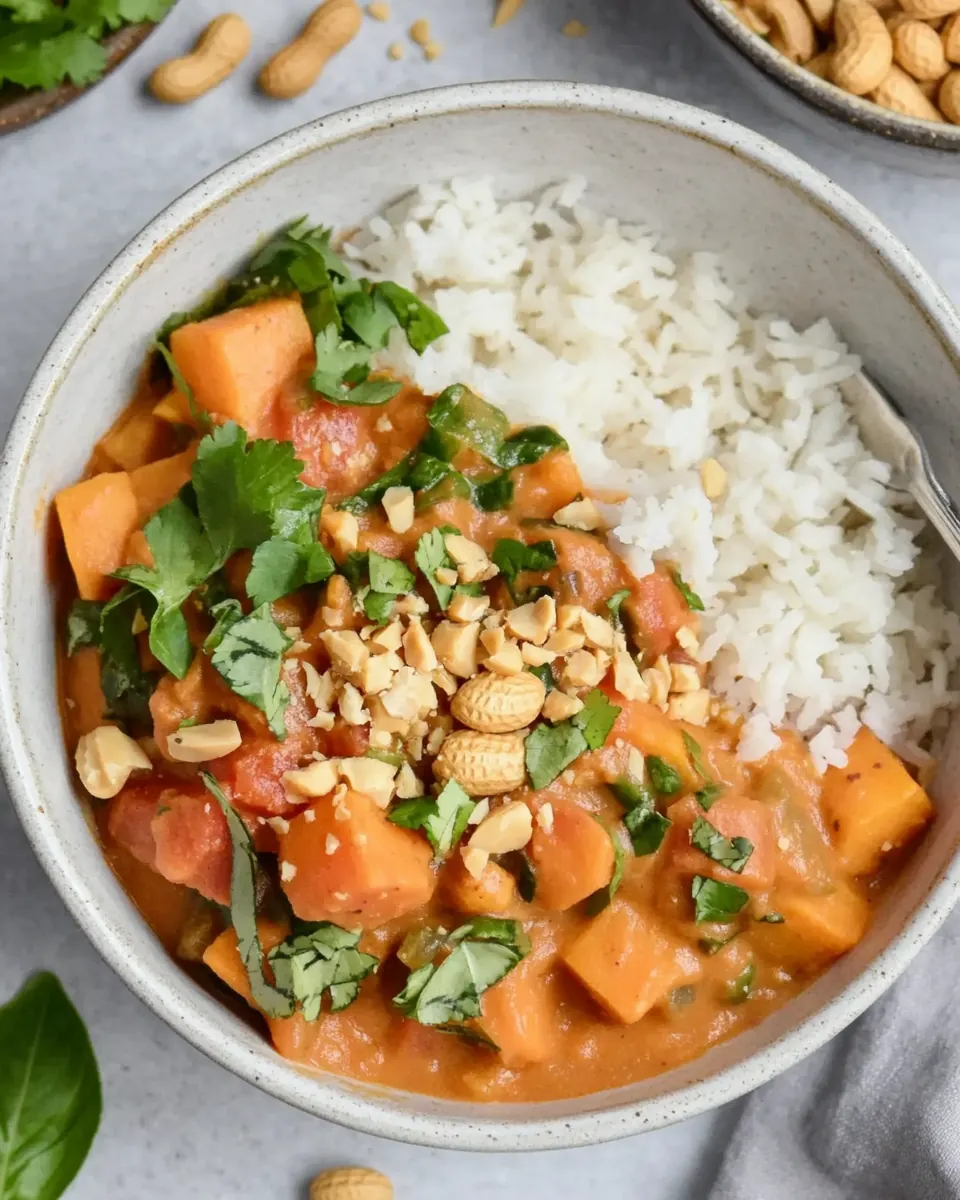
Vegetarian Sweet Potato Peanut Stew
Vegetarian Sweet Potato Peanut Stew is one of those bowls I turn to when I want something both comforting and bright, a simmering pot that smells like home and adventure at once.
On a crisp afternoon last fall I pulled a few sweet potatoes from the pantry, dug through the fridge for a jar of creamy peanut butter, and ended up with a pot that fed us for days. I remember the first spoonful, warm and tangy from tomatoes, with a gentle heat that crept in behind the sweetness. That first batch convinced me this recipe deserved a regular spot in my weeknight rotation.
I love how quickly it comes together. The savory onion and pungent garlic soften and scent the oil, the spices bloom, and the sweet potatoes melt into a silky texture when they finish cooking. Stirring in the peanut butter at the end creates a creamy body without any dairy, and a handful of spinach brightens the whole pot at the last minute. I often spoon it over a scoop of warm brown rice and finish it with crunchy peanuts and a hit of fresh cilantro for contrast.
What I appreciate most is how forgiving it is. If you like bolder heat, add more cayenne, if you like it milder, ease up. The stew adapts to what you have, while still tasting like the same, soulful dish. Every time I make Vegetarian Sweet Potato Peanut Stew it reminds me that simple pantry staples can produce something spectacular and nourishing.
Recipe Snapshot
35 mins
10 mins
25 mins
Easy
400 kcal
American
Gluten-Free, Vegan
Dinner
Medium soup pot or Dutch oven, Spoon or spatula, Knife and cutting board, Measuring spoons
Why You Need This Vegetarian Sweet Potato Peanut Stew
Hearty yet light
I love that this stew manages to be filling without feeling heavy. The combination of starchy sweet potatoes and creamy peanut butter gives body and mouthfeel, while the spinach and tomatoes add lift. It satisfies a hunger for comfort food but leaves you energized afterward.
Fast and weeknight friendly
I turn to this pot when time is short. With a short simmer and pantry staples, you can have a warm bowl in under an hour, ideal for busy evenings when you want something nourishing that does not require fuss.
Layered savory flavors
The way the cumin and coriander bloom in oil and then mingle with tomato and ginger creates depth. Adding peanut butter at the end rounds the acids and spices, producing an almost silky finish that keeps you coming back for another spoonful.
Comforting and customizable
I appreciate how adaptable the stew is. You can keep it strictly vegetarian and still have rich protein from the nuts, or you can add cooked meat to portions for guests who want it. The heat is easy to tweak, and the garnish choices let you change the character of each serving.
Great for leftovers
Leftovers develop more complexity overnight, so I often make a double batch. It reheats beautifully on the stove, the sweet potatoes holding shape while the broth thickens into a cozy, spoonable stew.
Vegetarian Sweet Potato Peanut Stew Shopping List
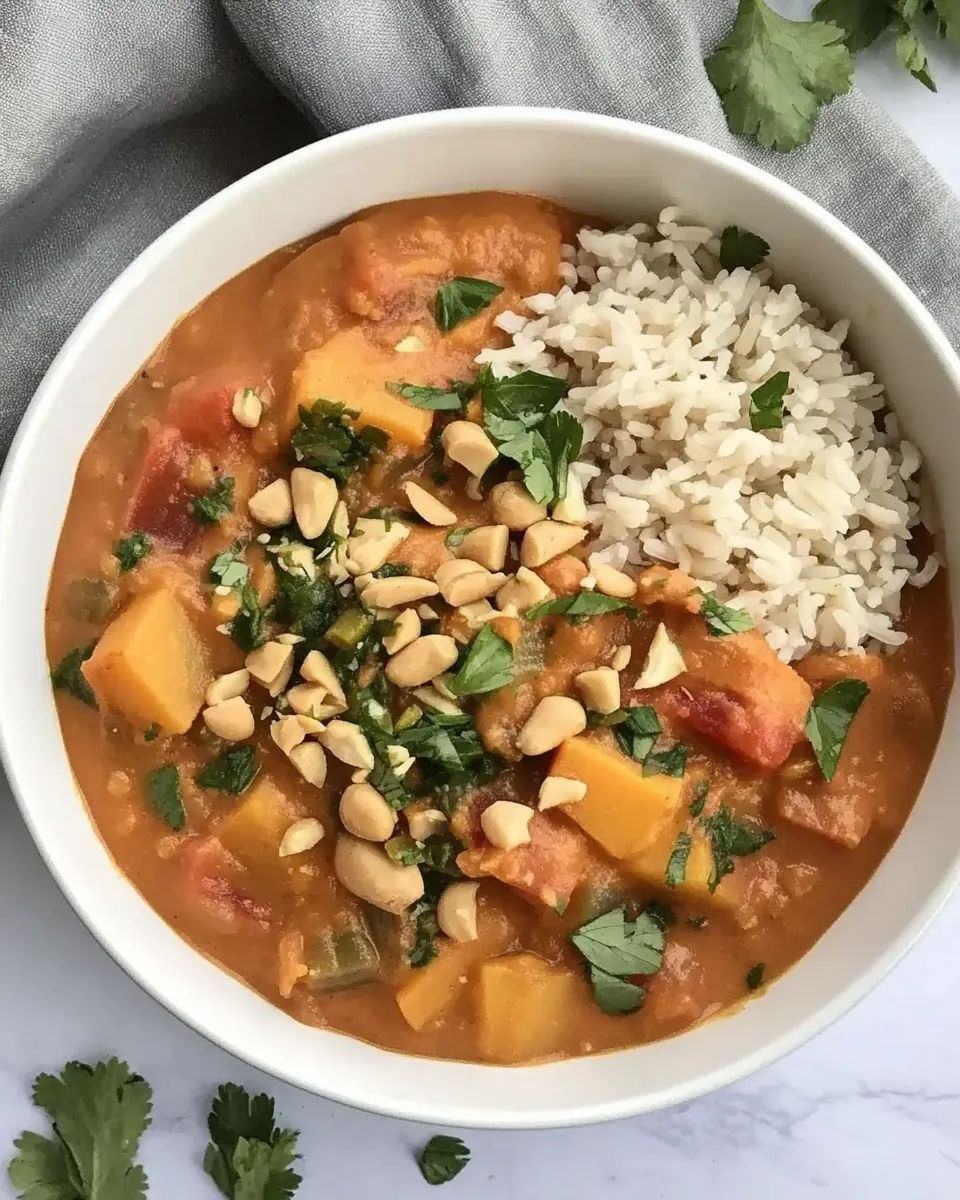
These ingredients are all about balance. The key players are the starchy sweet potatoes for body, the savory aromatics like onion and garlic for depth, and creamy peanut butter for richness. The broth and crushed tomatoes create a comforting liquid base that carries the spices, while spinach and cilantro add freshness at the end.
- 1 tablespoon olive oil: Sauté gently in a skillet to develop flavor and act as the cooking fat for the stew base, providing a silky mouthfeel and helping release aromatics from onions and spices.
- 1 medium yellow onion (diced) (about 2 cups): Render slowly until translucent to build a sweet, savory foundation; diced pieces add body and natural sugars that deepen the stew’s flavor when caramelized.
- 3 medium cloves garlic (minced): Mince finely and cook briefly to release pungent aromatics; garlic contributes a warm, savory backbone that brightens the tomato and peanut notes.
- 2 teaspoons ground cumin: Toast briefly in oil to bloom its warm, earthy aroma and add a smoky, slightly bitter warmth that complements sweet potato and peanut flavors.
- 1 teaspoon ground coriander: Heat briefly alongside cumin to release citrusy, floral notes and a mild earthy complexity that layers with the stew’s other warm spices.
- 4 cups low-sodium vegetable broth: Simmer gently with vegetables and spices to create the liquid base, concentrating flavors while providing savory depth and a low-sodium option to control overall saltiness.
- 15 ounce can crushed tomatoes: Stir in to provide bright acidity and tomato sweetness; crushed tomatoes add body, umami, and a slightly chunky texture that enriches the stew.
- 2 medium sweet potatoes (peeled and diced) (about 2 cups): Cube and simmer until tender to contribute creamy sweetness and hearty texture; sweet potatoes absorb spices and provide complex carbohydrates and natural sugars.
- 1 tablespoon fresh ginger: Grate or mince to infuse the stew with bright, spicy warmth and a fresh zing that balances the richness of peanut butter and tomatoes.
- 1/4 teaspoon ground red cayenne pepper (plus or minus to taste): Sprinkle according to taste to introduce concentrated heat; cayenne provides sharp, lively spice that can be adjusted to suit different heat preferences.
- 1/2 teaspoon kosher salt + more to taste: Season initially to enhance overall flavor profile while allowing for additional adjustments; kosher salt helps accentuate natural flavors without overpowering.
- 1/4 teaspoon freshly ground black pepper + more to taste: Grind freshly and add during cooking or at the end for a sharp, aromatic lift; black pepper contributes subtle heat and depth to the finished stew.
- 1/2 cup creamy peanut butter: Whisk or stir in until smooth to add rich, nutty creaminess and body; peanut butter binds flavors and creates a luscious, slightly sweet-savory sauce.
- 4 cups packed fresh baby spinach: Wilt gently into the hot stew at the end to introduce fresh green color, mild bitterness, and a tender leafy texture that boosts nutrition.
- 2 cups cooked brown rice: Plate as a hearty base beneath the stew or stir in to extend the meal; cooked brown rice offers nutty flavor and satisfying whole-grain substance.
- Fresh cilantro: Garnish chopped to provide bright herbal freshness and a citrusy, slightly peppery note that lifts the rich, savory elements of the stew.
- Chopped salted peanuts: Sprinkle on top for crunchy contrast and additional salty, roasted peanut flavor that echoes the creamy peanut butter and adds texture.
How to Prepare Vegetarian Sweet Potato Peanut Stew

These directions are straightforward, and I like to stay present at the stove so the flavors develop properly. The steps move from cooking the rice to building the stew base, simmering the sweet potatoes, and finishing with creamy peanut butter and wilted spinach. Follow the sensory cues and taste as you go.
- Cook the rice according to package instructions.: As the rice simmers, it should give off a nutty aroma and the grains should become tender but still slightly chewy. Fluff with a fork when done so each spoonful separates, preventing clumping under the stew. A common slip is overcooking to mush, which makes the serving base dense. Keep the lid on while it rests to maintain steam and texture.
- While the rice cooks, make the stew. Set a medium soup pot or Dutch oven over medium-low heat. When hot, add the olive oil and the onion. Cook, stirring occasionally, until softened, 6-8 minutes. Add the garlic, cumin, and coriander and cook, stirring frequently, for 1 minute.: When you set the pot over medium low heat, listen for a gentle shimmer in the oil before adding ingredients, this indicates the pan is ready. The oil will warm and carry aromas; if it smokes, reduce heat. Preheating ensures the onion begins to soften immediately instead of stewing slowly and becoming greasy.
- Add the broth, tomatoes, sweet potatoes, ginger, cayenne, 1/2 teaspoon salt, and 1/4 teaspoon black pepper. Increase heat to high and bring to a boil. Once the stew comes to a boil, reduce heat to low and simmer uncovered until the sweet potatoes are tender, 8-10 minutes.: A heavy bottomed pot distributes heat evenly and prevents hot spots that can scorch the aromatics. You want a consistent, moderate heat that gently draws sweetness from the onion . Using too high heat will brown the onion too quickly and risk burning the garlic later.
- Stir in the peanut butter and the spinach. Stew is done when the peanut butter has distributed and the spinach has wilted, about 2 minutes. Taste and add more salt and pepper if you like.: You should hear a soft sizzle when the diced onion hits the pan and smell a rising sweetness as it softens. Stir occasionally to encourage even color, aiming for translucence rather than deep browning. Rushing this by increasing heat often results in bitter charred edges.
- Serve with a scoop of brown rice and garnish with cilantro and peanuts.: The onion will become glossy and tender, releasing natural sugars that deepen the stew's flavor. Check the texture by pressing a piece between your finger and thumb it should yield easily. If the pan dries, add a splash of broth to deglaze and capture fond, rather than letting bits burn.
- Add the garlic, cumin, and coriander and cook, stirring frequently, for 1 minute: You will smell the spices bloom immediately, turning from flat to aromatic. Keep the mixture moving to prevent the minced garlic from sticking and burning; burning creates unpleasant bitterness. This quick toast unlocks essential oils in the spices, which is key for a layered final flavor.
- Add the broth, tomatoes, sweet potatoes, ginger, cayenne, 1/2 teaspoon salt, and 1/4 teaspoon black pepper: When the liquid hits the pot, there will be a soft hiss and a burst of steam as the ingredients meet heat. Stir to combine everything so the chunks of sweet potatoes are submerged and the spices are evenly distributed. Avoid crowding the pot with overly large pieces which will cook unevenly.
- Increase heat to high and bring to a boil: Raising the heat will create lively bubbling that signals the pot is ready to move into a simmer. Watch for a rolling boil as the stew reaches temperature, then promptly lower heat. Leaving it at a boil for long will break down the sweet potatoes too aggressively and can turn the broth overly thin.
- Once the stew comes to a boil, reduce heat to low and simmer uncovered until the sweet potatoes are tender, 8 to 10 minutes: During simmering you will see gentle bubbles and the aroma will deepen into a comforting, concentrated scent. Test the sweet potatoes with a fork they should offer little resistance. If pieces are still firm at the time listed, continue simmering a few minutes more, as undercooked chunks will alter the mouthfeel.
- Stir in the peanut butter and the spinach: As you whisk in the creamy peanut butter , the broth will thicken and take on a glossy sheen. The spinach will wilt quickly, turning bright green; this fresh color signals it is ready. If the peanut butter does not incorporate smoothly, a small splash of warm broth helps it emulsify instead of separating into oily pockets.
- Stew is done when the peanut butter has distributed and the spinach has wilted, about 2 minutes: You'll notice a rounded mouthfeel and integrated flavors at this point, with the spinach softened but still vibrant. Taste and adjust seasoning incrementally, adding more salt or black pepper as needed. A common error is over seasoning early rather than tasting after the peanut butter mellows the flavors.
- Taste and add more salt and pepper if you like: Use a small spoon to ensure you are balancing acidity, salt, and heat. The flavors should sing together not compete, and a tiny adjustment often finishes the bowl perfectly. Avoid dumping large amounts of salt which can be hard to correct once mixed in.
- Serve with a scoop of brown rice and garnish with cilantro and peanuts: The hot stew poured over fluffy brown rice will steam and meld, creating comforting contrasts in texture. Finish with chopped salted peanuts for crunch and sprigs of fresh cilantro for lift. Serve immediately so the peanuts stay crisp and the herbs keep their bright flavor.
Recipe Variations about Vegetarian Sweet Potato Peanut Stew
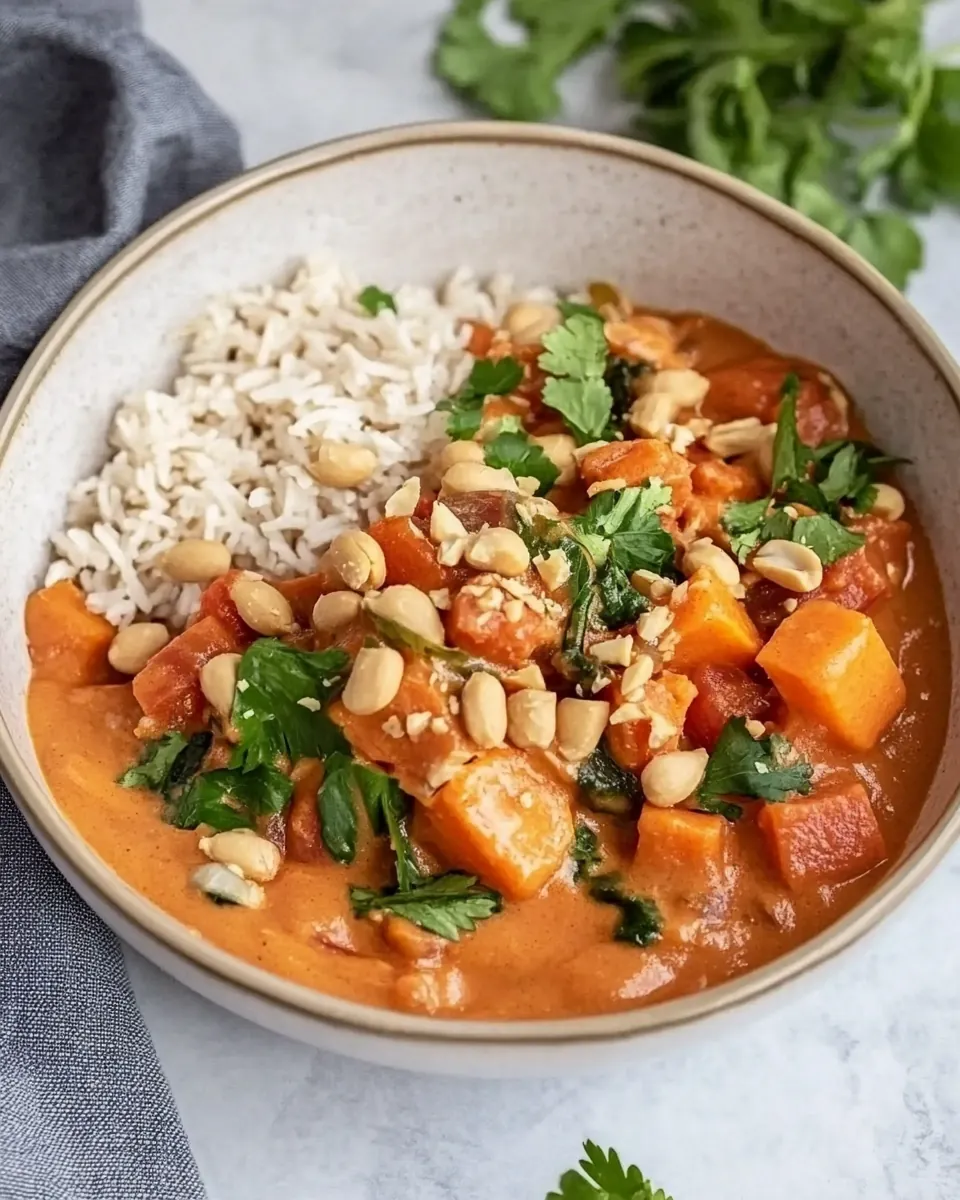
This stew is flexible and welcomes small adjustments to suit your pantry and palate. Below are practical variations and ideas to tailor texture, protein, and spice level while keeping the core identity intact.
- Make it heartier by stirring in additional cooked grains or legumes to increase protein and bulk without changing flavor profile.
- Adjust the heat by varying the cayenne level or adding a pinch of smoked paprika for a deeper, less sharp heat character.
- Nut swap caution try almond butter only if peanut allergy is a concern, but be aware the final taste and creaminess will differ slightly.
- Portion protein for mixed diners by adding cooked shredded meat to individual bowls if non vegetarian guests prefer it, keeping the main pot vegetarian.
- Make ahead the stew stores well in the fridge and often tastes even better the next day, simply reheat gently on the stove and add a splash of broth if too thick.
- Garnish creativity swap cilantro for thinly sliced scallions or add a wedge of lime for a citrusy brightness on top of each bowl.
What Goes Well With This Vegetarian Sweet Potato Peanut Stew
This stew pairs well with simple, fresh additions that complement its creamy, slightly spicy character. Below are ideas for sides, occasions, storage, and seasonal serving notes to help you plan meals around the pot.
- Serve over grains like warm brown rice or quinoa for a complete meal that soaks up the stew and adds texture.
- Fresh herb finish such as chopped cilantro gives a bright contrast, perfect for dinner or a casual lunch.
- Crunchy garnish of chopped salted peanuts provides textural contrast and reinforces the peanut flavor for special occasions or weeknight meals.
- Occasion friendly This stew is great for cozy fall dinners, family style weeknight meals, or for Ramadan if you want a nourishing, warming option to break fast with sustained energy.
- Storage tips Refrigerate leftovers in an airtight container for up to four days, and reheat gently on the stove with a splash of broth to loosen the texture.
- Batch cooking make a double batch for meal prep week, portion into individual containers with rice for easy grab and go dinners or lunches.
- Seasonal notes it shines in fall and winter when sweet potatoes are at their peak, providing comforting warmth and seasonal sweetness.
FAQ
Conclusion
This Vegetarian Sweet Potato Peanut Stew stands out for its creamy texture, layered spices, and comforting balance of sweet and savory. It comes together quickly using pantry staples and finishes with vibrant herbs and crunchy peanuts for contrast. I encourage you to give it a try on a busy weeknight or a cool weekend afternoon; it rewards simple effort with deep, satisfying flavor and makes reliable leftovers that taste even better the next day. Serve it over warm rice, top with fresh cilantro, and enjoy a bowl that feels nourishing and special.

Vegetarian Sweet Potato Peanut Stew
Equipment
- Medium soup pot or Dutch oven
- Spoon or spatula
- Knife and cutting board
- Measuring Spoons
Ingredients
- 1 tablespoon olive oil Sauté gently in a skillet to develop flavor and act as the cooking fat for the stew base, providing a silky mouthfeel and helping release aromatics from onions and spices.
- 1 medium yellow onion (diced) (about 2 cups) Render slowly until translucent to build a sweet, savory foundation; diced pieces add body and natural sugars that deepen the stew’s flavor when caramelized.
- 3 medium cloves garlic (minced) Mince finely and cook briefly to release pungent aromatics; garlic contributes a warm, savory backbone that brightens the tomato and peanut notes.
- 2 teaspoons ground cumin Toast briefly in oil to bloom its warm, earthy aroma and add a smoky, slightly bitter warmth that complements sweet potato and peanut flavors.
- 1 teaspoon ground coriander Heat briefly alongside cumin to release citrusy, floral notes and a mild earthy complexity that layers with the stew’s other warm spices.
- 4 cups low-sodium vegetable broth Simmer gently with vegetables and spices to create the liquid base, concentrating flavors while providing savory depth and a low-sodium option to control overall saltiness.
- 15 -ounce can crushed tomatoes Stir in to provide bright acidity and tomato sweetness; crushed tomatoes add body, umami, and a slightly chunky texture that enriches the stew.
- 2 medium sweet potatoes (peeled and diced) (about 2 cups) Cube and simmer until tender to contribute creamy sweetness and hearty texture; sweet potatoes absorb spices and provide complex carbohydrates and natural sugars.
- 1 tablespoon fresh ginger Grate or mince to infuse the stew with bright, spicy warmth and a fresh zing that balances the richness of peanut butter and tomatoes.
- 1/4 teaspoon ground red cayenne pepper (plus or minus to taste) Sprinkle according to taste to introduce concentrated heat; cayenne provides sharp, lively spice that can be adjusted to suit different heat preferences.
- 1/2 teaspoon kosher salt + more to taste Season initially to enhance overall flavor profile while allowing for additional adjustments; kosher salt helps accentuate natural flavors without overpowering.
- 1/4 teaspoon freshly ground black pepper + more to taste Grind freshly and add during cooking or at the end for a sharp, aromatic lift; black pepper contributes subtle heat and depth to the finished stew.
- 1/2 cup creamy peanut butter Whisk or stir in until smooth to add rich, nutty creaminess and body; peanut butter binds flavors and creates a luscious, slightly sweet-savory sauce.
- 4 cups packed fresh baby spinach Wilt gently into the hot stew at the end to introduce fresh green color, mild bitterness, and a tender leafy texture that boosts nutrition.
- 2 cups cooked brown rice Plate as a hearty base beneath the stew or stir in to extend the meal; cooked brown rice offers nutty flavor and satisfying whole-grain substance.
- Fresh cilantro Garnish chopped to provide bright herbal freshness and a citrusy, slightly peppery note that lifts the rich, savory elements of the stew.
- Chopped salted peanuts Sprinkle on top for crunchy contrast and additional salty, roasted peanut flavor that echoes the creamy peanut butter and adds texture.
Instructions
- Cook the rice according to package instructions.: As the rice simmers, it should give off a nutty aroma and the grains should become tender but still slightly chewy. Fluff with a fork when done so each spoonful separates, preventing clumping under the stew. A common slip is overcooking to mush, which makes the serving base dense. Keep the lid on while it rests to maintain steam and texture.
- While the rice cooks, make the stew. Set a medium soup pot or Dutch oven over medium-low heat. When hot, add the olive oil and the onion. Cook, stirring occasionally, until softened, 6-8 minutes. Add the garlic, cumin, and coriander and cook, stirring frequently, for 1 minute.: When you set the pot over medium low heat, listen for a gentle shimmer in the oil before adding ingredients, this indicates the pan is ready. The oil will warm and carry aromas; if it smokes, reduce heat. Preheating ensures the onion begins to soften immediately instead of stewing slowly and becoming greasy.
- Add the broth, tomatoes, sweet potatoes, ginger, cayenne, 1/2 teaspoon salt, and 1/4 teaspoon black pepper. Increase heat to high and bring to a boil. Once the stew comes to a boil, reduce heat to low and simmer uncovered until the sweet potatoes are tender, 8-10 minutes.: A heavy bottomed pot distributes heat evenly and prevents hot spots that can scorch the aromatics. You want a consistent, moderate heat that gently draws sweetness from the onion . Using too high heat will brown the onion too quickly and risk burning the garlic later.
- Stir in the peanut butter and the spinach. Stew is done when the peanut butter has distributed and the spinach has wilted, about 2 minutes. Taste and add more salt and pepper if you like.: You should hear a soft sizzle when the diced onion hits the pan and smell a rising sweetness as it softens. Stir occasionally to encourage even color, aiming for translucence rather than deep browning. Rushing this by increasing heat often results in bitter charred edges.
- Serve with a scoop of brown rice and garnish with cilantro and peanuts.: The onion will become glossy and tender, releasing natural sugars that deepen the stew's flavor. Check the texture by pressing a piece between your finger and thumb it should yield easily. If the pan dries, add a splash of broth to deglaze and capture fond, rather than letting bits burn.
- Add the garlic, cumin, and coriander and cook, stirring frequently, for 1 minute: You will smell the spices bloom immediately, turning from flat to aromatic. Keep the mixture moving to prevent the minced garlic from sticking and burning; burning creates unpleasant bitterness. This quick toast unlocks essential oils in the spices, which is key for a layered final flavor.
- Add the broth, tomatoes, sweet potatoes, ginger, cayenne, 1/2 teaspoon salt, and 1/4 teaspoon black pepper: When the liquid hits the pot, there will be a soft hiss and a burst of steam as the ingredients meet heat. Stir to combine everything so the chunks of sweet potatoes are submerged and the spices are evenly distributed. Avoid crowding the pot with overly large pieces which will cook unevenly.
- Increase heat to high and bring to a boil: Raising the heat will create lively bubbling that signals the pot is ready to move into a simmer. Watch for a rolling boil as the stew reaches temperature, then promptly lower heat. Leaving it at a boil for long will break down the sweet potatoes too aggressively and can turn the broth overly thin.
- Once the stew comes to a boil, reduce heat to low and simmer uncovered until the sweet potatoes are tender, 8 to 10 minutes: During simmering you will see gentle bubbles and the aroma will deepen into a comforting, concentrated scent. Test the sweet potatoes with a fork they should offer little resistance. If pieces are still firm at the time listed, continue simmering a few minutes more, as undercooked chunks will alter the mouthfeel.
- Stir in the peanut butter and the spinach: As you whisk in the creamy peanut butter , the broth will thicken and take on a glossy sheen. The spinach will wilt quickly, turning bright green; this fresh color signals it is ready. If the peanut butter does not incorporate smoothly, a small splash of warm broth helps it emulsify instead of separating into oily pockets.
- Stew is done when the peanut butter has distributed and the spinach has wilted, about 2 minutes: You'll notice a rounded mouthfeel and integrated flavors at this point, with the spinach softened but still vibrant. Taste and adjust seasoning incrementally, adding more salt or black pepper as needed. A common error is over seasoning early rather than tasting after the peanut butter mellows the flavors.
- Taste and add more salt and pepper if you like: Use a small spoon to ensure you are balancing acidity, salt, and heat. The flavors should sing together not compete, and a tiny adjustment often finishes the bowl perfectly. Avoid dumping large amounts of salt which can be hard to correct once mixed in.
- Serve with a scoop of brown rice and garnish with cilantro and peanuts: The hot stew poured over fluffy brown rice will steam and meld, creating comforting contrasts in texture. Finish with chopped salted peanuts for crunch and sprigs of fresh cilantro for lift. Serve immediately so the peanuts stay crisp and the herbs keep their bright flavor.
Notes
- Make it heartier by stirring in additional cooked grains or legumes to increase protein and bulk without changing flavor profile.
- Adjust the heat by varying the cayenne level or adding a pinch of smoked paprika for a deeper, less sharp heat character.
- Nut swap caution try almond butter only if peanut allergy is a concern, but be aware the final taste and creaminess will differ slightly.
- Portion protein for mixed diners by adding cooked shredded meat to individual bowls if non vegetarian guests prefer it, keeping the main pot vegetarian.
- Make ahead the stew stores well in the fridge and often tastes even better the next day, simply reheat gently on the stove and add a splash of broth if too thick.
- Garnish creativity swap cilantro for thinly sliced scallions or add a wedge of lime for a citrusy brightness on top of each bowl.