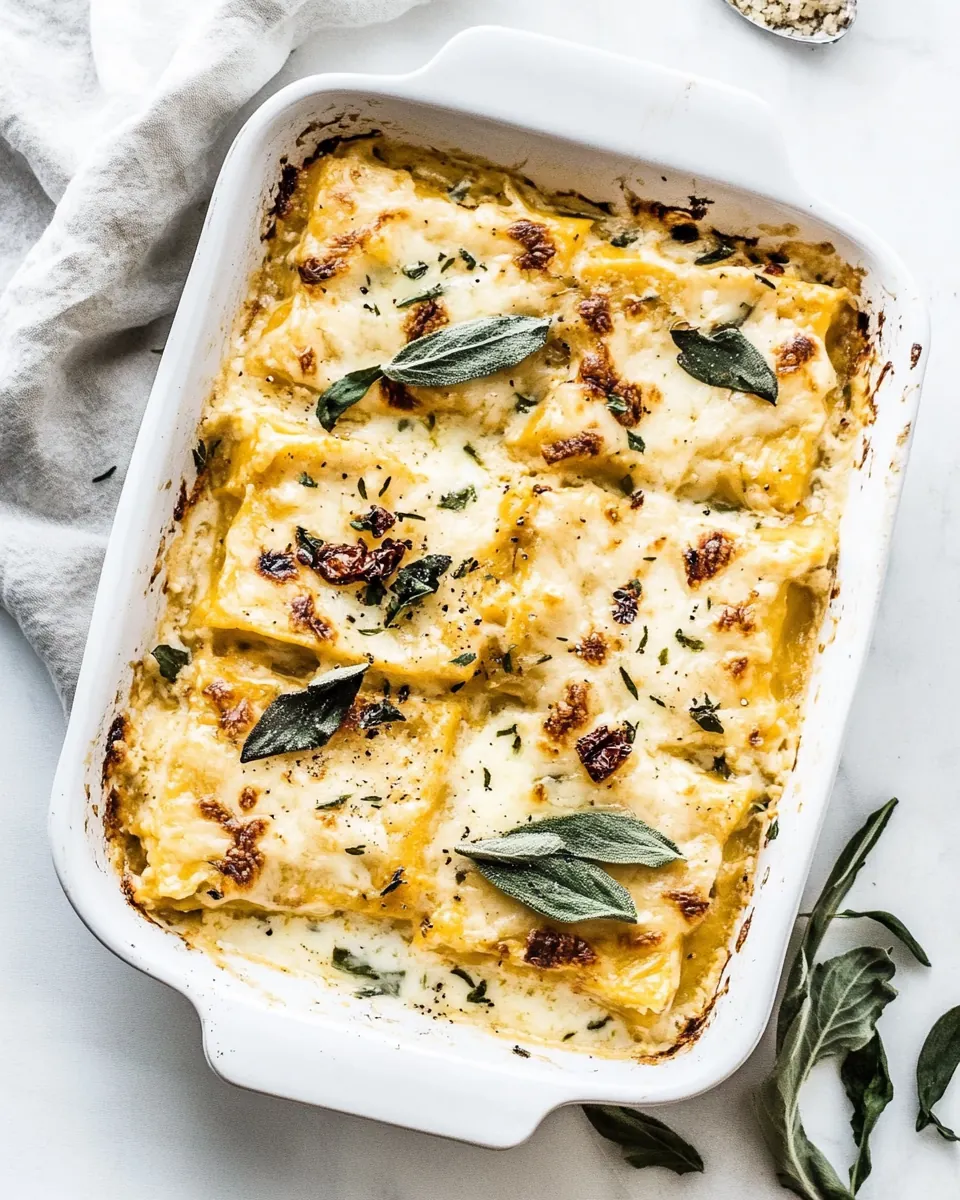
Butternut Squash and Sun Dried Tomato White Lasagna
Butternut Squash and Sun Dried Tomato White Lasagna is the kind of dish that makes cooler evenings feel celebratory, yet comfortable enough for a weeknight. The first time I layered roasted, sweet butternut squash with creamy cheese sauce and tangy sun dried tomatoes, I remember thinking how the textures sang together, each bite yielding a soft, molten interior and a lightly browned top. That initial attempt came together on a rushed autumn afternoon, and I kept tweaking it until it felt like a warm hug on a plate.
I still return to this recipe when I want something that looks fancy without being fussy. It feeds a crowd, but it also reheats beautifully for lunches the next day. I love prepping the components while the house fills with the scent of roasting butternut squash and melting fontina, the aroma turning an ordinary dinner into a small event. Over time I learned which textures matter most, and how a little provolone folded into the filling keeps slices tender yet cohesive.
Recipe Snapshot
2 hr
30 mins
90 mins
Medium
450 kcal
Italian
Gluten-Free, Low FODMAP
Dinner
Oven, 9 x 13 inch baking pan, Baking sheet, Medium saucepan, Mixing bowl
What You’ll Enjoy About This Butternut Squash and Sun Dried Tomato White Lasagna
Comforting, but not heavy
I adore how Butternut Squash and Sun Dried Tomato White Lasagna manages to feel indulgent while remaining surprisingly light. The roasted butternut squash brings natural sweetness, which lets me use a lighter hand with richer cheeses. I want my lasagna to be creamy and satisfying without being cloying, and this version hits that balance.
Layers of complementary textures
One reason I keep making this dish is the play between velvety cheese sauce and the tender, slightly rustic mashed butternut squash. The no boil lasagna noodles make assembly faster, and the toasted pine nuts on top add a bright crunch that keeps every bite interesting. Those contrasts are what make people ask for seconds.
Bright, savory accents
The sun dried tomatoes bring a concentrated tomato flavor that cuts through the richness, while the fresh sage and a hint of nutmeg in the béchamel create an aromatic backbone. I like recipes that have small flavor pivots, where one ingredient nudges the whole dish in a more memorable direction.
Make ahead friendly
I appreciate a recipe that reduces stress on the day of serving. This lasagna can be assembled ahead, refrigerated, and baked when you are ready. For gatherings, I often assemble in the morning and bake just before guests arrive so the cheese is bubbling and the top is golden.
Vegetarian and versatile
Because it is meat free, this lasagna appeals to vegetarians and anyone craving a cozy, vegetable forward meal. I also like that the components are adaptable, so you can shift cheese ratios or swap nuts if needed. Overall, I find it a reliable crowd pleaser that still feels thoughtfully composed.
Everything You Need for Butternut Squash and Sun Dried Tomato White Lasagna
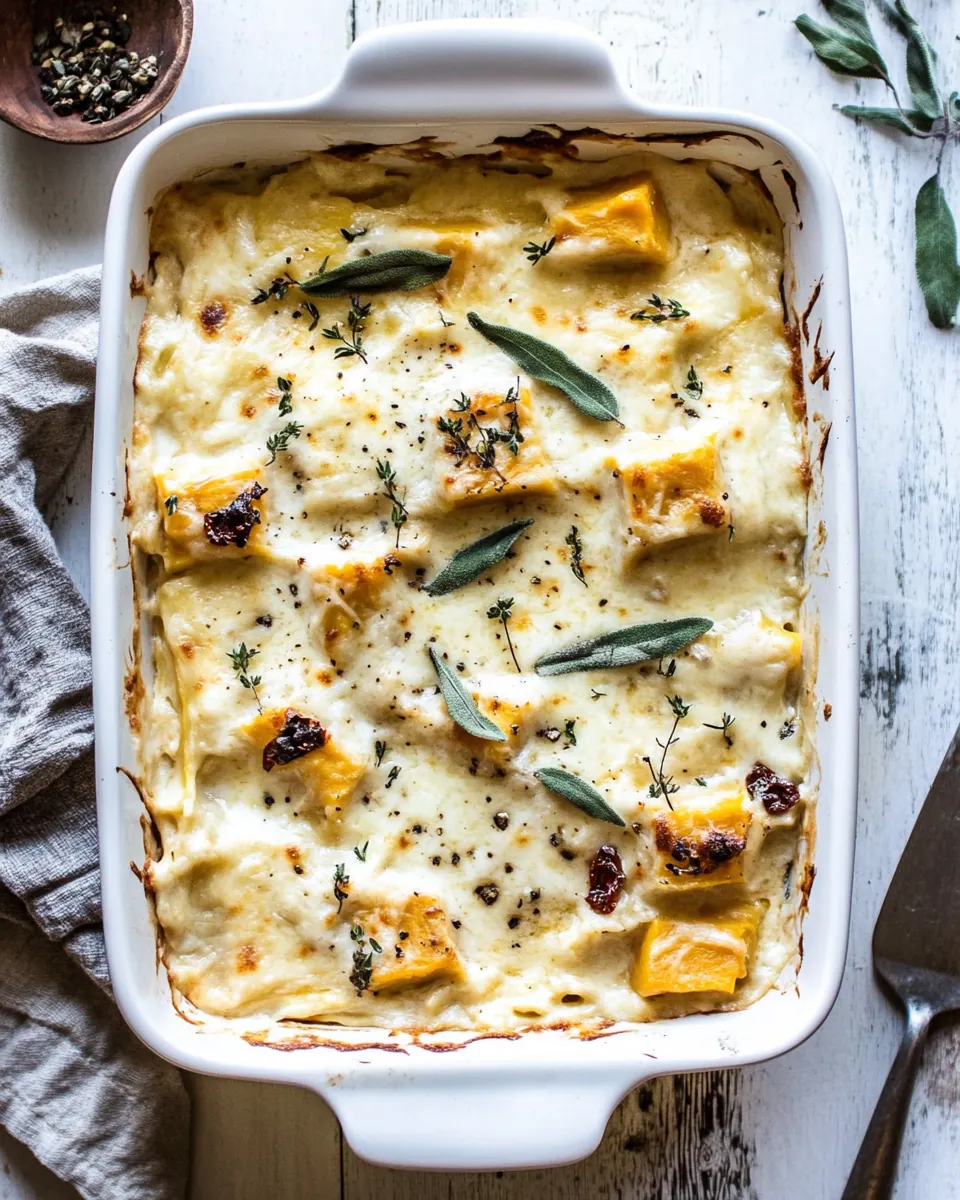
These ingredients are chosen to build layers of creaminess, sweetness, and savory depth. The key players are the roasted butternut squash for body and natural sugar, the rich cheese components for melt and binding, and the sun dried tomatoes for brightness. Together they create a lasagna that is cohesive, comforting, and seasonally appropriate for cooler months.
- 4 cups butternut squash, cubed (about 1 medium squash): Roasted and cubed to provide a sweet, creamy base layer that caramelizes slightly when baked, enhancing depth and natural sugars; contributes body and a velvety texture to the white sauce and filling. Complements savory cheeses and herbs while balancing acidity from sun-dried tomatoes, creating a central vegetable component. Offers visual appeal with warm orange color that contrasts with pale cheeses and noodles.
- 2 tablespoons extra virgin olive oil: Used to sauté and lightly brown aromatics or to finish the sauce for a silky mouthfeel, adding a fruity, peppery backbone to cooked components; helps transfer heat and distribute flavors evenly through the dish. Enhances browning on squash before roasting or pan-roasting and can be used to deglaze pans for richer layers. Provides a subtle Mediterranean note that harmonizes with sun-dried tomatoes and sage.
- 1 tablespoon honey: Added to boost natural sweetness and encourage light caramelization of the squash when roasting, amplifying the vegetable's inherent sugars without overpowering savory elements. Balances the tang of sun-dried tomatoes and the saltiness of cheeses for a more rounded flavor profile. Can be gently mixed into the squash before roasting or into the filling for gentle sweetness.
- kosher salt and pepper: Seasoned generously to enhance all flavors, ensuring balance between sweet squash, rich cheeses, and acidic tomatoes; salt elevates savory notes while pepper adds mild heat and brightness. Applied to squash, sauces, and layers to taste, preventing the dish from tasting flat. Used judiciously during sauce-making and final seasoning to achieve harmony.
- 6 tablespoons butter: Melted to form the base of the béchamel and to enrich fillings, delivering a smooth, decadent mouthfeel and aiding in emulsifying the sauce. Contributes a rich dairy flavor that complements ricotta and other cheeses, while helping to toast flour for a cohesive roux. Adds to the overall silkiness and prevents separation in the white sauce.
- 2 cloves garlic, minced or grated: Sweated briefly in butter or oil to release aromatic sulfur compounds that deepen savory notes; brings a gentle pungency and complexity when minced or grated. Infuses the béchamel and squash layers with subtle warmth without overwhelming delicate cheeses or herbs. Best added early to flavor the fat base and allow mellowing during cooking.
- 1 tablespoon fresh sage, chopped: Chopped and added to provide an earthy, slightly peppery herbaceous accent that pairs especially well with roasted squash and browned butter; offers seasonal depth and aromatic lift. Incorporated into the filling and sprinkled between layers for bursts of savory herbal character. Works especially well when briefly sautéed to release oils.
- 1 tsp dried basil: Sprinkled to contribute a dried, sweet-leaning herb warmth that supports the sage and enhances overall Italian-inspired flavor; adds background Mediterranean aromatics. Blended into the béchamel or mixed with cheeses to ensure even distribution. Used sparingly to avoid overpowering delicate dairy textures.
- 1/4 cup flour: Cooked into a roux to thicken the béchamel, creating a smooth, clingy sauce that binds cheeses and noodles; helps achieve the desired lasagna consistency. Toasted lightly in butter to remove raw flour taste before gradually whisking in milk, ensuring a lump-free sauce. Controls final sauce thickness to prevent watery or gummy layers.
- 3 1/2 cups whole milk: Whisked in gradually to form a creamy, cohesive white sauce that envelops noodles and fillings, lending richness and silkiness to each layer. Provides dairy body and neutral flavor that allows squash, tomatoes, and cheeses to shine while maintaining moisture. Heated gently to avoid scalding and to integrate with the roux for a stable béchamel.
- 1/4 teaspoon fresh grated nutmeg: Grated freshly to impart warm, nutty, and slightly sweet aromatic notes that elevate the béchamel and overall dish; tiny amounts add complexity to the white sauce. Dusts the sauce and layers with subtle fragrance that complements cheeses and squash. Best added near the end of sauce-making to preserve volatile flavors.
- 1 cup shredded fontina cheese: Shredded and folded into the filling to contribute a mild, creamy, and slightly tangy melting character that promotes gooey stretch and richness. Balances sharper cheeses while lending a luxurious texture when melted between layers. Helps create cohesive, luscious bites throughout the lasagna.
- 1 cup parmesan cheese, grated: Grated to deliver sharp, salty, and umami-rich flavor, cutting through the sweet squash and providing savory backbone; enhances overall depth and mouthwatering appeal. Sprinkled between layers and into the béchamel for consistent salinity and classic Italian cheese notes. Also contributes a subtle granular texture that melts into creaminess.
- 2 cups whole milk ricotta: Spoonable and thickened to bring a light, slightly grainy creaminess that adds mild tang, moisture, and structural body to the filling; balances richness without making the lasagna heavy. Mixed with herbs and cheeses to create pockets of soft cheese that contrast with melted provolone and fontina. Helps prevent dryness by contributing moisture to each layer.
- 2 cups shredded provolone: Shredded to add rich meltiness and a smooth, slightly smoky dairy flavor that strings and browns gracefully when baked, creating indulgent pockets throughout. Provides textural contrast to the ricotta and reinforces the overall cheesy profile. Sprinkled between layers and on top for even melting and appealing pull.
- 1 jar (8 ounce) oil packed sun-dried tomatoes, oil drained and chopped: Drained, chopped, and scattered for concentrated sweet-tart tomato flavor and chewy bursts that punctuate creamy layers; oil-packed preservation imparts an intensified tomato essence. Adds bright acidity and umami to offset the dish's richness, while chopped pieces distribute pleasantly throughout. Works well folded into ricotta or layered with cheeses for balanced bites.
- 1 box no-boil lasagna noodles: Layered to separate fillings and provide structure while absorbing sauce; no-boil noodles save time and streamline assembly by softening during baking. Ensures even distribution of components and creates classic lasagna texture without pre-cooking. Overlaps and trims as needed to cover layers and hold the casserole together.
- 2 tablespoons toasted pine nuts: Toasted and sprinkled as a finishing garnish to introduce a warm, nutty crunch and pine-like flavor that contrasts with the creamy interior; elevates mouthfeel and presentation. Adds aromatic oils and a slight buttery note when scattered over the baked lasagna. Best toasted lightly to enhance flavor and prevent burning.
Cooking Instructions for Butternut Squash and Sun Dried Tomato White Lasagna
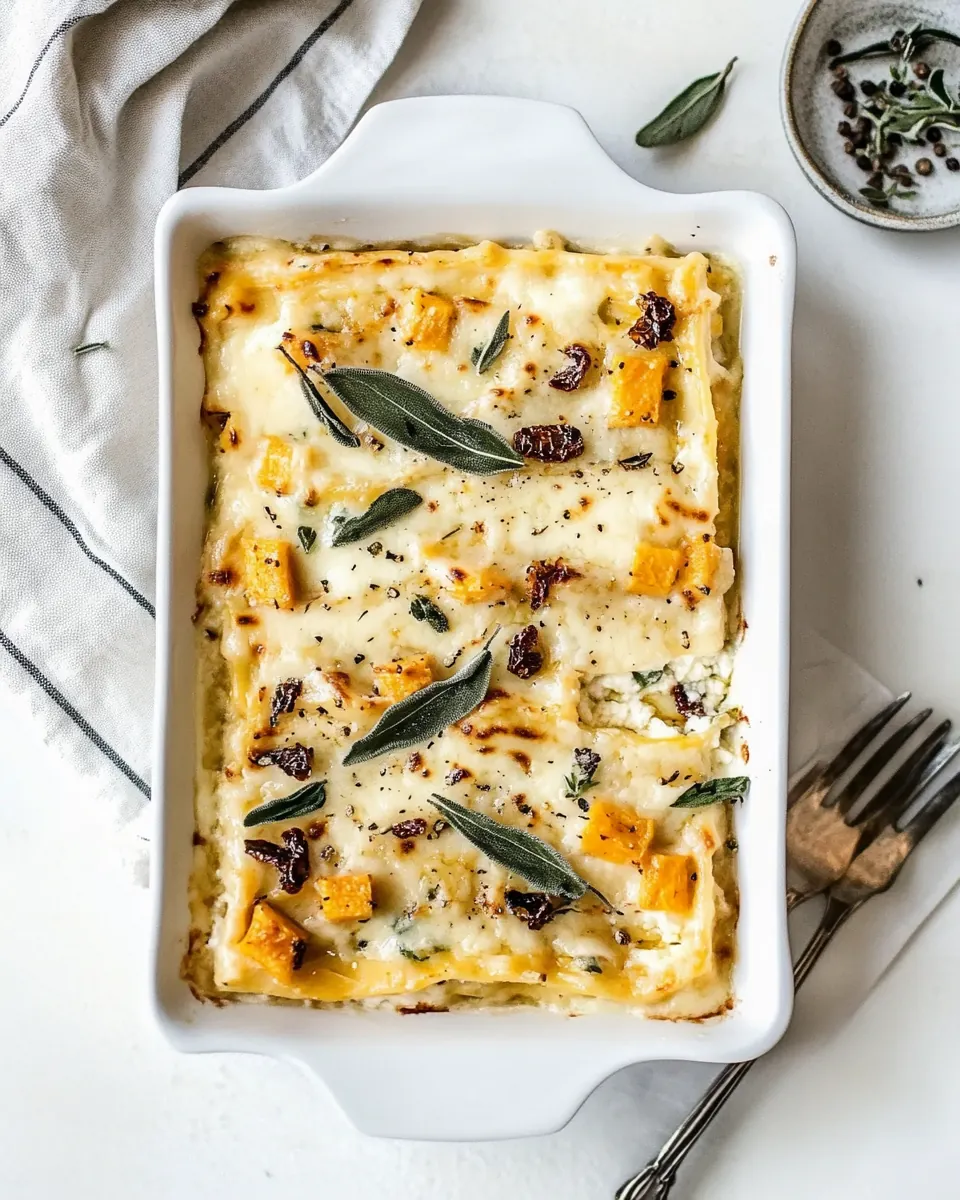
Let me walk you through assembling this lasagna in a way that feels relaxed yet precise. The technique balances roasting, sauce making, and layering, and gives you clear sensory cues so each component ends up where it should be. Keep your tools handy and pay attention to visual and aromatic signals.
- Preheat oven to 375 degrees F. Grease a 9 x 13 inch pan. On a baking sheet, toss together the butternut squash, olive oil, honey, and a pinch each of salt and pepper. Transfer to the oven and roast for 25-30 minutes or until the squash is tender. Melt the butter in a medium sauce pan. Add the garlic, sage, and basil and cook 30 seconds or until fragrant. Whisk in the flour and cook for about 1 minute. Slowly add the milk. Stir in the nutmeg and season with salt and pepper. Bring to a boil and stir for 1 minute. Remove from heat and stir in the fontina cheese and 1/2 cup of parmesan cheese. Stir until the cheese is fully melted and the sauce is smooth. Set the cheese sauce aside. In a medium bowl, mash the roasted butternut squash until mostly smooth. Stir in the ricotta, provolone, and sun-dried tomatoes. Spread 1/4 of the cheese sauce in the bottom of the prepared baking dish. Top with 3-4 lasagna sheets. Spread with 1/2 the butternut squash mixture and then another 1/4 of the cheese sauce. Place another 3-4 lasagna noodles on top, and then top with the remaining butternut squash mixture and another 1/4 of the cheese sauce. Add the remaining lasagna noodles and pour the remaining 1/4 of the cheese sauce over top. Top with the remaining 1/2 cup of parmesan cheese. Bake uncovered for 45 minutes or until the top has bubbled up and browned a bit. Let stand 10 minutes before serving. Top with pine nuts and fried sage.: As the oven warms, you will smell the faint mechanical hum and feel the kitchen prepare for baking. This temperature is chosen to roast the squash thoroughly and to allow the assembled lasagna to bake and brown without drying out. A common mistake is starting with a colder oven which lengthens roasting time and changes the texture of the squash, so always let the oven reach the full temperature before you put items in.
- Grease a 9 x 13 inch pan: Greasing the pan ensures easy release and reduces sticking along the edges. When you grease, notice how the surface takes on a subtle sheen, which also helps promote even browning at the base. If you skip greasing, the lasagna can adhere, causing uneven slices and difficulty serving, so take this quick step seriously.
- On a baking sheet, toss together the butternut squash, olive oil, honey, and a pinch each of salt and pepper: Tossing coats each cube in oil and honey, which encourages caramelization and even roasting. You will see the cubes glisten and hear a faint clink as they settle. Uneven coating leads to patchy browning, so use your hands or a spatula to turn the squash thoroughly for uniform color and texture.
- Transfer to the oven and roast for 25 to 30 minutes or until the squash is tender: During roasting, the kitchen will fill with a sweet, toasty aroma as the honey and natural sugars concentrate. Look for golden edges and a tender interior when pierced with a fork. Over roasting can dry the cubes, while under roasting leaves them too firm to mash smoothly, so check softness at 25 minutes and adjust as needed.
- Melt the butter in a medium sauce pan: As the butter melts, it will hiss slightly and release a nutty aroma. Warmed butter provides a silky base for the roux and helps carry the flavors of the aromatics. Do not let it brown here if you want a pale béchamel; browning would change the flavor profile.
- Add the garlic, sage, and basil and cook 30 seconds or until fragrant: The brief sauté releases essential oils, yielding an immediate burst of savory, herbal fragrance. You will notice the scent shift as the herbs and garlic bloom in the butter. Be careful not to let the garlic scorch, because burnt garlic introduces bitterness that is tough to mask.
- Whisk in the flour and cook for about 1 minute: Incorporating flour into the butter forms a roux which thickens the milk. Cooking it briefly removes raw flour taste, and you will see the mixture take on a smooth paste like texture. If you leave raw flour, the sauce will taste pasty, so whisk constantly and watch for a faint nutty scent as it cooks.
- Slowly add the milk: Adding milk gradually while whisking prevents lumps and produces a glossy béchamel. As the mixture smooths, you will hear gentle popping and see a thicker, velvety sauce forming. Pouring too fast can create clumps, so go slowly and keep whisking until uniform.
- Stir in the nutmeg and season with salt and pepper: The small amount of freshly grated nutmeg deepens the béchamel and complements the squash. Taste as you go, seasoning carefully since the cheeses will add salt later. Over salting at this stage can make the final lasagna too salty, so err on the side of light seasoning.
- Bring to a boil and stir for 1 minute: Bringing the sauce to a brief boil activates the thickening power, resulting in a stable texture that will coat the back of a spoon. You will hear a soft rolling simmer and see the sauce cling more thickly. If you skip this, the sauce may remain thin and not hold the layers together while baking.
- Remove from heat and stir in the fontina cheese and 1/2 cup of parmesan cheese: Off the heat, the cheeses melt smoothly into the béchamel, producing a glossy, rich cheese sauce. The aroma becomes creamy and savory, and the sauce should reach a homogeneous, silk like consistency. Adding cheese on heat can cause separation, so remove from direct heat before folding them in.
- Stir until the cheese is fully melted and the sauce is smooth: The final texture should be velvety and cohesive, with no visible cheese strings or curdled bits. Run a spoon through it to check for uniformity. If the sauce looks grainy, gentle whisking off heat usually brings it back together; if it separates, a small splash of warm milk can help re emulsify.
- Set the cheese sauce aside: Letting the sauce rest allows it to thicken slightly and makes it easier to spread in even layers. As it cools a touch, its body becomes more manageable for assembly. Don’t let it cool too long though, or it will become difficult to spread, so keep it warm but not piping hot.
- In a medium bowl, mash the roasted butternut squash until mostly smooth: Mashing transforms the roasted cubes into a spreadable filling, with some small chunks remaining for texture. The aroma will be sweeter and more concentrated than before roasting. If you over mash into complete puree, the filling can become overly dense, so aim for mostly smooth with a few tender pieces.
- Stir in the ricotta, provolone, and sun dried tomatoes: Combining ricotta , shredded provolone , and chopped sun dried tomatoes creates a creamy, slightly tangy filling studded with concentrated tomato bursts. The mixture should be cohesive and easy to spread. Ensure the tomatoes are well drained, as excess oil or liquid can make the filling too loose.
- Spread 1/4 of the cheese sauce in the bottom of the prepared baking dish: A thin, even layer of sauce prevents the noodles from sticking and provides moisture from the first layer upward. Smooth it with a spatula until uniform. If you skip this, the bottom noodles may adhere to the pan and the lasagna can bake unevenly.
- Top with 3 to 4 lasagna sheets: Arrange the no boil lasagna noodles overlapping slightly so they form a continuous layer. They will absorb moisture from the sauce as the lasagna bakes. Avoid large gaps because dry spots can form where noodles are not adequately covered.
- Spread with 1/2 the butternut squash mixture and then another 1/4 of the cheese sauce: Layering in this order ensures each noodle is accompanied by filling and sauce for balanced bites. The texture should be creamy and spreadable, not soupy. If the filling is too loose, it can shift during baking and create uneven layers, so keep the moisture in check.
- Place another 3 to 4 lasagna noodles on top, and then top with the remaining butternut squash mixture and another 1/4 of the cheese sauce: Building mirrored layers creates structural integrity and ensures flavor distribution. As you layer, press gently to eliminate air pockets but don’t compress the noodles flat. Over packing can make the lasagna dense rather than airy and tender.
- Add the remaining lasagna noodles and pour the remaining 1/4 of the cheese sauce over top: Finish with a final noodle barrier and a generous coating of sauce so the top bakes into a golden, bubbling crown. The sauce helps the top brown evenly. If the top is left dry, it will harden rather than develop that appealing, slightly crisped finish.
- Top with the remaining 1/2 cup of parmesan cheese: Sprinkling the last bit of parmesan lends a savory, crunchy finish as it melts and browns. The aroma will intensify as it bakes. Using too little reduces browning, while too much can make the top overly crisp, so distribute it evenly.
- Bake uncovered for 45 minutes or until the top has bubbled up and browned a bit: During baking you will hear gentle bubbling and see the edges turning golden, indicating the sauce is fully set and the noodles have absorbed moisture. This period also develops a lightly crisped surface. If you cover it, you will trap steam and miss that browned top, so bake uncovered as directed.
- Let stand 10 minutes before serving: Resting allows the lasagna to set so slices hold shape when cut. You will notice the steam subside and the internal structure firm up slightly. Serving too soon results in runny slices, so patience here pays off.
- Top with pine nuts and fried sage: The finish of toasted pine nuts and crisped sage adds aromatic crunch and herbal brightness. The contrast elevates each forkful and provides a pleasing textural finale. Be mindful that the nuts should be warmed just before serving so they stay crunchy and fresh.
Recipe Notes about Butternut Squash and Sun Dried Tomato White Lasagna
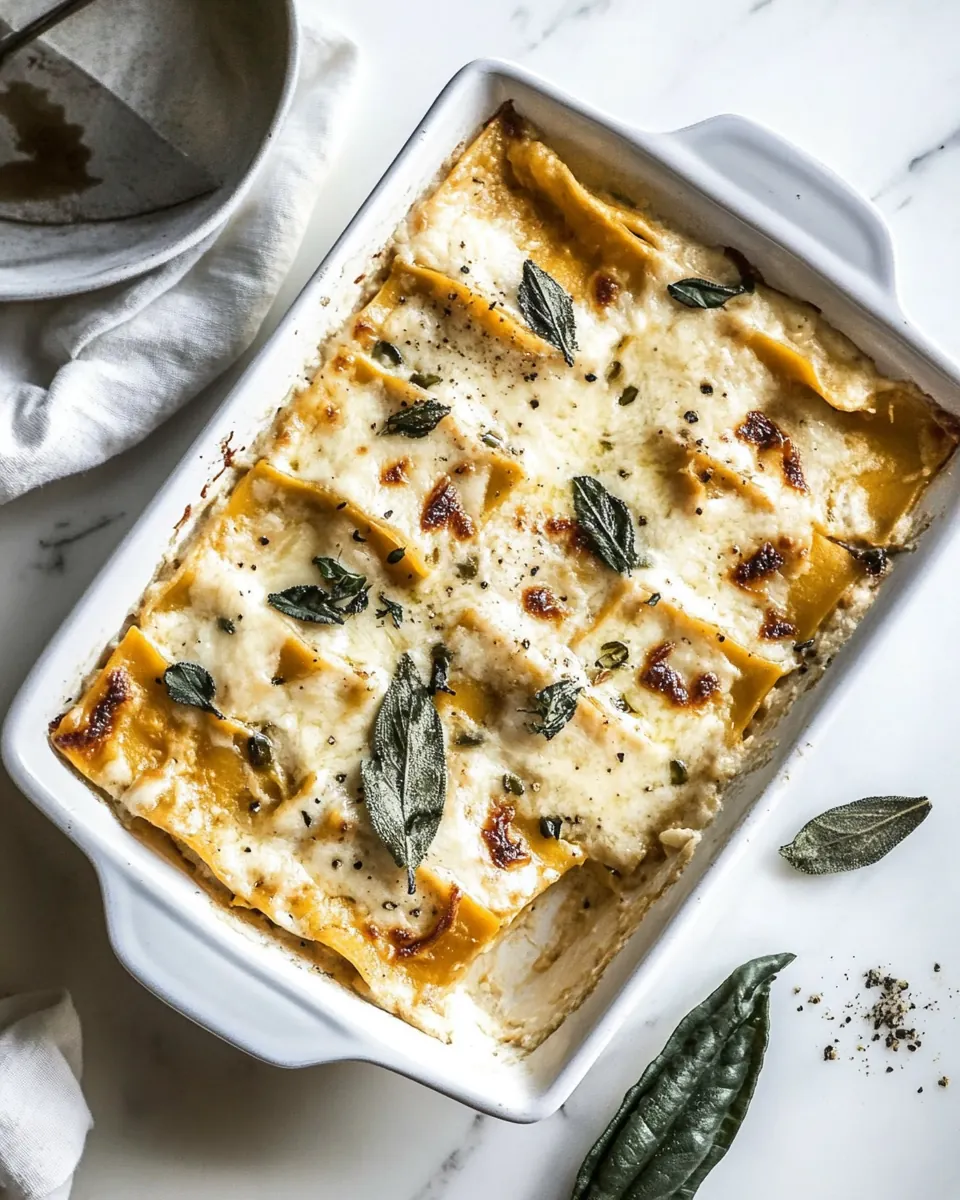
This section collects practical notes I use every time I make this lasagna. They cover small but important choices that influence texture, presentation, and timing. Read through these and pick the ones that help your workflow.
- Make ahead advantage, assemble the lasagna up to the point of baking, cover tightly, and refrigerate for up to 24 hours, then bake straight from the fridge, adding an extra 10 minutes to the bake time if needed.
- Toast pine nuts carefully, use a dry skillet over medium low heat and stir constantly until they turn golden because they burn quickly and will ruin the flavor if left unattended.
- Room temperature dairy, bring the milk, ricotta, and cheeses closer to room temperature before making the béchamel to help them incorporate smoothly without seizing or clumping.
- Drain sun dried tomatoes, press them between paper towels to remove excess oil so the filling does not become greasy and the layers remain stable.
- Slice cleanly, use a sharp, thin bladed knife dipped in hot water and wiped between cuts to get neat portions when serving.
Serving Ideas for Butternut Squash and Sun Dried Tomato White Lasagna
This lasagna works for many occasions from cozy family dinners to holiday gatherings. Below are serving ideas, perfect pairings, and storage notes to help you present and extend the dish.
- Family dinner, serve slices warm with a simple green salad dressed in lemon and olive oil for contrast, offering a crisp, acidic counterpoint to the rich layers.
- Holiday or special occasion, present the lasagna on a large platter with sprigs of fresh sage and a scattering of toasted pine nuts to make a centerpiece worthy dish that feeds a group.
- Lunch meal prep, portion individual servings into airtight containers and refrigerate for up to four days, reheating in the oven or microwave until warmed through.
- Make ahead for gatherings, assemble and chill the lasagna, then bake just before guests arrive so it comes out bubbling and fragrant for serving.
- Seasonal pairing, highlight autumn flavors by serving with roasted Brussels sprouts or a simple apple and fennel salad to echo the squash’s sweetness and add textural variety.
- Storage tips, freeze individual portions wrapped tightly for up to three months, thaw overnight in the fridge and reheat in a 350 degree F oven until hot throughout.
FAQ
Conclusion
Butternut Squash and Sun Dried Tomato White Lasagna stands out because it balances sweet roasted squash, tangy sun dried tomatoes, and a silky cheese sauce into a comforting, elegant casserole. Give it a try when you want a vegetarian dish that feels both special and approachable, whether for a family dinner or a seasonal gathering. I hope this recipe becomes one you turn to when you want food that comforts and impresses without complicated technique.
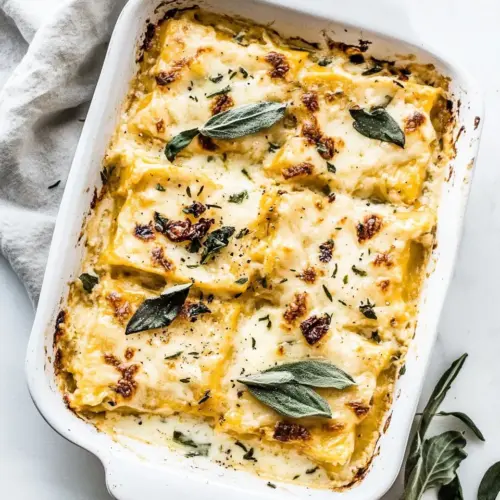
Butternut Squash and Sun Dried Tomato White Lasagna
Equipment
- Oven
- 9 x 13-inch baking pan
- Baking Sheet
- Medium Saucepan
- Mixing Bowl
Ingredients
- 4 cups butternut squash, cubed (about 1 medium squash) Roasted and cubed to provide a sweet, creamy base layer that caramelizes slightly when baked, enhancing depth and natural sugars; contributes body and a velvety texture to the white sauce and filling. Complements savory cheeses and herbs while balancing acidity from sun-dried tomatoes, creating a central vegetable component. Offers visual appeal with warm orange color that contrasts with pale cheeses and noodles.
- 2 tablespoons extra virgin olive oil Used to sauté and lightly brown aromatics or to finish the sauce for a silky mouthfeel, adding a fruity, peppery backbone to cooked components; helps transfer heat and distribute flavors evenly through the dish. Enhances browning on squash before roasting or pan-roasting and can be used to deglaze pans for richer layers. Provides a subtle Mediterranean note that harmonizes with sun-dried tomatoes and sage.
- 1 tablespoon honey Added to boost natural sweetness and encourage light caramelization of the squash when roasting, amplifying the vegetable's inherent sugars without overpowering savory elements. Balances the tang of sun-dried tomatoes and the saltiness of cheeses for a more rounded flavor profile. Can be gently mixed into the squash before roasting or into the filling for gentle sweetness.
- kosher salt and pepper Seasoned generously to enhance all flavors, ensuring balance between sweet squash, rich cheeses, and acidic tomatoes; salt elevates savory notes while pepper adds mild heat and brightness. Applied to squash, sauces, and layers to taste, preventing the dish from tasting flat. Used judiciously during sauce-making and final seasoning to achieve harmony.
- 6 tablespoons butter Melted to form the base of the béchamel and to enrich fillings, delivering a smooth, decadent mouthfeel and aiding in emulsifying the sauce. Contributes a rich dairy flavor that complements ricotta and other cheeses, while helping to toast flour for a cohesive roux. Adds to the overall silkiness and prevents separation in the white sauce.
- 2 cloves garlic, minced or grated Sweated briefly in butter or oil to release aromatic sulfur compounds that deepen savory notes; brings a gentle pungency and complexity when minced or grated. Infuses the béchamel and squash layers with subtle warmth without overwhelming delicate cheeses or herbs. Best added early to flavor the fat base and allow mellowing during cooking.
- 1 tablespoon fresh sage, chopped Chopped and added to provide an earthy, slightly peppery herbaceous accent that pairs especially well with roasted squash and browned butter; offers seasonal depth and aromatic lift. Incorporated into the filling and sprinkled between layers for bursts of savory herbal character. Works especially well when briefly sautéed to release oils.
- 1 tsp dried basil Sprinkled to contribute a dried, sweet-leaning herb warmth that supports the sage and enhances overall Italian-inspired flavor; adds background Mediterranean aromatics. Blended into the béchamel or mixed with cheeses to ensure even distribution. Used sparingly to avoid overpowering delicate dairy textures.
- 1/4 cup flour Cooked into a roux to thicken the béchamel, creating a smooth, clingy sauce that binds cheeses and noodles; helps achieve the desired lasagna consistency. Toasted lightly in butter to remove raw flour taste before gradually whisking in milk, ensuring a lump-free sauce. Controls final sauce thickness to prevent watery or gummy layers.
- 3 1/2 cups whole milk Whisked in gradually to form a creamy, cohesive white sauce that envelops noodles and fillings, lending richness and silkiness to each layer. Provides dairy body and neutral flavor that allows squash, tomatoes, and cheeses to shine while maintaining moisture. Heated gently to avoid scalding and to integrate with the roux for a stable béchamel.
- 1/4 teaspoon fresh grated nutmeg Grated freshly to impart warm, nutty, and slightly sweet aromatic notes that elevate the béchamel and overall dish; tiny amounts add complexity to the white sauce. Dusts the sauce and layers with subtle fragrance that complements cheeses and squash. Best added near the end of sauce-making to preserve volatile flavors.
- 1 cup shredded fontina cheese Shredded and folded into the filling to contribute a mild, creamy, and slightly tangy melting character that promotes gooey stretch and richness. Balances sharper cheeses while lending a luxurious texture when melted between layers. Helps create cohesive, luscious bites throughout the lasagna.
- 1 cup parmesan cheese, grated Grated to deliver sharp, salty, and umami-rich flavor, cutting through the sweet squash and providing savory backbone; enhances overall depth and mouthwatering appeal. Sprinkled between layers and into the béchamel for consistent salinity and classic Italian cheese notes. Also contributes a subtle granular texture that melts into creaminess.
- 2 cups whole milk ricotta Spoonable and thickened to bring a light, slightly grainy creaminess that adds mild tang, moisture, and structural body to the filling; balances richness without making the lasagna heavy. Mixed with herbs and cheeses to create pockets of soft cheese that contrast with melted provolone and fontina. Helps prevent dryness by contributing moisture to each layer.
- 2 cups shredded provolone Shredded to add rich meltiness and a smooth, slightly smoky dairy flavor that strings and browns gracefully when baked, creating indulgent pockets throughout. Provides textural contrast to the ricotta and reinforces the overall cheesy profile. Sprinkled between layers and on top for even melting and appealing pull.
- 1 jar (8 ounce) oil packed sun-dried tomatoes, oil drained and chopped Drained, chopped, and scattered for concentrated sweet-tart tomato flavor and chewy bursts that punctuate creamy layers; oil-packed preservation imparts an intensified tomato essence. Adds bright acidity and umami to offset the dish's richness, while chopped pieces distribute pleasantly throughout. Works well folded into ricotta or layered with cheeses for balanced bites.
- 1 box no-boil lasagna noodles Layered to separate fillings and provide structure while absorbing sauce; no-boil noodles save time and streamline assembly by softening during baking. Ensures even distribution of components and creates classic lasagna texture without pre-cooking. Overlaps and trims as needed to cover layers and hold the casserole together.
- 2 tablespoons toasted pine nuts Toasted and sprinkled as a finishing garnish to introduce a warm, nutty crunch and pine-like flavor that contrasts with the creamy interior; elevates mouthfeel and presentation. Adds aromatic oils and a slight buttery note when scattered over the baked lasagna. Best toasted lightly to enhance flavor and prevent burning.
Instructions
- Preheat oven to 375 degrees F. Grease a 9 x 13 inch pan. On a baking sheet, toss together the butternut squash, olive oil, honey, and a pinch each of salt and pepper. Transfer to the oven and roast for 25-30 minutes or until the squash is tender. Melt the butter in a medium sauce pan. Add the garlic, sage, and basil and cook 30 seconds or until fragrant. Whisk in the flour and cook for about 1 minute. Slowly add the milk. Stir in the nutmeg and season with salt and pepper. Bring to a boil and stir for 1 minute. Remove from heat and stir in the fontina cheese and 1/2 cup of parmesan cheese. Stir until the cheese is fully melted and the sauce is smooth. Set the cheese sauce aside. In a medium bowl, mash the roasted butternut squash until mostly smooth. Stir in the ricotta, provolone, and sun-dried tomatoes. Spread 1/4 of the cheese sauce in the bottom of the prepared baking dish. Top with 3-4 lasagna sheets. Spread with 1/2 the butternut squash mixture and then another 1/4 of the cheese sauce. Place another 3-4 lasagna noodles on top, and then top with the remaining butternut squash mixture and another 1/4 of the cheese sauce. Add the remaining lasagna noodles and pour the remaining 1/4 of the cheese sauce over top. Top with the remaining 1/2 cup of parmesan cheese. Bake uncovered for 45 minutes or until the top has bubbled up and browned a bit. Let stand 10 minutes before serving. Top with pine nuts and fried sage.: As the oven warms, you will smell the faint mechanical hum and feel the kitchen prepare for baking. This temperature is chosen to roast the squash thoroughly and to allow the assembled lasagna to bake and brown without drying out. A common mistake is starting with a colder oven which lengthens roasting time and changes the texture of the squash, so always let the oven reach the full temperature before you put items in.
- Grease a 9 x 13 inch pan: Greasing the pan ensures easy release and reduces sticking along the edges. When you grease, notice how the surface takes on a subtle sheen, which also helps promote even browning at the base. If you skip greasing, the lasagna can adhere, causing uneven slices and difficulty serving, so take this quick step seriously.
- On a baking sheet, toss together the butternut squash, olive oil, honey, and a pinch each of salt and pepper: Tossing coats each cube in oil and honey, which encourages caramelization and even roasting. You will see the cubes glisten and hear a faint clink as they settle. Uneven coating leads to patchy browning, so use your hands or a spatula to turn the squash thoroughly for uniform color and texture.
- Transfer to the oven and roast for 25 to 30 minutes or until the squash is tender: During roasting, the kitchen will fill with a sweet, toasty aroma as the honey and natural sugars concentrate. Look for golden edges and a tender interior when pierced with a fork. Over roasting can dry the cubes, while under roasting leaves them too firm to mash smoothly, so check softness at 25 minutes and adjust as needed.
- Melt the butter in a medium sauce pan: As the butter melts, it will hiss slightly and release a nutty aroma. Warmed butter provides a silky base for the roux and helps carry the flavors of the aromatics. Do not let it brown here if you want a pale béchamel; browning would change the flavor profile.
- Add the garlic, sage, and basil and cook 30 seconds or until fragrant: The brief sauté releases essential oils, yielding an immediate burst of savory, herbal fragrance. You will notice the scent shift as the herbs and garlic bloom in the butter. Be careful not to let the garlic scorch, because burnt garlic introduces bitterness that is tough to mask.
- Whisk in the flour and cook for about 1 minute: Incorporating flour into the butter forms a roux which thickens the milk. Cooking it briefly removes raw flour taste, and you will see the mixture take on a smooth paste like texture. If you leave raw flour, the sauce will taste pasty, so whisk constantly and watch for a faint nutty scent as it cooks.
- Slowly add the milk: Adding milk gradually while whisking prevents lumps and produces a glossy béchamel. As the mixture smooths, you will hear gentle popping and see a thicker, velvety sauce forming. Pouring too fast can create clumps, so go slowly and keep whisking until uniform.
- Stir in the nutmeg and season with salt and pepper: The small amount of freshly grated nutmeg deepens the béchamel and complements the squash. Taste as you go, seasoning carefully since the cheeses will add salt later. Over salting at this stage can make the final lasagna too salty, so err on the side of light seasoning.
- Bring to a boil and stir for 1 minute: Bringing the sauce to a brief boil activates the thickening power, resulting in a stable texture that will coat the back of a spoon. You will hear a soft rolling simmer and see the sauce cling more thickly. If you skip this, the sauce may remain thin and not hold the layers together while baking.
- Remove from heat and stir in the fontina cheese and 1/2 cup of parmesan cheese: Off the heat, the cheeses melt smoothly into the béchamel, producing a glossy, rich cheese sauce. The aroma becomes creamy and savory, and the sauce should reach a homogeneous, silk like consistency. Adding cheese on heat can cause separation, so remove from direct heat before folding them in.
- Stir until the cheese is fully melted and the sauce is smooth: The final texture should be velvety and cohesive, with no visible cheese strings or curdled bits. Run a spoon through it to check for uniformity. If the sauce looks grainy, gentle whisking off heat usually brings it back together; if it separates, a small splash of warm milk can help re emulsify.
- Set the cheese sauce aside: Letting the sauce rest allows it to thicken slightly and makes it easier to spread in even layers. As it cools a touch, its body becomes more manageable for assembly. Don’t let it cool too long though, or it will become difficult to spread, so keep it warm but not piping hot.
- In a medium bowl, mash the roasted butternut squash until mostly smooth: Mashing transforms the roasted cubes into a spreadable filling, with some small chunks remaining for texture. The aroma will be sweeter and more concentrated than before roasting. If you over mash into complete puree, the filling can become overly dense, so aim for mostly smooth with a few tender pieces.
- Stir in the ricotta, provolone, and sun dried tomatoes: Combining ricotta , shredded provolone , and chopped sun dried tomatoes creates a creamy, slightly tangy filling studded with concentrated tomato bursts. The mixture should be cohesive and easy to spread. Ensure the tomatoes are well drained, as excess oil or liquid can make the filling too loose.
- Spread 1/4 of the cheese sauce in the bottom of the prepared baking dish: A thin, even layer of sauce prevents the noodles from sticking and provides moisture from the first layer upward. Smooth it with a spatula until uniform. If you skip this, the bottom noodles may adhere to the pan and the lasagna can bake unevenly.
- Top with 3 to 4 lasagna sheets: Arrange the no boil lasagna noodles overlapping slightly so they form a continuous layer. They will absorb moisture from the sauce as the lasagna bakes. Avoid large gaps because dry spots can form where noodles are not adequately covered.
- Spread with 1/2 the butternut squash mixture and then another 1/4 of the cheese sauce: Layering in this order ensures each noodle is accompanied by filling and sauce for balanced bites. The texture should be creamy and spreadable, not soupy. If the filling is too loose, it can shift during baking and create uneven layers, so keep the moisture in check.
- Place another 3 to 4 lasagna noodles on top, and then top with the remaining butternut squash mixture and another 1/4 of the cheese sauce: Building mirrored layers creates structural integrity and ensures flavor distribution. As you layer, press gently to eliminate air pockets but don’t compress the noodles flat. Over packing can make the lasagna dense rather than airy and tender.
- Add the remaining lasagna noodles and pour the remaining 1/4 of the cheese sauce over top: Finish with a final noodle barrier and a generous coating of sauce so the top bakes into a golden, bubbling crown. The sauce helps the top brown evenly. If the top is left dry, it will harden rather than develop that appealing, slightly crisped finish.
- Top with the remaining 1/2 cup of parmesan cheese: Sprinkling the last bit of parmesan lends a savory, crunchy finish as it melts and browns. The aroma will intensify as it bakes. Using too little reduces browning, while too much can make the top overly crisp, so distribute it evenly.
- Bake uncovered for 45 minutes or until the top has bubbled up and browned a bit: During baking you will hear gentle bubbling and see the edges turning golden, indicating the sauce is fully set and the noodles have absorbed moisture. This period also develops a lightly crisped surface. If you cover it, you will trap steam and miss that browned top, so bake uncovered as directed.
- Let stand 10 minutes before serving: Resting allows the lasagna to set so slices hold shape when cut. You will notice the steam subside and the internal structure firm up slightly. Serving too soon results in runny slices, so patience here pays off.
- Top with pine nuts and fried sage: The finish of toasted pine nuts and crisped sage adds aromatic crunch and herbal brightness. The contrast elevates each forkful and provides a pleasing textural finale. Be mindful that the nuts should be warmed just before serving so they stay crunchy and fresh.
Notes
- Make ahead advantage, assemble the lasagna up to the point of baking, cover tightly, and refrigerate for up to 24 hours, then bake straight from the fridge, adding an extra 10 minutes to the bake time if needed.
- Toast pine nuts carefully, use a dry skillet over medium low heat and stir constantly until they turn golden because they burn quickly and will ruin the flavor if left unattended.
- Room temperature dairy, bring the milk, ricotta, and cheeses closer to room temperature before making the béchamel to help them incorporate smoothly without seizing or clumping.
- Drain sun dried tomatoes, press them between paper towels to remove excess oil so the filling does not become greasy and the layers remain stable.
- Slice cleanly, use a sharp, thin bladed knife dipped in hot water and wiped between cuts to get neat portions when serving.
