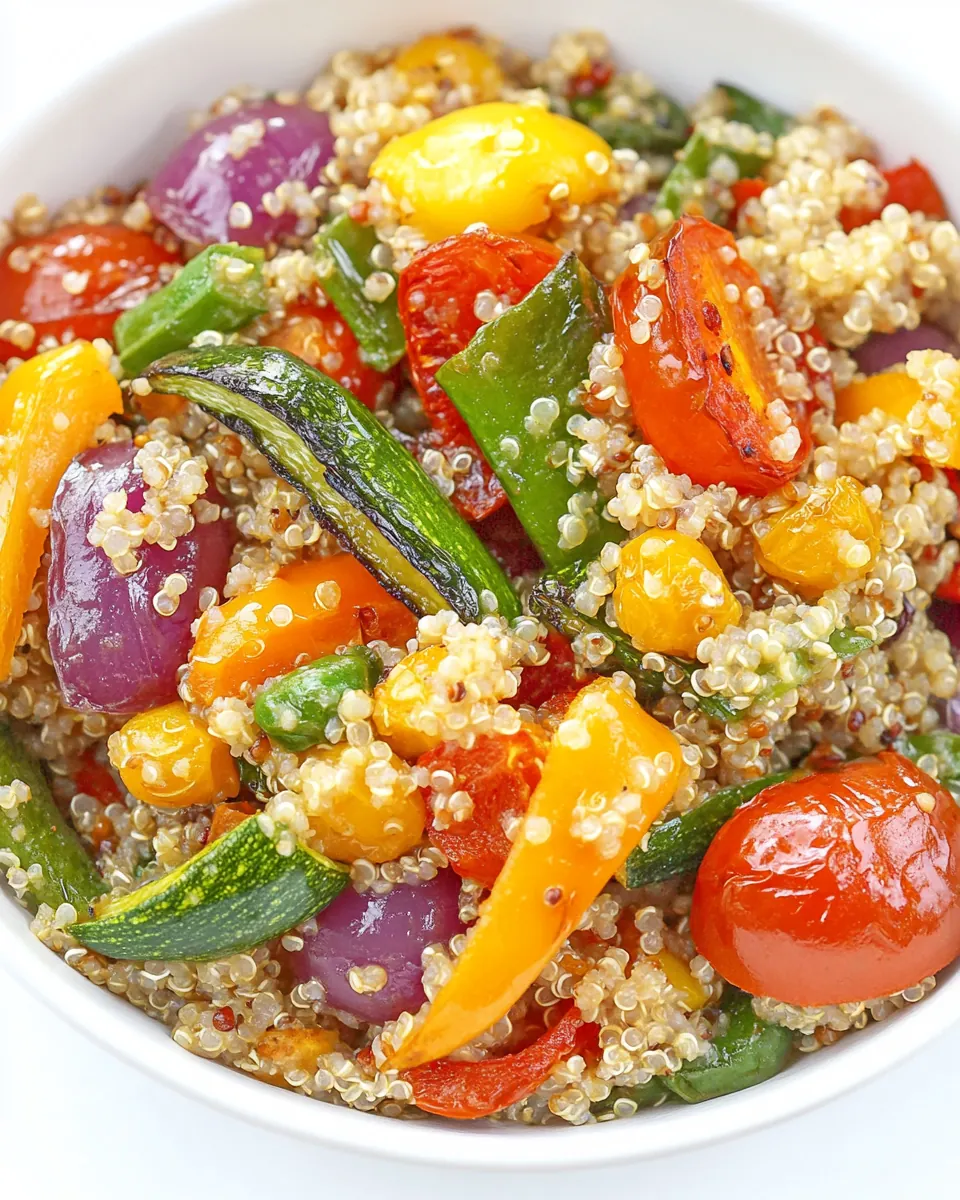
Quinoa with Roasted Rainbow Vegetables
Quinoa with Roasted Rainbow Vegetables has been my go to when I want something bright, satisfying, and endlessly adaptable. The first time I made it I was chasing color more than a plan, tossing whatever vegetables I had into the oven and pairing them with nutty quinoa. What came out was more than a side, it felt like a complete, nourishing bowl that I could eat for lunch or serve to friends who wanted something wholesome yet vibrant.
The memory of that oven filled with warm, roasted aroma still makes me smile. I remember the little pop of the cherry tomatoes as their skins split, the snap of roasted asparagus, and the way the hot quinoa softened fresh baby spinach into tender ribbons. Each bite combined textures and flavors in a way that felt clever but utterly forgiving. I learned that night that you do not need to be a pro to get a bowl that tastes layered and intentional.
Over time I’ve tweaked the dressing and timing to make sure the vegetables keep their character and the quinoa stays fluffy. I love how flexible this recipe is, letting you roast until the edges caramelize, or pull the pan earlier for a crisper bite. It’s become my fallback for potlucks and busy weeknights because it travels well, and it looks stunning on the table, which never hurts.
Recipe Snapshot
45 mins
20 mins
25 mins
Medium
250 kcal
Mediterranean
Vegan, Gluten-Free
Dinner
Baking sheet, Parchment paper, Small saucepan, Mixing bowl
Why This Quinoa with Roasted Rainbow Vegetables Is a Winner
Bright seasonal flavor
I adore how Quinoa with Roasted Rainbow Vegetables showcases simple produce. Roasting concentrates sweetness and adds caramel notes, so even plain cherry tomatoes and bell peppers taste more complex. I feel like I am celebrating spring when the colors and flavors pop.
Texture harmony
The dish balances fluffy quinoa with crisp roasted vegetables and tender baby spinach. I like the contrast between the slightly chewy grains and the crispness of the asparagus, it keeps each bite interesting so you never get bored while eating.
Effortless nutrition
This bowl packs good plant based protein from quinoa, fiber from the vegetables, and a light vinaigrette for flavor without heaviness. I often reach for this recipe when I want something filling that still feels clean and energizing.
Flexible and forgiving
I love recipes that adapt to what I have on hand, and this one does exactly that. You can roast until vegetables are just tender or a little charred, switch up the herbs, and it still shines. That makes it perfect for last minute dinners or meal prep.
Great warm or chilled
Whether I serve it right away or let it cool for lunch the next day, Quinoa with Roasted Rainbow Vegetables maintains flavor and texture. The dressing melds with the grains, and the veggies keep enough bite to stay interesting, so it is reliable across occasions.
What’s In This Quinoa with Roasted Rainbow Vegetables
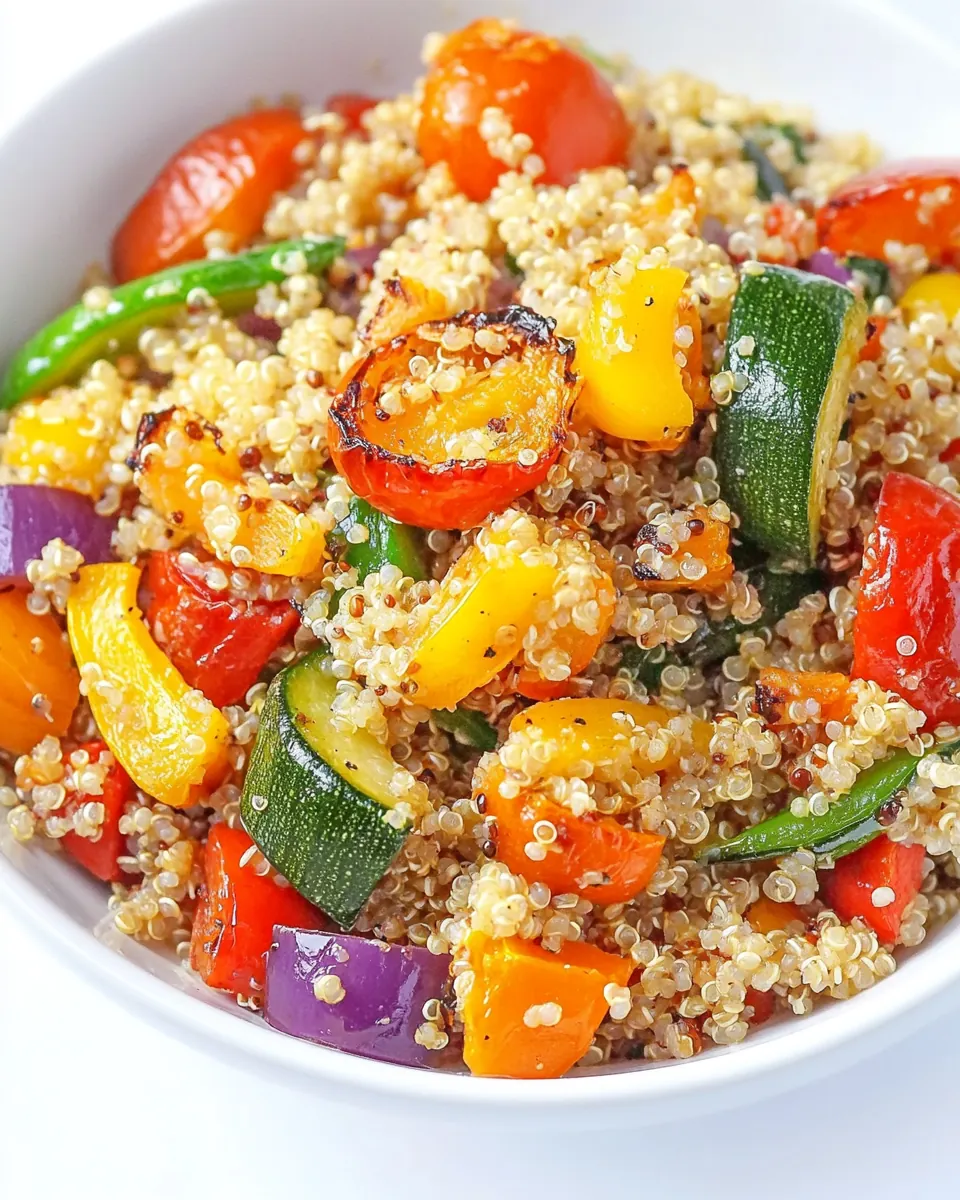
I choose ingredients that harmonize rather than compete. The star is quinoa, which brings a nutty base and body. Roasting concentrates the sweetness of vegetables like cherry tomatoes and bell peppers, while a simple dressing ties everything together, waking up the flavors without masking them. The key players are grains, roasted veg, and a bright dressing, each doing a clear job to create a balanced bowl.
- 1 cup white quinoa (uncooked): Rinse thoroughly and cook until tender to provide a fluffy, nutty base that absorbs flavors from the dressing and roasted vegetables; offers protein and fiber to make the dish hearty and satisfying.
- 12 oz . asparagus: Trim and roast until slightly charred to add a crisp-tender, grassy note and bright green color that contrasts with sweeter vegetables; contributes vitamins A and K and a pleasant seasonal crunch.
- 2 bell peppers (I use 1 orange + 1 yellow): Slice into strips and roast to contribute sweet, caramelized flavor and vibrant color; provides a juicy, slightly smoky element and balances the dish with natural sugars and vitamin C.
- 1 small red onion: Peel and slice into wedges, then roast to add savory-sweet depth and a mellow oniony bite that becomes tender and slightly caramelized; enhances overall umami and aromatic complexity.
- 12 oz . cherry tomatoes (or grape tomatoes): Roast whole or halved until skins blister to introduce bursts of concentrated sweetness and acidity; adds juicy pops of flavor and a bright, summery contrast that complements quinoa.
- 1 2 cups fresh baby spinach: Roughly chop or wilt briefly to fold in at the end, adding a tender, leafy green layer that brightens the salad and boosts iron, folate, and fresh color without overpowering other elements.
- Salt to taste: Season to taste during and after cooking to enhance and balance flavors, controlling saltiness and bringing out natural sweetness and umami from the roasted vegetables and quinoa.
- 1 1/2 tbsp . balsamic vinegar: Drizzle into the warm quinoa and vegetables to add tangy sweetness and a subtle acidity that ties ingredients together; helps create a glossy finish and deepen roasted flavors.
- 2 cloves garlic, minced: Mince finely and sauté or roast with vegetables to impart pungent, aromatic warmth and savory depth; provides a fragrant backbone that elevates the overall flavor profile.
- 1/2 tsp . dried basil: Sprinkle evenly to introduce a warm, herbaceous note with subtle peppery hints; supports Mediterranean flavor direction and complements the balsamic and garlic without dominating.
Recipe Steps for Quinoa with Roasted Rainbow Vegetables
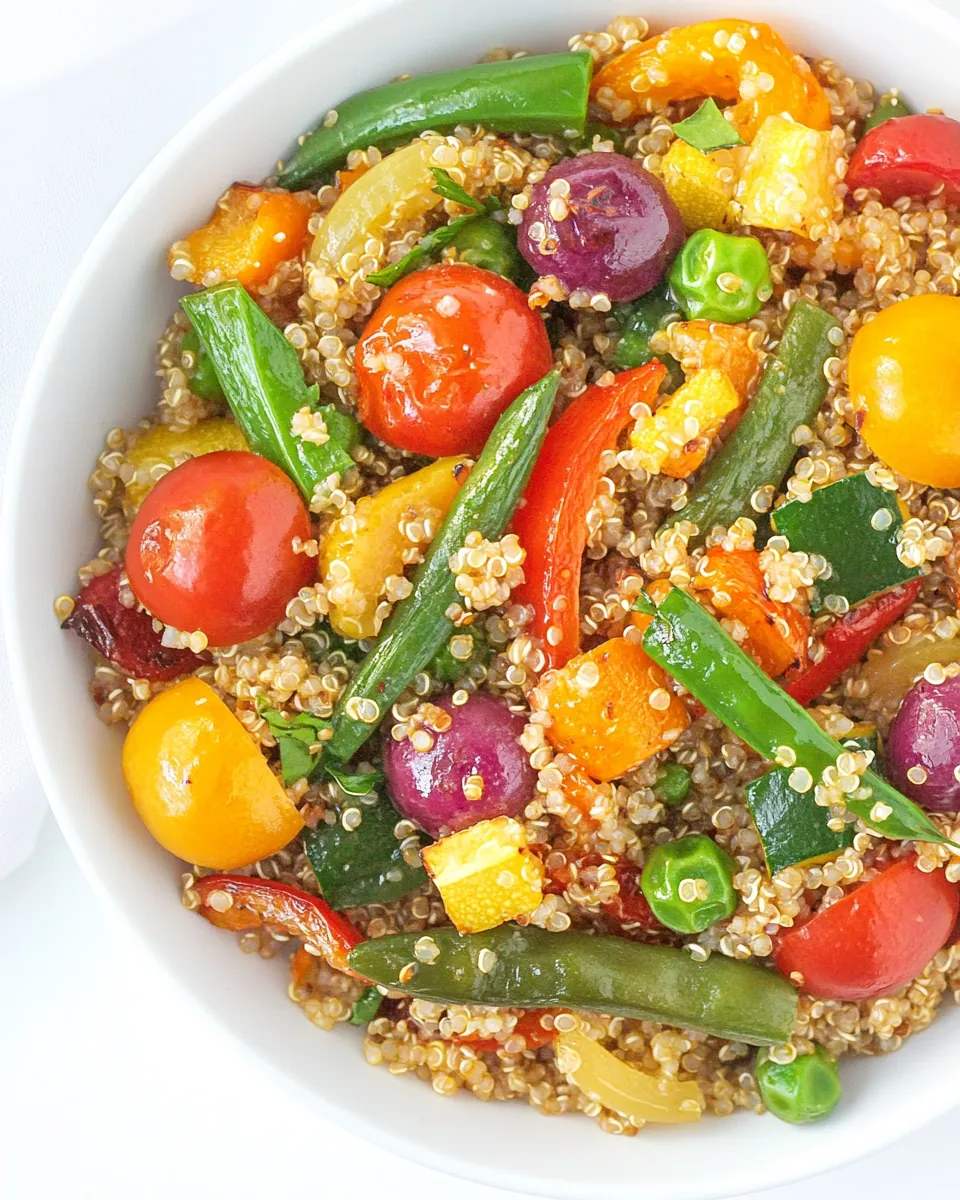
These steps guide you through roasting vegetables, cooking quinoa, and bringing everything together into a cohesive bowl. Read each step fully so you catch the sensory cues and understand why timing matters. Move through the process at a steady pace and enjoy the aromas that evolve as you work.
- Preheat oven to 425°F (220°C). Line a baking sheet with parchment paper.: The warm, dry air inside a properly heated oven is what creates those caramelized edges and fragrant roasted notes on the vegetables. You should feel a slight heat coming from the oven door and notice the smell of hot air when you open it, which signals readiness. Preheating ensures even roasting from the moment the pan goes in, preventing limp, steamed vegetables. A common mistake is putting vegetables into a cold oven, which yields a softer, less flavorful result.
- Cut asparagus into about 1 1/2-inch pieces, woody ends removed. Cut bell peppers and onion into 3/4 to 1 inch squares. Place on baking sheet. Add cherry tomatoes. Salt if desired.: When you slice the asparagus , you expose more surface area to the oven, helping each piece brown and crisp around the edges while staying tender inside. Removing the woody ends keeps the texture pleasant; you will notice the tender pieces snap slightly when bent before cooking. Avoid leaving thick woody ends, they remain tough even after roasting and spoil the mouthfeel.
- Place in oven and roast for 25 minutes, or desired tenderness.: Uniform pieces cook at the same rate so you get consistent caramelization and texture, with the edges developing a slight char while the centers stay juicy. The scent of sweet, slightly toasted vegetables will rise as they roast, giving a clear aroma cue that progress is happening. The most common error is uneven sizes, causing some pieces to burn while others remain underdone.
- Meanwhile, cook the quinoa: Place 1 cup quinoa (rinsed and drained) in a small saucepan with 1 1/2 cups water or vegetable broth. Bring to a light boil over medium-high heat. Then reduce heat to medium-low, cover, and simmer for 20 minutes.: Spread the prepared asparagus , bell peppers , and red onion on a lined baking sheet so air can circulate and surfaces brown. Space between pieces prevents steaming and encourages crispness, you should be able to see space around each piece. Overcrowding traps moisture and yields soft vegetables rather than roasted ones, so use a second sheet if needed.
- In a small bowl, combine dressing ingredients and set aside.: Scatter the cherry tomatoes among the other vegetables so they can roast and burst, releasing sweet juices that mingle with the pan. You will hear a light sizzle as the tomatoes warm and begin to blister, and the skins will wrinkle or split when they are ready. Putting tomatoes under a pile of veggies can prevent this blistering, so keep them on top of the bed of vegetables if possible.
- When quinoa is done cooking, immediately place in a large bowl and toss with spinach. (The heat from the quinoa will lightly wilt the spinach.): Lightly salting the vegetables before roasting draws out moisture and intensifies their natural sweetness, which helps them caramelize faster. Sprinkle evenly and consider that additional salt can be adjusted later once the bowl is assembled. A frequent misstep is over salting early on, which can concentrate too much by the end, so season conservatively and taste later.
- Pour dressing over quinoa and mix well to combine. Add roasted vegetables and stir.: As the vegetables roast, you will notice increasing aroma and visual changes, from glossy raw skin to slightly blistered, golden edges. The sound shifts to a gentle quiet as the moisture reduces and sugars caramelize, giving a deeper, more savory scent. Check at the 20 minute mark to gauge progress, because oven temps vary. Leaving them too long leads to dryness and over char, while pulling them too early leaves them underdeveloped.
- Salt to taste (or add fresh basil, or a splash more balsamic if desired). Great served warm or chilled.: While the vegetables roast, place 1 cup rinsed quinoa with 1 1/2 cups water or vegetable broth in a small saucepan and bring to a light boil over medium high heat. You will hear a steady simmer as bubbles rise, then when you reduce heat and cover the pot the steam will cook the grains into tender pearls. The lid traps steam so the quinoa absorbs liquid uniformly and becomes fluffy rather than mushy. Stirring too often releases starch and can make the grains gummy, so resist lifting the lid during the simmer.
- Simmer covered for 20 minutes: During this gentle simmer the quinoa will swell and become translucent around each grain, a visual cue it is nearly done. After the timer, remove from heat and let it sit briefly covered so residual steam finishes the texture. Allowing it to sit prevents a watery, undercooked texture. A common error is draining cooked quinoa and losing flavor, so use the correct water ratio and let it absorb.
- In a small bowl, combine dressing ingredients: Mixing balsamic vinegar , minced garlic , dried basil, and a pinch of salt melds acidity and aromatics into a cohesive dressing that brightens the bowl. Whisking briefly helps the flavors marry and the aromatics bloom, releasing fragrant oils from the garlic . If you toss a very hot grain with a cold dressing, chill may dull flavors, so bring the dressing to room temperature if possible.
- When quinoa is done cooking, immediately place in a large bowl and toss with spinach: The residual heat from the hot quinoa gently wilts the baby spinach , turning it from crisp to tender while leaving some structure. You will see the leaves reduce in volume and become glossy, which signals they have wilted just enough. Adding cold spinach to very hot quinoa can shock and over wilt it, so toss quickly and evenly to achieve a balance.
- Pour dressing over quinoa and mix well to combine: As the dressing meets the warm quinoa and wilted spinach , it clings to the grains and coats leaves, creating cohesive flavor in every bite. The aroma will lift as the vinegar and garlic integrate, and you should taste and adjust seasoning now. Too much dressing can make the bowl soggy, so add gradually until you reach a pleasant brightness that does not drown the texture.
- Add roasted vegetables and stir: Fold the roasted asparagus , bell peppers , red onion , and cherry tomatoes into the dressed quinoa so their juices and caramelized bits distribute through the bowl. Visually you will see colorful chunks against the grain, and the roasted juices will mingle with the dressing for layered flavor. Stir gently to avoid breaking roasted pieces, as overmixing can create a mashed texture.
- Salt to taste or add fresh basil or a splash more balsamic: Final seasoning is where you calibrate the bowl to your preference, adding a little extra salt or a touch more balsamic vinegar for brightness, or fresh herbs for lift. Taste several bites and adjust a little at a time so you do not overshoot. A common misstep is dramatic late seasoning which can overpower subtle flavors, so add in small increments and taste frequently.
- Serve warm or chilled: This bowl keeps its character whether served right away or cooled, as the textures remain pleasant and the dressing melds with the grains. When warm the aromas are more immediate, and when chilled the flavors meld and taste slightly more concentrated, which suits meal prep. If refrigerating, cover and store in an airtight container for several days, but avoid leaving it out too long to preserve freshness.
Ways to Customize
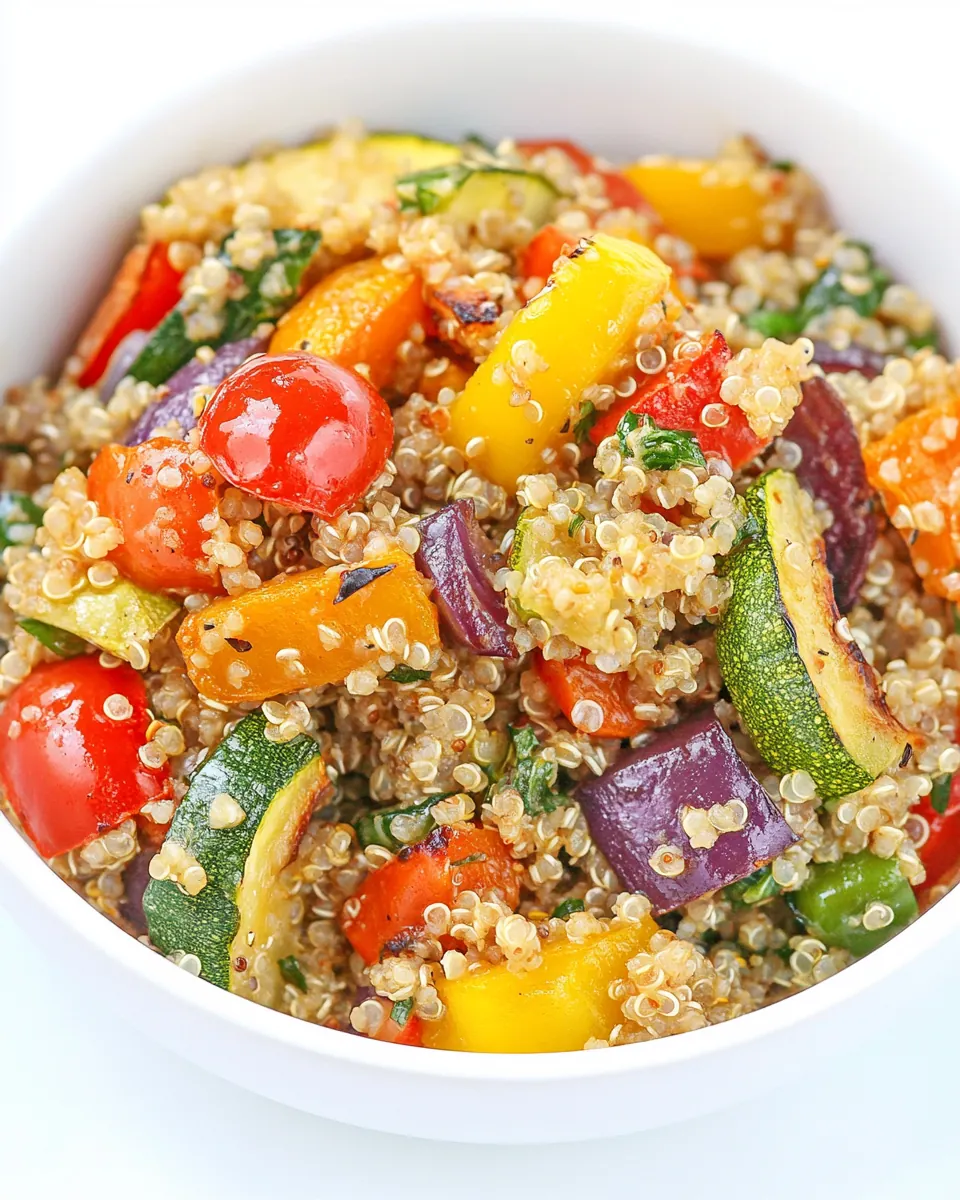
This dish is wonderfully adaptable so you can tailor textures and flavors to your pantry and preferences. Below are practical, creative ways to vary the recipe while keeping the bowl balanced and delicious.
- Boost the protein by increasing the quinoa portion or mixing in cooked legumes, which adds staying power for lunches and dinners.
- Swap vegetables seasonally by using what is freshest like zucchini in summer or roasted root vegetables in cooler months, maintaining the same roasting approach.
- Adjust the dressing by reducing balsamic vinegar for a milder tang, or whisking in a teaspoon of mustard for extra emulsification and brightness.
- Make it meal prep friendly by roasting vegetables ahead and storing separately from the dressed quinoa to preserve texture until serving.
- Serve temperature options: try it warm for an immediate cozy bowl or chilled for a refreshing, portable lunch with flavors that deepen overnight.
- Herb finish such as fresh basil or parsley can be added right before serving to lift aromas and add a green pop without changing the cooked flavor profile.
Pairing Suggestions for Quinoa with Roasted Rainbow Vegetables
This recipe pairs well with a variety of sides and occasions, making it versatile for casual meals or special gatherings. Below are serving ideas, storage notes, and occasions where this bowl shines.
- Side dish pairing Serve alongside a simple lentil soup or a light green salad for a balanced vegetarian meal that feels complete.
- Main course for lunch Present the bowl with a wedge of lemon and extra balsamic vinegar so guests can customize brightness at the table.
- Occasions Great for potlucks, spring brunches, or any time you want a colorful, health forward option that travels well and looks inviting.
- Storage tips Store dressed and undressed components separately if possible, keeping roasted vegetables and quinoa airtight for up to four days to preserve texture.
- Seasonal pairings In spring use tender asparagus and sweet peppers, while in cooler months swap to roasted root vegetables for deeper flavors.
- Serving style Offer it bowl style with warm quinoa for an immediate meal or chilled for grab and go lunches, both present beautifully and taste great.
FAQ
Conclusion
Quinoa with Roasted Rainbow Vegetables stands out for its delightful balance of textures, bright flavors, and effortless adaptability. It brings together fluffy quinoa, caramelized vegetables, and a simple vinaigrette to create a bowl that feels both nourishing and celebratory. I encourage you to give it a try, tweaking the veggies or herbs to match your pantry and the season. Whether served warm for company or chilled for weekday lunches, it reliably delivers satisfying flavor with very little fuss.
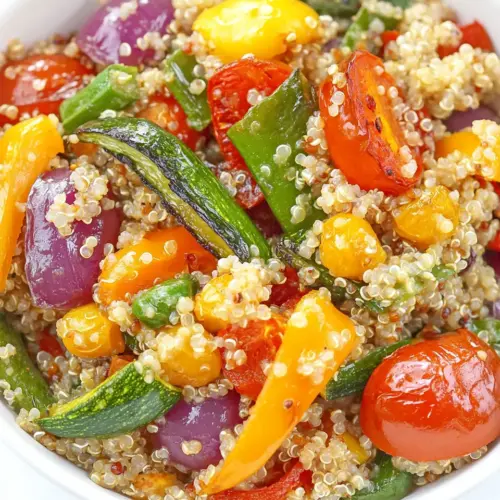
Quinoa with Roasted Rainbow Vegetables
Equipment
- Baking Sheet
- Parchment Paper
- Small Saucepan
- Mixing Bowl
Ingredients
- 1 cup white quinoa (uncooked) Rinse thoroughly and cook until tender to provide a fluffy, nutty base that absorbs flavors from the dressing and roasted vegetables; offers protein and fiber to make the dish hearty and satisfying.
- 12 oz . asparagus Trim and roast until slightly charred to add a crisp-tender, grassy note and bright green color that contrasts with sweeter vegetables; contributes vitamins A and K and a pleasant seasonal crunch.
- 2 bell peppers (I use 1 orange + 1 yellow) Slice into strips and roast to contribute sweet, caramelized flavor and vibrant color; provides a juicy, slightly smoky element and balances the dish with natural sugars and vitamin C.
- 1 small red onion Peel and slice into wedges, then roast to add savory-sweet depth and a mellow oniony bite that becomes tender and slightly caramelized; enhances overall umami and aromatic complexity.
- 12 oz . cherry tomatoes (or grape tomatoes) Roast whole or halved until skins blister to introduce bursts of concentrated sweetness and acidity; adds juicy pops of flavor and a bright, summery contrast that complements quinoa.
- 1 -2 cups fresh baby spinach Roughly chop or wilt briefly to fold in at the end, adding a tender, leafy green layer that brightens the salad and boosts iron, folate, and fresh color without overpowering other elements.
- Salt to taste Season to taste during and after cooking to enhance and balance flavors, controlling saltiness and bringing out natural sweetness and umami from the roasted vegetables and quinoa.
- 1 1/2 tbsp . balsamic vinegar Drizzle into the warm quinoa and vegetables to add tangy sweetness and a subtle acidity that ties ingredients together; helps create a glossy finish and deepen roasted flavors.
- 2 cloves garlic, minced Mince finely and sauté or roast with vegetables to impart pungent, aromatic warmth and savory depth; provides a fragrant backbone that elevates the overall flavor profile.
- 1/2 tsp . dried basil Sprinkle evenly to introduce a warm, herbaceous note with subtle peppery hints; supports Mediterranean flavor direction and complements the balsamic and garlic without dominating.
Instructions
- Preheat oven to 425°F (220°C). Line a baking sheet with parchment paper.: The warm, dry air inside a properly heated oven is what creates those caramelized edges and fragrant roasted notes on the vegetables. You should feel a slight heat coming from the oven door and notice the smell of hot air when you open it, which signals readiness. Preheating ensures even roasting from the moment the pan goes in, preventing limp, steamed vegetables. A common mistake is putting vegetables into a cold oven, which yields a softer, less flavorful result.
- Cut asparagus into about 1 1/2-inch pieces, woody ends removed. Cut bell peppers and onion into 3/4 to 1 inch squares. Place on baking sheet. Add cherry tomatoes. Salt if desired.: When you slice the asparagus , you expose more surface area to the oven, helping each piece brown and crisp around the edges while staying tender inside. Removing the woody ends keeps the texture pleasant; you will notice the tender pieces snap slightly when bent before cooking. Avoid leaving thick woody ends, they remain tough even after roasting and spoil the mouthfeel.
- Place in oven and roast for 25 minutes, or desired tenderness.: Uniform pieces cook at the same rate so you get consistent caramelization and texture, with the edges developing a slight char while the centers stay juicy. The scent of sweet, slightly toasted vegetables will rise as they roast, giving a clear aroma cue that progress is happening. The most common error is uneven sizes, causing some pieces to burn while others remain underdone.
- Meanwhile, cook the quinoa: Place 1 cup quinoa (rinsed and drained) in a small saucepan with 1 1/2 cups water or vegetable broth. Bring to a light boil over medium-high heat. Then reduce heat to medium-low, cover, and simmer for 20 minutes.: Spread the prepared asparagus , bell peppers , and red onion on a lined baking sheet so air can circulate and surfaces brown. Space between pieces prevents steaming and encourages crispness, you should be able to see space around each piece. Overcrowding traps moisture and yields soft vegetables rather than roasted ones, so use a second sheet if needed.
- In a small bowl, combine dressing ingredients and set aside.: Scatter the cherry tomatoes among the other vegetables so they can roast and burst, releasing sweet juices that mingle with the pan. You will hear a light sizzle as the tomatoes warm and begin to blister, and the skins will wrinkle or split when they are ready. Putting tomatoes under a pile of veggies can prevent this blistering, so keep them on top of the bed of vegetables if possible.
- When quinoa is done cooking, immediately place in a large bowl and toss with spinach. (The heat from the quinoa will lightly wilt the spinach.): Lightly salting the vegetables before roasting draws out moisture and intensifies their natural sweetness, which helps them caramelize faster. Sprinkle evenly and consider that additional salt can be adjusted later once the bowl is assembled. A frequent misstep is over salting early on, which can concentrate too much by the end, so season conservatively and taste later.
- Pour dressing over quinoa and mix well to combine. Add roasted vegetables and stir.: As the vegetables roast, you will notice increasing aroma and visual changes, from glossy raw skin to slightly blistered, golden edges. The sound shifts to a gentle quiet as the moisture reduces and sugars caramelize, giving a deeper, more savory scent. Check at the 20 minute mark to gauge progress, because oven temps vary. Leaving them too long leads to dryness and over char, while pulling them too early leaves them underdeveloped.
- Salt to taste (or add fresh basil, or a splash more balsamic if desired). Great served warm or chilled.: While the vegetables roast, place 1 cup rinsed quinoa with 1 1/2 cups water or vegetable broth in a small saucepan and bring to a light boil over medium high heat. You will hear a steady simmer as bubbles rise, then when you reduce heat and cover the pot the steam will cook the grains into tender pearls. The lid traps steam so the quinoa absorbs liquid uniformly and becomes fluffy rather than mushy. Stirring too often releases starch and can make the grains gummy, so resist lifting the lid during the simmer.
- Simmer covered for 20 minutes: During this gentle simmer the quinoa will swell and become translucent around each grain, a visual cue it is nearly done. After the timer, remove from heat and let it sit briefly covered so residual steam finishes the texture. Allowing it to sit prevents a watery, undercooked texture. A common error is draining cooked quinoa and losing flavor, so use the correct water ratio and let it absorb.
- In a small bowl, combine dressing ingredients: Mixing balsamic vinegar , minced garlic , dried basil, and a pinch of salt melds acidity and aromatics into a cohesive dressing that brightens the bowl. Whisking briefly helps the flavors marry and the aromatics bloom, releasing fragrant oils from the garlic . If you toss a very hot grain with a cold dressing, chill may dull flavors, so bring the dressing to room temperature if possible.
- When quinoa is done cooking, immediately place in a large bowl and toss with spinach: The residual heat from the hot quinoa gently wilts the baby spinach , turning it from crisp to tender while leaving some structure. You will see the leaves reduce in volume and become glossy, which signals they have wilted just enough. Adding cold spinach to very hot quinoa can shock and over wilt it, so toss quickly and evenly to achieve a balance.
- Pour dressing over quinoa and mix well to combine: As the dressing meets the warm quinoa and wilted spinach , it clings to the grains and coats leaves, creating cohesive flavor in every bite. The aroma will lift as the vinegar and garlic integrate, and you should taste and adjust seasoning now. Too much dressing can make the bowl soggy, so add gradually until you reach a pleasant brightness that does not drown the texture.
- Add roasted vegetables and stir: Fold the roasted asparagus , bell peppers , red onion , and cherry tomatoes into the dressed quinoa so their juices and caramelized bits distribute through the bowl. Visually you will see colorful chunks against the grain, and the roasted juices will mingle with the dressing for layered flavor. Stir gently to avoid breaking roasted pieces, as overmixing can create a mashed texture.
- Salt to taste or add fresh basil or a splash more balsamic: Final seasoning is where you calibrate the bowl to your preference, adding a little extra salt or a touch more balsamic vinegar for brightness, or fresh herbs for lift. Taste several bites and adjust a little at a time so you do not overshoot. A common misstep is dramatic late seasoning which can overpower subtle flavors, so add in small increments and taste frequently.
- Serve warm or chilled: This bowl keeps its character whether served right away or cooled, as the textures remain pleasant and the dressing melds with the grains. When warm the aromas are more immediate, and when chilled the flavors meld and taste slightly more concentrated, which suits meal prep. If refrigerating, cover and store in an airtight container for several days, but avoid leaving it out too long to preserve freshness.
Notes
- Boost the protein by increasing the quinoa portion or mixing in cooked legumes, which adds staying power for lunches and dinners.
- Swap vegetables seasonally by using what is freshest like zucchini in summer or roasted root vegetables in cooler months, maintaining the same roasting approach.
- Adjust the dressing by reducing balsamic vinegar for a milder tang, or whisking in a teaspoon of mustard for extra emulsification and brightness.
- Make it meal prep friendly by roasting vegetables ahead and storing separately from the dressed quinoa to preserve texture until serving.
- Serve temperature options: try it warm for an immediate cozy bowl or chilled for a refreshing, portable lunch with flavors that deepen overnight.
- Herb finish such as fresh basil or parsley can be added right before serving to lift aromas and add a green pop without changing the cooked flavor profile.
