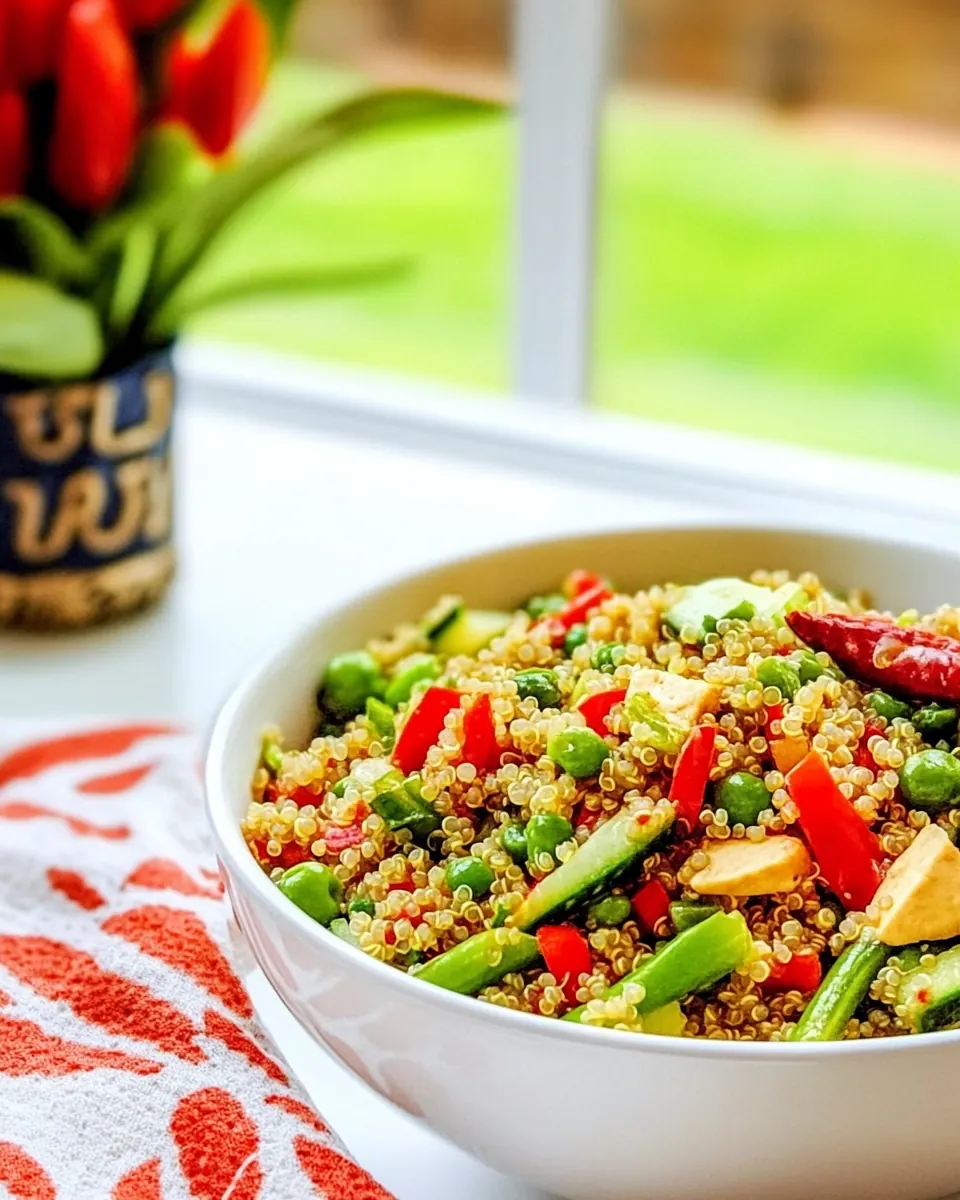
Asian Quinoa Salad
Asian Quinoa Salad became one of my go to lunches the spring I was juggling a new job and weekend farmers market runs. I remember carrying home a bag of crisp sugar snap peas and a bright red bell pepper, thinking I needed something that would showcase those fresh flavors while holding up for a few days in the fridge. That first evening I tossed cooked quinoa with the crunchy vegetables and a tangy, sesame forward dressing, and it felt like the kind of bowl I could eat every day without getting bored.
Since then I have adapted tiny things each time, listening to the way the textures and flavors talk to each other. Sometimes I make it for casual potlucks because it travels well, other times I portion it for weekday lunches that still feel a little special. The simple swap of toasted peanuts for another nut made a big difference in texture, and I always rinse my quinoa properly to remove any lingering bitterness. This salad is bright, textured, and quietly satisfying, which is why it keeps finding its way into my rotation.
Recipe Snapshot
40 mins
20 mins
20 mins
Medium
250 kcal
Asian
Vegan, Gluten-Free
Salads
Wire mesh strainer, Saucepan with tight fitting lid, Large mixing bowl, Whisk
Why Try This Asian Quinoa Salad
Fresh, crisp texture that lasts
I love how Asian Quinoa Salad keeps its crunch even after sitting in the fridge for a day. The combination of quinoa, sugar snap peas, celery, and red bell pepper gives each bite an energetic snap, so you never get a soggy mouthfeel. I think of this as a salad that stays lively, which makes it perfect for prepping ahead.
Balanced savory and bright flavors
The dressing in this recipe hits salty, tangy, and nutty notes all at once. A little soy sauce and rice vinegar lift the bowl, while sesame oil adds a warm, toasty finish. For me, that interplay is why I reach for this salad when I want something light but never bland.
Nutritious and filling without heaviness
I rely on the quinoa as the protein forward base that keeps me satisfied. It feels substantial enough to be a main for lunch, yet it never weighs you down. That makes it ideal for busy days when you want energy but not a food coma.
Flexible for sharing and meal prep
I often make a big batch because it travels well to picnics and desk lunches. You can chill it for an hour and it develops deeper flavor without losing its charm. I appreciate recipes that improve a little with time, and this one does just that.
Simple techniques, big payoff
The steps are straightforward, but each tiny technique matters, like rinsing the quinoa and letting it steam after cooking. Those small details produce a light, fluffy grain that soaks up dressing without getting gummy, and that is why I keep returning to this bowl.
What to Gather for Asian Quinoa Salad
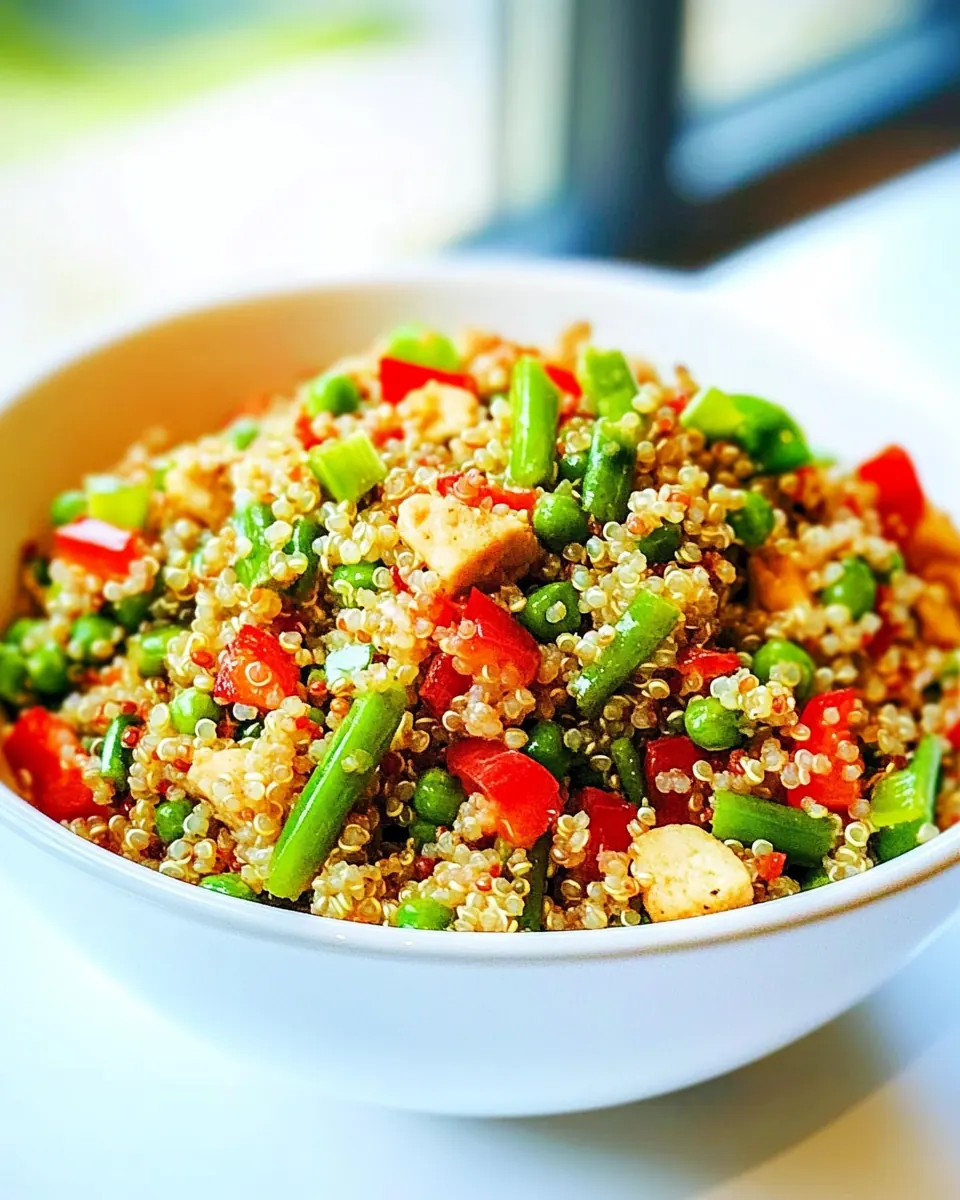
The philosophy behind these ingredients is harmony and contrast. I choose crisp, raw vegetables for texture, a fluffy, neutral grain for body, and a concentrated dressing to bind everything together. Key players include quinoa for protein and texture, the snap peas and celery for bright crunch, and the dressing elements like soy sauce and sesame oil to deliver savory depth.
- 1 cup quinoa, rinsed well: Rinse thoroughly to remove bitter saponins and improve texture; cooks into fluffy, slightly nutty grains that form the salad base. Provide protein and fiber, absorbing dressing flavors for a hearty, nutritious foundation.
- 2 cups vegetable broth (see notes): Simmer gently to cook quinoa and infuse subtle savory flavor; provides liquid that prevents sticking and contributes depth. Use low-sodium broth if desired to control overall saltiness while enhancing umami.
- 1 1/2 cups diagonally sliced sugar snap peas: Slice diagonally for visual appeal and tender-crisp texture; adds fresh snap and sweet-green flavor that contrasts cooked quinoa. Toss in near the end of prep to preserve crunch and bright color.
- 1 cup diagonally sliced celery: Slice diagonally to create slender, crisp pieces that add freshness and mild vegetal flavor; helps balance richer components. Include raw for crunch or briefly blanch if a softer bite is preferred.
- 1 red bell pepper, finely chopped: Chop finely to distribute sweet, slightly tangy bell pepper flavor evenly; adds vibrant color and juicy crunch throughout the salad. Use red for maximum sweetness and appealing visual contrast.
- 1/2 cup diagonally sliced green onion: Slice diagonally to produce angled rings that offer mild onion bite and aromatic lift; contributes both flavor and decorative edging. Add raw for pungency or marinate briefly to mellow sharpness.
- 1/2 cup chopped peanuts: Chop coarsely to add crunchy texture and nutty richness; offers savory contrast and a pleasant mouthfeel that complements soft quinoa. Use roasted or raw peanuts depending on desired intensity and salt level.
Cooking Instructions for Asian Quinoa Salad
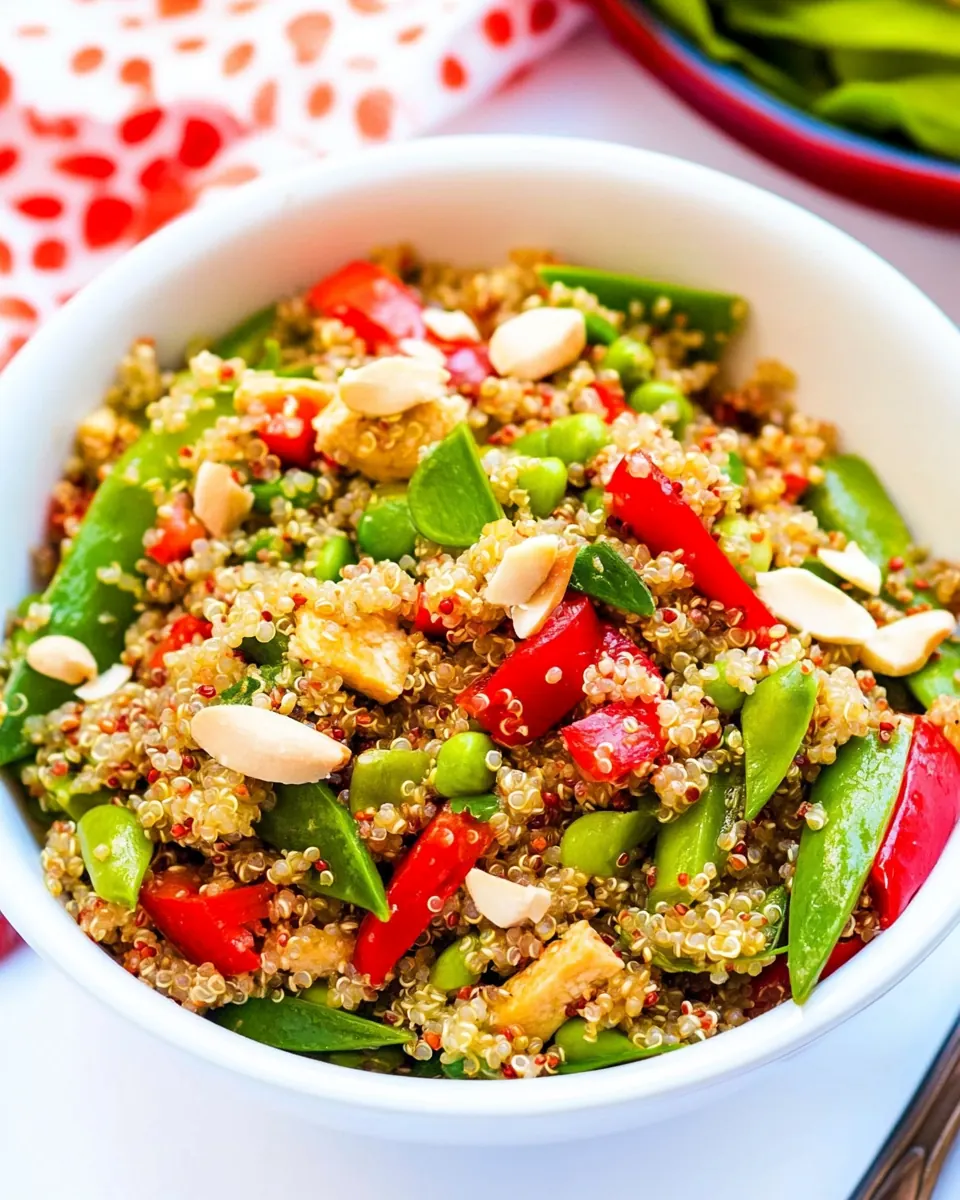
These steps are easy to follow, and the real craft is in the attentive moments while the quinoa cooks and the dressing comes together. I like to prep my vegetables while the quinoa simmers so everything can be combined while the grain is still a touch warm. Read through the steps, then move through them with a calm rhythm for best results.
- Put the quinoa in a wire-mesh strainer and rinse well. (This removes a bitter coating on the quinoa.): The scent of rinsed quinoa is subtle and earthy, and you will notice the cloudy rinse water clear up as the bitter coatings wash away. Rinsing prevents a faintly soapy or bitter aftertaste, and results in separate, fluffy grains once cooked. A common mistake is skimping on rinsing, which leaves that coating behind and dulls the final flavor. Make sure to rub the grains gently with your fingers while running water, then shake off excess moisture so the cooking ratio stays accurate.
- Bring the vegetable stock to a low boil in a pan with a tight-fitting lid.: As the vegetable broth warms, it will steam and release savory aromas that signal the base flavor for the quinoa. A low rolling boil is ideal, you want visible movement but not a violent boil that evaporates liquid too quickly. If you use too high heat the broth can reduce too much before the quinoa is added, which might make the grains cook unevenly. Use a pot with a lid that seals to trap steam for even cooking.
- When it boils, stir in the quinoa, reduce the heat to a low simmer, cover the pan, and cook 15 minutes.: You will hear a gentle simmer and see a few bubbles, while the quinoa absorbs the broth and puffs up. The steam and trapped heat are what cook the grain through; don’t lift the lid frequently because that releases steam and lengthens cooking. A common error is cooking at too high a heat, which can cause uneven texture or scorched bottoms. Maintain a low simmer and set a timer for reliable results.
- Turn off the heat and let it sit covered for 5 minutes more.: This resting time lets residual steam finish the job, producing fluffy grains rather than gummy clumps. You may notice gentle steam escaping when you uncover the pot, and the aroma becomes more pronounced. Avoid stirring immediately out of the pot, which can make the quinoa sticky. Let it settle so the grains finish gently and separate when fluffed.
- While the quinoa cooks, cut the sugar snap peas, celery, and green onions into thin diagonal slices and chop the red bell pepper into small pieces.: The sound of knife on board and the burst of vegetal fragrance are small pleasures here. Diagonal slicing creates more elegant, elongated pieces that mingle well with quinoa . Uniform cuts ensure every forkful feels balanced. A frequent misstep is uneven chopping which leads to inconsistent texture; take a little time to make sure the pieces are similar sizes for an even eating experience.
- When the quinoa is done, fluff it with a fork. Dump the cooked quinoa into a bowl (big enough to hold all the ingredients) and let it cool while you prep the other ingredients.: Fluffing teases apart the hot grains, releasing steam and revealing a tender, slightly nutty aroma. Use a fork rather than a spoon to separate the kernels gently so they stay light and airy. A mistake is over stirring which can crush the grains and make the texture gluey. After fluffing, transfer the quinoa to a large bowl that will hold the assembled salad and allow it to cool a bit.
- To make the dressing, whisk together the soy sauce, ginger puree, rice vinegar, sesame oil, and Golden Monkfruit sweetener and then whisk in the avocado oil.: As you whisk, the dressing transforms into a glossy sheen that clings to the back of a spoon. The aroma of ginger and sesame is forward and bright, and the small amount of sweetener balances the acidity. If the dressing is too sharp, a little more oil smooths it out; if too thin, a tiny extra splash of soy sauce deepens the body. Avoid over emulsifying and adding too much oil at once, which can mask the bright components.
- Chop enough peanuts to make 1/2 cup chopped peanuts.: The act of chopping releases the rich, toasty fragrance of the peanuts , and the crunchy pieces add a satisfying contrast to the tender grain. Chop to varied sizes for textural interest, but avoid grinding them into dust which will disappear into the salad. A common oversight is adding whole nuts that are too large and dominate the bite; aim for pieces that contribute crunch without overwhelming.
- When the quinoa has cooled about 15 minutes, add about 3 tablespoons dressing to the bowl and stir to lightly coat the quinoa with dressing.: At this stage the warmth of the quinoa helps the dressing open up aromatically and cling to the grains. You should see a slight sheen on the kernels rather than puddles of liquid. Starting with a modest amount of dressing ensures you do not overdress and wilt the vegetables. An easy mistake is adding all the dressing at once, which can make the salad too salty; start small and adjust to taste.
- Stir in the vegetables and chopped peanuts, adding a little more dressing as desired.: You will hear the soft rustle of vegetables and feel the satisfying mix of textures as the bowl comes together. Toss gently to combine so the vegetables retain their crispness and the dressing coats without pooling. If the salad tastes flat, add a splash more rice vinegar or a pinch of salt to lift it. Avoid over mixing which will bruise delicate pieces and change the texture.
- Serve Asian Quinoa Salad right away or chill for an hour or two before serving.: Serving immediately gives you the contrast of still slightly warm quinoa against crisp vegetables, while chilling allows the flavors to meld for a more cohesive profile. Both options are valid and delicious; choose based on the occasion. A common regret is letting it sit too long without a tight lid which dries out the salad, so cover it if refrigerating overnight to retain moisture and flavor.
Tips for Success
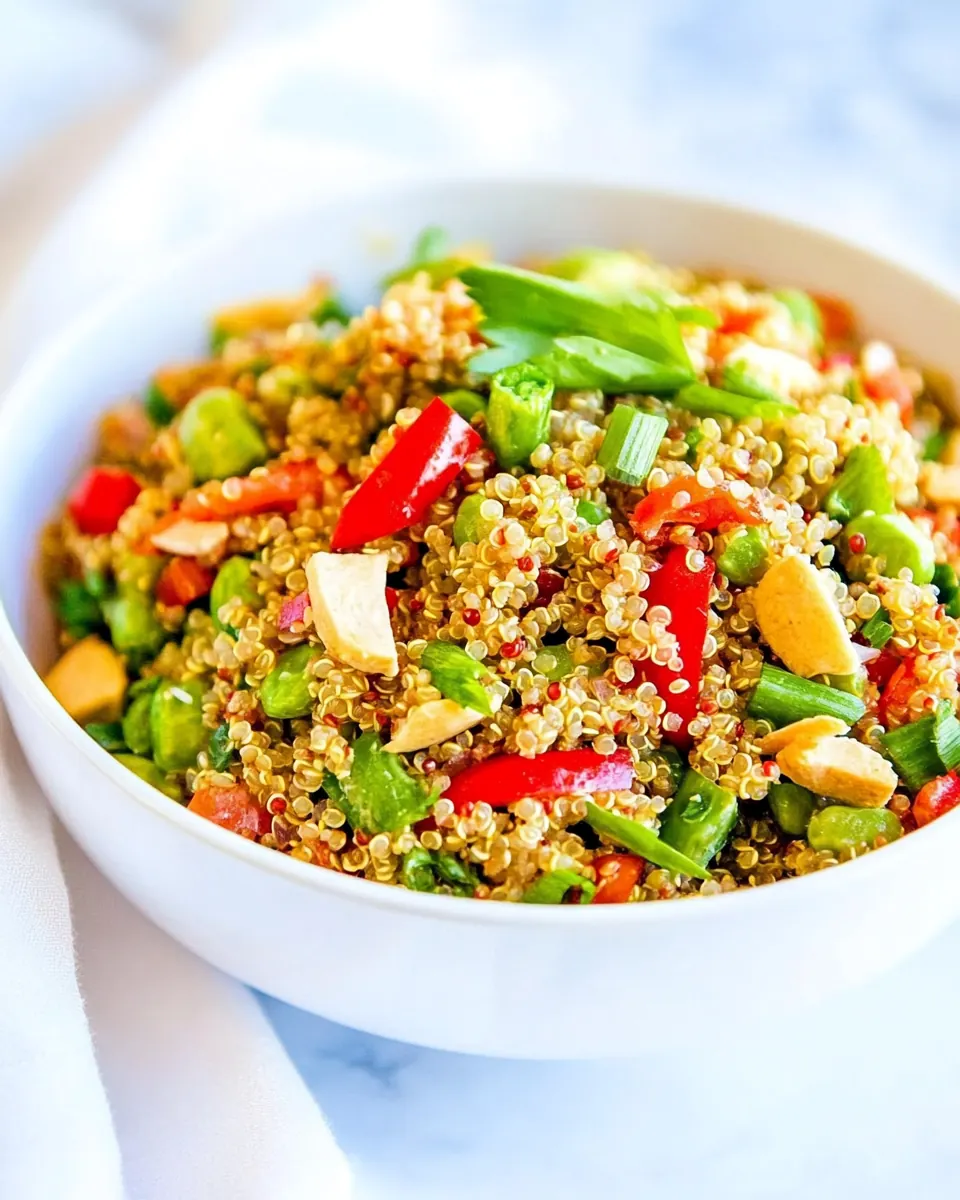
I like to treat this salad like a small production where a few careful choices make a big difference. The tips below cover timing, texture, and how to balance the dressing so the bowl tastes harmonious. They will help you get consistent results whether you are making one serving or a large batch.
- Rinse quinoa thoroughly to remove the natural bitter coating and produce light, separate grains that soak up dressing beautifully.
- Use vegetable broth to cook the quinoa for a subtle savory foundation that complements the dressing without overpowering the vegetables.
- Cut vegetables uniformly to guarantee even texture in every bite, aiming for thin diagonal slices for snap peas and celery and small dice for the bell pepper.
- Start with a small amount of dressing, about 3 tablespoons, then add more as needed so you do not overdress and muddy the crunch of the vegetables.
- Chop peanuts to mixed sizes so you get both small bits that distribute flavor and slightly larger pieces for noticeable crunch.
- Cool quinoa slightly before tossing so the warm grains soak up some dressing without wilting the vegetables, preserving crispness and mouthfeel.
What Goes Well With This Asian Quinoa Salad
This salad pairs well with lots of occasions and sides because it is both nourishing and bright. Serve it for a light lunch, a picnic, or as part of a larger spread at a potluck. The textures and flavors play nicely alongside a range of dishes and seasonal menus.
- Serve as a main for lunch with a simple side of fresh fruit or steamed greens to create a balanced midday meal that feels energized rather than heavy.
- Offer it at potlucks because it travels well and can be served chilled or at room temperature, making it an easy contribution to a buffet style meal.
- Pair with grilled vegetables for a spring or summer dinner; the smoky char contrasts nicely with the fresh, crunchy salad.
- Bring it to seasonal gatherings like spring market lunches or casual holiday lunches where a lighter grain salad balances richer dishes on the table.
- Storage tips include keeping the salad covered in the fridge for up to three days, and storing any extra dressing separately to preserve maximum crunch in the vegetables.
- Serve chilled or slightly warm depending on preference; chilling melds flavors, while serving slightly warm accentuates the quinoa‘s toasted notes.
FAQ
Conclusion
This salad stands out for its bright textures and balanced flavors, combining fluffy quinoa with crisp vegetables and a savory sesame ginger dressing. Give it a try whether you need a nourishing lunch, a make ahead potluck dish, or a versatile side for spring gatherings. I hope this recipe becomes one you return to often, because it is easy to scale, forgiving in technique, and reliably satisfying without being heavy.
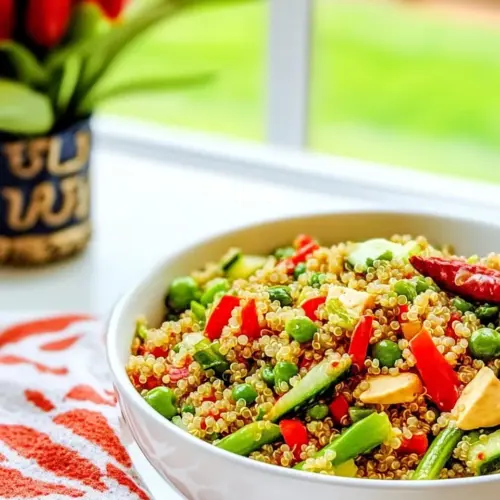
Asian Quinoa Salad
Equipment
- Wire mesh strainer
- Saucepan with tight fitting lid
- Large Mixing Bowl
- Whisk
Ingredients
- 1 cup quinoa, rinsed well Rinse thoroughly to remove bitter saponins and improve texture; cooks into fluffy, slightly nutty grains that form the salad base. Provide protein and fiber, absorbing dressing flavors for a hearty, nutritious foundation.
- 2 cups vegetable broth (see notes) Simmer gently to cook quinoa and infuse subtle savory flavor; provides liquid that prevents sticking and contributes depth. Use low-sodium broth if desired to control overall saltiness while enhancing umami.
- 1 1/2 cups diagonally sliced sugar snap peas Slice diagonally for visual appeal and tender-crisp texture; adds fresh snap and sweet-green flavor that contrasts cooked quinoa. Toss in near the end of prep to preserve crunch and bright color.
- 1 cup diagonally sliced celery Slice diagonally to create slender, crisp pieces that add freshness and mild vegetal flavor; helps balance richer components. Include raw for crunch or briefly blanch if a softer bite is preferred.
- 1 red bell pepper, finely chopped Chop finely to distribute sweet, slightly tangy bell pepper flavor evenly; adds vibrant color and juicy crunch throughout the salad. Use red for maximum sweetness and appealing visual contrast.
- 1/2 cup diagonally sliced green onion Slice diagonally to produce angled rings that offer mild onion bite and aromatic lift; contributes both flavor and decorative edging. Add raw for pungency or marinate briefly to mellow sharpness.
- 1/2 cup chopped peanuts Chop coarsely to add crunchy texture and nutty richness; offers savory contrast and a pleasant mouthfeel that complements soft quinoa. Use roasted or raw peanuts depending on desired intensity and salt level.
Instructions
- Put the quinoa in a wire-mesh strainer and rinse well. (This removes a bitter coating on the quinoa.): The scent of rinsed quinoa is subtle and earthy, and you will notice the cloudy rinse water clear up as the bitter coatings wash away. Rinsing prevents a faintly soapy or bitter aftertaste, and results in separate, fluffy grains once cooked. A common mistake is skimping on rinsing, which leaves that coating behind and dulls the final flavor. Make sure to rub the grains gently with your fingers while running water, then shake off excess moisture so the cooking ratio stays accurate.
- Bring the vegetable stock to a low boil in a pan with a tight-fitting lid.: As the vegetable broth warms, it will steam and release savory aromas that signal the base flavor for the quinoa. A low rolling boil is ideal, you want visible movement but not a violent boil that evaporates liquid too quickly. If you use too high heat the broth can reduce too much before the quinoa is added, which might make the grains cook unevenly. Use a pot with a lid that seals to trap steam for even cooking.
- When it boils, stir in the quinoa, reduce the heat to a low simmer, cover the pan, and cook 15 minutes.: You will hear a gentle simmer and see a few bubbles, while the quinoa absorbs the broth and puffs up. The steam and trapped heat are what cook the grain through; don’t lift the lid frequently because that releases steam and lengthens cooking. A common error is cooking at too high a heat, which can cause uneven texture or scorched bottoms. Maintain a low simmer and set a timer for reliable results.
- Turn off the heat and let it sit covered for 5 minutes more.: This resting time lets residual steam finish the job, producing fluffy grains rather than gummy clumps. You may notice gentle steam escaping when you uncover the pot, and the aroma becomes more pronounced. Avoid stirring immediately out of the pot, which can make the quinoa sticky. Let it settle so the grains finish gently and separate when fluffed.
- While the quinoa cooks, cut the sugar snap peas, celery, and green onions into thin diagonal slices and chop the red bell pepper into small pieces.: The sound of knife on board and the burst of vegetal fragrance are small pleasures here. Diagonal slicing creates more elegant, elongated pieces that mingle well with quinoa . Uniform cuts ensure every forkful feels balanced. A frequent misstep is uneven chopping which leads to inconsistent texture; take a little time to make sure the pieces are similar sizes for an even eating experience.
- When the quinoa is done, fluff it with a fork. Dump the cooked quinoa into a bowl (big enough to hold all the ingredients) and let it cool while you prep the other ingredients.: Fluffing teases apart the hot grains, releasing steam and revealing a tender, slightly nutty aroma. Use a fork rather than a spoon to separate the kernels gently so they stay light and airy. A mistake is over stirring which can crush the grains and make the texture gluey. After fluffing, transfer the quinoa to a large bowl that will hold the assembled salad and allow it to cool a bit.
- To make the dressing, whisk together the soy sauce, ginger puree, rice vinegar, sesame oil, and Golden Monkfruit sweetener and then whisk in the avocado oil.: As you whisk, the dressing transforms into a glossy sheen that clings to the back of a spoon. The aroma of ginger and sesame is forward and bright, and the small amount of sweetener balances the acidity. If the dressing is too sharp, a little more oil smooths it out; if too thin, a tiny extra splash of soy sauce deepens the body. Avoid over emulsifying and adding too much oil at once, which can mask the bright components.
- Chop enough peanuts to make 1/2 cup chopped peanuts.: The act of chopping releases the rich, toasty fragrance of the peanuts , and the crunchy pieces add a satisfying contrast to the tender grain. Chop to varied sizes for textural interest, but avoid grinding them into dust which will disappear into the salad. A common oversight is adding whole nuts that are too large and dominate the bite; aim for pieces that contribute crunch without overwhelming.
- When the quinoa has cooled about 15 minutes, add about 3 tablespoons dressing to the bowl and stir to lightly coat the quinoa with dressing.: At this stage the warmth of the quinoa helps the dressing open up aromatically and cling to the grains. You should see a slight sheen on the kernels rather than puddles of liquid. Starting with a modest amount of dressing ensures you do not overdress and wilt the vegetables. An easy mistake is adding all the dressing at once, which can make the salad too salty; start small and adjust to taste.
- Stir in the vegetables and chopped peanuts, adding a little more dressing as desired.: You will hear the soft rustle of vegetables and feel the satisfying mix of textures as the bowl comes together. Toss gently to combine so the vegetables retain their crispness and the dressing coats without pooling. If the salad tastes flat, add a splash more rice vinegar or a pinch of salt to lift it. Avoid over mixing which will bruise delicate pieces and change the texture.
- Serve Asian Quinoa Salad right away or chill for an hour or two before serving.: Serving immediately gives you the contrast of still slightly warm quinoa against crisp vegetables, while chilling allows the flavors to meld for a more cohesive profile. Both options are valid and delicious; choose based on the occasion. A common regret is letting it sit too long without a tight lid which dries out the salad, so cover it if refrigerating overnight to retain moisture and flavor.
Notes
- Rinse quinoa thoroughly to remove the natural bitter coating and produce light, separate grains that soak up dressing beautifully.
- Use vegetable broth to cook the quinoa for a subtle savory foundation that complements the dressing without overpowering the vegetables.
- Cut vegetables uniformly to guarantee even texture in every bite, aiming for thin diagonal slices for snap peas and celery and small dice for the bell pepper.
- Start with a small amount of dressing, about 3 tablespoons, then add more as needed so you do not overdress and muddy the crunch of the vegetables.
- Chop peanuts to mixed sizes so you get both small bits that distribute flavor and slightly larger pieces for noticeable crunch.
- Cool quinoa slightly before tossing so the warm grains soak up some dressing without wilting the vegetables, preserving crispness and mouthfeel.