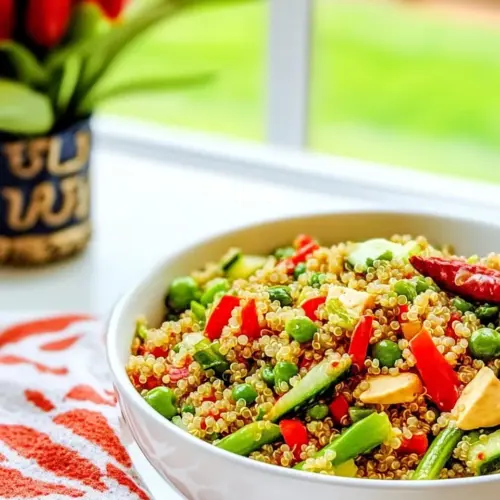
Asian Quinoa Salad
Asian Quinoa Salad is a bright, crunchy bowl with fluffy quinoa, crisp sugar snap peas, and a tangy sesame ginger dressing. This easy spring salad is perfect for meal prep or a light lunch, delivering savory, nutty, and fresh flavors in every bite. Make it for an easy weeknight dinner or a potluck side, it stays vibrant and satisfying for days.
Equipment
- Wire mesh strainer
- Saucepan with tight fitting lid
- Large Mixing Bowl
- Whisk
Ingredients
- 1 cup quinoa, rinsed well Rinse thoroughly to remove bitter saponins and improve texture; cooks into fluffy, slightly nutty grains that form the salad base. Provide protein and fiber, absorbing dressing flavors for a hearty, nutritious foundation.
- 2 cups vegetable broth (see notes) Simmer gently to cook quinoa and infuse subtle savory flavor; provides liquid that prevents sticking and contributes depth. Use low-sodium broth if desired to control overall saltiness while enhancing umami.
- 1 1/2 cups diagonally sliced sugar snap peas Slice diagonally for visual appeal and tender-crisp texture; adds fresh snap and sweet-green flavor that contrasts cooked quinoa. Toss in near the end of prep to preserve crunch and bright color.
- 1 cup diagonally sliced celery Slice diagonally to create slender, crisp pieces that add freshness and mild vegetal flavor; helps balance richer components. Include raw for crunch or briefly blanch if a softer bite is preferred.
- 1 red bell pepper, finely chopped Chop finely to distribute sweet, slightly tangy bell pepper flavor evenly; adds vibrant color and juicy crunch throughout the salad. Use red for maximum sweetness and appealing visual contrast.
- 1/2 cup diagonally sliced green onion Slice diagonally to produce angled rings that offer mild onion bite and aromatic lift; contributes both flavor and decorative edging. Add raw for pungency or marinate briefly to mellow sharpness.
- 1/2 cup chopped peanuts Chop coarsely to add crunchy texture and nutty richness; offers savory contrast and a pleasant mouthfeel that complements soft quinoa. Use roasted or raw peanuts depending on desired intensity and salt level.
Instructions
- Put the quinoa in a wire-mesh strainer and rinse well. (This removes a bitter coating on the quinoa.): The scent of rinsed quinoa is subtle and earthy, and you will notice the cloudy rinse water clear up as the bitter coatings wash away. Rinsing prevents a faintly soapy or bitter aftertaste, and results in separate, fluffy grains once cooked. A common mistake is skimping on rinsing, which leaves that coating behind and dulls the final flavor. Make sure to rub the grains gently with your fingers while running water, then shake off excess moisture so the cooking ratio stays accurate.
- Bring the vegetable stock to a low boil in a pan with a tight-fitting lid.: As the vegetable broth warms, it will steam and release savory aromas that signal the base flavor for the quinoa. A low rolling boil is ideal, you want visible movement but not a violent boil that evaporates liquid too quickly. If you use too high heat the broth can reduce too much before the quinoa is added, which might make the grains cook unevenly. Use a pot with a lid that seals to trap steam for even cooking.
- When it boils, stir in the quinoa, reduce the heat to a low simmer, cover the pan, and cook 15 minutes.: You will hear a gentle simmer and see a few bubbles, while the quinoa absorbs the broth and puffs up. The steam and trapped heat are what cook the grain through; don’t lift the lid frequently because that releases steam and lengthens cooking. A common error is cooking at too high a heat, which can cause uneven texture or scorched bottoms. Maintain a low simmer and set a timer for reliable results.
- Turn off the heat and let it sit covered for 5 minutes more.: This resting time lets residual steam finish the job, producing fluffy grains rather than gummy clumps. You may notice gentle steam escaping when you uncover the pot, and the aroma becomes more pronounced. Avoid stirring immediately out of the pot, which can make the quinoa sticky. Let it settle so the grains finish gently and separate when fluffed.
- While the quinoa cooks, cut the sugar snap peas, celery, and green onions into thin diagonal slices and chop the red bell pepper into small pieces.: The sound of knife on board and the burst of vegetal fragrance are small pleasures here. Diagonal slicing creates more elegant, elongated pieces that mingle well with quinoa . Uniform cuts ensure every forkful feels balanced. A frequent misstep is uneven chopping which leads to inconsistent texture; take a little time to make sure the pieces are similar sizes for an even eating experience.
- When the quinoa is done, fluff it with a fork. Dump the cooked quinoa into a bowl (big enough to hold all the ingredients) and let it cool while you prep the other ingredients.: Fluffing teases apart the hot grains, releasing steam and revealing a tender, slightly nutty aroma. Use a fork rather than a spoon to separate the kernels gently so they stay light and airy. A mistake is over stirring which can crush the grains and make the texture gluey. After fluffing, transfer the quinoa to a large bowl that will hold the assembled salad and allow it to cool a bit.
- To make the dressing, whisk together the soy sauce, ginger puree, rice vinegar, sesame oil, and Golden Monkfruit sweetener and then whisk in the avocado oil.: As you whisk, the dressing transforms into a glossy sheen that clings to the back of a spoon. The aroma of ginger and sesame is forward and bright, and the small amount of sweetener balances the acidity. If the dressing is too sharp, a little more oil smooths it out; if too thin, a tiny extra splash of soy sauce deepens the body. Avoid over emulsifying and adding too much oil at once, which can mask the bright components.
- Chop enough peanuts to make 1/2 cup chopped peanuts.: The act of chopping releases the rich, toasty fragrance of the peanuts , and the crunchy pieces add a satisfying contrast to the tender grain. Chop to varied sizes for textural interest, but avoid grinding them into dust which will disappear into the salad. A common oversight is adding whole nuts that are too large and dominate the bite; aim for pieces that contribute crunch without overwhelming.
- When the quinoa has cooled about 15 minutes, add about 3 tablespoons dressing to the bowl and stir to lightly coat the quinoa with dressing.: At this stage the warmth of the quinoa helps the dressing open up aromatically and cling to the grains. You should see a slight sheen on the kernels rather than puddles of liquid. Starting with a modest amount of dressing ensures you do not overdress and wilt the vegetables. An easy mistake is adding all the dressing at once, which can make the salad too salty; start small and adjust to taste.
- Stir in the vegetables and chopped peanuts, adding a little more dressing as desired.: You will hear the soft rustle of vegetables and feel the satisfying mix of textures as the bowl comes together. Toss gently to combine so the vegetables retain their crispness and the dressing coats without pooling. If the salad tastes flat, add a splash more rice vinegar or a pinch of salt to lift it. Avoid over mixing which will bruise delicate pieces and change the texture.
- Serve Asian Quinoa Salad right away or chill for an hour or two before serving.: Serving immediately gives you the contrast of still slightly warm quinoa against crisp vegetables, while chilling allows the flavors to meld for a more cohesive profile. Both options are valid and delicious; choose based on the occasion. A common regret is letting it sit too long without a tight lid which dries out the salad, so cover it if refrigerating overnight to retain moisture and flavor.
Notes
- Rinse quinoa thoroughly to remove the natural bitter coating and produce light, separate grains that soak up dressing beautifully.
- Use vegetable broth to cook the quinoa for a subtle savory foundation that complements the dressing without overpowering the vegetables.
- Cut vegetables uniformly to guarantee even texture in every bite, aiming for thin diagonal slices for snap peas and celery and small dice for the bell pepper.
- Start with a small amount of dressing, about 3 tablespoons, then add more as needed so you do not overdress and muddy the crunch of the vegetables.
- Chop peanuts to mixed sizes so you get both small bits that distribute flavor and slightly larger pieces for noticeable crunch.
- Cool quinoa slightly before tossing so the warm grains soak up some dressing without wilting the vegetables, preserving crispness and mouthfeel.