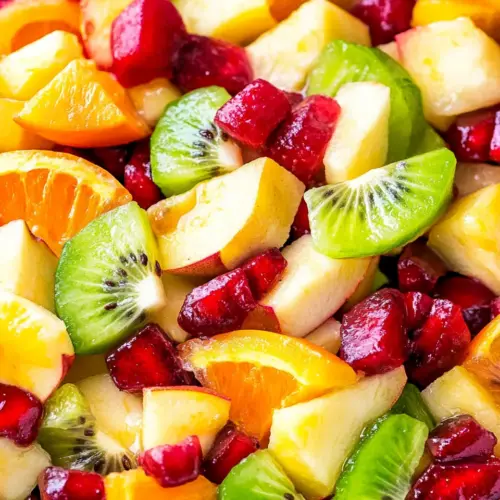
Winter Fruit Salad
Winter Fruit Salad is a bright, easy bowl that pairs juicy clementines, crisp apples, tender pears and jewel like pomegranate arils with a simple honey and citrus dressing. It is colorful, refreshing, and perfect as an easy side salad or party addition, delivering crisp textures and bright tang in every bite, making it a must try for cold season gatherings.
Equipment
- Large Mixing Bowl
- Measuring Cup
- Whisk
- Knife
Ingredients
- 1 lb 5 count Clementine oranges, peeled and separated into segments Provide bright, sweet-tart citrus segments that add juiciness and a burst of flavor; peel and separate to avoid bitterness from pith and to distribute evenly throughout the salad. Serve chilled for maximum refreshment and contrast with firmer fruits.
- 2 pears, cored and sliced Add tender, slightly grainy slices that contribute mild sweetness and pleasant texture; core and slice evenly to maintain consistent bite size. Choose ripe but firm pears to prevent mushiness and to keep slices intact in the dressing.
- 2 apples, cored and sliced Offer crisp, sweet-tart slices that bring structure and crunch; core and slice to match the size of other fruits for balanced mouthfeel. Use a variety you prefer for sweetness level and to complement the other winter fruits.
- 1 large pomegranate, to get 1 to 1 1/2 cups arils or seeds Provide jewel-like arils that deliver a pop of tart juice, vivid color, and a delightful crunchy texture; extract enough to yield one to one and a half cups for visual appeal. Rinse and drain the seeds gently to remove any membrane bits before adding.
- 4 kiwis, peeled and sliced Contribute vibrant green color and a soft, slightly tangy-sweet flavor with a creamy texture when peeled and sliced; prepare slices to harmonize with citrus and pomegranate. Select ripe kiwis that give slightly to gentle pressure for best sweetness.
- 3 tbsp honey Add natural sweetness and a glossy finish that helps bind juices and lightly sweeten the fruit medley; drizzle evenly and adjust to taste for desired sweetness. Warm slightly if needed to thin for easier mixing and to coat fruit evenly.
- 2 tbsp fresh lime juice, from 1 medium lime Provide bright acidity and fresh citrus aroma that balances sweetness and enhances overall freshness; squeeze from a medium lime for measured flavor. Strain to remove seeds and add gradually, tasting to maintain brightness without overpowering.
- 2 tbsp fresh lemon juice, from 1 medium lemon Deliver gentle acidity and fragrant citrus notes that round out the dressing and lift flavors; juice from a medium lemon for a clean, tart edge. Combine with lime juice and honey to create a balanced, zesty dressing for the salad.
Instructions
- In a large mixing bowl combine all prepared fruit - 5 segmented clementines, 2 sliced pears, 2 sliced apples, pomegranate seeds, and 4 sliced kiwis.: The first sensory cue you’ll notice is the mingle of fresh citrus aroma as you bring together the clementine segments, sliced pears , sliced apples , pomegranate arils, and sliced kiwis . You should see a colorful mosaic of textures and hues, and the bowl will begin to smell bright and fruity. This step matters because combining the fruit gently ensures each type retains its texture, letting the crunchy apples contrast with the soft kiwis and juicy clementines . A common mistake is overhandling the fruit which can bruise delicate pieces, so use a wide, shallow bowl and fold gently with a spoon or your hands.
- In a measuring cup, combine: 3 tbsp honey, 2 tbsp lemon juice and 2 tbsp lime juice, until honey is dissolved. If honey is not dissolving easily, warm for 10 seconds in microwave.: The moment you mix the honey with the fresh lemon and lime juices a fragrant citrus steam lifts, cutting through the syrupy sweetness of the honey . Use a small whisk or fork, and if the honey resists dissolving, warming it for a few seconds helps it blend smoothly without cooking the juice. The reason this matters is an even dressing coats the fruit with a thin glossy layer rather than puddling at the bottom. Avoid heating too long which can change the flavor of the honey , and be careful not to over dilute the citrus which would flatten the taste.
- Drizzle dressing over salad and toss gently to combine. Serve right away or cover and refrigerate if not serving right away.: When warmed briefly, the honey loosens and incorporates into the juices with minimal effort, releasing a deeper floral note. You’ll hear a gentle sound as the liquid mixes and see the viscosity drop, creating a silky dressing. This technique matters because a fully dissolved dressing adheres to fruit better, promoting even flavor in every bite. A frequent misstep is overheating which can scorch the honey and introduce a caramelized flavor, so trust short bursts of heat and stir between intervals.
- Drizzle dressing over salad and toss gently to combine: As the dressing hits the fruit you’ll notice the bowl gaining a soft sheen and a fresh citrus fragrance. Toss with gentle folding motions so the dressing coats pieces evenly, maintaining textures rather than pulverizing them. This final touch is crucial because it melds the components without making the salad soggy; it enhances brightness while preserving visual appeal. One thing to watch for is over tossing which bruises delicate segments, so aim for a few smooth turns to distribute flavor.
- Serve right away or cover and refrigerate if not serving right away: If you serve immediately, the fruit will be at its freshest with vibrant textures. If you refrigerate, the flavors will mingle further and the salad will chill nicely, making it refreshing at serving time. Chilling also helps the dressing set slightly on the fruit, which some guests prefer. However, refrigerating for too long can cause softer fruits to lose their structure, so plan to serve within a few hours for best texture. A common error is leaving the salad covered overnight which can lead to excess liquid and a loss of crispness.
Notes
- Choose firm fruit: Select pears and apples that are ripe but still firm to keep a pleasing crunch after tossing.
- Prep pomegranate smartly: Cut the pomegranate and tap out arils over a bowl of water to minimize mess and make separation easier.
- Balance the dressing: Taste the dressing with a small piece of fruit and adjust the honey or citrus to suit the sweetness or tartness you prefer.
- Slice uniformly: Keep slices consistent so each bite has a balanced mix of textures and flavors.
- Serve chilled: Refrigerate the salad for a short time before serving to let flavors settle and to refresh the bowl for warm gatherings.