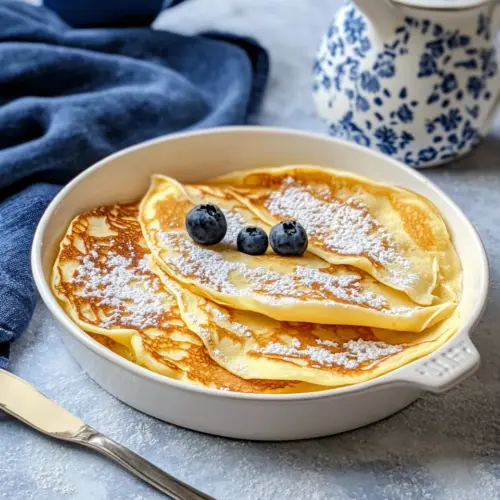
Swedish Pancakes
Swedish Pancakes are thin, lacy, and silky, delivering a delicate texture with golden edges and a tender center. This easy recipe yields light pancakes that are perfect for weekend brunch or an easy weeknight breakfast, pairing beautifully with jam, fruit, or creamy toppings. Make them when you want a simple, elegant meal that everyone will love.
Equipment
- nonstick skillet
- Whisk
- Mixing Bowls
- Spatula
Ingredients
- 3 large eggs Beat and incorporate structure and richness into the batter by providing protein and leavening support; whisk until smooth to help create a tender, cohesive pancake texture. Offer flavor depth and assist in browning when cooked on a hot griddle, contributing to a golden surface and slight lift.
- 1 1/4 cups whole milk Moisten and thin the batter for proper pourability and cooking consistency while adding creamy richness that enhances mouthfeel. Temper the batter temperature and suspend dry ingredients for even mixing, helping achieve thin, flexible Swedish pancakes.
- 3/4 cup all-purpose flour Bind and give body to the batter by supplying starches that set during cooking to form the pancake's body and structure. Absorb liquids for appropriate viscosity and contribute mild flavor and lightness when combined with eggs and milk.
- 1 1/2 tablespoons granulated sugar Add gentle sweetness to balance flavors and enhance browning through caramelization on the cooking surface. Improve overall taste profile without overpowering, helping the pancakes develop a pleasant, slightly sweet finish.
- 1/4 teaspoons salt Enhance and balance overall flavor by providing a subtle savory contrast that amplifies sweetness and other ingredients. Regulate taste perception to prevent the pancakes from tasting flat, while playing a minor role in chemical interactions during cooking.
- 1 1/2 tablespoons unsalted butter, melted (plus more for cooking) Enrich and add silkiness to the batter while providing fat that improves tenderness and flavor; melted form distributes evenly for consistent texture. Supply lubrication for cooking to reduce sticking and promote even browning when additional butter is used in the pan.
Instructions
- In a medium bowl, whisk the eggs until well beaten.: The whisking produces a uniform, slightly frothy mixture that helps incorporate air into the batter, leading to lighter pancakes. You should notice the eggs lighten in color and the surface becomes a bit foamy. A common mistake is under whisking, which can leave streaks of yolk and uneven texture. Use a whisk and circular motion to fully combine whites and yolks, scraping the bowl so no pockets of egg remain.
- Add the milk to the eggs, whisk to combine.: Pouring the milk in slowly while whisking softens the eggs and creates a homogeneous liquid base, making it easier to incorporate the flour later. You will see the mixture thin and take on a uniform pale color. If you add the milk too quickly without whisking, separation can occur and the batter may be uneven. Keep whisking until there are no visible streaks of egg or milk, and the mixture flows smoothly off the whisk.
- In a separate bowl, mix the flour, sugar, and salt.: Dry mixing distributes the sweet and savory elements evenly, so each bite tastes balanced. The flour should look powdery and free of lumps, while the sugar and salt will be dispersed through the dry mix. A common issue is clumps in the flour, which can create pockets in the batter, so break up any lumps with a fork or sift if needed.
- Gradually mix the dry ingredients into the wet ingredients while whisking until the mixture is smooth. If it is too thick, incorporate a splash of milk to thin it out.: Adding the dry mix in stages prevents lumps and lets you monitor consistency, resulting in a silkier batter. Visually, the mixture should become glossy and pourable, without visible flour streaks. If you add all the flour at once, you risk clumping, which leads to an uneven texture. If the batter seems too viscous, add milk in teaspoon amounts until the batter runs smoothly off the whisk.
- Whisk in the melted butter until well combined.: The melted butter lends a velvety mouthfeel and a toasty aroma to the batter, and whisking it in emulsifies the fat into the mixture. You will smell a warm, buttery note and see the batter take on a slight sheen. If you add very hot butter, it can cook the eggs, causing bits to coagulate; allow the butter to cool slightly before combining. Ensure the butter is fully incorporated so the pancakes brown evenly and do not separate during cooking.
- Heat a nonstick skillet or griddle over medium heat. Lightly coat with butter.: A properly heated pan creates the quick set at the edges that forms the signature lacy border, and butter in the pan promotes even browning. The surface should shimmer but not smoke, and you may hear a soft sizzle when batter hits the pan. If the pan is too cool the pancakes will absorb fat and stay pale, while an overly hot pan will burn the exterior before the center cooks. Keep the heat steady and spread a thin film of butter with a paper towel or brush.
- Pour about 1/4 cup of batter onto the skillet, tilting the pan to spread the batter thinly.: The batter should glide and create a thin round that almost fills the pan, forming a uniform layer. As it spreads you will notice the edges begin to set quickly and tiny bubbles may appear across the surface. Pouring too much batter results in thick pancakes that do not cook through evenly, so aim for a light pour and tilt the pan to encourage an even, lace like edge.
- Cook for 1–2 minutes, until the edges are lightly browned and the top appears set.: During this stage the underside develops color and the top loses its glossy sheen, indicating readiness to flip. Look for delicate golden edges and a set surface, and listen for a gentle sizzle rather than a loud crackle. Flipping too early can tear the pancake, while waiting too long can overbrown the underside. Use a thin spatula to lift an edge and check the color before proceeding.
- Flip the pancake and cook for another minute until golden.: The second side cooks quickly, finishing the interior and creating a balanced golden tone. You should see an appetizing, even color and feel a slight spring when you press the center with the spatula. A common error is pressing down on the pancake while cooking, which flattens and dries it out. Allow it to cook with minimal handling so the texture stays tender and slightly springy.
- Transfer to a plate. Repeat with the remaining batter.: Stacking the pancakes on a warmed plate helps maintain temperature while you finish the batch, and the residual heat keeps them pliable. If you stack too many at once without a warm plate they can cool and lose some of their lacy charm. Keep the cooked pancakes covered loosely with foil or a clean towel if you need to hold them for a short time, this preserves warmth without trapping steam.
- Serve warm with your choice of toppings.: Warm pancakes are at their best, as toppings meld into the surface creating a luscious bite. Choose toppings that complement the mild sweetness, and you will notice jams soaking slightly into the surface while fresh fruit adds bright contrast. Serving them cold dulls the texture and flavor, so aim to plate them right away for the most satisfying experience.
Notes
- Warm the milk slightly before adding for a silkier batter and a more tender crumb, but do not make it hot enough to cook the eggs when combined.
- Control the heat by testing with a small dollop of batter first; if it browns too quickly lower the temperature a touch to avoid overcoloring.
- Use unsalted butter so you control the sodium level, and add the extra cooking butter sparingly to keep edges crisp without greasiness.
- Thin the batter gradually with teaspoons of milk rather than large additions, this keeps you in control of the pourable consistency.
- Serve immediately on warmed plates so the pancakes remain soft and the toppings meld into the surface instead of cooling and firming up.