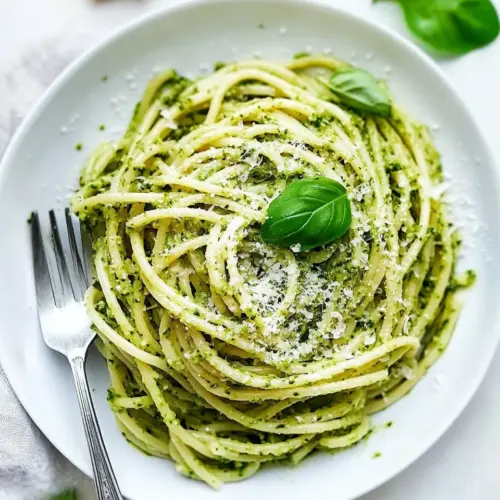
Super Easy Homemade Pesto Pasta
Super Easy Homemade Pesto Pasta is a creamy, herb forward pasta dish with bright basil, nutty pine nuts, and savory parmesan cheese. This easy weeknight dinner comes together fast, offering a silky sauce that clings to spiral pasta for satisfying texture and flavor. Make it when you want a quick, elegant meal that still feels special.
Equipment
- Large Pot
- Food Processor
- Colander
- Skillet
Ingredients
- 2 cups spiral pasta Provide structure and bite to the dish by cooking until al dente; toss with sauce to absorb flavors and maintain texture. Use spiral shapes to catch pesto between crevices, enhancing each mouthful with herbaceous sauce.
- 2 cups fresh basil leaves Bring bright, aromatic freshness and a signature basil flavor when blended into pesto; choose young leaves for a tender, vibrant profile. Add gradually to control intensity and preserve the aromatic oils that define the sauce.
- 1/2 cup pine nuts Deliver a rich, nutty backbone and slight creaminess when ground into the pesto; toast lightly to amplify flavor but avoid burning to prevent bitterness. Use as a middle note to balance herbaceous basil and sharp cheese.
- 1/4 cup extra virgin olive oil Provide smoothness and help emulsify the sauce when whisked with nuts and basil, creating a glossy texture that coats pasta evenly. Use good-quality extra virgin olive oil for fruity complexity and to carry fat-soluble flavors.
- 1/2 cup parmesan cheese freshly grated Contribute sharp, savory, umami depth and creamy texture when finely grated into the pesto; stir in to add saltiness and help bind the sauce. Freshly grated cheese melts into the warm pasta for a cohesive, flavorful finish.
- salt and pepper to taste Enhance and balance flavors by seasoning to taste; start with a pinch and adjust gradually to avoid over-salting. Use freshly ground pepper for brightness and subtle heat that complements the pesto's richness.
Instructions
- Cook your noodles according to package directions.: The kitchen fills with a warm, starchy scent as the water comes to a rolling simmer, and the occasional bubble bursts on the surface. You want the pasta to be cooked to an al dente texture where it still has a gentle resistance when bitten, not mushy. Salting the boiling water before adding the pasta seasons it from the inside out and prevents blandness, which is a common oversight. Listen for the water returning to a vigorous boil after the pasta goes in, then stir to keep pieces from sticking, and watch the pot rather than relying solely on the clock to avoid overcooking.
- Pulse. In the bowl of a food processor, add the basil leaves and pine nuts and pulse until very finely minced.: When you add the basil leaves and pine nuts to the food processor, you will immediately notice a green, herbaceous aroma that signals freshness. Pulse in short bursts so the ingredients break down evenly rather than turning into a puree too quickly. This controlled processing preserves small bits of texture and prevents the mixture from warming up too much, which can dull the bright flavor. A common mistake is running the processor continuously, which heats the sauce and can cause color loss.
- Add the garlic and parmesan cheese and pulse a few more times until combined.: As you introduce minced garlic and freshly grated parmesan cheese , the scent deepens into savory territory, and the mixture will start to bind. Pulse just enough to combine without overworking, because over-blending can create a gluey texture and reduce the lively herbal notes. If the garlic is too coarse, it may leave harsh pockets of flavor, so check the consistency and scrape down the sides if needed to unify the mixture.
- Pour. With the food processor running, slowly pour in the olive oil and blend until combined and smooth. Season with salt and pepper to taste and pulse a couple of times.: Slowly streaming in the extra virgin olive oil while the processor runs creates an emulsion that turns the mixture silky and glossy. The sound changes subtly as the oil incorporates, and you will see the sauce go from grainy to smooth. This technique matters because a proper emulsion helps the sauce cling to the pasta , yielding even coating rather than sliding off. Pour too quickly and the oil may separate, leaving a slick layer instead of a cohesive sauce.
- Serve with cooked pasta and add an extra sprinkle of parmesan cheese as a garnish.: At this point, tasting is essential. The interplay of salt and pepper fine tunes the pesto, brightening the basil and tempering the richness of the parmesan cheese . Pulse briefly after seasoning to distribute flavors. Watch out for under seasoning, which makes the dish flat, and over seasoning, which is difficult to correct after the fact. If it tastes too sharp, a tiny bit more olive oil can mellow it.
- Serve with cooked pasta and add an extra sprinkle of parmesan cheese as a garnish: Tossing the warm pasta with the pesto lets the sauce cling into every crevice, and you will notice steam rising as the flavors meld. The sound of the pasta being stirred in a bowl is subtle, but the visual is important too, the sauce should coat rather than pool. Garnish with an additional dusting of freshly grated parmesan cheese for a final savory lift. A mistake to avoid here is adding hot pasta directly from the pot without draining well, which can dilute the sauce with excess water.
Notes
- Swap nuts for variety If you want a different nuttiness, you can substitute toasted walnuts or almonds for the pine nuts, they add a robust flavor and are often more budget friendly.
- Smooth versus chunky For a silkier pesto, process a little longer and add extra olive oil, for a chunkier texture pulse less frequently to keep small pieces of pine nuts and basil.
- Adjust the cheese If you prefer a sharper note, use a slightly older grated parmesan cheese, or reduce the amount for a lighter finish.
- Boost brightness For extra lift, stir in a small squeeze of lemon juice at the end, which brightens the basil without masking it.
- Reserve pesto for other uses This sauce is great in sandwiches or as a drizzle for roasted vegetables, so make a double batch to keep on hand.