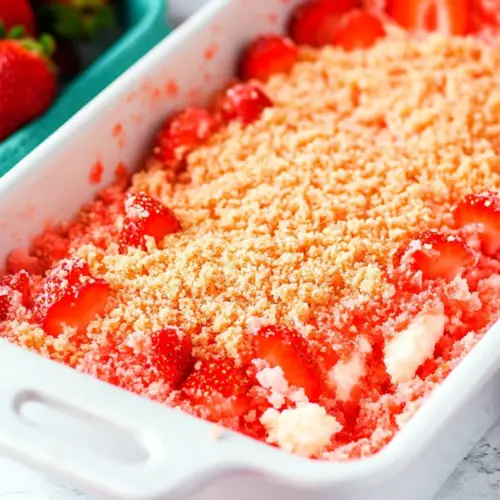
Strawberry Shortcake Crumbs
Strawberry Shortcake Crumbs deliver bright, concentrated strawberry flavor and crunchy texture in minutes. These easy pantry friendly crumbles are creamy to the nose and crisp to the bite, perfect for topping yogurt, ice cream, or cake. A quick bake turns simple flour, cold butter, and a box of strawberry Jell o into a playful garnish, ideal for easy weeknight desserts or last minute entertaining.
Equipment
- Baking Sheet
- Parchment Paper
- Medium Bowl
- Fork
Ingredients
- 3 ounces box strawberry flavored Jell-o Adds bright strawberry flavor and color while contributing soluble gelatin to help bind and set crumbs; dissolve into dry ingredients or melt with butter for even distribution. Enhances aroma and provides a nostalgic, concentrated fruit note without fresh strawberries.
- 1 cup all-purpose flour divided Provides structure and bulk to the crumb mixture, with 1 cup measured and part held back for dusting or adjusting texture; develop lightness by sifting and combining with fat. Enables proper hydration and browning during baking or toasting when mixed with other dry ingredients.
- 1/2 cup unsalted butter cold and divided Contributes richness, moisture, and tenderness when cold and cut or grated into the flour to create flaky crumb clusters; divide as directed to control texture and to cream with sugar if needed. Supplies flavor and helps bind ingredients when melted or incorporated, supporting both crumble and shortcake textures.
- 1/2 cup white granulated sugar Imparts sweetness and assists in browning and tenderizing the crumb; creamed with butter can create a lighter, aerated texture and helps dissolve powdered or flavored gelatin. Balances tartness of the strawberry flavoring and enhances overall mouthfeel without adding excessive moisture.
- 1 teaspoon vanilla extract Adds sweet floral notes and depth to the overall flavor profile while enhancing perceived sweetness without additional sugar; stir in toward the end to preserve aroma. Complements the strawberry Jell-o and rounds flavor, preventing flatness in the finished crumbs.
Instructions
- Preheat oven to 350 degrees F.: As you set the temperature, notice the warmth building in the oven and the faint metallic hum as the elements engage, this ensures consistent heat so the crumbs bake quickly and evenly. The why here is simple, a properly preheated oven gives immediate browning and prevents sogginess. A common mistake is skipping the preheat, which leads to uneven texture and underbaked centers. If your oven runs hot, use an oven thermometer to verify the temperature.
- In a medium bowl using a fork stir Jell-o with 1/2 cup flour and 1/4 cup butter, until you get a crumble mixture.: Right after combining, you will smell a concentrated strawberry scent, and the texture should resemble coarse sand with small butter flecks. This strawberry forward crumble forms the colorful component and the cold butter creates little pockets that crisp in the oven. Why this matters, the separate strawberry mix preserves bright flavor and color without overworking the dough. Avoid over mixing which melts the butter , leading to dense clumps instead of separate crumbles.
- In another medium bowl stir 1/2 cup flour, with 1/2 cup sugar, and 1/4 cup butter, plus 1 teaspoon vanilla. Mix until you get a crumble mixture.: When you fold these together you will detect a sweet scent with warm vanilla undernotes, and the texture should again be sandy but slightly more cohesive because of the sugar and vanilla . This vanilla crumble provides a balancing flavor to the strawberry bits, adding warmth and caramelizing potential. The technique matters because keeping the butter cold creates a lighter, crisper result. A frequent error is using softened butter , which yields a pasty mixture rather than distinct crumbs.
- Line a baking sheet with parchment paper and sprinkle on it the strawberry crumbles. Next, sprinkle on the vanilla crumbles, and slightly mix them.: As you layer the crumbles you will see a pretty contrast between pink and pale crumbs, and the parchment prevents sticking while allowing an easy transfer. Slightly mixing them gives visual interest and ensures both flavors mingle on the tray without fully blending. The reason this step is done separately is to preserve the integrity of each crumble so they brown at slightly different rates. A usual slip is packing the crumbs too tightly on the sheet, which prevents airflow and causes uneven browning.
- Bake for 7-8 minutes and do NOT stir.: During baking you will hear a faint crackle and soon smell that warm, sugared aroma; the edges will just begin to color. Leaving them undisturbed allows the crumbs to crisp and set, forming a brittle texture as the sugar melts and rehardens. The technique matters because stirring mid bake can break developing crisp edges and make clumps. If the crumbs brown too quickly, reduce the oven temperature slightly on the next batch to prevent burning.
- Remove from the oven and let cool completely on the baking sheet before storing into an airtight container in the fridge. When ready to use, take a fork and stir them first as they tend to stick together a bit.: Cooling on the sheet lets the crumbs finish firming up and you will notice the texture shift from warm and slightly soft to snap crisp. Storing chilled preserves their crunch and keeps the color bright. The why is that residual heat can create steam trapped in the container, making them soggy if stored warm. A mistake to avoid is transferring to a container while warm which ruins the crispness; always cool fully.
- The recipe makes 3 cups of crumbles.: When you open the jar, the first sensory cue is the fresh aroma, and stirring with a fork will break apart small clusters, restoring individual crumbles. This quick action ensures you get an even distribution when sprinkling over dishes. The reason clusters form is sugar and residual moisture causing bits to clump, so gentle agitation restores texture. Avoid using hands that may warm the crumbs and soften them; a fork does the job cleanly.
- The recipe makes 3 cups of crumbles.: Measuring out the finished volume helps you plan how much to use and how to store it, and the sight of three cups of colorful crumbs is satisfying and practical for portioning. Knowing the yield lets you decide if you should double or halve the batch depending on your needs. The why is that consistent yields allow repeatable results and help with recipe scaling. A common oversight is not accounting for jars or containers large enough for the full yield; choose containers that leave a bit of headroom to avoid crushing the crumbs.
Notes
- Chill the butter: Keep your butter cold until the moment you work it into the flour; this protects the crumb structure and prevents grease bleeding.
- Measure accurately: Spoon the flour into the cup and level it for consistent results, too much flour yields dry crumbs while too little makes them flimsy.
- Layer sparingly: Spread crumbs in a single layer on parchment so each piece gets hot air contact and browns uniformly.
- Watch the oven closely: Because the bake time is short, peek through the window rather than opening the door to preserve heat and monitor color.
- Cool completely: Let the tray come to room temperature before transferring to an airtight container to keep the texture crisp.