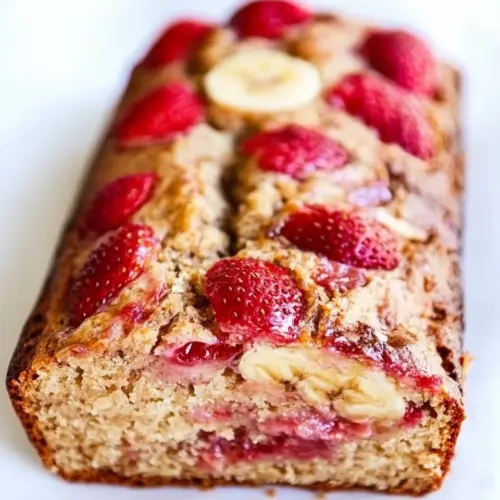
Strawberry Banana Bread
Strawberry Banana Bread is an easy, moist loaf that marries creamy ripe banana notes with bright strawberry bursts. This tender, slightly sweet bread is perfect for breakfast or a casual snack, and it’s pantry friendly with simple ingredients. The loaf stays moist thanks to sour cream and oil, making it a reliable bake you will want to make again and again.
Equipment
- 19×5-inch loaf pan
- 1 Large Bowl
Ingredients
- 1 large egg Whisked into the batter to provide structure and moisture while helping emulsify fats and liquids for a tender crumb. Adds richness and assists leavening by trapping air when beaten, contributing to the loaf's rise and texture.
- 1/2 cup light brown sugar, packed Packed into the measure to supply caramel-like sweetness and moistness while aiding browning and depth of flavor in the bread. Balances fruit tartness and works with granulated sugar to create a nuanced sweetness profile and tender crumb.
- 1/3 cup canola or vegetable oil, liquid-state coconut oil may be substituted Poured in as the primary fat to tenderize the crumb and add moistness without solid pockets, keeping the loaf soft. Provides a neutral flavor that lets the strawberries and bananas shine while aiding mouthfeel and shelf life.
- 1/4 cup granulated sugar Sprinkled into the batter to deliver straightforward sweetness and assist in browning and texture control during baking. Combines with brown sugar to balance flavors and ensure proper sugar structure for moistness and crust formation.
- 1/4 cup sour cream, lite is okay; or Greek yogurt may be substituted Folded into the mixture to add tangy richness and slight acidity, which helps activate baking soda for lift and contributes to a moist crumb. Can be substituted with Greek yogurt for similar creaminess and tartness while maintaining texture.
- 2 teaspoons vanilla extract Stirred in for aromatic sweetness that enhances the fruity flavors and rounds out the overall taste profile. Small quantity significantly elevates the bread's flavor complexity without affecting texture.
- 1 1/4 cups all-purpose flour, plus additional if necessary (see step 4 in directions) Sifted or measured to create the bulk of the loaf and provide the necessary gluten structure for shape and chew. Can be adjusted slightly if batter is too thick, ensuring the right consistency for even baking and proper crumb.
- 1/2 teaspoon baking powder Sprinkled into the dry mix in a small amount to contribute gentle leavening and support rise alongside baking soda for a light crumb. Works with the acidic components to help the loaf puff and maintain tenderness.
- 1/2 teaspoon baking soda Added in tandem with baking powder to react with acidic ingredients and produce carbon dioxide for lift during baking. Helps create an even, airy texture and prevents a dense, heavy loaf.
- 1/2 teaspoon salt, or to taste Measured carefully to enhance and balance flavors while controlling yeast or chemical leavening activity, preventing overly flat or excessively salty results. Used judiciously to heighten sweetness and the natural flavors of fruit without overpowering them.
- 1 cup mashed ripe bananas, about 2 large or 3 small bananas Mashed and folded in to provide natural sweetness, moisture, and flavor concentration while contributing to the loaf's tender structure. Ripeness level influences sweetness and texture, so very ripe bananas yield better moisture and banana flavor.
- 1 1/2 cups fresh strawberries, quartered and tossed in 3 tablespoons all-purpose flour Tossed in with flour to prevent sinking, these berries add bright fruity sweetness, color, and bursts of freshness throughout the loaf. Quartered strawberries distribute evenly and their slight acidity complements the banana and sour cream for balanced flavor.
Instructions
- Preheat oven to 350 F. Spray one 9×5-inch loaf pan with floured cooking spray, or grease and flour the pan; set aside. Note – Loaf is not very tall as baked in a 9×5 pan, but I fear an 8×4 pan will be a bit too skimpy.: When you step into the kitchen and set the oven to 350 F , you will start to feel the ritual of baking. As the oven warms, you might catch a faint metallic hum followed by a gentle thermal scent. This even heat is crucial because it gives the loaf time to rise steadily and set without collapsing. A common mistake is to put the batter into an oven that is not fully up to temperature, which can lead to uneven rising and a dense center. Make sure your oven reads the correct temperature, and position the rack in the center so heat circulates evenly around the 9×5-inch loaf pan .
- To a large bowl, add the first six ingredients, through vanilla, and whisk to combine.: Greasing and flouring the pan ensures the loaf releases cleanly and develops a nicely textured crust. When you press your finger gently against the greased surface before adding flour, you should feel a light coating that glistens. If you overdo the flour layer it can create dry patches on the sides, and if you skip greasing altogether you risk the loaf sticking. I like to tap out excess flour and wipe any clumps to avoid uneven browning.
- Add 1 1/4 cups flour, baking powder, baking soda, salt, and fold with spatula or stir gently with a spoon until just combined; don’t overmix.: Combine the egg , light brown sugar , canola or vegetable oil , granulated sugar , sour cream , and vanilla extract in a large bowl and whisk until smooth. You will notice the mixture become glossy and slightly thickened, and the sugar will dissolve into the wet ingredients, producing a fragrant, creamy base. This blend sets the tone for the crumb by evenly distributing fat and moisture. A typical error is under-whisking which leaves sugar grains; whisk until you no longer feel grittiness between your fingers.
- Add the bananas and fold gently to combine.: Folding in the dry ingredients by hand helps preserve a tender texture. As you fold, watch the batter change from glossy to a more matte appearance, and you will see streaks of flour disappear. The goal is to mix until you no longer see dry pockets, but stop before a fully uniform batter if you want a lighter loaf. Overmixing activates gluten and will yield a tight, chewy crumb, so fold gently and stop as soon as the flour is incorporated.
- Add the strawberries tossed in 3 tablespoons flour and fold gently to combine. Batter should be on the thicker side. If it’s not, you may wish to add up to 1/4 cup additional flour. All bananas and strawberries vary in their moisture content and the consistency of batters will vary. The berries will release water into batter during baking and it’s better to err on the side of a thicker than thinner batter by adding additional flour if you deem it necessary.: When you add the mashed ripe bananas , the batter will loosen slightly and take on a deeper golden hue. You may smell a soft, caramelized banana fragrance as the sugars meld. Folding carefully prevents overworking the batter and preserves air bubbles. A common problem here is adding bananas that are too liquid; if your mash is very watery, scoop off excess liquid or add a touch more flour to keep the batter thick and supportive for the fruit.
- Turn batter out into the prepared pan, smoothing the top lightly with a spatula.: Fold in the strawberries that have been dusted with flour, and you will see specks of red distributed through the batter. The flour coating helps the berries stay suspended and not sink, avoiding a wet center. The scent will brighten with their addition. Avoid vigorous stirring which can macerate the berries and turn your batter pink and runny. If you notice a lot of liquid pooling, fold as little as possible and consider a touch more flour to achieve the right consistency.
- Bake for about 55 to 65 minutes (I baked 60 minutes) or until the top is golden, the center is set, and a toothpick inserted in the center comes out clean, or with a few moist crumbs, but no batter.: Spoon the thicker batter into the greased and floured 9×5-inch loaf pan , and smooth the top with a spatula so the loaf bakes evenly. You should see a dense but spreadable surface that will form a gentle dome as it rises. If the top is too rough, it can brown unevenly; too smooth and it may not form a pleasing crust. A gentle nap of batter that holds its shape is ideal.
- Allow bread to cool in pan for about 15 minutes before turning out on a wire rack to cool completely before slicing and serving.: During baking the kitchen will fill with a warm, fruity perfume as the sugars caramelize and the fruits release steam. Look for a golden top that springs back slightly to the touch and for the center to be set. Insert a toothpick in the center and expect it to come out with a few moist crumbs but no raw batter. If the top is browning too quickly, tent loosely with foil in the last 10 minutes. A frequent mistake is removing the loaf too early because the outer edges may appear done while the center still needs more time.
- Allow bread to cool in pan for about 15 minutes before turning out on a wire rack to cool completely before slicing and serving: Let the loaf rest so it finishes setting and releases from the pan easily. The residual heat continues to cook the interior gently, and you can hear a subtle settling sound as steam escapes. If you try to unmold it while piping hot, the loaf can crack or crumble. After turning out, cool completely on a wire rack to prevent a soggy bottom, and slice with a serrated knife for clean cuts.
Notes
- Swap oils carefully Use canola or vegetable oil as written for a neutral profile; if substituting liquid coconut oil, melt and cool slightly first to integrate without seizing the batter.
- Lower sugar gently Reduce the granulated sugar by a tablespoon or two if your bananas are very ripe, tasting the batter for balance and watching for less browning during baking.
- Sour cream alternatives Greek yogurt can replace sour cream in equal measure to maintain moisture and tang, but use a thicker variety to avoid thinning the batter.
- Control fruit moisture If your strawberries are very ripe and juicy, drain briefly on paper towel before quartering, then dust with the flour to prevent excess liquid in the batter.
- Make it ahead Bake, cool fully, and wrap tightly. Stored at room temperature in an airtight container it will keep well for several days, or freeze slices for longer storage.