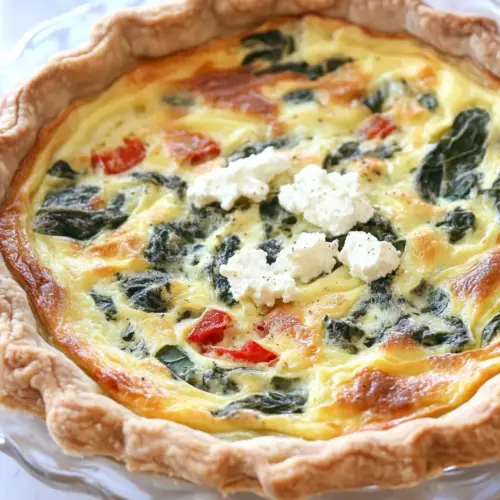
Spinach Ricotta Quiche
Spinach Ricotta Quiche is a creamy, savory tart that balances soft ricotta and melted mozzarella with fresh spinach and bright basil. This easy to prepare recipe creates a golden custard with pockets of cheese and roasted tomato, perfect for an easy weeknight dinner or relaxed weekend brunch. Try it for a make ahead meal that travels well and consistently pleases a crowd.
Equipment
- 9-inch pie dish
- Mixing Bowl
- Fork
- Cookie Sheet
Ingredients
- refrigerated Dough for 1, 9-inch, deep dish pie crust Refrigerated and pre-made to simplify pie assembly, provides a sturdy, flaky shell that holds the quiche filling and crisps during baking. Presses into a 9-inch deep-dish pan to create uniform edges and prevents leakage when pouring the custard. Chills easily to maintain shape and reduces prep time compared with making crust from scratch.
- 7 large eggs, beaten Beaten thoroughly to create the quiche custard, binds the cheeses and vegetables while setting into a firm, sliceable texture when baked. Adds richness and structure to the filling, contributing to a tender, creamy interior once the dish is cooked. Incorporates air when beaten, which can lighten the final quiche.
- 2 cups chopped fresh baby spinach, 1 1/2 ounces Chopped finely to distribute bright, leafy flavor and moisture evenly throughout the quiche without overwhelming the custard. Provides a fresh, slightly earthy contrast to the cheeses and eggs while wilting down during baking for a tender bite. Adds color and nutritional value, including vitamins and iron.
- 2/3 cups milk Poured in measured amount to thin the eggs and create a smooth, pourable custard that sets properly in the oven. Balances richness and prevents the quiche from becoming rubbery, while contributing subtle creaminess. Adjusts overall texture depending on milk fat content.
- 6 tablespoons grated parmesan Grated and sprinkled to contribute sharp, nutty umami that enhances overall savory flavor and helps develop a golden crust on top. Melts into the custard, blending with ricotta and mozzarella to boost depth and saltiness. Provides aromatic complexity and pairs well with herbs and tomatoes.
- 3 tablespoons chopped fresh basil Chopped and folded in to provide a fragrant, peppery herbal note that brightens the rich custard and cheeses. Releases essential oils as it heats, complementing the spinach and tomato flavors for a fresher profile. Works well as both an integrated flavor and a garnish.
- 1/4 teaspoon kosher salt Measured precisely to season the custard and amplify the natural flavors of eggs, cheese, and vegetables without overpowering them. Ensures balanced savory notes while helping proteins in the eggs set slightly firmer. Can be adjusted to taste but adds necessary depth.
- 1/2 cup part skim ricotta Spoonfuls added to the filling to lend creamy texture and mild, slightly sweet dairy flavor that contrasts with sharper cheeses. Disperses in small pockets throughout the quiche, creating pleasant, moist bites and preventing dryness. Helps bind ingredients while keeping the custard tender.
- 1/3 cup part skim shredded mozzarella Sprinkled or layered to provide melty, stretchy texture and mild, milky flavor that complements both ricotta and parmesan. Browns lightly on top and contributes to an appealing, cohesive mouthfeel in each slice. Balances the creaminess of ricotta with a bit of elasticity.
- 3/4 cups halved grape or cherry tomatoes Halved and arranged on or within the filling to introduce juicy bursts of sweetness and acidity that cut through the rich, cheesy custard. Roast or bake down slightly to concentrate flavor while adding visual color contrast to the finished quiche. Works as a fresh garnish and flavor counterpoint.
Instructions
- Preheat oven to 350 degrees Fahrenheit.: When the oven reaches 350 degrees Fahrenheit , you should feel the warmth radiating from the door and hear the faint hum of the heating elements stabilizing. Preheating ensures the crust begins to set immediately when it hits the oven, promoting a flakier base and consistent bake. A common mistake is slipping into the next step too early, which can lead to uneven baking, so always wait until the oven indicates it has reached temperature.
- Roll the dough out on a well-floured work surface until it’s approximately 11 to 12-inches in diameter.: The dough should feel cold and slightly pliable as you roll, producing a tender, even circle. Flour prevents sticking, and gentle rolling from the center outward keeps the thickness uniform. If you press too hard or roll too much, the dough will become tough and elastic, making it resist shaping into the pan.
- Transfer it to a 9-inch metal or glass pie dish. Using your fingers, press it firmly into the bottom and sides of the pie plate. Trim off any excess, leaving about 1/2-inch overhanging. Then fold/crimp the overhanging dough.: As you seat the crust, you should hear a soft pat as the dough conforms to the dish and see a consistent edge thickness. Leaving a little overhang lets you create an attractive crimp that stays intact while baking. Avoid stretching the dough into place because that causes shrinkage during baking and may pull the crust away from the pan.
- Prick the bottom of the pie crust with the tines of a fork. Transfer the pie crust to your pre-heated oven and bake for 10 to 15 minutes, until par-baked.: Docking the base with a fork keeps air pockets from forming and helps the bottom set smoothly. During blind baking the surface should take on a pale golden tint and feel slightly firm to the touch. If the crust browns too quickly at the edges, tent them with foil earlier rather than later to prevent over color while the center finishes.
- Meanwhile in a large mixing bowl combine eggs with spinach, milk, 2 tablespoons parmesan cheese, basil and salt; mix well.: At this stage the filling should smell fresh and green from the spinach and basil , while the beaten eggs create a glossy, cohesive mixture. Mixing thoroughly distributes the parmesan and seasoning so the flavor is even throughout. A frequent error is adding wet or un-drained spinach , which can introduce excess moisture and thin the custard, so squeeze or pat the greens dry first.
- Pour mixture into the par-baked pie crust.: As you pour, watch the custard settle and level itself, forming a silky surface before you add the cheese dollops. The weight of the filling presses gently against the crust, and you will see the mixture reach the edges uniformly. Pour carefully to avoid splashing the oven or making the crust soggy by overfilling; leave a small margin to accommodate slight puffing while baking.
- In a small bowl combine ricotta with mozzarella and remaining parmesan.: Combining the cheeses creates a varied texture, the ricotta lending creaminess and the shredded mozzarella providing melt and stretch. Stir until cohesive, and you will notice the aroma sharpen slightly as the cheeses mingle. If the mixture feels too loose, let it rest briefly so some moisture can be absorbed; adding it while overly wet can cause little pools rather than creamy pockets.
- Dollop the ricotta all around and top and place tomatoes around the cheese.: When you dot the surface with spoonfuls of the cheese mix, the quiche takes on an artisanal, rustic look. The halved tomatoes nestle between cheese dollops, their glossy cut sides facing up so they roast attractively. Place them evenly so each slice gets a balance of cheese and tomato, and avoid piling too many in one spot which could lead to undercooked filling beneath.
- Place foil on the edges of the crust to prevent them from burning.: Shielding the rim keeps it from over browning while the center reaches doneness. The foil should rest lightly against the crust edge without touching the filling. A common oversight is leaving the foil too tight or pressing it into the filling, which can disrupt the quiche shape, so tent it gently around the rim.
- Place quiche on cookie sheet and bake on the middle oven rack for 50 to 55 minutes, or until top is browned and a knife inserted in center comes out clean.: As the quiche bakes, you will hear a faint settling and see the top transition from pale to a golden brown with slightly puffed edges. The aroma will deepen into a savory, cheesy note. The center should be set but still slightly jiggly when you gently shake the pan, and the knife test should come out clean to signal doneness. Avoid overbaking which leads to a rubbery texture, and if the edges brown too quickly, extend baking time with the foil protecting the rim.
- Let cool before serving.: Cooling allows the custard to finish setting, making slicing neat and clean. You will notice the surface contracts slightly and the aroma mellows into a composed, savory profile. If you cut too soon, the slices may slump or weep moisture, so give it time to rest for the best presentation.
Notes
- Blind bake the crust: Par baking the shell prevents a soggy bottom and ensures the base is crisp beneath the custard.
- Dry the spinach: Excess moisture in the spinach can thin the filling, so pat it dry thoroughly before folding into the custard.
- Room temperature eggs: Let eggs sit briefly at room temperature so they incorporate more smoothly and the custard sets evenly.
- Even cheese distribution: Mix part of the parmesan into the custard and reserve some for the top so flavor is present throughout and on the surface.
- Protect the crust edge: Use foil or a pie shield once the rim reaches golden to keep it from overbrowning while the center finishes.