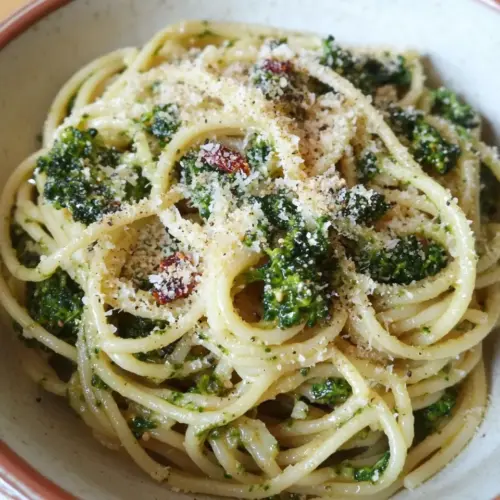
Spaghetti with Broccoli Rabe and Sundried Tomato Paste
Spaghetti with Broccoli Rabe and Sundried Tomato Paste is a quick, savory pasta with bright tomato umami and lively bitter greens. Creamy notes from grated pecorino and a glossy finish from Olive oil make it an easy weeknight dinner that feels elevated. It cooks in minutes, uses pantry friendly components, and delivers a satisfying, restaurant quality plate you will want to make again.
Equipment
- Large Pot
- Colander
Ingredients
- 1 large bunch broccoli rabe Blanch and chop to tame bitterness while preserving bright green color; provides a peppery, leafy backbone and textural contrast to the pasta. Use both stems and leaves for variety in bite and a robust, slightly bitter flavor that pairs well with cheese and tomato paste.
- 1/2 pounds spaghetti quinoa, brown rice, or regular, if you like Boil until al dente according to package instructions to offer the starchy base and vehicle for flavors; acts as the main source of carbohydrates and bulk in the dish. Choose quinoa, brown rice, or regular spaghetti to adjust texture and nutrition while keeping cooking time in mind.
- 2 heaping tablespoons sundried tomato paste recipe follows Stir in concentrated for intense umami and sweet-tart depth; binds with olive oil to create a glossy, savory coating for pasta and greens. Use sparingly at first then adjust to taste, as the concentrated paste will dominate if overused.
- 1/4 cup grated pecorino cheese Grate finely and sprinkle at the end to add salty, nutty, and tangy notes; helps balance the bitterness of the greens and the acidity of the tomato paste. Pecorino also contributes a creamy mouthfeel when melted into the warm pasta and oil.
- Olive oil Drizzle and sauté to carry and meld flavors, creating a silky finish and helping tomato paste adhere to pasta and broccoli rabe. Use extra-virgin olive oil for aroma and to gently soften the greens without overpowering delicate components.
Instructions
- Bring a large pot of salted water to boil.: The steam will smell clean and slightly metallic as the water reaches a rolling boil, and you will hear a lively bubbling sound. Salting the water is essential because it seasons the spaghetti from the inside out, enhancing the final dish, so aim for the water to taste slightly like the sea. A common mistake is under salting, which results in flat tasting pasta, so be generous but not excessive. Use a pot large enough that the pasta can move freely, this prevents sticking and ensures even cooking.
- Trim the broccoli rabe stems, removing the thick bottom third. Remove any leaves from the stalk - you can leave some towards the top. Roughly chop the cleaned rabe into 1-inch pieces.: As you trim, the greens release a fresh, earthy scent and the stems reveal a firmer, vegetal snap when bent. Keeping the tender leaves and removing the woody bottoms balances texture, ensuring the thicker stems become tender without the leaves turning to mush. Avoid cutting the pieces too small, or they will disintegrate into the pasta; conversely, leaving them too large can make biting awkward. Consistent size helps even cooking and a pleasant mouthfeel.
- Cook the spaghetti according to package directions. 3 minutes before al dente, add the broccoli to the pot.: The water will roar when you add the spaghetti , and later you will notice the pasta surface become slightly glossy as the starch releases. Adding the broccoli rabe three minutes before the end allows the stems to soften while the leaves keep their color and bite. This technique fuses the cooking steps and reduces dishes, which I prefer on busy nights. A frequent error is adding the greens too early, which makes them limp and dull in color; time them so they remain lively.
- When the pasta is cooked to your liking, drain the pot in a colander in the sink and shake it to remove any excess water.: As you lift the colander, you will see steam rising and hear the faint drip of hot water, while the pasta glistens with a light starch sheen. Give the colander a gentle shake to remove excess water but do not rinse, because the pasta surface needs the residual starch to bind with the sundried tomato paste and pecorino cheese . A common slip is rinsing the pasta, which strips flavor and prevents the sauce from adhering properly, so avoid that. Let the residual moisture remain; it helps create a cohesive sauce when tossed.
- Toss the cooked pasta and rabe with the tomato paste, half of the pecorino, and a drizzle of olive oil (if necessary). Taste for seasoning and add salt and pepper as necessary. Divide between two bowls and garnish with the remaining cheese.: Here you will smell the concentrated tomato and feel the glossy finish as you fold everything together. The paste should break up and cling to the strands, while the pecorino cheese begins to melt and lend a creamy, savory lift. Use moderate force when tossing so the ingredients combine evenly without bruising the greens. If the mixture seems dry, add a touch more Olive oil or a tablespoon of reserved pasta water to loosen it. A misstep is adding too much oil at once, which can make the dish greasy; instead, add gradually until you reach a silky coating. Taste and add salt and pepper as necessary, then divide between bowls and garnish with the remaining cheese so each serving has a bright finish.
Notes
- Swap pasta type If you want a gluten free option or nuttier flavor, use quinoa or brown rice spaghetti exactly as suggested in the ingredient line, adjusting cook time so it remains al dente.
- Boost umami Add a small spoonful more sundried tomato paste if you prefer a deeper tomato concentration, but add incrementally to avoid overpowering the greens.
- Adjust cheese If you want a sharper finish, increase the pecorino cheese slightly while watching salt levels, since the cheese brings a pronounced salty tang.
- Control bitterness If the broccoli rabe tastes very bitter, blanch it separately for a minute then shock in cold water before adding, this moderates the bite while keeping color.
- Olive oil finish Use a small, high quality drizzle of Olive oil at the end to add fruitiness and create a glossy, elegant plate without excess oiliness.