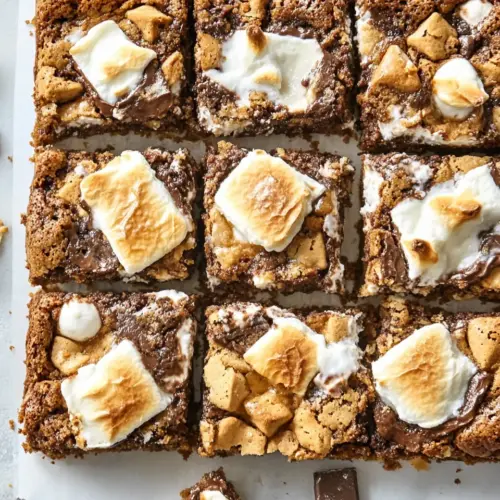
S'mores Blondies
S'mores Blondies are chewy, crackly topped bars studded with molten chocolate and toasted marshmallow pockets. The buttery, graham cracker studded base balances sweet, toasty flavors for a fun, easy dessert that works for gatherings or weeknight treats. Make them when you want a crowd pleasing, nostalgic sweet that's simple to pull together.
Equipment
- Oven
- 13 x 9-inch baking pan
- Parchment Paper
- Mixing Bowl
- Whisk
- Wire Rack
Ingredients
- 1 3/4 cup s (385 grams) firmly packed light brown sugar Provides deep caramel-like sweetness and moisture to the blondies while helping create a tender crumb; pack firmly to ensure accurate measurement and even baking results.
- 1 cup (227 grams) unsalted butter, melted and cooled Adds rich butterfat flavor and contributes to a fudgy, dense texture when melted and cooled; cool before mixing to prevent scrambling the eggs.
- 1 tablespoon (13 grams) vanilla extract Imparts aromatic warmth and enhances the overall sweetness while balancing flavors; measure precisely to avoid overpowering the other components.
- 2 large eggs (100 grams) Binds ingredients together, contributes structure and lift, and adds richness; use large eggs at the specified weight for consistent texture.
- 1 teaspoon (5 grams) baking powder Leavens mildly to give a light lift and slight rise without making the blondies cake-like; mix in with dry ingredients for even distribution.
- 1 1/4 teaspoon s (3.75 grams) kosher salt Balances sweetness, enhances flavor, and strengthens gluten slightly to control tenderness; use kosher salt measured by weight for accuracy.
- 1 1/2 cup s (195 grams) finely ground graham cracker crumbs (about 1 1/2 sleeves) Provides a toasty, graham flavor and tender texture while acting as part of the dry structure; finely ground crumbs distribute evenly throughout the batter.
- 1 cup (125 grams) all-purpose flour Supplies structure and body through gluten and starch, helping blondies hold together while maintaining tenderness; spoon and level for an accurate cup.
- 6 ounces s (170 grams) milk or semisweet chocolate, coarsely chopped and divided Contributes concentrated chocolate flavor and pockets of melty chocolate; chop coarsely and reserve part for mixing in and sprinkling on top for texture contrast.
- 2 cups s (90 grams) mini marshmallows Adds chewiness, sweet marshmallow pockets, and classic s'mores character; distribute evenly on top and in the batter to create gooey bits after baking.
Instructions
- Preheat oven to 350°F (180°C). Spray a 13 x 9-inch baking pan with cooking spray. Line pan with parchment paper, letting excess extend over sides of pan.: As the oven warms you will smell a faint warmth from the heating elements, which signals readiness; this consistent heat helps the batter rise evenly, setting the edges while allowing the center to stay chewy. A well greased, parchment lined pan prevents sticking and makes removal effortless, so don't skip that step. Common mistakes include not preheating fully, which can cause uneven baking and a dense center, and failing to line the pan, which can tear the bars when removed.
- In a large bowl, whisk together brown sugar, melted butter, and vanilla for 30 seconds. Add eggs, one at a time, whisking until combined after each addition. Sprinkle baking powder onto mixture, and vigorously whisk until combined; repeat procedure with salt. Gently stir in graham cracker crumbs, flour, and 3/4 cup (127 grams) chocolate just until combined. (Do not overmix.) Spread batter into prepared pan.: The mixture will feel glossy and slightly thick after whisking, with the brown sugar dissolving into the butter to form a caramel scented base; this aroma is a good cue that you are on track. Adding eggs one at a time creates a smooth emulsion which helps the final texture. When you fold in the dry ingredients, you should see speckles of graham cracker crumbs and small streaks of flour disappear quickly; stop mixing as soon as the batter is homogeneous to avoid toughness. A frequent error is overmixing at this stage, which develops gluten and yields gummy bars.
- Bake until top is browned and crackly, edges are set, and a wooden pick inserted in center comes out with a few moist crumbs, about 30 minutes. Increase oven temperature to broil. Sprinkle marshmallows and remaining chocolate onto blondie.: During baking you'll notice the surface developing a glossy, crackled sheen and the kitchen filling with a toasty, caramel aroma; those are indicators the sugars are caramelizing properly. The edges will firm first, pulling slightly away from the pan, while the center should wiggle a touch when nudged, leaving moist crumbs on a tester. This stage locks in chew while letting the top form a desirable snap. A typical pitfall is baking too long which dries the bars and removes the gooey center; rely on the wooden pick test rather than clock time alone.
- Broil on top rack until chocolate is melted and marshmallows are toasted, about 30 seconds, checking every 10 seconds. Using a wooden pick, swirl marshmallows and chocolate on top, if desired. Let cool completely in pan on a wire rack. Using excess parchment as handles, remove from pan, and cut into bars. Store in an airtight container for up to 3 days.: The broiler step elevates the texture by quickly charring the marshmallow surface and melting the reserved chocolate , creating striations of glossy chocolate and toasted sugar. The scent will shift to a toasty, slightly smoky note that feels indulgent. Distribute the toppings evenly so each square gets a mix of toasted marshmallow and melted chocolate. One mistake to avoid is piling too many marshmallows in one spot, which can create overly gooey islands rather than an even toasted layer.
- Broil on top rack until chocolate is melted and marshmallows are toasted, about 30 seconds, checking every 10 seconds. Using a wooden pick, swirl marshmallows and chocolate on top, if desired. Let cool completely in pan on a wire rack. Using excess parchment as handles, remove from pan, and cut into bars. Store in an airtight container for up to 3 days.: The broiler action is dramatic and fast; you'll hear slight crackles as the marshmallow surface browns and you will see the chocolate gloss melt into pools. Keep the oven door open or watch through the window, because the change happens quickly; checking every 10 seconds prevents burning. Swirling with a wooden pick creates marbled patterns and helps the toppings integrate with the top layer. Cooling fully firms the bars so they cut cleanly, and using the parchment helps you lift the whole slab without squishing it. A common error is cutting while warm, which leads to squashed pieces; patience pays off here.
Notes
- Room temperature eggs help the batter emulsify smoothly with melted butter, producing a more even crumb and reducing the chance of a greasy mouthfeel.
- Do not overmix once you add the graham cracker crumbs and flour, because overworking the batter develops gluten and yields tougher bars instead of tender, chewy ones.
- Divide the chocolate so some melts into the batter and some finishes on top, creating pockets of gooey richness and glossy swirls when broiled.
- Check the broiler frequently, particularly during the last 30 seconds, since the marshmallow and chocolate can transform visually in moments and you want a golden toast not burnt black edges.
- Cool fully before slicing to allow the structure to set; this yields neat bars and prevents the toppings from smearing during cutting.