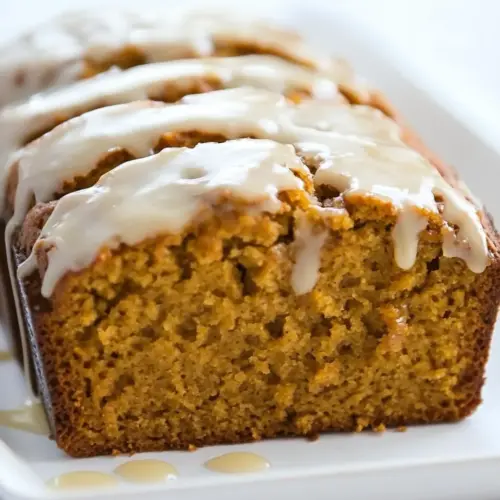
Pumpkin Bread with Brown Butter Maple Glaze
Pumpkin Bread with Brown Butter Maple Glaze offers a moist, spiced loaf with a nutty, glossy glaze. The texture is tender and slightly dense, while the brown butter maple topping adds a toasty sweetness. Perfect for cozy mornings or holiday gatherings, this easy to make loaf brings comforting fall flavors and a polished finish that makes it worth baking again and again.
Equipment
- Loaf Pan
- Hand Mixer
Ingredients
- 1 3/4 cups all-purpose flour Provide structure and tenderness to the loaf by forming the flour matrix that traps air and moisture during baking; sift or whisk to avoid lumps and measure accurately for proper crumb.
- 1 teaspoon baking soda Leaven baked goods by releasing carbon dioxide when reacting with acidic components, helping the bread rise evenly; distribute evenly with dry ingredients to prevent bitter pockets.
- 2 teaspoons ground cinnamon Warm and aromatic spice that enhances the pumpkin's flavor and adds depth; mix thoroughly into the dry ingredients for consistent spice throughout the bread.
- 1/4 teaspoon ground cloves Pungent spice that adds a warm, slightly sweet and aromatic note to complement cinnamon and nutmeg; use sparingly to avoid overpowering the blend.
- 1/4 teaspoon ground nutmeg Sweet, warm spice offering a slightly nutty aroma that complements pumpkin and cinnamon; incorporate into the spice mix for balanced fall flavors.
- 3/4 teaspoons salt Enhance and balance flavor while strengthening gluten formation slightly; measure carefully since too much salt can inhibit yeast and alter taste.
- 2 large eggs Provide structure and moisture as a binding agent and help with leavening through steam and protein coagulation; beat lightly before adding to the batter for even distribution.
- 3/4 cup granulated sugar Add sweetness and contribute to the bread's tenderness by interacting with wet ingredients to retain moisture; cream briefly with eggs or mix into batter until dissolved.
- 1/2 cup light brown sugar, packed Impart a deeper, caramel-like sweetness and add moisture that enriches the crumb; pack firmly when measuring for accurate sweetness and moisture contribution.
- 1 1/2 cups canned pumpkin Deliver moisture, density, and pumpkin flavor, contributing to the loaf's tender, rich texture; use pure canned pumpkin for consistent results and avoid pie filling.
- 1/2 cup oil (vegetable or canola oil) Supply fat for moistness and richness without overwhelming flavor; opt for neutral oils like vegetable or canola to let pumpkin and spices shine.
- 1/4 cup milk Add a touch of dairy richness and help thin the batter slightly for a smoother texture; use standard milk for expected consistency and flavor.
- 4 tablespoons butter Brown to develop nutty, toasty flavor notes that deepen the glaze's complexity; melt and brown carefully until golden and fragrant, then cool slightly before combining with sugar.
- 2/3 cup powdered sugar Create a smooth, sweet glaze base that adds brightness and a silky finish to the bread; sift powdered sugar to remove lumps for a glossy result.
- 1 tablespoon pure maple syrup (not pancake syrup) Introduce maple-specific sweetness and a subtle woody flavor to complement brown butter; use pure maple syrup for authentic maple flavor rather than imitation syrups.
- 2 tablespoons milk (to thin the glaze) Adjust glaze consistency to the desired pourability while adding a touch of creaminess; add gradually until the glaze reaches a ribbon-like pourable texture.
Instructions
- Adjust your oven rack to the lower third position and preheat the oven to 350 F degrees. Spray a 9 x 5 inch loaf pan with non-stick spray. Set aside.: As the oven warms you should notice an even, dry heat filling the cavity, which helps the loaf develop a nicely browned top while baking through. I preheat for at least 10 minutes so the temperature stabilizes, because an oven that is not fully hot can make the loaf dense. A common mistake is relying on the dial setting alone, so I recommend an oven thermometer to confirm accuracy. The lower third placement encourages the bottom and center to cook fully without overbrowning the top. If your oven runs hot, tent with foil about halfway through baking to avoid too dark a crust.
- In a large bowl, whisk together the flour, baking soda, cinnamon, nutmeg, cloves, and salt.: When you prepare the pan, you ll feel the smooth coating cover the metal and trust it will release cleanly after baking. I prefer a light coating plus a strip of parchment for foolproof release. Skipping this step risks the loaf sticking and breaking when inverted. If you don t have spray, rub the pan with a little butter and dust with flour, tapping out excess, to achieve a similar nonstick surface.
- In a medium bowl, whisk the eggs, granulated sugar, and brown sugar together until well combined.: As you whisk the dry ingredients, the spices release their aroma and mingle into a single, fragrant blend that will flavor the entire loaf. I take care to break up any lumps so the flour and leavening are evenly distributed, which prevents pockets of uneven rise. A common error is under mixing the dry blend, which can lead to uneven spice pockets; be thorough but gentle. Whisking also aerates the dry mix slightly, contributing to a lighter crumb.
- Add the pumpkin, oil, and milk and stir to combine. Pour the wet ingredients into the dry ingredients and gently mix together just until combined (do not overmix).: Whipping these together creates a glossy, slightly pale mixture that traps air and lends lift to the loaf. You should feel the mixture thicken a little and smell the caramel notes from the brown sugar . Avoid overbeating to the point of ribbon stage, which is unnecessary here and can make the batter tough. If you notice grainy sugar after a short whisk, continue briefly until smooth.
- Pour the batter into the prepared loaf pan.: At this point the batter will be dense, silky, and spiced, with the orange hue of the pumpkin evident. Fold gently so you preserve air pockets from the eggs, which keeps the loaf tender. Overmixing is the most common issue here it develops gluten and makes the finished loaf heavy. Look for no streaks of dry flour , but expect some small lumps; that s fine for a moist crumb.
- Bake for 55-65 minutes or until a toothpick inserted in the center comes out clean.: As you pour, notice the batter s viscosity it should mound slightly rather than collapse flat. Smooth the top with a spatula for even browning. I tap the pan on the counter once to release trapped air bubbles. Filling the pan too high can cause overflow, so keep the fill level to about three quarters full. If the batter seems excessively thick, a tablespoon of extra milk can help reach a pourable consistency.
- Check the bread about 3/4 of the way through cooking and place a piece of aluminum foil on top if you feel it's getting too brown.: During baking you will hear the quiet settling and might notice the aroma of spices filling the kitchen as sugars caramelize. The surface should become golden brown and spring back slightly when touched. A common mistake is removing the bread too early; the center can be underbaked and gummy. If a toothpick comes out with a few moist crumbs that is okay, but wet batter means it needs more time. Rotate the pan halfway if your oven has hot spots, but do so gently to avoid collapse.
- Allow the bread to cool for a few minutes in the pan and then invert onto a cooling rack to cool completely.: The visual cue here is the top s color if it s deepening too quickly while the center remains underdone, shield it with foil to slow browning. You should still get a firm crust while allowing the middle to finish cooking. A mistake is adding foil too early, which can prevent proper browning altogether; only tent when the top is noticeably ahead of the interior. Watching this stage helps you learn your oven s temperament.
- While bread cools, make your glaze. Melt the butter in a small saucepan over medium-low heat.: Inverting releases a warm, steamy aroma as the loaf comes free, and the cooling rack permits air to circulate so the crust does not become soggy. Cooling completely before glazing prevents the glaze from melting into the crumb. A common error is glazing while the loaf is hot, which yields a runny finish that won t set. If the loaf sticks, slide a thin knife around the edges before inverting to help release cleanly.
- Continue cooking, watching butter carefully and swirling it in the pan until it sizzles and begins to turn amber in color, about 4-5 minutes. Watch it closely so it doesn't burn!: As the butter warms you ll hear gentle sizzling and notice it foaming. Keep the heat modest so the milk solids brown slowly, producing a toasty, nutty aroma. Rushing this step on high heat risks burning, which imparts a bitter edge. Stir gently and be ready to remove from heat the moment it reaches amber.
- Remove butter from heat and pour it into a mixing bowl. Add the powdered sugar and maple syrup and beat with electric mixers until smooth.: The moment the butter moves from foamy to amber is when the aromas deepen into caramelized, toasted notes that elevate the glaze. Swirling helps the solids brown evenly and prevents hot spots. A common mistake is walking away during browning; it can go from perfect to burnt in seconds. Pour immediately into a separate bowl to stop cooking once you see the amber hue.
- Add some milk to thin it, if necessary, or a little extra powdered sugar to thicken it until a soft glaze has formed.: Combining the browned butter with powdered sugar and maple syrup creates a glossy, silky glaze that smells nutty and sweet. Beat until you see a pouring consistency that holds slightly on a spoon. If the glaze is gritty, continue beating briefly or sift the powdered sugar first. Overbeating can incorporate too much air, making the glaze frothy instead of shiny.
- Spoon the glaze generously over top of the pumpkin loaf and let it set. Cut into slices and serve!: Adjusting the texture allows you to control how the glaze drapes over slices a thinner glaze soaks slightly into the top, while a thicker one sits luxuriously on the surface. Add milk a teaspoon at a time to avoid making it too runny. If it becomes too thin, add more powdered sugar in small amounts to restore body.
- Spoon the glaze generously over top of the pumpkin loaf and let it set. Cut into slices and serve: As the glaze lands it should cascade into soft peaks that level out with a glossy finish, making the loaf look inviting and polished. Let it set until slightly tacky so it won t smear when slicing. A common mistake is slicing immediately, which can drag the glaze and tear the crumb. Use a serrated knife and gentle sawing motions for neat slices.
Notes
- Use oil for tenderness: Keeping the specified 1/2 cup of neutral oil delivers a moist crumb that holds up over days, making it perfect for make ahead.
- Adjust sweetness with brown sugar: Slightly increasing the packed light brown sugar to 2 3/4 tablespoons more will deepen molasses notes without overwhelming the spices.
- Control glaze thickness: Add milk one teaspoon at a time to reach a pourable glaze that either soaks in a little or sits decoratively on top.
- Swap pan sizes carefully: If using a different pan, monitor baking time closely; a wider pan will reduce bake time while a narrower pan will increase it.
- Freeze for later: Wrap the cooled loaf tightly in plastic and foil to freeze for up to three months, then thaw overnight in the refrigerator for best texture.