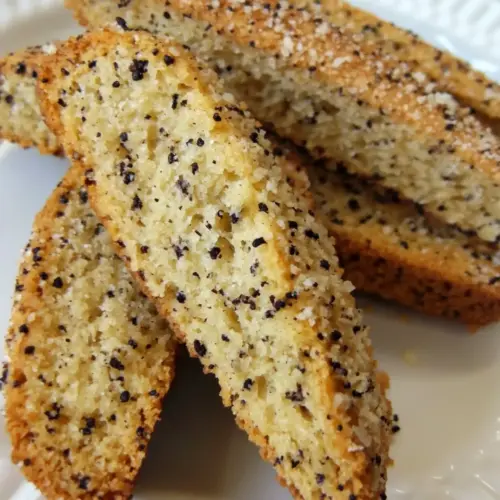
Parmesan Black Pepper Biscotti
Parmesan Black Pepper Biscotti are crispy, savory twice baked cookies with a bold peppery kick and nutty Parmigiano Reggiano flavor. These easy to make bites are perfect for entertaining, serving with soup, or packing for gifts. Crunchy, aromatic, and satisfying, they make a memorable savory snack worth trying this week.
Equipment
- Oven
- Mixing Bowl
- Pastry blender
- Serrated Knife
- Baking Sheet
- Wire Rack
- Pepper grinder
Ingredients
- 1 1/2 tablespoons whole black peppercorns Crush and toast to release intense, aromatic heat; cracked peppercorns provide bold, floral spice and crunch that contrasts the biscotti's crumb and highlights the savory Parmesan.
- 4 cups all-purpose flour, plus more for dusting Sift and combine as the primary dry structure; all-purpose flour gives the biscotti its tender yet firm crumb and absorbs moisture from butter, eggs, and milk to form the dough.
- 2 teaspoons baking powder Leaven gently to promote subtle rise and lightness; baking powder creates small air pockets during baking so the biscotti is crisp without being overly dense.
- 2 teaspoons salt Season and balance flavors for savory depth; salt enhances the cheese and pepper while strengthening the dough’s gluten network for improved texture.
- 4 1/2 ounces Parmigiano-Reggiano, finely grated (2 1/4 cups) Grate finely to distribute rich, umami-packed cheese evenly; Parmigiano-Reggiano contributes nutty, salty complexity and a dry, granular quality that helps create a crisp crust.
- 1 1/2 sticks cold unsalted butter, cut into 1/2-inch cubes (3/4 cup) Cube and keep cold to create layered flakiness; cold unsalted butter, when cut into the flour, yields tender pockets and controls richness without adding excess salt.
- 4 large eggs Whisk and bind wet ingredients while adding richness; large eggs provide structure, moisture, and help emulsify fats for a cohesive, sliceable biscotti dough.
- 1 cup whole milk Warm slightly and adjust hydration for workable dough; whole milk adds tenderness, helps dissolve dry components, and contributes to a richer mouthfeel in the finished biscotti.
Instructions
- Put oven racks in upper and lower thirds of oven and preheat oven to 350°F.: The moment your oven warms you will start to notice a faint, clean heat, which helps the logs set uniformly during the first bake. Positioning racks in the upper and lower thirds creates even airflow and prevents one sheet from browning too quickly. A common mistake is opening the oven door repeatedly, which drops the temperature and can yield uneven baking, so try to minimize peeks.
- Pulse peppercorns in grinder until coarsely ground.: Pulsing releases aromatic oils so the pepper tastes lively, and leaving some coarse bits provides texture against the crumb of the biscotti. You should smell sharp, citrus like notes as the pepper opens up. Avoid grinding to a powder, which will smear into the dough and mute the pleasant crunchy pockets you want.
- Whisk together flour, baking powder, salt, 2 cups of the cheese, and 1 tablespoon ground black pepper in a large bowl. Blend in butter with a pastry blender or your fingertips until mixture resembles coarse meal. Whisk 3 eggs with milk and add to flour mixture, stirring with a fork until a soft dough forms.: At this stage the dry mixture should look uniform, with flecks of grated Parmigiano Reggiano distributed through the pale flour. Whisking ensures even leavening and seasoning, so every bite tastes balanced. A pitfall is dumping cheese in clumps, which creates salty pockets; take time to break any clumps apart.
- Turn dough onto a lightly floured surface and quarter dough. Using well-floured hands, form each piece into a slightly flattened 12-inch-long log (about 2 inches wide and 3/4-inch high). Transfer logs to 2 ungreased large baking sheets, arranging logs about 3 inches apart.: Work quickly so the butter stays cold and forms small pea sized pieces. The texture should resemble coarse crumbs with tiny butter bits visible, which creates pockets that contribute to a tender interior before the biscotti crisp. If you overwork and the butter becomes greasy, the dough will be heavy, so stop as soon as the coarse meal texture appears.
- Whisk remaining egg and brush some over logs, then sprinkle tops of logs evenly with remaining 1/4 cup cheese and 1/2 tablespoon ground pepper. Bake, rotating sheets 180 degrees and switching position of sheets halfway through baking, until logs are pale golden and firm, about 30 minutes total. Cool logs to warm on sheets on a rack, about 10 minutes.: The wet mix should create a soft, slightly tacky dough that holds together without being sticky. Stirring gently prevents overdeveloping the gluten, which keeps the final biscotti from becoming tough. If the dough appears dry, add a tiny splash of milk; if too sticky, dust a bit more flour, but be careful not to alter the balance drastically.
- Reduce oven temperature to 300°F.: The dough will feel cool and slightly dense, but it should be pliable. Quartering makes uniform logs easier to shape and bake evenly. A frequent error is forming unequal pieces, which leads to different baking times, so aim for equal portions by eye or weigh them if precision matters.
- Carefully transfer one warm log to a cutting board and cut diagonally into 1/2-inch-thick slices with a serrated knife. Arrange slices, cut sides down, in 1 layer on a baking sheet. Repeat with remaining logs, transferring slices to sheets. Bake, turning over once, until golden and crisp, 35 to 45 minutes total. Cool biscotti on baking sheets on racks, about 15 minutes.: Shape each quarter into a smooth, even log about 12 inches long, with a thickness close to 2 inches. The surface should be tidy, with no glaring cracks. If cracks appear, press them gently and smooth; large fissures can widen during baking, causing uneven slices later.
- Transfer logs to 2 ungreased large baking sheets, arranging logs about 3 inches apart: Leave ample space because the logs will spread slightly as they bake. Ungreased sheets encourage the bottoms to firm up properly. Crowding the logs traps steam and prevents proper browning, so keep that 3 inch gap as suggested.
- Whisk remaining egg and brush some over logs, then sprinkle tops of logs evenly with remaining 1/4 cup cheese and 1/2 tablespoon ground pepper: Brushing with egg gives a glossy finish and helps the extra Parmigiano Reggiano adhere, creating a golden, savory crust. The topping will toast in the oven and add a beautiful flecked appearance. Over brushing floods the surface and can cause uneven browning, so use a light hand.
- Bake, rotating sheets 180 degrees and switching position of sheets halfway through baking, until logs are pale golden and firm, about 30 minutes total: You should smell toasty dairy notes and see the logs take on a pale gold hue, with edges that feel set to the touch. Rotating and switching ensures both pans bake evenly; failing to rotate can produce one pan darker than the other. If the logs feel soft in the center after 30 minutes, give them a bit more time but watch carefully so they do not overbrown.
- Cool logs to warm on sheets on a rack, about 10 minutes: Cooling a bit makes slicing easier and prevents the dough from crumbling. The logs will still be warm to the touch and slightly pliable, which helps when transferring to the cutting board. Cutting while piping hot leads to smearing, and cutting fully cold can cause brittle crumbs, so aim for warm.
- Reduce oven temperature to 300 F: Lowering the temperature prepares for the slow second bake that dries the slices without burning them. You will notice a calmer, steadier heat at this setting which crisps rather than aggressively browns. Skipping the reduction risks overbrowning the thin slices during the second bake.
- Carefully transfer one warm log to a cutting board and cut diagonally into 1/2-inch-thick slices with a serrated knife: The diagonal cut creates an appealing elongated shape and increases surface area for crisping. Use a gentle sawing motion so the slices stay intact and clean. Pressing too hard can crush the log, producing uneven thickness, so let the serrated blade do the work.
- Arrange slices, cut sides down, in 1 layer on a baking sheet: Placing slices cut side down gives the exposed interior direct contact with the sheet for even toasting. Leave space so air circulates around each piece. Overlapping slices traps moisture and prevents the biscotti from becoming uniformly crisp.
- Repeat with remaining logs, transferring slices to sheets: Keep a steady rhythm and organize sheets so you can slide them into the oven promptly. Consistency in slice size and spacing ensures even baking across batches. If slices from different logs vary in thickness, try to group similar sized pieces on the same sheet to avoid timing mismatches.
- Bake, turning over once, until golden and crisp, 35 to 45 minutes total: During this stage you will hear a faint crackle as moisture leaves the biscotti and smell a deepened, toasted cheese aroma. Turn the slices partway through so both sides become evenly golden and crisp. A common misstep is removing them too early; they will feel slightly softer when hot but firm up as they cool, so err on the side of a few extra minutes if unsure.
- Cool biscotti on baking sheets on racks, about 15 minutes: Cooling fully on the sheet allows residual heat to finish the crisping process. The biscotti will snap with a clean break when completely cooled and will store well in an airtight container. Storing while warm can trap steam and soften them, so wait until they are room temperature before packaging.
Notes
- Cheese selection: Stick with fresh, high quality Parmigiano Reggiano for a nutty, savory backbone, as pregrated cheese can be dry and less flavorful.
- Butter handling: Keep the butter cold and work quickly; the little bits of cold fat create a tender crumb before the biscotti crisp during the final bake.
- Pepper grinding: Pulse the black peppercorns to a coarse grind so you get bursts of heat, not a flat, powdery taste dispersed through the dough.
- Slicing technique: Use a serrated knife and a gentle sawing motion to cut 1/2 inch slices while the logs are warm, this prevents crushing and yields even pieces.
- Baking patience: Do the second bake at a lower temperature to dry the slices slowly, rushing this step can brown the exterior before the inside crisps.
- Storage: Store cooled biscotti in an airtight container at room temperature; they will keep their crunch for up to a week.