Olive Oil Pancakes
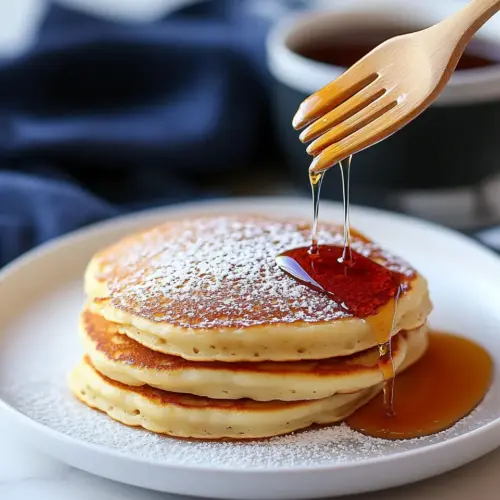
Olive Oil Pancakes are tender, slightly crisp edged pancakes with a subtle citrus brightness and fruity olive oil aroma. This easy breakfast or brunch option is creamy in the middle and golden on the outside, perfect for an easy weekend morning or a simple weeknight treat. Make them when you want dependable, flavorful pancakes with minimal fuss.
Equipment
- Nonstick skillet or griddle
- Mixing Bowls
- Whisk
- Measuring Cups and Spoons
- Ladle or large cookie scoop
Ingredients
- 1 1/4 cup 156 g all-purpose flour, sifted Provide structure and body to the batter by supplying gluten and starch; sifting aerates the flour to avoid lumps and ensures a lighter, more tender pancake texture when combined with the wet ingredients.
- 2 tablespoons 24 g sugar Add sweetness and help with browning; granulated sugar also contributes to moisture retention and can slightly tenderize the crumb when dissolved into the batter.
- 1 1/2 teaspoons baking powder Leaven the pancakes by releasing carbon dioxide when activated; baking powder creates lift and a fluffy interior, improving rise during cooking.
- 1/2 teaspoon baking soda React with acidic components to produce additional lift; baking soda helps with browning and balances pH for tender crumb development when combined with buttermilk.
- 1/2 teaspoon fine sea salt Enhance overall flavor balance and strengthen gluten slightly; fine sea salt heightens sweetness and rounds out the taste while controlling fermentation of leaveners.
- 1 large egg Bind ingredients and add richness through proteins and fats; a large egg provides structure, emulsification, and moisture for a cohesive, tender pancake.
- 1 cup 250 g buttermilk Provide acidity, moisture, and tang that react with baking soda for lift; buttermilk contributes to tender crumb and adds a pleasant, slightly sour flavor profile.
- 3 tablespoons 42 g extra virgin olive oil Contribute richness and a fruity, savory fat that tenderizes the batter; extra virgin olive oil replaces butter for moisture and imparts subtle flavor nuances.
- 1 teaspoon finely grated lemon zest Offer bright citrus aroma and a fresh, zesty lift; finely grated lemon zest adds essential oils that enhance flavor without introducing extra liquid.
- 1/2 teaspoon vanilla extract Lend aromatic sweetness and depth with a small amount of extract; vanilla extract rounds flavors and complements the lemon zest and olive oil in the batter.
Instructions
- In a mixing bowl, whisk together flour, sugar, baking powder, baking soda, and salt until evenly incorporated.: You will notice the dry mixture turns homogenous and slightly aerated, with a faintly sweet and saline scent from the sugar and fine sea salt . This step ensures the leavening is distributed so pancakes rise uniformly. If you skip thorough whisking, you risk pockets of leavener that puff unevenly; using a whisk and sweeping the bowl sides prevents that.
- In a small bowl or 2-cup glass measuring cup, whisk together buttermilk, egg, oil, lemon zest, and vanilla until smooth. Add to bowl with dry ingredients and whisk just until smooth (it will still be a bit lumpy, just as long as there aren't any huge clumps of flour).: The wet mix should look glossy and slightly thick, with specks of lemon zest dotting the surface and a mild aroma of vanilla . Emulsifying the egg and oil creates a stable liquid phase that integrates easily into the dry ingredients. If you notice separation or cold lumps, whisk more vigorously; lukewarm buttermilk helps if your kitchen is chilly.
- Heat a nonstick skillet or griddle pan over medium heat. Be patient and let the pan come up to temperature fully.: The batter should come together with small lumps, not a perfectly silky paste. You will see a few flour pockets vanish as the batter rests briefly on the spoon. This minimal mixing prevents gluten overdevelopment, which keeps the pancakes tender. Overmixing is the main error here, leading to tough pancakes.
- Rub a little butter or olive oil on the skillet with a paper towel if necessary (a good nonstick pan will barely need any greasing at all).: Bring the pan to temperature until a drop of water skitters and hisses, signaling readiness. The correct heat gives a steady sizzle and steady browning without burning. If your pan is too hot, pancakes will brown on the outside and stay raw inside, so raise or lower the heat to find a gentle, even sizzle.
- Ladle approximately 3 tablespoons of batter for each pancake (I use a large cookie scoop for this, filling it just barely level), leaving enough space between pancakes so they don’t touch as they spread out. Use the back of the scoop to gently spread into 4-inch rounds if necessary as the batter is on the thick side.: A lightly greased surface produces even contact and reliable browning, with a faint toasty aroma as the fat warms. Use just enough to coat, wiping excess to avoid frying the batter. The mistake to avoid is a sticky pan from too little fat or smoking from too much.
- Cook for about 2 to 3 minutes or until bottoms are deep golden brown; then flip and cook for another 1 to 2 minutes until browned. If you find your pancakes are browning more quickly, turn down the heat (the centers need time to cook through).: The batter should pour with some body, forming rounds that hold together. You will hear a soft settling sound as batter meets pan and see edges begin to set. If pancakes spread into irregular shapes, your pan may be slightly too cool or your batter too thin; adjust accordingly.
- Transfer to serving plates and serve, or place on a baking sheet in a 200 degree F oven to keep warm while you finish cooking the rest of the pancakes. Enjoy warm, drizzled with maple syrup.: Gently coaxing the batter into uniform rounds helps achieve even cooking and pretty presentation, and the surface should look matte and slightly bumpy before flipping. Avoid pressing down which compresses the air pockets and yields dense pancakes.
- Cook for about 2 to 3 minutes or until bottoms are deep golden brown: Look for a deep golden hue and small bubbles forming at the surface edges that stay open, that is your visual cue. You should hear a soft, sustained sizzle but not aggressive crackling. If you smell burning, reduce the heat immediately; undercooked centers indicate the temperature was too high.
- Then flip and cook for another 1 to 2 minutes until browned: After flipping, the second side cooks quicker, so watch for a uniform golden color and a springy center when pressed gently. The aroma will shift to a richer, toasty note and you will see slight steaming. Flipping too often or pressing the pancake flattens it and robs it of airiness.
- If you find your pancakes are browning more quickly, turn down the heat: Slowing the heat gives the center time to set without overbrowning the surface, and you will notice a steadier, lower sizzle. This adjustment is crucial for thicker pancakes that need more time to cook through. A common oversight is leaving the burner unchanged; small adjustments yield consistent results.
- Transfer to serving plates and serve, or place on a baking sheet in a 200 degree F oven to keep warm while you finish cooking the rest of the pancakes: The stack will maintain warmth and texture in the low oven, and the aroma in the kitchen becomes gently sweet and toasty. Use a wire rack over the sheet if you want to prevent steam softening. Avoid piling them directly on top of each other while finishing; trapped steam will make edges limp.
- Enjoy warm, drizzled with maple syrup: The final service brings the bright citrus and olive oil notes together with sweet syrup, creating a balanced bite that is warm and satisfying. Serve immediately for best texture, as residual steam will soften the crisp edges over time. If serving later, reheat briefly on a skillet to refresh the surface.
Notes
- Measure flour correctly: Spoon the all purpose flour into your measuring cup and level it with a knife rather than scooping directly from the bag, which can compact the flour and yield dense pancakes.
- Test the pan temperature: Flick a few drops of water on the skillet, they should dance and evaporate quickly, signaling the right heat for even browning.
- Keep the batter slightly lumpy: Overmixing develops gluten and makes pancakes chewy, so stop when the batter is just combined with small streaks of flour still visible.
- Use a large cookie scoop for consistency: Portioning with a scoop ensures uniform pancake sizes so they cook at the same rate; I fill mine just barely level for three tablespoon rounds.
- Control browning with heat: If the bottoms darken too fast, reduce the burner slightly and give the center extra time to cook through without burning the exterior.
- Store leftovers properly: Cool completely before stacking and refrigerate in an airtight container; reheat on a skillet to restore the edges rather than microwaving which can make them limp.