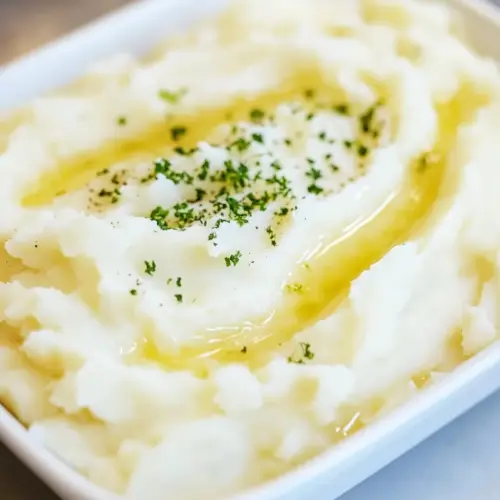
Mashed Potatoes
Mashed Potatoes are creamy, comforting, and unbelievably easy, delivering a silky texture from warm milk and rich butter. This classic side is an ideal easy weeknight dinner companion or a centerpiece for holiday feasts, offering fluffy bites and bright herb finishes. Make them for guests or a cozy family meal, and you will see why they are a crowd favorite.
Equipment
- Large Pot
- Potato Masher
- Colander
Ingredients
- 4 lbs Yukon gold potatoes Boil and mash to provide the starchy, creamy base for the dish; yields a naturally buttery texture when cooked and helps bind liquids and fats for smooth consistency. Choose uniform-sized pieces and cook until fork-tender to avoid lumps, then drain thoroughly before mashing to control moisture. Yukon Golds contribute a subtly sweet, rich flavor and golden color that enhances overall mouthfeel and appearance.
- 1/2 c. salted butter softened Soften and enrich by adding creamy, savory fat that improves texture and flavor; helps create a silkier mouthfeel when incorporated while also aiding in aeration during mashing. Bring to room temperature or gently warm to ensure even distribution and prevent cooling the potatoes. Salted butter adds seasoning, so adjust additional salt accordingly during final tasting.
- 1 c. milk warmed Warm gently and blend to loosen the mashed potatoes to a creamy, scoopable consistency; temperature-matched milk integrates smoothly and prevents chilling the mixture. Use warmed milk to control final texture, adding gradually until desired creaminess is achieved without making the mash watery. Whole or reduced-fat milk will affect richness, so select according to preferred creaminess.
- 1 1/2 tsp sea salt finely ground Season finely to balance and enhance the natural flavors of the potatoes; dissolves evenly when finely ground and avoids pockets of concentrated salt. Measure carefully and adjust to taste after combining other ingredients, since the butter may already contribute sodium. Proper salting brings out depth and rounds the overall flavor profile.
- 1/2 tsp pepper Spice subtly to provide gentle heat and underpinning savory notes that brighten the dish; ground pepper distributes aromatic pungency throughout the mash. Add gradually and taste before serving to avoid over-seasoning, as pepper can intensify after sitting. Freshly ground pepper will yield stronger flavor compared with pre-ground varieties.
- parsley or chives optional Garnish optionally to add fresh herbal aroma, color contrast, and a light oniony or grassy note that complements the rich potatoes; use finely chopped parsley or chives for even distribution. Sprinkle just before serving to preserve brightness and prevent wilting from residual heat. Herbs can be mixed in or used as a finishing touch depending on presentation preference.
Instructions
- Peel potatoes and quarter them. Place potatoes in a large pot and cover with cold water. Bring to a boil and cook until easily pierced with a knife about 15 minutes. Drain well.: The aroma of raw potatoes is faintly earthy, and when you quarter them you create uniform pieces that cook evenly. Make sure pieces are similar in size so none finish much earlier than the rest. A common mistake is leaving large gaps in size, which leads to some pieces being undercooked while others fall apart.
- Add butter to potatoes and begin mashing with your potato masher. Pour in a little of the warmed milk at a time while mashing to achieve desired consistency.: Starting with cold water ensures the potatoes heat evenly from edge to center, preventing a mushy exterior and undercooked core. The sound of tiny bubbles building as the water warms is your cue that even heating is happening. If you start in hot water, the outside can overcook before the center warms through, producing an inconsistent texture.
- Season with salt and pepper to taste and garnish with chives or parsley if desired.: During boiling, the water should bubble steadily but not violently; a rolling boil can batter the tubers and bruise them. Check doneness by sliding a knife into the largest piece, feeling for a smooth slide with no resistance. Overcooking will make the potatoes waterlogged and prone to becoming gluey when mashed, so watch the clock and test early.
- Drain well: After the potatoes are tender, drain them completely so excess water does not dilute the flavor or thin the mash. The quiet clatter of the pot as the water leaves is the last audible sign before you begin mashing. Leaving water behind is a common error that leads to a watery, bland result, so give them a good shake in the colander.
- Add butter to potatoes and begin mashing with your potato masher: As you press the potatoes, you will hear a soft, rhythmic squelch and see the texture change from chunky to cohesive. The butter should melt into warm potatoes , releasing a nutty aroma. I prefer a hand masher because it preserves a lighter texture; using a mixer can overwork the starches and make the mash gummy.
- Pour in a little of the warmed milk at a time while mashing to achieve desired consistency: Warm milk integrates smoothly, leaving the mash glossy and tender. Add it slowly, watching the texture change and stopping when the mouthfeel feels right. If you pour too much at once, the mash can turn soupy, so proceed in small increments and taste as you go.
- Season with salt and pepper to taste: Salt brings out the underlying potato flavor, while pepper adds a gentle counterpoint. Sprinkle small amounts, stir, and taste, because it is easy to over-season. Remember that butter already contains salt, so adjust carefully.
- Garnish with chives or parsley if desired: Fresh herbs add a bright finish and a pop of color against the creamy backdrop. Scatter finely chopped chives or parsley just before serving to keep their vibrancy. Adding herbs too early can cause them to wilt and lose their fresh aroma.
Notes
- Choose Your Potato: Yukon golds are my preferred option for their creamy texture, but if you only have Russets they will still make a lovely mash, just be mindful of water content and cook time.
- Butter Temperature: Use softened or melted butter so it blends readily into the hot potatoes, creating an even, unbroken texture rather than lumps of cold fat.
- Milk Warmth: Always warm the milk slightly before adding, this prevents cooling the mash and allows the liquid to incorporate with less stirring.
- Herb Finish: Fresh chives or parsley are ideal as a final touch; add them just before serving to keep color and aroma bright.
- Texture Control: Add liquid gradually and stop when you reach your preferred mouthfeel, whether that is rustic and slightly chunky or smooth and silky.