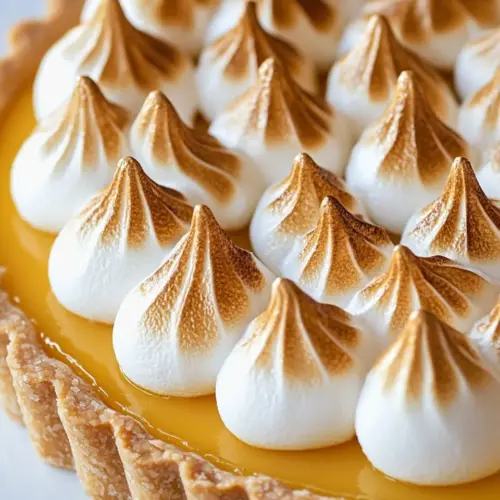
Lime Meringue Tart
Lime Meringue Tart is a bright, creamy dessert featuring a tangy lime custard topped with a cloud like meringue and a crisp tart shell. The contrast of silky filling and toasted peaks makes it a showy yet approachable treat, perfect for spring gatherings or an easy weekend celebration. Make it for its fresh citrus punch and impressive presentation.
Equipment
- Saucepan
- Mixing Bowl
- Stand mixer
- Oven
- Tart Pan
Ingredients
- 8 tablespoons (115 g) butter, salted or unsalted, cut into pieces Softened and cut into pieces to ensure even melting, provides a rich, tender texture and flaky crumb to the tart crust; salt content can be adjusted to balance sweetness and enhance overall flavor. Use chilled butter if making a pâte sablée or shortcrust to achieve proper lamination and prevent overworking the dough.
- 3/4 cup (180 ml) freshly-squeezed lime juice, from about 5-6 limes Freshly squeezed to deliver bright, acidic flavor and natural aroma that sets the tart's citrus backbone; acidity also helps to set the curd and balance the sweetness of sugar and meringue. Measure juice after squeezing to ensure correct curd consistency and strain to remove pulp or seeds for a smooth filling.
- 3/4 cup (150 g) sugar Granulated sugar used to sweeten the lime curd and stabilize the meringue; contributes to texture and helps with setting by interacting with eggs and citrus to create a glossy, stable filling. Adjust amount carefully to preserve tartness while providing sufficient structure and sheen.
- zest of two limes, unsprayed (see Note) Finely grated zest brings concentrated citrus oils and aromatic intensity to amplify lime flavor without adding extra acidity; unsprayed zest avoids pesticide residues and preserves pure taste. Zest should be added early to the curd to infuse the filling or reserved for garnish to boost fragrance.
- pinch of salt Small amount used to enhance and balance the sweet and sour components of both the filling and meringue; salt deepens flavor and reduces any bitterness from the citrus. Incorporate sparingly, distributing evenly to avoid overt salinity while improving overall taste clarity.
- 3 large egg yolks Thickened yolks provide richness, body, and emulsifying power to the lime curd, helping it set into a silky, custard-like consistency; they also contribute color and smooth mouthfeel. Temper yolks with hot lime-sugar mixture to prevent curdling and cook gently until the desired thickness is achieved.
- 3 large eggs Whole eggs supply additional structure, protein, and volume to the curd, assisting in coagulation and ensuring a stable, sliceable filling; they also lighten the texture slightly compared with yolks alone. Whisk thoroughly and temper to avoid scrambling, then cook until just thickened for optimal creaminess.
- 2 large egg whites Separated whites reserved for the meringue to create light, airy peaks that contrast the dense curd; whipping the whites adds volume and a tender cloudlike topping when properly stabilized. Ensure no trace of yolk or fat remains for maximum lift and whip to glossy soft peaks before adding sugar.
- 5 tablespoons (75 g) sugar Sugar for the meringue stabilizes beaten egg whites, adds sweetness, and helps create glossy, stable peaks that hold shape when baked or torched; dissolving sugar properly yields a smooth, satiny meringue. Add gradually while whipping to achieve stiff, glossy peaks and avoid grainy texture.
- pinch of salt Small pinch enhances the sweetness and overall flavor of the meringue by balancing taste and lifting other components; it can also assist slightly in stabilizing whipped egg whites. Use minimal salt to avoid diminishing the meringue's delicate sweetness while improving depth.
- a few drops vanilla extract A few drops introduce a subtle warm, vanilla note that rounds out the tart's bright lime flavor without overpowering it, enhancing aromatic complexity and perceived sweetness. Use pure vanilla extract sparingly to complement the citrus and harmonize the curd and meringue layers.
- One recipe, French tart dough, pre-baked, or another favorite tart dough Pre-baked tart shell provides a crisp, sturdy base to hold the lime curd and meringue; using French tart dough or a favorite recipe ensures proper texture, thickness, and flavor compatibility. Blind-bake until golden and cooled to prevent a soggy bottom when filling and finishing the tart.
Instructions
- Preheat the oven to 375º (180ºC.): You will notice the oven warming the kitchen and a slight dry heat that encourages even baking. Preheating matters because a cold oven will change the bake time and can leave the crust soggy. A common mistake is skipping full preheat, which results in uneven browning. Make sure the rack is positioned for even heat circulation and that the oven reaches temperature before inserting the tart shell.
- In a medium-sized saucepan, warm the butter, lime juice, sugar, zest, and salt.: As the ingredients heat, the kitchen fills with a bright citrus aroma combined with the rich scent of butter . Warm until the sugar dissolves and the mixture becomes homogeneous, but avoid boiling which can drive off delicate citrus oils. If the mixture overheats, the filling may separate or become grainy, so keep the heat gentle and stir frequently.
- In a separate bowl, whisk together the eggs and the yolks.: Whisking by hand or with a fork creates a uniform pale mixture that will take the warm liquid without cooking. The sound of the whisk changes as the mixture smooths, and the visual cue is a consistent, slightly frothy yellow. A common pitfall is under whisking, which makes tempering uneven and may lead to curdled bits when combined with hot liquid.
- When the butter has melted and the mixture is warm, gradually pour some of the warm lime juice mixture into the eggs, whisking constantly. Scrape the warmed eggs back into the saucepan and cook the mixture over low heat.: As you temper, you will feel the bowl warming and see the eggs thin without scrambling. This process protects the eggs and results in a smooth custard. Return to the saucepan and cook gently, stirring so heat distributes evenly. If you add the hot liquid too quickly, the eggs will scramble and ruin the texture, so patience here prevents disaster.
- Stir the mixture constantly over low heat, using the whisk, until the filling thickens and begins to resemble soft jelly. Do not let it boil. (For the intrepid, you can do this step in a large bowl set over a saucepan of simmering water instead of over direct heat.): You will see the filling change from a loose liquid to a glossy, ribbon like consistency that coats the whisk. The smell becomes more concentrated, and the texture should feel velvety. Constant stirring prevents hotspots and curdling. If the mixture comes to a boil the eggs will scramble, so keep the temperature controlled and steady.
- Remove from heat and scrape the filling into the pre-baked tart shell.: The filling will be warm and slightly thick, spreading smoothly into the shell. It should sit level but not runny. The sensory cue is a glossy surface and a custard that moves slowly when tilted. Pour too hot and you risk softening the crust; too cool and it will not spread evenly. Let it settle briefly to remove air pockets before moving on.
- Bake for 10 minutes.: During this short bake, the filling sets further and the top acquires a subtle sheen. Watch the edges to ensure the crust does not over brown. A common error is leaving it too long, which can dry the filling out; the goal is a just set center with a tender, custardy mouthfeel.
- To make the meringue (see Note for alternative method), whisk together the egg whites, sugar, and salt in the bowl of a stand mixer. Set the bowl over a pan of simmering water, and whisk it as it heats, checking it with an instant-read thermometer.: The bowl will warm and the mixture will become glossy and smooth as the sugar dissolves. Bringing the whites to about 140 F (60 C) helps ensure food safety and stabilizes the foam. If you skip warming, the meringue may be looser and less stable, especially in humid conditions, so this step improves reliability.
- Once it reaches 140 F (60 C), transfer the bowl to the standing mixer and beat at high speed until cool, scraping down the sides once of the mixer bowl, midway during mixing, and add the vanilla. Whip until the meringue is light and fluffy.: You will hear the mixer change pitch as the foam builds, and visually the peaks will go from soft to glossy and then to stiff. The meringue should feel satiny and hold its shape. If it looks grainy, it means the sugar did not fully dissolve or it was over whipped; avoid over whipping which can cause separation.
- Heat the broiler and move the oven rack to the top third of the oven.: The broiler provides intense top heat that lightly caramelizes the meringue. Positioning is crucial so the meringue browns quickly without burning. Leaving it too low results in slow browning and drying, while too close can char the peaks in seconds, so keep a vigilant eye.
- Scrape the meringue into a pasty bag fitted with a star tip and pipe a ring around the perimeter of the tart. Or spread in a ring around the tart with a spatula.: Piping creates decorative peaks that take on color attractively, while spreading yields a more rustic look. You should feel the meringue's weight as you pipe, and see defined ridges form. Overworking it can deflate the foam, so handle gently and confident.
- Pop the tart under the broiler, watching carefully, as it will brown quickly. When the top begins to darken, remove the tart from the oven and cool completely before slicing.: The meringue will go from pale to golden in moments, releasing a toasty aroma that complements the lime. Remove as soon as the desired color appears to avoid bitterness. Cooling fully lets the filling set so slices cut cleanly; slicing too soon will produce messy, weeping edges.
Notes
- Swap crusts: Try a pre baked shortcrust for a classic base or a pressed cookie crust if you want a quicker assembly, both will alter the bite but keep the filling intact.
- Meringue styling: Pipe tall peaks for a dramatic presentation, or spread the meringue thinly and torch just the top for a subtler finish, both approaches change how the toasted notes read in each bite.
- Advance prep for filling: Make the lime filling up to five days ahead and refrigerate, it will save time on the day of service while retaining flavor when reheated gently.
- Serving sizes: Bake in individual tartlets for a party friendly format, they are easier to portion and look elegant on a dessert tray.
- Texture control: For an extra creamy filling, whisk more vigorously when combining after cooking to smooth any small curdles, which yields silkier mouthfeel.