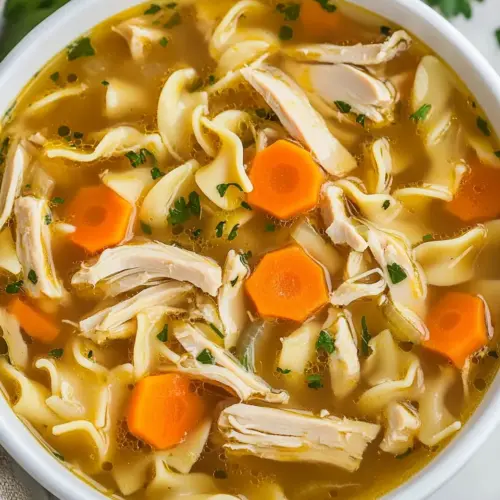
Leftover Turkey Noodle Soup
Leftover Turkey Noodle Soup offers a rich, savory broth made from a turkey carcass, tender turkey meat, and soft egg noodles, creating a comforting and easy weeknight dinner. The homemade stock yields a slightly silky mouthfeel and deep roasted flavor, while simple aromatics lift the bowl into something special. Make it after holiday meals to stretch your bird into a nourishing family favorite.
Equipment
- 6-quart Dutch Oven
Ingredients
- 1 turkey carcass (leftover from a carved turkey, all meat removed) Provide the flavor base and structure for the broth by simmering the bones and connective tissue; extract gelatin and depth of taste from the leftover carcass over several hours to create a rich stock.
- 14 cups water Contribute the liquid volume necessary to cover the carcass and vegetables; allow the water to carry dissolved flavors and dilute seasonings while supporting long, gentle simmering for extraction.
- 1 large onion (peeled) Add aromatic sweetness and savory depth when halved or quartered and simmered; release sulfurous and umami compounds that round out the broth’s flavor profile.
- 2 stalks celery Impart subtle vegetal savory notes and aromatics when chopped and added to the pot; celery’s fibrous stalks also lend faint herbal bitterness that balances richer elements.
- 3 medium carrots (peeled) Bring natural sweetness and earthiness when peeled and sliced; carrots add color, natural sugars, and body that enhance the stock’s overall balance.
- 1/2 teaspoons salt (or to taste) Provide initial seasoning that enhances the natural flavors of the simmered stock; sprinkle and adjust to taste to prevent an underseasoned broth while accounting for later additions.
- 1/4 teaspoon pepper (or to taste) Introduce a mild heat and brightness to the broth when added sparingly; ground pepper helps lift flavors and add subtle warmth without overpowering the soup.
- 2 to 3 cups turkey meat (chopped, white or dark) Contribute concentrated protein and texture when chopped into bite-sized pieces; leftover turkey meat adds substance, rich flavor, and makes the soup a complete meal.
- 8 ounces egg noodles (dry) Supply starchy body and comforting texture once cooked in the broth; egg noodles absorb liquid and thicken the soup slightly while offering familiar chewiness.
- 1 bouillon cube (or 1-2 tbsp Vegeta) Boost umami and deepen savory notes when dissolved into the broth; a bouillon cube or Vegeta concentrates salt and flavor, helping to round out the stock quickly.
- 1/4 teaspoons salt (or to taste) Allow for fine-tuned seasoning of the finished soup; add this salt later to account for reduced stock and salted concentrates so the final taste is balanced.
- 1/4 teaspoon pepper (or to taste) Enhance the final flavor with a controlled amount of ground pepper; finishing pepper brightens and rounds the soup’s overall seasoning without masking delicate notes.
- 1 tablespoon parsley (chopped for garnish) Provide a fresh herbal finish when chopped and sprinkled as a garnish; parsley adds color, a light grassy note, and aromatic lift to the finished bowl.
Instructions
- In a large soup pot, add turkey carcass, water, onion, celery sticks and carrots. Season with salt and pepper. Cook for about 1.5 hours, covered over medium-low heat.: You will smell a savory, roasted fragrance rising as the pot warms, and small bubbles should slowly break the surface indicating a gentle simmer. This low, steady heat pulls collagen and flavor from the bones, yielding a golden, slightly viscous broth. Keep the lid slightly askew if you want a bit more evaporation, but avoid a full rolling boil which can cloud the stock. A common mistake is boiling too hard, which makes the broth muddy and sharp, so maintain medium low heat and skim any foam if it appears.
- Remove the carcass and everything else from the soup using tongs or a slotted spoon, set the carrots aside. All there should be left in the pot should be the broth. Add turkey meat and noodles to the pot. You might need to add a couple more cups of water as some of it may have evaporated. Chop the cooked carrots into half moons and add back to the pot. Season with salt and pepper and add the bouillon cube or Vegeta.: When you remove the solids, the broth will glisten and smell concentrated, with roasted and sweet vegetable notes. Adding the turkey meat now lets it heat through without overcooking, preserving tenderness. If the broth reduced, the surface will show more sheen and a slightly thicker mouthfeel, which is why you may add water to reach the desired volume. Stir in the egg noodles and observe them plump and soften; this visual cue tells you when they are close to done. Avoid adding too much salt at this stage because the bouillon can be salty; taste after it dissolves to adjust. A frequent pitfall is overcrowding the pot with noodles which can clump and cook unevenly, so give them space and stir gently.
- Cook for another 8 minutes until noodles are cooked. Garnish with parsley and serve.: As the noodles simmer, you will hear a gentle, steady simmer and see the broth shimmer around the pasta. The aroma becomes homier, with the bundled flavors harmonizing. After about eight minutes the noodles should be tender yet resilient to the bite, and the turkey will be warmed through, releasing tiny ribbons of protein into the broth. Finish with chopped parsley which brightens the bowl and provides a fresh contrast on the tongue. A key thing to avoid is overcooking the noodles if you plan to store leftovers; consider cooking them slightly underdone if reheating later to prevent mushiness.
Notes
- Save and freeze carcasses, because having a frozen carcass on hand makes it effortless to make a rich broth whenever you need a comfort meal.
- Simmer low and slow, as this encourages a clear, flavorful stock by extracting gelatin without emulsifying fats into the liquid.
- Control final salt, taste the broth after dissolving the bouillon before adding more salt to avoid oversalting.
- Cook noodles separately for storage, if you expect leftovers, to preserve noodle texture when reheating.
- Add fresh herbs at the end, because delicate herbs like parsley lose brightness if simmered too long.