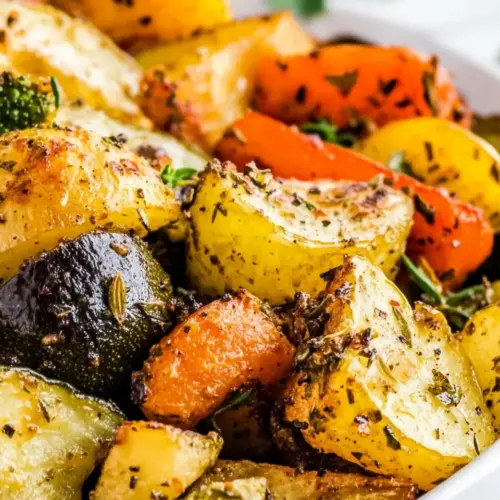
Italian Roasted Vegetables
Italian Roasted Vegetables are a crispy, savory, and easy weeknight dinner side that balances roasted baby red potatoes with tender zucchini, eggplant, and a sprinkle of Parmesan cheese. The Tuscan seasoning and olive oil coax out caramelized sweetness, making them perfect for fall meals or casual gatherings. Make them to elevate simple produce into a crowd pleasing dish.
Equipment
- Rimmed Baking Sheet
Ingredients
- 1 pound baby red potatoes, cut in half Hold as the starchy base that adds body and creamy texture when roasted; halve to ensure quick, even cooking and golden edges while absorbing seasonings.
- 2 tablespoons extra-virgin olive oil, divided Coat vegetables and promote browning while adding subtle fruitiness; divide use allows initial high-heat roasting and a finishing drizzle for gloss and flavor balance.
- 1 medium zucchini, cut into half-moon shapes Provide tender, slightly sweet flesh with a mild bite when cut into half-moons; contribute moisture and a contrasting texture to root vegetables in the roast.
- 1/2 medium eggplant, cut into 1-inch pieces Offer a meaty, absorbent texture that soaks up oil and seasoning; cutting into 1-inch pieces yields even roasting and caramelized surfaces without turning mushy.
- 1 medium red onion, cut into 1 1/2-inch pieces Impart sweet, savory notes and soft caramelized layers when cut into 1 1/2-inch pieces; add aromatic depth and color contrast among the mixed vegetables.
- 1 1/2 cups cauliflower florets Contribute a slightly nutty flavor and delicate crumbly texture when roasted; florets brown at the tips and add visual variety to the tray.
- 1 cup baby carrots Introduce crunchy-sweet roots that hold shape under high heat; use whole baby carrots for uniform appearance and a naturally sweet counterpoint to savory items.
- 1 tablespoon melted butter Provide a small amount of richness and help brown edges; melted butter adds to flavor complexity and gives a glossy finish to roasted pieces.
- 1/2 teaspoons salt Enhance overall seasoning and bring out natural flavors; use the half-teaspoon to avoid over-salting while allowing other herbs and cheese to shine.
- 1/2 teaspoon black pepper Add a sharp, warming note and highlight savory elements; half a teaspoon offers a balanced peppery finish without overwhelming delicate vegetables.
- 1 tablespoon Tuscan seasoning Season with an herby, garlicky blend that evokes Tuscan flavors; one tablespoon seasons the mix evenly and supports the Parmesan topping.
- 1/4 cup freshly shredded Parmesan cheese Top the finished vegetables with savory, salty richness and a lightly nutty finish; freshly shredding ensures quick melting and better texture integration.
Instructions
- Preheat oven to 400 degrees and grease a large rimmed baking sheet. (Note: Line with parchment paper or aluminum foil for easy clean-up.): The first thing your nose will notice is the warm, dry heat filling the kitchen as the oven approaches 400 degrees , which is ideal for caramelization without overcooking. Greasing the sheet ensures the vegetables will slide when they are done and helps the edges brown evenly, creating those desirable crisp, toasty bits. If you line the pan with parchment or foil, cleanup becomes trivial, though be sure the foil is flat so vegetables roast on an even surface. A common mistake is skipping preheating, which results in uneven roasting and limp texture; always wait until the oven reaches temperature before you put the vegetables in.
- Place potatoes on the baking sheet and drizzle with 1 tablespoon of oil.: When you place the baby red potatoes on the hot sheet and drizzle that first tablespoon of extra-virgin olive oil , you will hear the faint, satisfying sizzle as oil meets warm metal, and that quick contact begins forming a crust. This early oiling helps the potatoes start to brown and develop a slightly crispy skin while protecting the tender interior. Spread them so each piece has breathing room, because crowding traps steam and prevents that lovely crisp. A frequent misstep is piling pieces together, which yields steamed, pale potatoes instead of golden ones.
- Roast for 10 minutes.: As the potatoes roast for about ten minutes, you will smell the earthy aroma deepen and notice the edges taking on a golden tint; this short initial roast gives them a head start so they finish at the same time as the quicker cooking vegetables. It also softens the interior so the remainder of the vegetables can share the pan without turning to mush. Resist the urge to open the oven repeatedly, because losing heat early in the roast slows browning and extends cook time.
- Remove baking sheet from oven and add the remaining vegetables to it.: Pulling the pan out, you will see small brown freckles on the potatoes, which is your cue to add in the zucchini , eggplant , red onion , cauliflower , and baby carrots . Adding them now ensures the softer pieces do not overcook and become watery. Arrange everything evenly so similar sizes sit near one another, making the visual harmony pleasant and the heat distribution consistent. A common oversight is tossing all vegetables together before the initial potato roast, which results in an unevenly cooked pan.
- Drizzle the remaining olive oil and the butter over the veggies. Sprinkle with salt, pepper, and Tuscan seasoning. Stir to mix and spread out in a single layer.: The moment you add the second drizzle of extra-virgin olive oil and the melted butter , you will notice the pan gleam and the herbs bloom, releasing their scent as they hit warm surfaces. The fat helps the seasoning cling, promotes browning, and gives a silky mouthfeel to the finished pieces. Stirring ensures even seasoning, but be gentle so you do not break delicate vegetables. Spread the veggies in a single layer, giving them space to crisp. Overlapping is the most frequent culprit behind soggy results, so take a few extra seconds to arrange them thoughtfully.
- Return to oven for 20 minutes.: When the pan goes back into the oven, the heat will coax the sugars in the onion and carrots to caramelize, the eggplant to turn silky, and the zucchini edges to darken slightly. After about twenty minutes you should see golden brown edges and smell a deep, nutty aroma. If your oven runs hot, check at fifteen minutes to avoid excessive charring; conversely, if your vegetables are still pale, an extra five minutes can help develop color. A typical error here is not rotating the pan; if your oven has hot spots, a quick turn at the ten minute mark keeps browning even.
- Sprinkle with Parmesan cheese and serve.: Once you pull the pan from the oven, the final act of sprinkling the Parmesan cheese creates pockets of savory richness that melt against the hot vegetables, forming golden flecks of umami. The aroma is uplifting, and the contrast between the warm veggies and the salty cheese is immediate. Serve right away so the cheese keeps a slight crisp where it meets the heat. A common mistake is waiting too long to serve, which lets the cheese lose its texture and the vegetables cool, so bring it straight to the table for peak flavor and warmth.
Notes
- Seasoning swap Try Italian seasoning if you cannot find Tuscan seasoning, the herb profile will be similar and still complement the vegetables nicely.
- Spice it up For heat, add crushed red pepper flakes to the seasoning mix, starting with a small amount and adjusting to taste so it does not overwhelm the natural sweetness of the vegetables.
- Even cuts Cut vegetables to similar sizes to ensure uniform roasting, which prevents some pieces from burning while others remain underdone.
- Oil control Use the olive oil sparingly and divide it in stages, too much oil will lead to soggy results rather than crisp, browned edges.
- Make ahead Roast ahead and reheat briefly in a 350 degree oven to re-crisp edges before serving, adding fresh Parmesan cheese after reheating.