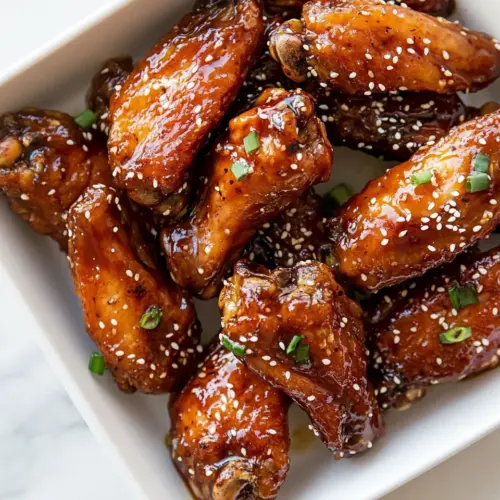
Honey Garlic Soy Chicken Wings
Honey Garlic Soy Chicken Wings are sticky, savory, and irresistibly crispy, combining honey, soy sauce, and garlic for an easy weeknight dinner or party favorite. The lightly dusted corn starch crisps the skin while a quick stovetop glaze adds glossy depth, making them both comforting and craveable. Try them when you want a simple, crowd pleasing dish that delivers big flavor.
Equipment
- Oven
- Baking Sheet
- Wire Rack
- Large Bowl
- Skillet
- Tongs
Ingredients
- 2 pounds wings Coat wings evenly to create a crisp, protective layer when fried or baked; adds a light texture and helps seasonings adhere. Use to reduce surface moisture for better browning and a crunchier exterior during cooking.
- 1/4 cup corn starch Thicken and crisp the exterior when tossed with wings prior to cooking; creates a delicate, crunchy coating that holds sauces well. Use for moisture control and to enhance mouthfeel without altering flavor significantly.
- 1 tsp garlic powder Season wings with savory, roasted garlic notes and enhance overall flavor depth; distributes easily for even coverage. Use to complement fresh garlic and balance sweet and spicy elements in the sauce.
- 1 tsp paprika Add a mild smoky warmth and visual color to the wings while boosting savory complexity; blends well with other spices. Use in small amounts to avoid overpowering and to enhance baked or fried appearance.
- Dash Salt and pepper Balance and enhance flavors by providing necessary seasoning; highlights savory, sweet, and spicy components of the dish. Use sparingly to taste, ensuring wings are properly seasoned before cooking.
- 1 tablespoon butter or oil Provide a cooking medium to sauté aromatics and develop sauce richness; contributes subtle fatiness and mouthfeel. Use to prevent sticking, help transfer heat, and carry flavor from garlic into the sauce.
- 3 cloves garlic, minced Deliver fresh, pungent aromatic flavor and build the base of the sauce; releases essential oils when sautéed to infuse the dish. Mince finely for even distribution and sauté briefly to mellow raw sharpness.
- 3 tablespoons honey Contribute primary sweetness and glaze formation for the sticky sauce; caramelizes when heated to create glossy coating on wings. Use to balance salt and acid, and adjust quantity to control overall sweetness.
- 3 tablespoons soy sauce Impart savory umami and saltiness while forming a glossy, cohesive sauce; balances the sweetness of honey and the acidity of vinegar. Choose a regular or low-sodium variety and adjust amount to taste.
- 1 tablespoon rice vinegar Introduce bright acidity to cut through richness and balance sweetness; helps emulsify and loosen the sauce for even coating. Use to enhance brightness and lift flavors without making the sauce overtly tart.
- 1 tablespoon sriracha, or more, to taste Provide heat and a spicy kick to the sauce, allowing for adjustable heat level; integrates smoothly into the glaze for complexity. Start with the listed amount and increase according to preferred spice tolerance.
Instructions
- Preheat the oven to 400 degrees F. Line a baking sheet with aluminum foil and place a wire rack on top of it.: You will notice the oven hum as it climbs to temperature and the air inside becomes dry and hot, which is essential for drying the wing skin so it crisps. The metal foil below makes cleanup effortless, while the wire rack elevates the chicken so hot air circulates around each piece, preventing steaming. If you skip the rack the undersides can stay soggy, so resist the temptation to bake directly on the sheet, unless you plan to flip more often. A common mistake is under preheating, which leads to pale, floppy skin. Wait until the oven fully reaches 400 degrees F so the wings start browning immediately upon contact.
- In a large bowl, combine the chicken wings, corn starch, and spices. Transfer in a single layer onto the rack.: As you toss the wings you'll feel the powder coat each piece, leaving a fine, dry film that will puff and brown. The aroma of paprika and garlic powder will be subtle but present as you mix them in with your hands or tongs. Laying each wing in a single layer is crucial for even heat exposure; crowding traps moisture and prevents crisping. If pieces touch, they will steam where they meet, so give them space. A frequent misstep is overcoating with corn starch , which can create a cakey surface instead of a light crust. Shake off excess starch before arranging the wings.
- Bake 50-60 minutes, flipping halfway through until the wings are golden and cooked through.: Initially the wings will sizzle softly as moisture escapes, and after about 25 to 30 minutes you should see golden edges forming. Flip the wings when the underside shows good color so both sides achieve even caramelization. The skins will transform from pale to bronzed, and you may hear a faint crackle as fats render. The internal juices should run clear, signaling doneness. Overbaking will dry the meat, so aim for that sweet spot where the skin is crisp but the meat remains juicy. A common error is insufficient flipping, which produces uneven texture across the tray.
- While the wings are baking, heat a pan over medium-high heat. Add the butter and garlic and cook for 30 seconds or until garlic begins to brown. Stir in the remaining ingredients for the sauce and simmer for just a few seconds.: When the pan heats you will see the butter melt and foam, releasing a toasty aroma as the minced garlic softens. That moment right before browning is where the flavor is most fragrant; once it begins to brown you must act quickly to add honey , soy sauce , rice vinegar , and sriracha . The sauce will hiss and become glossy as sugars dissolve, and you will smell sweet and savory notes marrying. Simmer only briefly to thicken slightly, because prolonged reduction can burn the honey . A typical mistake is overheating and letting the garlic burn, which introduces bitterness. Keep the heat controlled and stir constantly when the sweet ingredients enter the pan.
- Remove wings from the oven and toss into the sauce until fully coated. Serve immediately.: As you transfer the baked wings into the pan or a bowl, you will notice steam rising and the sauce clinging in ribbons. Tossing disperses heat and helps the glaze adhere; the wings should look glossy and sound slightly tacky when you touch them. Serve at once so the skin remains pleasantly textured under the glaze. If you let them sit too long the sauce can seep and soften the crust. A common pitfall is overcrowding the pan during tossing, which prevents even coating. Work in batches if needed to maintain that shiny finish and crisp exterior.
Notes
- Swap fat: If you prefer a cleaner finish, use a neutral oil instead of butter. Oil stands up to higher heat without browning too quickly, which helps when you need to reduce the sauce a touch longer. Butter adds richness, but oil will keep the flavors bright.
- Adjust heat: Add sriracha gradually and taste as you go. A little goes a long way, and it is easier to increase spice than to remove it once combined with honey and soy sauce. Reserve extra sriracha at the table for guests who like more heat.
- Control salt: Use low sodium soy sauce if you are watching salt intake. Because soy sauce concentration affects final seasoning strongly, this simple swap prevents an overly salty glaze while preserving umami depth.
- Crisp hack: Pat wings very dry before coating with corn starch. Removing surface moisture is the most effective way to achieve a roasted, crackly exterior. Wet skin steams, which defeats the purpose of the starch coating.
- Make ahead: Bake wings and store them separately from the sauce for up to one day. Reheat wings in a hot oven to revive crispness, then toss with freshly warmed sauce right before serving to maintain texture.
- Scale safely: When increasing quantities, avoid overcrowding the baking surface and use multiple racks or batches. Proper spacing is more important than fitting everything onto a single sheet because airflow directly impacts crispness.