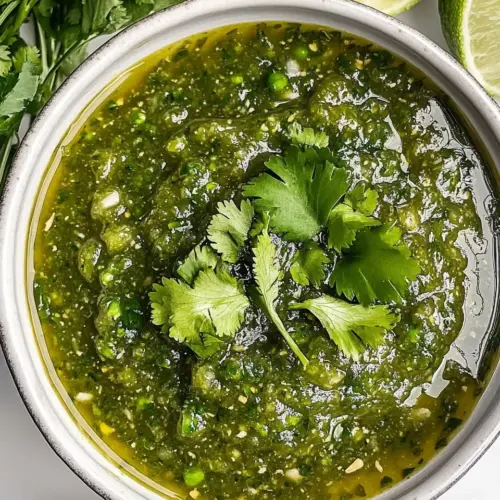
Homemade Salsa Verde
Homemade Salsa Verde is a bright, tangy sauce made from charred tomatillos and peppers, offering smoky depth and fresh herbaceous notes. This easy to make condiment is perfect for dipping or spooning over proteins, delivering vibrant flavor for an easy weeknight dinner or casual gathering. Make it to add lively acidity and just the right amount of heat to your meals.
Equipment
- Broiler pan
- Aluminum Foil
- Tongs
- Food Processor
Ingredients
- 3/4 lb tomatillos, husks removed Provide bright, tangy acidity and a slightly fruity background that forms the base of salsa verde; remove husks and rinse to reduce stickiness, then roast or boil to deepen flavor and soften for blending. Balance natural tartness with other elements while contributing body and a glossy green color to the finished sauce.
- 1 poblano chilli Add a mild, earthy heat and a smoky, vegetal note when roasted; char or roast briefly to mellow bitterness and enhance complexity. Offer texture when finely diced or blended and complement other chiles without overpowering the salsa.
- 1 serrano chili, or jalapeno for milder Contribute sharp, bright heat that lifts the overall flavor profile; adjust variety (serrano or jalapeño) to control spiciness and seed for milder results. Provide a fresh, green chili flavor that pairs well with tomatillos and cilantro in salsa verde.
- 1 clove garlic, crushed Impart pungent, aromatic depth and a savory backbone when crushed or minced; briefly sautéing can soften its raw edge while preserving flavor. Help marry the acidic and herbal elements and enhance overall umami in the salsa.
- 2 tbsp chopped onion Introduce a mild sweet-sharpness and crunchy texture when finely chopped; briefly rinse to reduce pungency if needed. Serve as a balancing element that brightens flavors and adds small aromatic pieces throughout the salsa.
- 2 tbsp chopped cilantro Bring fresh, citrusy herbaceousness and lift to the salsa; chop leaves and tender stems finely to distribute flavor evenly. Act as a counterpoint to acidity and spice while providing aromatic brightness and a green, fresh character.
- 1/4 teaspoons sugar Provide a touch of sweetness to round acidity and temper sharp flavors; dissolve into the salsa to soften bright edges without noticeable sweetness. Serve as a subtle balancing agent that harmonizes tart and savory components.
- 1 tsp kosher salt Add essential seasoning that enhances and ties together all flavors; dissolve thoroughly to ensure even seasoning across the salsa. Fine-tune to taste, as salt controls perceived brightness and overall balance in the finished sauce.
Instructions
- Preheat the broiler. Rinse and dry the tomatillos. Line a broiler pan with foil and arrange the tomatillos on the foil along with the poblano and serrano chill peppers. Broil until they are charred on top, about 3 minutes. Use tongs to turn and broil the other sides until charred, 3 to 4 minutes.: As the tomatillos and peppers hit intense heat you will hear a faint popping and see blistering skin, which signals caramelization. The smell becomes sharper and more roasted, adding depth that raw fruit lacks. This charring creates complex flavors that a raw salsa cannot replicate, and it also makes peeling easier for the poblano. A common mistake is crowding the pan, which results in steaming instead of charring. Make sure pieces have some space and watch closely so they do not blacken beyond a deep char, which can taste bitter.
- Wrap the tomatillos and chillies in foil and let them rest for 10 minutes. Unwrap the tomatillos and chillies and peel the skin off the poblano chilli and remove the seeds. The tomatillos and serrano chilli don’t need to be peeled or seeded.: Steam trapped by the foil loosens the skin and concentrates aromas, making peeling easier and safer. After resting the poblano skin should slide off with gentle pressure, revealing smoky flesh beneath. Seeds and membranes contain most of the heat, so removing them from the poblano tames the intensity while keeping depth. A frequent oversight is skipping the rest period, which makes peeling fiddly and hotter to handle, so give it the full ten minutes for best results.
- Place the tomatillos and chillies into the bowl of a food processor. Add the garlic, sugar and salt. Pulse the mixture until the ingredients are coarsely chopped.: The first pulses build texture, producing little bits of charred skin and flesh that catch the tongue. You will notice an aromatic wave of roasted notes and a faint garlic punch as the pieces break down. Coarse chopping preserves a lively mouthfeel, which I prefer to a completely smooth purée. One pitfall is over processing at this stage, which yields a too fine blend and can make the salsa thin, so stop pulsing when you see small, varied pieces.
- Add 5 to 6 tablespoons of water, the onion, and cilantro. Pulse quickly until a coarse puree forms then transfer the salsa to a serving dish. Makes about 1 3/4 cup.: Adding water adjusts viscosity gently, creating a spoonable consistency without diluting flavor. The chopped onion softens while the cilantro releases fresh aromatics that lift the roasted base. When pulsing, look for a coarse, slightly chunky texture that spreads easily but still has character. If you add too much water you will lose the concentrated tang, so add measured amounts and pause to check texture. Transfer to a dish and taste for balancing, adjusting salt if needed.
Notes
- Swap the heat Use a jalapeno instead of a serrano chili to reduce spice while maintaining peppery flavor, making the salsa more approachable for mild palates.
- Boost the smoke Char the poblano chilli a touch longer or briefly flame the peppers over an open gas burner for a deeper, campfire like smokiness.
- Smoother texture For a silkier sauce, blend longer and add an extra tablespoon of water, but be cautious not to make it watery, which dilutes the tomatillo brightness.
- Herb variance Increase the cilantro by a tablespoon for a fresher, grassier note, or reduce it slightly if you prefer the roasted tones to dominate.
- Milder garlic Roast the garlic alongside the tomatillos for a softer, sweeter garlic presence that melds smoothly into the salsa.
- Salt control Start with 3/4 of the suggested kosher salt and finish seasoning after pulsing to avoid oversalting; salts affect perceived acidity significantly.