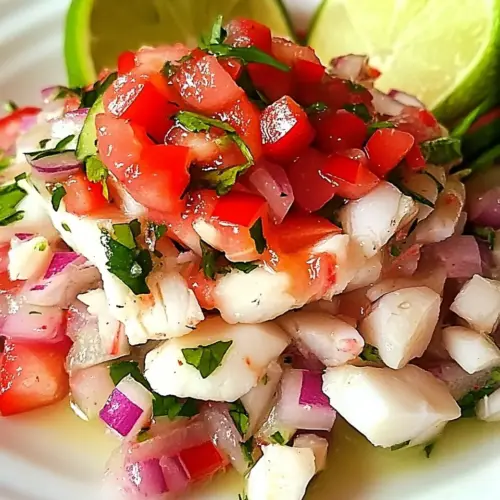
Halibut Ceviche
Halibut Ceviche is a bright, refreshing seafood dish featuring tender halibut cured in fresh lime juice with crunchy red onion, juicy seeded tomato, spicy serrano pepper, and herbaceous cilantro. This easy to assemble recipe is perfect for summer gatherings and quick weeknight meals, offering clean textures and bold citrus flavor that make it impossible not to enjoy.
Equipment
- Shallow Dish
- Mixing Bowl
- Knife
- Citrus Juicer
Ingredients
- 1 pound halibut, you can also use tilapia Provide firm, flaky white fish that cures in citrus; cut into small, uniform cubes to allow even 'cooking' in the lime juice. Offer a mild, slightly sweet flavor that pairs well with the bright acidity of the marinade and other fresh components.
- 8 -10 limes, juice of- approximately 1 cup Add bright, high-acid citrus juice that denatures proteins and effectively 'cooks' the fish; strain or measure to about one cup for consistent acidity. Balance tartness by tasting during marination and adjust quantity if limes vary in juiciness.
- 1 red onion, chopped Contribute sharp, pungent crunch and a mildly sweet bite when finely chopped; soak briefly in cold water if a milder onion flavor is desired. Provide textural contrast to the tender cured fish and help build the dish’s aromatic base.
- 2 tomatoes, chopped and seeded Bring juicy, subtly sweet flesh and fresh acidity when seeded and chopped; remove seeds to prevent excess liquid and bitterness. Offer vibrant color, body, and a fresh tomato flavor that complements the tangy marinade and herbs.
- 1 serrano pepper, finely diced and seeded Introduce concentrated heat and bright green pepper flavor when finely diced and seeded to control spice level. Deliver a clean, sharp capsaicin pop that livens the ceviche without overwhelming the delicate fish.
- 1/2 cup cilantro, chopped Supply fresh, citrusy-herbal brightness when chopped; add near the end of marination to preserve flavor and color. Tie together the dish with aromatic lift and a slightly peppery, verdant finish.
- salt, to taste Enhance overall flavor by seasoning to taste; add gradually and taste between additions to avoid over-salting. Balance the acidity and natural sweetness of the ingredients while bringing out the individual flavors.
Instructions
- Cut halibut to bite-sized pieces and place in shallow dish. Cover with 1 cup fresh lime juice and set aside for 20-25 minutes.: Right away you will notice the cool, silvery sheen of the raw halibut as you slice it into consistent, bite sized cubes. The pieces should be similar in size for even curing, and the flesh will feel firm yet yielding under the knife. If the fish smells overly fishy, do not use it, as freshness matters for both safety and flavor. A common mistake is cutting pieces too large, which prevents the lime from penetrating fully and leaves the center too raw when you finish.
- Meanwhile mix together onion, tomatoes, serrano pepper, cilantro and salt to taste.: As the limes hit the fish, you will see the flesh begin to turn opaque and firmer around the edges, which signals the acid is denaturing the proteins. The aroma of citrus will become dominant, bright and almost floral, and the dish will carry a clean, sharp tang. I recommend tasting a small piece at 20 minutes to check texture, because overcuring can make the fish tough and rubbery. Avoid the mistake of leaving the fish in juice for too long, which shrinks and dries the meat.
- Drain lime juice from halibut (discard lime juice). Add halibut to the pico-mixture and gently fold together.: While the fish cures, combine the chopped red onion , seeded tomatoes , finely diced and seeded serrano pepper , and chopped cilantro in a bowl. The onion will contribute a crisp little crunch, the tomatoes add juicy sweetness, and the pepper brings a warming heat that develops as it sits. Add salt sparingly at first because it will concentrate as flavors meld. A troubleshooting tip is to let this mix rest ten minutes so the flavors marry, but do not over-salt early, which can make the overall mix flat.
- Squeeze the juice of 1 more lime on top of ceviche and mix together. Enjoy!: When the curing window is up, carefully drain the used lime juice from the shallow dish and discard it. You will notice the fish has become opaque and slightly firm, with a faint citrus scent. Draining prevents the ceviche from becoming too acidic or soggy when combined with the pico style mixture. One mistake to avoid is leaving the fish sitting in the drained juice, which can reintroduce excess acid and alter the intended balance.
- Add halibut to the pico mixture and gently fold together: Now add the cured halibut to the bowl with the vegetable mix and use a gentle folding motion to combine, preserving the fish pieces and avoiding mashing. You will hear a soft movement as textures mingle, and the combined aromas should be bright and layered. The folding technique keeps the fish intact and ensures even distribution of veggies without breaking the pieces. A common error is stirring too aggressively, which will bruise the fish and make the presentation sloppy.
- Squeeze the juice of 1 more lime on top of ceviche and mix together: Finish by squeezing an additional lime over the assembled ceviche to add a final, aromatic brightness that ties everything together. This last splash of citrus sharpens flavors and brings a lively lift to the herbs and pepper. Mix once gently so the juice coats everything evenly, then taste and adjust salt if needed. Avoid over squeezing more limes than called for, because extra acid can overpower the delicate fish texture.
- Enjoy: At this point the ceviche should smell fragrant and look vibrant, with glossy pieces of cured halibut nestled among colorful veggies. Serve immediately for the best texture, noting the pleasing contrast of tender fish against crisp onion and herbacious cilantro . If you must hold it, refrigerate for a short time, but remember that extended standing will continue to firm the fish and change the mouthfeel. The most common mistake is leaving it too long before serving which reduces the refreshing quality that makes ceviche special.
Notes
- Choose firm, fresh fish - Always buy high quality halibut and smell it; it should smell clean and ocean fresh, not fishy. This ensures the curing process yields a pleasant texture and safe eating experience.
- Measure lime juice roughly - Use about one cup of fresh limes for a pound of fish, but taste and adjust since citrus potency varies. Too little will under cure the fish, too much can make it overly tart.
- Seed tomatoes for texture - Removing seeds keeps the ceviche from getting watery and preserves the balance between liquid and solids in each bite.
- Control heat with serrano seeds - Keep or remove seeds from the serrano pepper depending on your tolerance, and always add incrementally so you do not overpower the delicate fish.
- Chop cilantro last - Chop the cilantro right before serving to retain its bright aroma and avoid a wilted, muted herbal note.
- Serve chilled but not iced - Keep the ceviche cool, but avoid serving it over melting ice which waters it down; a chilled plate or bowl works best.