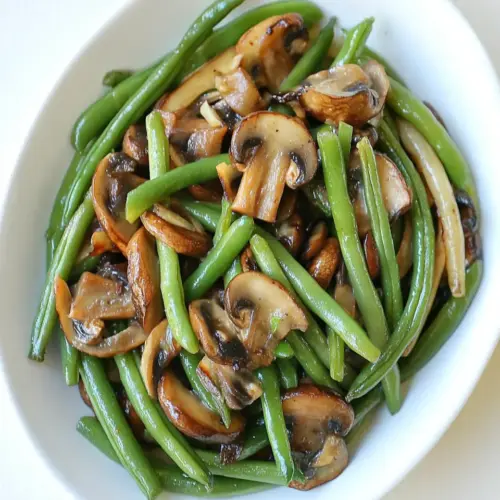
Green Beans with Mushrooms and Shallots
Green Beans with Mushrooms and Shallots is a simple, savory side with crisp green beans, caramelized mushrooms, and sweet shallots. Bright and earthy, this easy weeknight dinner side offers satisfying texture and concentrated flavor with minimal fuss. It makes a perfect spring vegetable dish to elevate everyday meals and encourage seconds at the table.
Equipment
- Steamer insert
- Pan
- Large Nonstick Skillet
- Tongs
Ingredients
- 1 pound fresh green beans, trimmed and cut into 1-inch pieces Trimmed and cut into 1-inch pieces to provide a crisp-tender vegetable base that holds texture when sautéed; contributes bright color and fresh flavor to the dish. Offers a nutritious boost of fiber and vitamins while balancing the earthiness of mushrooms and the sweetness of shallots. Retains a pleasant snap when cooked properly, preventing sogginess in the final presentation.
- 2 tablespoons olive oil Coated lightly to enable even cooking and to help carry flavors; used for sautéing shallots, mushrooms, and green beans while adding a mild fruity richness. Provides a cooking medium that helps develop gentle browning and prevents sticking, enhancing mouthfeel without overpowering other ingredients. Supports a smoother finish and helps distribute seasoning across the vegetables.
- 2 medium shallots, sliced (about 1/3 cup) Sliced to release a delicate sweet and aromatic profile during cooking; adds subtle onion-like complexity without overpowering the other vegetables. Caramelizes quickly when sautéed, contributing depth and a touch of natural sweetness that complements mushrooms and green beans. Enhances the overall savory balance and aroma of the finished dish.
- 12 ounces assorted sliced fresh mushrooms Sliced assorted varieties to introduce a range of textures and deep, earthy flavors that pair well with shallots and green beans. Browned mushrooms add umami and moisture, helping to create a rich, savory backbone for the recipe. Absorb oil and seasonings, intensifying the overall complexity while offering meaty bite and visual variety.
- salt and freshly ground black pepper, to taste Seasoned to taste to heighten and balance the natural flavors of the vegetables; used sparingly to avoid masking delicate notes. Salt helps draw out moisture and concentrate flavors during cooking, while freshly ground black pepper adds a bright, mildly pungent finish. Adjusted at the end ensures proper seasoning and enhances overall harmony of the dish.
Instructions
- Place the green beans in a steamer insert placed in a pan above a small amount of boiling water. Cover and steam until tender but not squishy (or however you desire them to be).: The gentle steam will envelop the green beans , preserving their bright color and keeping their interior tender while maintaining a satisfying snap. You should hear a soft simmer from the pot rather than a vigorous boil, which prevents water from sloshing onto the beans. A common mistake is overcrowding the steamer, which can cause uneven cooking, so give them a single layer if possible. Visually, look for the beans to turn a more vibrant green and for the skin to lose its raw sheen. If they steam too long, the texture becomes limp rather than pleasantly tender.
- While the beans are steaming, heat the oil over medium-high heat in a large nonstick skillet. Add the shallots and cook, stirring, until softened slightly, about 2 minutes. Add the mushrooms and cook, stirring occasionally, until the water they release has evaporated and they begin to brown, about 10 minutes. Add the green beans and stir to combine and rewarm. Season with salt and pepper and serve.: Steam times vary by bean thickness, so test one after about 4 to 6 minutes to check for the texture you prefer. There will be a subtle pop when you bite into a properly steamed bean, and the aroma will be clean and green. Oversteaming leads to a dull color and a mushy mouthfeel, so err on the side of slightly underdone if you plan to finish them in the pan. If your beans are older and tougher, extend the steaming slightly, but avoid letting them sit in hot water which makes them soggy.
- While the beans are steaming, heat the oil over medium high heat in a large nonstick skillet: Heating the olive oil until it shimmers ensures an even sear on the shallots and mushrooms . The pan should be hot enough that the aromatics sizzle when they hit the surface, but not so hot that the oil smokes. If the oil smokes, lower the heat and let it calm before adding ingredients, as high heat can create burnt flavors. The sound you want is a steady sizzle, and the aroma should begin to smell warmly savory.
- Add the shallots and cook, stirring, until softened slightly, about 2 minutes: The shallots should become translucent and fragrant without browning aggressively at this stage. Stirring helps them cook evenly and release their natural sugars. A frequent pitfall is rushing this step at too high a heat, which causes the shallots to char and taste bitter. The proper sensory cue is a gentle sweet scent and a softening texture that still holds form, which creates a flavorful base layer for the mushrooms.
- Add the mushrooms and cook, stirring occasionally, until the water they release has evaporated and they begin to brown, about 10 minutes: As the mushrooms heat, they will exude liquid that first makes the pan look wet, then slowly reduces. Patience here yields golden edges and concentrated umami. You will notice the pan go from steamy to dry and hear the sizzling intensify as browning begins. Avoid crowding the pan, as too many mushrooms at once will steam rather than brown, losing that caramelized flavor. Stir occasionally to promote even color and prevent sticking, and when they reach a deep, golden brown, they are ready.
- Add the green beans and stir to combine and rewarm: When you fold the steamed green beans into the browned mushrooms and softened shallots , the pan will release a bright fresh scent and a gentle steam as everything comes together. Tossing briefly ensures even coating and reheating without overcooking. If you leave them in the pan too long, the beans will lose their snap, so move quickly to combine and check seasoning. The ideal mouthfeel pairs warm, tender beans with the chewy, caramelized mushroom bites.
- Season with salt and pepper and serve: Seasoning at the end lets you calibrate salt and black pepper after flavors have concentrated. Taste and adjust in small increments, because mushroom varieties can vary in natural saltiness. A common error is over salting early, which becomes more pronounced as liquids reduce. Serve while warm so the textures remain distinct, and notice how the final aroma bridges vegetal brightness and savory depth.
Notes
- Choose fresh green beans for the best texture, look for ones that snap cleanly and avoid limp or spotted pods, as freshness is key to achieving that bright, crisp bite.
- Dry mushrooms thoroughly before slicing to reduce initial pan moisture and speed up the browning process, pat them with paper towels to remove excess water.
- Use medium high heat for sautéing to encourage caramelization on the mushrooms, but lower the heat if the oil starts to smoke to prevent bitterness.
- Trim ends consistently from your green beans so they cook evenly, uneven ends can cause some pieces to be over or underdone.
- Finish with a final taste check for salt and black pepper so you can adjust after the flavors have concentrated, seasoning slowly to avoid over salting.