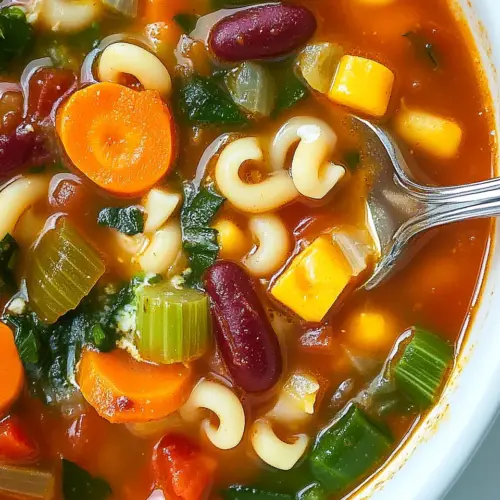
Gluten Free Minestrone Soup
Gluten Free Minestrone Soup is a hearty, aromatic bowl of tomatoes, beans, and tender vegetables that feels both comforting and bright. Creamy beans and soft potatoes mingle with vibrant greens and gluten free pasta for an easy weeknight dinner that satisfies. This cozy, flavorful soup is perfect for cold evenings and makes a persuasive reason to cook a wholesome, crowd friendly meal.
Equipment
- Dutch Oven
- Wooden Spoon
- Colander
- Knife
Ingredients
- 1 tablespoon extra-virgin olive oil Enhance flavor and provide a silky mouthfeel by sautéing aromatics and vegetables in the oil at the start of the soup preparation.
- 1 onion, diced Add savory depth and a sweet, aromatic base when diced and softened, contributing body and complexity to the broth.
- 2 garlic cloves, minced Infuse pungent, aromatic notes and a subtle heat when minced and cooked briefly with the onions and oil.
- 2 ribs celery, diced Contribute a mild, slightly peppery crunch and aromatic backbone when diced and sautéed alongside other base vegetables.
- 4 carrots, diced Offer natural sweetness, texture, and color while building the hearty vegetable foundation after being diced.
- 2 yellow potatoes, peeled and diced small Provide starchy body and creaminess as they break down slightly during simmering, helping thicken the soup.
- 15 ounce can diced tomatoes Introduce bright acidity and tomatoey umami to balance the vegetables and add liquid and texture.
- 1 15 ounce can cannellini beans Bring creamy, mild bean protein and fiber while adding a soft, hearty texture to make the soup more filling.
- 15 ounce can kidney beans Supply additional protein, color contrast, and a slightly firmer bite compared to the cannellini beans.
- 1 teaspoon ea salt Season and enhance overall flavor, bringing out other ingredients while helping to balance acidity and sweetness.
- 1 teaspoon black pepper Add warm, earthy heat and aromatics to season the soup and complement the herbal components.
- 1 teaspoon Italian seasoning, more to taste Incorporate a blend of herbs that delivers classic Italian aromatic flavors and a savory background note.
- 1 bay leaf Impart a subtle herbal depth and complex aroma while simmering, contributing to the classic soup profile.
- 1/4 teaspoon red pepper flakes, optional Provide optional heat and a touch of spiciness to lift flavors without overwhelming the other ingredients.
- 1 teaspoon fresh thyme leaves, more to taste Deliver fresh, bright herbal notes and a slightly minty, lemony aroma when added toward the end of cooking.
- 6 cups veggie or chicken broth, more as needed Create the liquid base that melds all components together while adding savory richness and room to simmer.
- 1 cup green beans, trimmed and cut into bite size pieces Add crisp-green texture and a fresh vegetal note when trimmed and cut into bite-size pieces before simmering.
- 2 cups kale or spinach, roughly chopped Introduce leafy color, nutrients, and a tender green texture that wilts into the broth near the end.
- 8 ounces gluten-free pasta, cooked Contribute satisfying chew, gluten-free carbohydrates, and a familiar pasta element that completes the minestrone.
Instructions
- Heat oil over medium heat in a large dutch oven. Once hot, add onion, garlic, celery, and carrots and cook until the veggies have started to soften, about 5 minutes.: The moment the oil shimmers and breathes lightly, the pan is ready, releasing a warm, fruity scent from the extra-virgin olive oil . You'll hear a faint sigh as the oil warms, and the surface will look glossy rather than still. This stage primes the pan so the aromatics release their flavors without sticking. If the oil smokes, the pan is too hot and the oil has lost its delicate flavor, so reduce the temperature and start again. When done right, the oil forms the foundation for a savory, rounded broth.
- Add in the potatoes, canned tomatoes, cannellini beans, kidney beans, salt, black pepper, Italian seasoning, bay leaf, red pepper, and thyme.: As soon as the onion hits the oil, you will smell sweetness unfolding, and the edges will begin to go translucent. The garlic aroma should bouquet gently, not scorch, and the carrots will start to release a sugary note. Use a wooden spoon to stir, scraping any bits that cling so they brown lightly and deepen the flavor. A common error is rushing this step, which leaves the onion raw and the base flat, so keep the heat moderate and let time coax out complexity. You'll know it's ready when the mix looks glossy, and the vegetables give under the spoon.
- Pour in vegetable broth and mix, making sure to scrape up all of the bits from the bottom of the pan.: When these ingredients join the pot, the kitchen fills with a chorus of aromas, from herbaceous thyme to tomato sweetness. Stir to combine so the potatoes are evenly distributed and the spices coat the vegetables, which helps flavors marry as they simmer. The canned tomatoes will start to loosen and lend a bright acidity that balances the beans' creaminess. Avoid dumping everything haphazardly; instead, fold gently so the beans remain intact. A typical misstep is stirring too aggressively and mashing the beans, which can cloud the broth and change the texture.
- Cover and bring to a boil over high heat. Reduce heat to low and let simmer for 15 minutes, or until potatoes are tender. Add in green beans and kale, and continue to simmer until green beans are tender. Taste and adjust seasoning.: As the broth hits the hot pan, it will hiss and steam slightly, loosening those flavorful browned bits, called fond, that cling to the bottom. Scraping them up is essential because they dissolve into the liquid and enrich the overall taste. Stir until the mixture looks cohesive and the broth carries a deeper hue from those browned pieces. If you skip scraping, you miss concentrated umami and the soup will taste less layered. Be mindful of heat, and bring the pot to an even simmer rather than a rolling boil.
- Meanwhile, cook pasta according to the package directions, drain and set aside.: As the pot comes to a boil, the aroma will intensify and small bubbles will begin to break the surface. Covering helps the pot reach that point faster, trapping heat, but once it starts to boil, immediately reduce to low to maintain a gentle simmer. Vigorous boiling can break down the beans and potatoes unevenly and evaporate liquid too quickly. Watching for a steady, gentle bubbling along the perimeter tells you the temperature is right for tenderizing the vegetables without destroying texture.
- Serve soup warm with pasta.: During this simmer the potatoes absorb flavors and begin to soften, adding body to the broth. You will notice the broth deepening in color and the aroma shifting from raw ingredients to a cohesive, savory stew. Test a potato piece with a fork; it should yield easily without disintegrating. A pitfall here is over simmering, which can make the potatoes break down and thicken the soup excessively. Simmer slowly so each component reaches the ideal doneness.
- Add in green beans and kale, and continue to simmer until green beans are tender: Introducing the green beans and kale later keeps their texture and bright color vibrant. As they soften, the soup will gain a fresh vegetal note and a contrasting chew against the softer elements. A quick simmer of several minutes usually does the trick, and you will see the greens wilt while the beans become tender yet still slightly snap. Overcooking the greens will lead to a dull flavor and limp mouthfeel, so time this step carefully.
- Taste and adjust seasoning: This is when the soup reveals its final voice, and tasting lets you balance salt, pepper, and herbs. The flavor should be layered, with acidity from the tomatoes, savory depth from the broth, and a gentle herbal lift. I always sample a warm spoonful to determine if it needs a pinch more salt or a touch more Italian seasoning. A common oversight is failing to taste near the end, which can leave a well cooked soup underseasoned. Adjust slowly and let minor additions marry for a minute before reassessing.
- Meanwhile, cook pasta according to the package directions, drain and set aside: The gluten-free pasta should be cooked to al dente so it keeps a pleasant firmness when combined at the table. As it cooks, you will hear a soft, rolling bubble and see the pasta expand, and smelling the cooked grains gives a comforting reassurance that it is nearly ready. Drain promptly and toss with a little oil if you will store it separately to prevent sticking. Leaving pasta sitting in hot water or adding it too early to the soup will make it swell and become mushy.
- Serve soup warm with pasta: Serving the Gluten Free Minestrone Soup with pasta on the side lets everyone customize their bowl and preserves the pasta's texture. Ladle the hot soup into bowls, then top with the desired amount of pasta, enjoying the contrast between silky broth and toothsome noodles. If you combine them too early, the pasta will absorb the broth and the soup will thin out, so plating separately keeps everything lively. A final taste after plating ensures the seasoning is balanced and ready for the table.
Notes
- Swap beans selectively If you prefer a firmer bite, use chickpeas in place of one of the canned beans. Chickpeas will hold their texture and add a nutty note, while still contributing protein and fiber. Drain and rinse them just like the other beans to keep the broth clear.
- Make it more peppery Increase the red pepper flakes slightly for a lively heat, adding a pinch at a time and tasting as you go. Remember that heat intensifies as flavors meld, so err on the side of moderation and adjust at the end if needed.
- Boost the herb profile Stir in extra fresh thyme or a spoonful of chopped parsley at the end for a fresher finish. Fresh herbs brighten the bowl and add a pleasing, green aroma that complements the tomatoes and beans without overpowering them.
- Adjust the broth clarity If you like a clearer broth, use a fine mesh skimmer to remove scum that can appear early in the simmer. This keeps the liquid visually appealing and maintains a clean taste, especially important when serving to guests.
- Make it heartier Add an extra can of beans or a few more diced potatoes if you need a more filling meal. This increases the soup's bulk without changing the core flavor profile, and is perfect for feeding hungrier appetites.