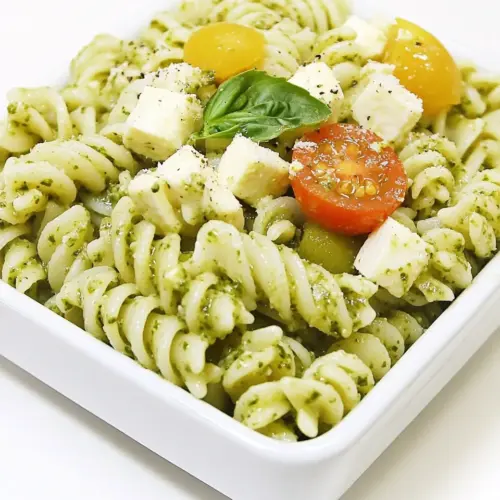
Easy Pesto Pasta Salad
Easy Pesto Pasta Salad is a creamy and bright summer salad featuring herbaceous pesto, juicy cherry tomatoes, crisp cucumbers, and hearty cannellini beans. This easy pasta salad is perfect for an easy weeknight dinner or potluck, delivering balanced textures and fresh flavors in a make ahead friendly dish. You ll want to make it again for its bright, satisfying results.
Equipment
- Calphalon 5-Quart Pot
- Mixing Bowl
- Storage Containers
Ingredients
- 1 pound pasta Boil until al dente to provide the carbohydrate base and structure for the pasta salad; drain and cool to prevent clumping and overcooking. Offer a neutral canvas that soaks up pesto and dressing flavors while adding hearty texture to the dish.
- 1 tablespoon olive oil Drizzle to lightly coat pasta and prevent sticking while adding a touch of richness and mouthfeel; use extra virgin olive oil for best flavor and smoothness. Enhance overall balance by helping pesto adhere to pasta pieces and vegetables.
- 2 cups diced cucumbers (about 1 medium or 2-3 mini) Dice to add crisp, refreshing texture and a mild, watery sweetness that brightens the salad; peel if desired for smoother texture. Contribute moisture and a cooling contrast to richer elements like beans and pesto.
- 2 cups halved or quartered cherry tomatoes (or 1 10-ounce container) Halve or quarter to release juicy, slightly acidic bursts that cut through the richness of the pesto and beans; choose ripe tomatoes for best flavor. Provide vibrant color and a fresh, tangy component that balances the salad.
- 14.5 -ounce can white cannellini beans (rinsed and drained) Rinse and drain to offer creamy, protein-rich bites that add substance and a smooth counterpoint to the pasta and vegetables; use cannellini for a mild, nutty flavor. Boost nutritional value with plant-based protein and a satisfying, tender texture.
- 1/2 -3/4 cup pesto Spoon to coat the pasta and vegetables with concentrated herb, nut, and cheese flavors; adjust quantity for preferred intensity and creaminess. Act as the primary seasoning and binding agent that unifies all components of the salad.
- Salt to taste Season to taste to balance and enhance all flavors; add gradually and re-taste to avoid over-salting. Provide final flavor adjustment so herbs, acidity, and natural sweetness shine without being bland.
Instructions
- Prepare the pasta according to the package directions. I like to use a smaller shape like elbows, mini wagon wheels, ditalini, or farfalle. Drain and add to a large bowl or storage container. Toss with the oil and let cool at least slightly.: Warm steam will rise as you drain the pasta , and you should feel the slight give that indicates al dente. The residual heat helps the olive oil coat the pieces so they do not clump, and tossing while warm helps flavors adhere. Listen for the sound of water settling in the sink and notice when the pasta stops clinging to the pot; that is your cue it is properly drained. The reason this matters is that overcooked or poorly drained pasta will become gummy and fail to carry the pesto properly. A frequent mistake is skipping the oil or not letting steam escape, which leads to sticking and a heavy, wet salad. If you detect a starchy sheen on the pasta , rinse quickly under cool water to stop cooking and remove surface starch.
- Stir in the cucumbers, tomatoes, beans, and pesto. Start with 1/2 cup pesto and add more as you like. The more you add, the more flavor it will have (which may be good or bad depending on your preference!): When you fold in the cucumbers , cherry tomatoes , cannellini beans , and pesto , you will see colors blend and scents open up, the bright herbal aroma of the pesto coming forward first. Gently mix so the beans keep their shape and the vegetables stay crisp. The pesto initially sits as a vibrant ribbon; as you stir it mellows and coats evenly, creating a glossy finish on the pasta . This step matters because even distribution ensures each bite has balance, and adding too much at once can mask the subtle textures of the vegetables. A common error is dumping the entire amount of pesto at once, which can overwhelm the salad; taste as you go and stop when the balance pleases you.
- Season to taste with salt. Serve at room temperature or store and serve later.: After everything is combined you will want to sample a forkful and notice how flavors settle as the pesto melds with the other ingredients. The right pinch of salt will brighten the whole bowl, sharpening the herb notes and taming any softness from the beans . If serving now, let the bowl sit a few minutes to let flavors harmonize, and if storing, chill and allow flavors to deepen in the fridge. The why behind this is simple: seasoning at the end prevents over salting and lets you tailor the dish to your palate. A typical mistake is neglecting to taste before salting, which can lead to an over salted final salad especially if your pesto or beans were already salty.
Notes
- Use al dente pasta: Cooking the pasta just until al dente preserves bite and prevents the salad from becoming mushy when chilled. Test a piece a minute or two before the package time, and look for a slight firmness at the center. Overcooked pasta will absorb dressing and turn gummy, so err on the side of slightly undercooked if you plan to refrigerate.
- Rinse and drain beans well: Rinsing the canned cannellini beans removes canning liquid and excess salt, which can otherwise make the salad taste metallic or too salty. Place them in a fine mesh strainer and run cool water until the flow is clear. Pat dry gently to avoid splitting the beans.
- Dice cucumbers uniformly: Evenly diced cucumbers ensure consistent texture in each bite and help the salad maintain a pleasing crunch throughout. If your cucumbers are seedy, scoop out the center before dicing to reduce excess moisture that can water down the dressing.
- Add pesto gradually: Because jarred pesto varies in salt and oil content, begin with the smaller amount listed and increase as needed. Taste as you go to avoid overpowering the bright notes of the tomatoes and cucumbers. This also helps you control the salad s overall creaminess and intensity.
- Lightly oil pasta while cooling: Tossing the warm pasta with a tablespoon of olive oil prevents sticking and lets the pieces stay separate so the pesto can coat them evenly later. Use just enough to shine the surface, as too much oil will make the salad feel greasy.
- Store in airtight containers: Keep the salad in a sealed container to preserve freshness and prevent the cucumbers from softening too quickly. Chilling for several hours allows flavors to meld, but serve within three days for the best texture.