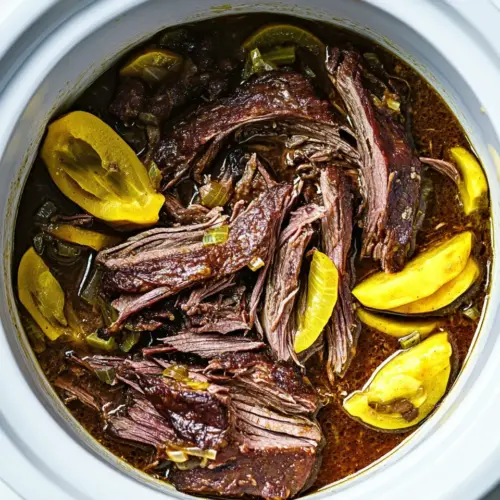
Crockpot Mississippi Pot Roast
Crockpot Mississippi Pot Roast brings tender, shreddable beef infused with tangy pepperoncini and savory seasoning mixes. This easy slow cooker recipe creates a rich, buttery jus and melts-in-your-mouth texture, perfect for an easy weeknight dinner or relaxed weekend meal. Serve over mashed potatoes or on rolls with Provolone for a crowd pleasing comfort dish that’s worth the wait.
Equipment
- 6-quart Crock-Pot
- 6-quart or larger
- Dutch oven or heavy-bottomed pot
Ingredients
- 2 tablespoons olive oil Heat and lubricate the pan or slow cooker by helping to sear the roast before slow cooking; adds a light, fruity flavor and helps prevent sticking. Use measured tablespoons to control fat content and ensure even browning without overwhelming the dish.
- 3 pounds beef chuck roast Provide the rich, marbled centerpiece of the recipe that becomes tender and shreddable after slow cooking; supplies beefy flavor and connective tissue that breaks down into gelatin. Choose a chuck roast for its balance of fat and meat, which yields moist, succulent results when cooked low and slow.
- 1 (1-ounce) ranch seasoning mix see note 1 Season the roast with a savory, herby powdered blend to impart tangy, creamy ranch flavors into the cooking liquid; helps build an umami-forward profile and complements the gravy mix. Sprinkle evenly over the meat to ensure consistent seasoning throughout the finished dish.
- 1 (1-ounce) au jus gravy mix Contribute concentrated beefy, savory base notes and mouth-coating gravy flavor that mixes with juices to create a rich sauce; intensifies overall depth and provides comfort-food familiarity. Add directly to the pot so its powdered components dissolve into the cooking liquid and thicken slightly.
- 4 tablespoons unsalted butter Melt into the braising liquid to create pockets of rich, silky butter that baste the meat and enrich the sauce; adds a smooth mouthfeel and boosts flavor without competing with the seasonings. Place on top of the roast so it slowly liquefies during slow cooking, coating the meat.
- 10 pepperoncini peppers plus 1/2 cup of brine/surrounding liquid Introduce bright, tangy, slightly spicy pickled peppers and their salty brine to brighten and tenderize the roast; provide acidity that balances the rich meat and butter while contributing characteristic Mississippi roast flavor. Add the specified number of whole peppers and measured brine to evenly distribute their briny heat through the cooking liquid.
- Mashed potatoes or crusty sandwich rolls, for serving (see note 2) Serve as starchy accompaniments that soak up the flavorful cooking juices and provide contrasting texture; mashed potatoes offer creaminess while crusty rolls make hearty sandwiches. Keep as optional serving suggestions to present the roast in classic, comforting ways and to absorb the sauce effectively.
- Provolone cheese for serving, if making sandwiches Melt over shredded roast when assembling sandwiches to add a mild, creamy, slightly tangy cheese layer that enhances richness and helps bind fillings. Offer as an optional finishing element for those preparing the meat on rolls to create gooey, deli-style sandwiches.
Instructions
- Pat the roast dry with paper towels. No need to season (there's a lot of salt in the seasoning mixes).: Start by feeling the surface of the beef chuck roast as you pat it dry, the meat should feel tacky but not wet; removing surface moisture is the key to getting a proper sear, because moisture prevents browning and promotes steaming instead. You should hear a faint slap as the paper towel pulls away dampness, and the roast will look slightly drier and take on a matte tone. This step matters because browning creates complex Maillard flavors that will deepen the entire dish, contributing savory, slightly sweet notes that you won't get from slow cooking alone. A common mistake is rushing this step and putting damp meat into the hot oil, which results in a pale surface and weaker flavor development. If the roast is very cold, let it rest at room temperature for 10 to 15 minutes after patting to promote even searing; avoid leaving it out longer than 30 minutes to maintain food safety.
- Heat olive oil in a large Dutch oven over medium-high heat. Once you can feel the heat when you hold your hand 6 inches above the pot, add the beef. Sear the beef for 5-7 minutes per side, until a crust forms and it releases easily from the pan.: When the olive oil shimmers and you can sense radiating heat, the pan is ready and will produce an audible sizzle as the meat meets the surface; that sound signals flavor forming. As the roast sears, watch for a deep mahogany color forming at the edges and a satisfying crust that releases cleanly when you lift the piece with tongs. Searing for 5 to 7 minutes per side is about building those layered flavors and locking in juices; the aroma will shift from raw to rich and roasted as sugars and proteins react. If you crowd the pan, the temperature drops and you risk steaming instead of browning, so work in batches if needed. Also avoid flipping too often, let each side develop a full crust before turning, and be patient if the meat momentarily sticks to the pan, it will release when properly browned.
- Transfer beef to the slow cooker along with pepperoncini liquid (1/2 cup). Sprinkle ranch mix and au jus mix evenly over the roast. Top with butter pieces and pepperoncini peppers. No need to add any other liquid.: As you move the seared roast into the slow cooker , notice the savory steam rising and the concentrated smell of caramelized meat combining with tangy pepperoncini brine; that contrast is what makes the final jus so compelling. Distribute the ranch seasoning mix and au jus gravy mix in a thin layer so each bite absorbs seasoning during the long cook, and scatter the butter in small pats to create pockets of richness that will melt into the juices. The 1/2 cup of pepperoncini brine is a clever source of acidity and salt, removing the need for extra stock while helping to break down connective tissue slowly. An easy trap here is dumping all the seasoning in one spot, which can lead to overconcentrated bites; take a moment to sprinkle evenly across the roast for balanced flavor.
- Cover and cook on low for 7–9 hours, or high for 5–7 hours, until the meat is very tender and easily shreds with 2 forks. (Low gives the best texture.): During the long simmer, you'll notice a slow, steady aroma filling the kitchen, evolving from meaty to almost buttery as fats render and the seasoning melds into the cooking liquid. The beef will gradually soften until a fork slides through the grain with almost no resistance, and the juices will deepen in color and viscosity as collagen becomes gelatin. Choosing low heat yields a finer, silkier texture because the proteins relax gently, while high heat accelerates the process but can produce slightly coarser strands. A frequent misstep is checking too often, which releases heat and lengthens cook time; resist peeking unless necessary. To test doneness, pull a small section with two forks, if it falls apart without effort you're ready. If the meat still resists, it needs more time rather than higher heat, because extended low heat will reward you with better mouthfeel.
- Remove roast, shred with two forks, discarding any excess fat. Return meat to the liquid in the crockpot and gently stir. Serve over mashed potatoes or on rolls with Provolone (see note 2).: When you lift the roast out, it should feel light and give under the forks; shredding releases a warm, savory steam that smells concentrated and comforting. Pull the meat along the grain into irregular ribbons, tossing out large, unrendered fat pieces so each forkful has a balanced meat to sauce ratio. Returning the shredded beef to the cooking liquid allows it to soak up the jus and reheat evenly, creating glossy, well coated strands. Stir gently so you don't mash the meat, and watch as the juices cling to the fibers, providing both moisture and flavor. A common oversight is leaving too much solid fat in the mix, which can feel greasy; skim or discard those pieces for a cleaner finish. Serve immediately over warm mashed potatoes or pile onto toasted rolls topped with melted Provolone cheese and spoon extra jus on the side for dipping, the contrast of textures will make each bite more satisfying.
Notes
- Prep the meat properly. Pat the beef chuck roast dry and let it warm slightly at room temperature before searing to promote even browning and a deeper crust.
- Sear for depth. Take the time to sear each side in the hot olive oil until a dark crust forms, this adds rich, roasted notes that elevate the slow cooked flavor.
- Butter placement matters. Scatter the unsalted butter in small pats over the roast so it melts into the cooking liquid and adds silkiness without making the dish greasy.
- Distribute seasonings evenly. Sprinkle the ranch seasoning mix and au jus gravy mix across the roast rather than dumping them in one spot to prevent concentrated salty bites.
- Use the pepperoncini brine. The 1/2 cup of brine is a shortcut for acidity and helps break down collagen, just be cautious when adding extra liquid to maintain balanced seasoning.
- Choose low and slow when possible. Cooking on low for longer yields a more tender, silky texture than the high setting, especially for older or well marbled roasts.
- Shred and soak. After shredding the beef, return it to the juices so the meat absorbs the flavorful jus and stays moist for serving.
- Melt cheese under a broiler. For sandwiches, top shredded roast with Provolone cheese and broil briefly until just melted for a gooey, appealing finish.
- Serve with soakable sides. Pair the roast with mashed potatoes or crusty rolls to capture the rich jus and enhance mouthfeel.
- Store properly. Refrigerate leftovers in airtight containers for up to four days or freeze in portions for up to three months to keep flavor intact.