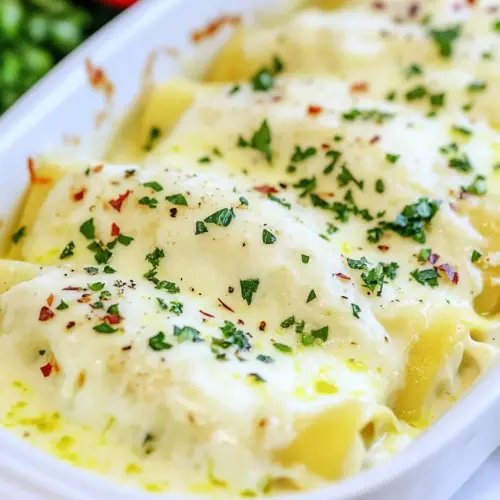
Creamy Chicken Alfredo Manicotti
Creamy Chicken Alfredo Manicotti is a luscious, cheesy pasta bake featuring shredded rotisserie chicken, creamy ricotta, and rich Alfredo sauce. This easy weeknight dinner offers a bubbly golden top and a tender, satisfying filling, perfect for family meals or casual entertaining. Serve it with a crisp salad for a balanced plate and you have a comforting dish worth repeating.
Equipment
- Large Pot
- Skillet
- Mixing Bowl
- Piping bag or zip top bag
- 13 x 9 baking dish
- Oven
Ingredients
- 1 box manicotti Boil until al dente and hold for stuffing; provides the tubular shells that contain the filling and bake nicely without collapsing. Offers a sturdy vehicle for sauce and cheeses while absorbing some moisture. Ensure tubes are cooked per package directions to avoid overcooking during baking.
- 9 oz bag fresh spinach Wilt quickly in a hot pan to reduce moisture and concentrate flavor; contributes bright color and a tender, slightly earthy note to the filling. Adds nutrients and balances the richness of cheeses and Alfredo sauce. Squeeze out excess liquid to prevent a watery filling or soggy pasta.
- 1/2 rotisserie chicken remove the meat from the bones and shred it Shred finely after removing from bones to distribute protein evenly throughout the filling; supplies savory, cooked chicken flavor and texture. Acts as the primary protein component that complements the creamy cheeses. Ensure meat is free of bones and skin for a consistent bite.
- 1 egg Beat and mix into the filling to bind cheeses and spinach together; adds structure and helps the mixture hold its shape inside manicotti. Contributes a subtle richness and helps create a creamier interior when baked. Use one egg to gently set the filling without making it rubbery.
- 18 oz ricotta cheese Fold into the filling for a rich, creamy base with mild, slightly tangy dairy notes; provides bulk and smooth texture to the filling mixture. Helps meld other ingredients and holds moisture during baking. Stir to combine thoroughly for an even, scoopable consistency.
- 1 cup grated parmesan Sprinkle into the filling and over the assembled manicotti for nutty, salty depth and to enhance savory flavor. Adds umami and helps create a gratin-like top when combined with other cheeses. Use grated parmesan for sharpness and to thicken the filling slightly.
- 2 cups shredded Italian blend cheese you can also use mozzarella, divided Mix most into the filling and reserve some for topping to achieve gooey, melty stretch and a smooth finish; contributes mild, creamy flavor characteristic of Italian-style cheeses. Balances textures between ricotta and parmesan and browns attractively when baked. Divide as directed to maximize creamy interior and golden topping.
- Alfredo sauce double the recipe - or use store-bought Coat and smother the stuffed manicotti either from homemade or store-bought to impart a rich, velvety sauce that ties the dish together; doubles the creamy profile and keeps pasta moist while baking. Provides flavorful fat and seasoning that complements cheeses and chicken. Use a double batch if a saucier, indulgent casserole is desired.
- fresh parsley for garnish Chiffonade or finely chop and scatter over the finished dish for a fresh, herbaceous finish and visual brightness; adds mild grassy aroma and slight peppery note. Serves as a contrasting garnish to cut through richness and elevate presentation. Add just before serving to preserve color and fragrance.
Instructions
- Preheat oven to 375 degrees F.: Warmth in the room and the scent of a ready oven set the stage for even baking. You want a fully preheated oven so the dish starts cooking immediately, which promotes even bubbling and light browning on the cheese top. A common error is putting the dish into a not fully preheated oven, which lengthens bake time and can lead to uneven cheesing. Listen for the faint hum of the oven, and if you have an oven thermometer check for true temperature accuracy. The heat helps the sauce thicken and the cheeses to meld properly, creating that desirable glossy finish.
- Bring a large pot of salted water to a boil, and cook the manicotti until al dente. Drain and set aside.: You should smell the faintly salty steam as the water comes to a rolling boil, and the manicotti will go from opaque to tender in minutes. Cooking to al dente ensures the tubes hold their shape during filling and baking. Overcooking makes them fragile and prone to tearing, which complicates piping. After draining, lay the tubes on a lightly oiled tray so they do not stick together, and cool until warm to the touch. If they feel gummy, they were overcooked; if they are still very firm, they're undercooked and may remain hard after baking.
- In the meantime, place a small skillet over medium heat, add 1 tablespoon of olive oil, and cook the spinach in it until wilted. Transfer it to a cutting board and roughly chop it.: The skillet will hiss softly as the spinach hits the hot oil, releasing a green, herbaceous aroma. Cooking concentrates the flavor and reduces moisture, which is crucial so the filling does not become watery. Chop the wilted leaves to distribute them evenly through the filling. Avoid overheating, which can make the spinach flavor bitter and dry. If the skillet looks crowded, cook the spinach in batches so it steams rather than sautés, which affects texture.
- In a large bowl, combine the ricotta cheese, 1 cup Italian blend cheese, parmesan cheese, shredded chicken, chopped spinach, and the egg. Stir well until thoroughly combined.: The bowl will fill with creamy textures and a savory scent as the cheeses meet the shredded chicken . Stirring brings the mixture together into a cohesive filling, with bits of green visible throughout. This step matters because a well combined filling ensures every tube has balanced flavor. A frequent slip is under mixing, which leaves pockets of dry cheese or unblended egg. Use a sturdy spoon and scrape the bowl sides to incorporate everything evenly. If the mixture feels too loose, chill briefly to firm it up for easier piping.
- Next, spoon the mixture into a piping bag or large Ziploc bag. Cut off the corner enough to pipe the filling.: When you squeeze the bag, you should feel steady resistance, and the filling should flow in a thick ribbon. Piping is neater than spooning and fills tubes consistently. If the filling splatters or clogs, the bag opening may be too large or small, so adjust the cut. Avoid using an overfilled bag, which is hard to control; portion into two bags if needed. The tactile feedback of piping tells you when the tubes are full without bursting.
- Add 1 cup of Alfredo sauce over the bottom of a 13 x 9 baking dish.: Pouring the first layer of Alfredo sauce creates a slick base that prevents sticking and adds moisture. The sauce should coat the bottom evenly, offering pockets of saucy richness beneath each tube. If you skip this, the manicotti can stick and dry on the underside. Aim for a caramel colored rim along the dish and smooth the sauce with a spoon to ensure full coverage. A thin, uneven base will give uneven moisture to the pasta.
- Pipe the cheese filling into the manicotti tubes and arrange them on the bottom of the baking dish one next to each other.: As you pipe, the filling should glisten and hold shape inside each tube. Arranging them snugly helps support the tubes so they do not topple and allows cheese to meld across seams. You want to see smooth, filled ends, not air pockets. A common mistake is overcrowding the dish which prevents even heat circulation; leave a little space at the edges for airflow. If a tube tears, you can spoon the filling into it gently rather than forcing more pressure through the piping bag.
- Pour the remaining Alfredo sauce evenly on top of the manicotti, and sprinkle with the remaining 1 cup of shredded cheese.: The top layer of Alfredo sauce should blanket the tubes, and the shredded cheese will create a golden, bubbling crust. As the oven heat reaches the dish, the cheeses will liquefy and then brown slightly at the edges. Be mindful of too much sauce, which can cause the topping to slide off; evenly distribute to maintain a cohesive surface. If the top seems dry before baking, add an extra spoonful of sauce to ensure creaminess throughout.
- Bake for 20-25 minutes, until the cheese is bubbly.: During baking you will hear a gentle sputter as bubbles form and the aroma deepens into rich, toasty notes. The cheese should be fully melted and show spots of light golden brown. This stage develops flavor and textural contrast between the creamy interior and slightly browned top. Opening the oven too often releases heat and slows browning, so resist frequent checks. If the top browns too quickly, tent with foil to prevent burning while allowing the inside to finish cooking.
- Cool for 10 minutes, sprinkle with parsley, and serve.: Allowing the dish to rest helps the filling set so slices hold together, and the steam settles into a silkier sauce. The first forkful should be warm and creamy rather than scalding, and the fresh bite of chopped parsley brightens the dish. Serving immediately may lead to loose filling, while waiting too long cools the sauce excessively. A ten minute rest balances texture and temperature for ideal plating.
Notes
- Cheese selection matters Choose a flavorful grated parmesan and a good Italian blend for melting. Freshly grate the parmesan if possible for the brightest flavor, and reserve half the shredded blend for topping so the bake develops a crunchy, golden finish.
- Control moisture After cooking the spinach, press it between paper towels to remove excess liquid. Too much moisture will thin the filling and make the manicotti soggy, so take a moment to drain thoroughly.
- Piping makes assembly faster Use a sturdy piping bag or a zip top bag with the corner trimmed. Piping yields uniform tubes and reduces spills, which helps the final presentation and ensures even distribution of filling.
- Rest before serving Let the baked dish cool for about ten minutes before serving. This pause helps the filling set so each portion slices cleanly and the sauce settles into a silky consistency instead of running off the plate.
- Make ahead advantage You can assemble the dish, cover tightly, and refrigerate for up to 24 hours before baking. If chilled, add a few extra minutes to the bake time and tent with foil to prevent over browning while heating through.