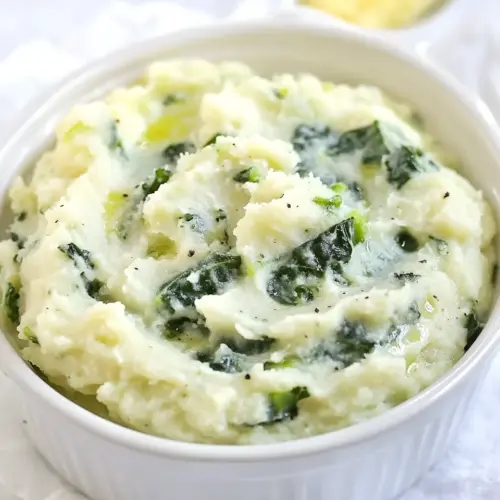
Creamy Cauliflower Mash with Kale
Creamy Cauliflower Mash with Kale is a silky, savory mash that balances bright greens and gentle garlic notes. This easy weeknight dish is creamy yet light, perfect for a cozy dinner or a smart holiday swap. The texture is lush and the flavors are layered, making it a satisfying reason to choose vegetables over starch.
Equipment
- Medium Pot
- Colander
- Blender
Ingredients
- 6 cups 1 large head cauliflower, cut up into florets Provide body and mild sweetness to create a fluffy, potato-like base when steamed and mashed; steam until very tender to ensure a smooth texture. Puree with butter and milk to achieve a creamy consistency while allowing other flavors like garlic and kale to blend in.
- 4 teaspoons unsalted butter Add richness and silkiness to the mash by melting into the hot cauliflower, helping bind the puree and carry flavors. Use sparingly to keep the dish light while enhancing mouthfeel and rounding out sharper notes from garlic and scallions.
- 3 cups chopped kale Contribute earthy bitterness and bright color when sautéed or wilted into the mash, offering a nutritious contrast to the creamy cauliflower. Chop finely so it distributes evenly and folds into the mash for added texture and leafy nutrients.
- 4 cloves crushed garlic Provide pungent depth and aromatic warmth when crushed and lightly cooked, infusing the mash with savory complexity; cook briefly to tame sharpness and release flavor. Blend into the mashed cauliflower for an even garlic presence without overpowering the dish.
- 2 chopped scallions Bring a mild onion-like freshness and subtle crunch when thinly sliced, adding layered flavor and a bit of texture contrast to the smooth mash. Sprinkle into or fold through the finished mash to impart delicate savory notes and visual appeal.
- 1/3 cup fat free milk Lend creaminess and a lighter dairy note to thin and smooth the mash while keeping calories lower than full-fat substitutes. Warm slightly before adding and incorporate gradually to reach desired consistency without watering down flavor.
- kosher salt and pepper to taste Balance and enhance all flavors by seasoning to taste, allowing salt to elevate natural sweetness and pepper to add gentle heat. Taste at the end and adjust gradually to preserve the delicate interplay between cauliflower, kale, garlic, and butter.
Instructions
- Boil the cauliflower: Put the cauliflower in a medium pot and cover with cold water by at least an inch. Add salt, and bring to a boil.: Put the cauliflower in a medium pot and cover with cold water by at least an inch. Add salt, and bring to a boil. : When the pot first heats you will hear a gentle rumble as tiny bubbles rise, and the aroma will be faintly vegetal, signaling the water is warming. Salted water seasons the florets from within, which matters more than many expect because it deepens the base flavor. A common mistake is starting with hot water, which can cook the outer pieces before the center, leading to uneven tenderness. Use cold water so the cauliflower cooks uniformly, and leave about an inch of headspace so the pot does not foam over.
- Cook, covered until fork tender. 6 to 8 minutes. Drain in a colander (reserving some liquid if needed).: As the cauliflower softens you will see steam and the florets will lose their rigid shape, becoming slightly translucent at the edges. Test with a fork, aiming for easy give without mushiness. Reserving some cooking liquid is useful because it can tighten or loosen the puree without watering down flavor, should you need it later. One trap is overcooking; if the florets fall apart, the texture can become grainy rather than creamy, so drain promptly once tender.
- In the same pot, melt 1 teaspoon butter medium high heat and add the garlic and scallions, cook 30 seconds, add the kale, 1/4 tsp salt, cover and cook until wilted, 6 to 7 minutes.: At medium high the butter will sizzle and release a toasty aroma. The brief cook for garlic and scallions should smell sweet and fragrant rather than sharp, which indicates you did not brown them. Adding kale and covering traps steam so the leaves wilt evenly and stay vibrant. The why here is texture: slightly wilted kale keeps subtle chew and color. Don’t skip the salt step; it helps the kale release moisture. Mistakes include overheating the garlic until it browns, which brings bitterness, so keep an attentive eye.
- In a blender, puree the cauliflower with milk, transfer to the pot with the greens and add 2 teaspoons butter, 1/4 teaspoon salt and pepper, keep warm.: The moment you puree the cauliflower with fat free milk you will notice a creamy steam rising and a smooth sheen in the blender jar, that is the texture goal. Blending warm cauliflower helps it emulsify into a silky mass. When you fold it into the kale, the contrast of soft puree and tender greens creates a balanced mouthfeel. Adding the remaining butter at this stage melts into the mash, giving a glossy finish. One error to avoid is adding too much milk at once, which can make the mixture soupy; add sparingly until the texture pleases you.
- To serve, transfer to a bowl and top with remaining teaspoon butter.: The finishing touch of butter will melt into the warm mash, creating a glossy, inviting surface and rounding the flavors. You should hear a soft pat as the butter hits the hot bowl and see a ripple of melted fat. This step is about presentation and mouthfeel; that final butter adds an indulgent note. A common oversight is serving too cool, which causes the butter to solidify rather than melt, so serve promptly while hot.
Notes
- Choose a firm head of cauliflower, it yields denser florets that mash into a creamier texture instead of turning watery.
- Chop the kale small, this ensures even wilting and a pleasant, consistent bite throughout the dish.
- Pulse the puree carefully, stop and scrape the sides so you reach a smooth finish without overworking the blender motor.
- Reserve cooking liquid, keep a few tablespoons to loosen the mash if it becomes too thick when cooling.
- Finish with butter, adding a final teaspoon at plating creates a glossy, appealing surface and rounds the flavors.