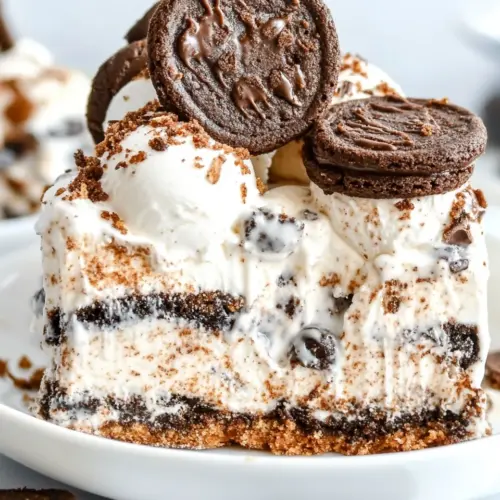
Cookies And Cream Ice Cream Cake
Cookies And Cream Ice Cream Cake is a creamy, crunchy, easy frozen dessert layered with ice cream sandwiches, pillowy frozen whipped topping, ribboned chocolate sauce, and crunchy chocolate sandwich cookies. It is perfect for summer parties or casual get togethers and slices beautifully for sharing. Make it ahead and freeze, this crowd pleaser is a reason to celebrate any warm day.
Equipment
- 1 9×13 pan
Ingredients
- 24 ice cream sandwiches Provide a sweet, creamy layer and convenient shape that forms the cake’s primary structure; arrange sandwiches in a single layer or stacked pattern, allowing them to soften slightly for easier slicing and serving.
- 16 oz frozen whipped topping thawed, like Cool Whip or two 8 ounce containers Fold into softened ice cream layers to add light, airy texture and stabilize the cake; spread evenly to create smooth tiers and prevent ice crystals while enhancing mouthfeel with a sweet whipped finish.
- 1/2 cup chocolate sauce Add glossy chocolate flavor and moisture, creating ribbons or a marbled effect when drizzled between layers; pour sparingly to avoid sogginess while intensifying the dessert’s chocolate profile.
- 20 chocolate sandwich cookies Oreos, crushed, plus extra for garnish Contribute crunchy, chocolatey cookie pieces and visible speckles when folded into layers or sprinkled on top; crush to desired size for texture contrast and reserve extras for garnish.
Instructions
- Unwrap and place 12 ice cream sandwiches into the bottom of a 9×13 pan. Slice any ice cream sandwiches necessary with a knife to fit all ice cream sandwiches in a flat layer.: The cold clink of frozen bars against the pan is oddly satisfying, and you will feel the slight resistance as you nudge each ice cream sandwich into place. Aim for a tight, contiguous layer so there are no big gaps, which helps the finished cake hold together. If you need to slice pieces to fit edges, run a sharp knife under warm water, dry it quickly, then slice with a single confident stroke to prevent smearing. A common mistake here is letting the sandwiches thaw too much before arranging them, which makes them soft and hard to trim; keep a chilled kitchen towel nearby to cool your hands if needed. Visual cue, the surface should look like a compact grid of frozen rectangles that sits level in the pan.
- Spread half of the thawed whipped topping over the ice cream sandwiches.: As you spread the cold, pillowy frozen whipped topping , you will notice it glides across the frozen surface, creating a matte, cloudlike layer. Use an offset spatula for the smoothest finish, applying gentle pressure to avoid tearing the sandwich layer. This topping acts as a buffer, preventing the next layer of sauce and crumbs from sinking into the ice cream, which preserves the distinct layers after slicing. A trap to avoid is overworking the topping, which warms it and makes it runny; always work quickly and keep the topping chilled until the last second. The right look is a uniform, even blanket of white that hides the cookie seams beneath.
- Drizzle 1/4 cup of the chocolate sauce over the top of the whipped cream layer.: The liquid sound of the sauce falling in ribbons is part of the fun, and the smell is instantly chocolatey and comforting. Hold the bottle a few inches above the surface and gently squeeze so the sauce forms thin streams across the white layer. This creates marbling and concentrated pockets of chocolate in each bite. If your sauce is too thick, warm it slightly in a bowl placed in hot water to loosen it; if too thin, let it cool to regain viscosity. Avoid pouring all at once into a single spot, which creates a puddle; instead, disperse evenly for balance and aesthetics. You want delicate ribbons that peek through the topping.
- Sprinkle half of the crushed Oreo cookies on top.: As you scatter the crushed chocolate sandwich cookies , listen for the soft pat as crumbs land. The mixture of fine crumbs and small chunks gives layered texture, so aim for variety in the crushed pieces. Pressing the crumbs lightly into the topping will help them adhere, but do not compact them flat, you want some loft to remain. A common error is crushing the cookies too finely into powder, which reduces the satisfying crunch; use a rolling pin or pulse in short bursts for the ideal mix. Visually, you should see a freckled surface with dark cookie bits contrasting against the white topping.
- Repeat the same layers again. First a second layer of ice cream sandwiches, then a second layer of whipped topping, then topped with 1/4 cup of chocolate sauce drizzled on top. Top with extra crushed Oreo cookies if desired.: Building the second tier is like composing a dessert painting, and you will appreciate how the chilled layers stack without collapsing. The second layer of ice cream sandwiches must be aligned so the cake cuts into neat bars. After spreading the second portion of frozen whipped topping , add the remaining chocolate sauce in delicate trails, and finish with the rest of the crushed chocolate sandwich cookies for drama. The second assembly seals the structure and sets the flavor profile into recognizable layers. Be careful not to press too hard when aligning the second set, which can squeeze out fillings and create uneven slices. The end result should look symmetrical, with a glossy drizzle and a topping of cookie crumbs.
- Cover the dish and place into the freezer for at least 3-4 hours. Then slice to serve, enjoy!: The waiting period is the quiet finale, where the cake firms and the layers knit together. Covering prevents freezer burn and keeps the surface pristine. After freezing, let the pan sit at room temperature for a few minutes so the knife can glide through cleanly, then slice with a warm, dry knife for neat portions. A common pitfall is trying to cut the cake immediately, which yields ragged edges and smeared layers; patient timing yields crisp slices. The textural payoff is worth the pause, with cold, creamy interiors and crisp cookie accents in each neat square.
Notes
- Layer arrangement: Try building three thinner layers instead of two to create more visible strata and a cake that slices into taller, narrower servings.
- Cookie texture: Use half crushed and half roughly chopped chocolate sandwich cookies for a contrast between tiny crumbs and chunkier bites in each forkful.
- Chocolate sauce finish: Warm the chocolate sauce slightly so it forms thinner ribbons that set into pretty veining patterns across the topping.
- Whipped topping technique: Spread the frozen whipped topping in thin even coats, smoothing with a chilled offset spatula for a polished, bakery style surface.
- Portioning: Freeze the assembled cake until firm, then score the top into serving squares before returning to the freezer for cleaner slicing later.
- Presentation: After slicing, let pieces rest for a minute at room temperature so the texture softens slightly, enhancing the creamy mouthfeel without losing structure.