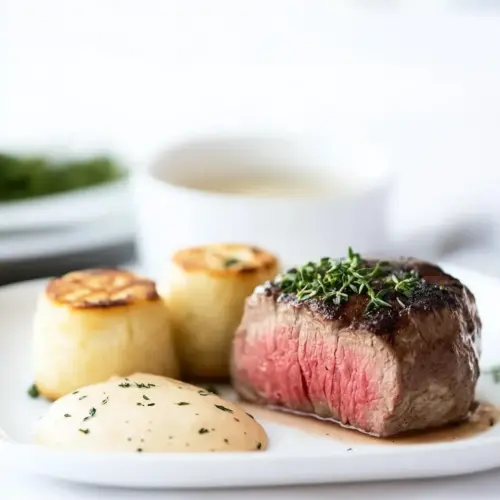
Classic Châteaubriand
Classic Châteaubriand is a luxurious, tender beef centerpiece with a crisp seared crust and silky béarnaise, paired with golden roasted small potatoes. This easy to follow, elegant recipe delivers a rich, savory experience perfect for an easy weeknight dinner or special occasion. Make it to impress, and enjoy a restaurant worthy result at home.
Equipment
- Sauté Pan
- Oven
- Roasting Pan
- Instant read thermometer
Ingredients
- 10 -12 small Yukon or red potatoes, peeled Peeled and simmered until tender, adds a creamy, earthy base for gratins or pan-roasted potatoes accompanying the steak; season and finish with butter for rich texture and flavor.
- 3 tablespoons clarified butter or oil Clarified to a high smoke point, used for pan-searing or roasting to promote even browning and a crisp exterior without burning; imparts a clean, buttery mouthfeel.
- 2 pounds center cut beef tenderloin Center-cut portion provides a uniformly thick, lean roast ideal for even cooking and tender slices; handles high-heat searing and gentle oven finish for classic Châteaubriand presentation.
- 2 tablespoons unsalted butter Added in small amounts to enrich pan sauces or baste meat while cooking, contributing silkiness and enhanced mouthfeel when melted into jus or compound butters.
- 4 garlic cloves Pounded or thinly sliced and gently crushed to release aromatic oils, contributes savory depth and subtle pungency when used in basting, rubs, or roasted accompaniments.
- 5 -10 fresh thyme sprigs Sprigs used whole during cooking or tied into a bouquet garni to infuse a subtle, lemony, floral herbaceousness that complements beef and potato dishes.
- 1 tablespoon chopped fresh parsley Finely chopped and sprinkled at the end to add fresh, bright, herbaceous notes and a pop of color, balancing the richness of meat and butter-based sauces.
- 1 béarnaise recipe Prepared separately and served alongside to provide a tangy, rich emulsified sauce that complements the tender beef with tarragon and vinegar notes; can be spooned over slices for classic service.
- salt and pepper to taste Used to season both potatoes and meat to taste, providing essential flavor enhancement and balance; adjust sparingly during cooking and more at the table for final seasoning.
Instructions
- Make your Béarnaise sauce and keep warm in a bowl covered in plastic wrap and set it to the side. This will hold for about 90 minutes.: The warm, herbaceous scent of béarnaise should be present but not hot, and you want it ready before the meat comes out so service is seamless. While it sits the texture should be glossy and thick enough to coat a spoon, not runny. If the sauce splits, a common pitfall, whisk a little warm water or a touch of warm melted butter in slowly to bring it back together. Keep it lightly covered so a skin does not form.
- Add 1 tablespoon of clarified butter or oil to a sauté pan until smoking and then add the potatoes and brown over medium to high heat, which takes about 3-4 minutes. Move the potatoes frequently while cooking.: When the fat begins to shimmer and just kiss smoke, you will hear a lively sizzle as you add the potatoes . The surface should brown quickly, developing rich mahogany spots that smell nutty. Move them frequently so all sides get contact and avoid steaming. A common mistake is overcrowding the pan, which traps steam and prevents browning, so give the pieces space.
- Add them to the oven at 350° for 30-35 minutes or until cooked through.: Transferring the partially browned potatoes to a moderate oven finishes them evenly, creating a dry, fluffy interior and a crisp exterior. You will notice a fragrant roasted aroma as they finish. Test doneness by piercing a piece with a knife; it should slide in without resistance. If the pan is too cool going into the oven, the potatoes will not crisp properly, so ensure they began browning on the stovetop.
- Garnish with parsley, butter, salt, and pepper, and set the potatoes to the side and keep warm.: Tossing the hot potatoes with chopped parsley and a pat of butter releases bright herb notes and gives them a glossy finish. Season to taste so each bite is balanced. Keep them covered loosely so steam does not make them soggy; one common error is sealing them too tightly which traps moisture and softens the exterior.
- While the potatoes are in the oven, truss and season the beef tenderloin well on all sides with salt and pepper.: Trussing the beef creates a uniform cylinder so it cooks evenly, and a liberal seasoning helps form a flavorful crust. Rub the salt and pepper into the surface so it adheres. Under-seasoning at this stage results in a bland crust, so be confident with your seasoning.
- Add the remaining 2 tablespoons of clarified butter or oil to a large frying pan or rondeau pot over medium-high heat until smoking and then add in the beef.: When the fat is properly hot it will hiss energetically as the beef hits the pan and the surface will begin to brown almost instantly. You'll see an initial darkening that signals proper Maillard reaction. If the pan is not hot enough the meat will release juices and stew rather than sear, so make sure the fat is near smoking before adding the tenderloin.
- Turn the heat down to medium, add in the unsalted butter, garlic, and thyme and cook on all sides until very browned, which takes about 2 1/2-3 minutes per side.: Lowering the heat slightly and adding butter , smashed garlic , and whole thyme lets the aromatics flavor the pan without burning. Spoon the foaming butter over the meat as it sears so the surface develops a glossy, brown crust and the garlic softens and sweetens. Listen for a steady sizzle; if the garlic turns black, it has burned and will taste bitter, so reduce heat or remove it early.
- Transfer the pan to the oven and cook at 350° for 15-20 minutes or until the desired internal temperature has been achieved. This amount of cooking time will render a medium-rare internal temperature at 125° internally.: The oven provides gentle, even heat that finishes the interior while preserving the seared crust. For medium rare aim for an internal target of 125° before resting, remembering it will climb slightly. Insert an instant read thermometer into the center for accuracy. A mistake I see is relying solely on timing; oven temperatures vary, so trust the thermometer.
- Remove the beef and let rest for 3-5 minutes before slicing.: Resting is essential, because hot muscle fibers relax and redistribute juices, so when you slice the beef it will be juicy rather than leaking everything onto the board. The meat will still be warm, and the texture will feel tender when pressed gently. Cutting too soon is a frequent error that leads to drier slices, so be patient for at least a few minutes.
- Serve the beef with the potatoes, béarnaise sauce, and chopped fresh parsley.: Arrange slices of the rested beef so each portion receives both crust and rosy center, add a spoonful of warm béarnaise , and nestle the golden potatoes alongside. Sprinkle chopped parsley for color and freshness. Serve promptly so the sauce retains its texture and the meat stays warm; reheating immediately will change the texture.
Notes
- Resting matters — Allow the beef to rest undisturbed for at least 3 to 5 minutes after roasting so the juices redistribute evenly, giving you juicy slices instead of a pooling mess on your cutting board.
- Thermometer over time — Use an instant read thermometer to confirm internal temperature instead of relying on oven times, because ovens vary and internal readings ensure the exact doneness you want for the tenderloin.
- Clarified butter advantage — Clarified butter provides rich flavor with a higher smoke point, which helps you develop a deep crust without burning the fats when searing the beef or browning the potatoes.
- Make béarnaise ahead — Prepare the béarnaise in advance and keep it warm over a bowl of warm water; this prevents last minute stress and ensures the sauce stays glossy at service.
- Even sizing — Cut the small potatoes to uniform size so they brown and finish in the oven at the same rate, reducing the risk of some pieces being undercooked while others are overdone.
- Room temperature beef — Let the beef sit at room temperature for 20 to 30 minutes before searing to promote even cooking from edge to center, avoiding an overcooked crust and underdone middle.