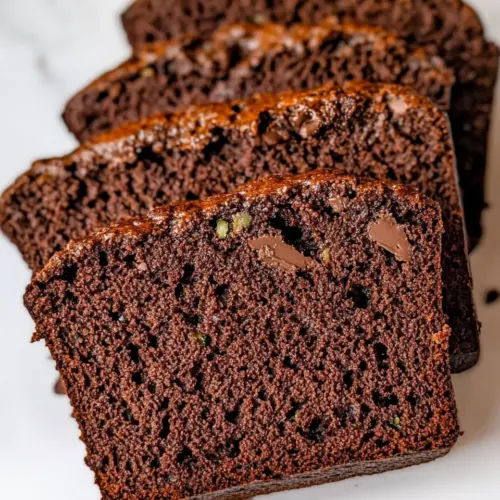
Chocolate Zucchini Bread
Chocolate Zucchini Bread is a moist, chocolate packed loaf that balances rich cocoa and melty chips with the gentle moisture of zucchini. This easy to make treat yields a tender crumb and deep flavor, perfect for an easy weeknight dessert or a cozy breakfast. Make it when you want something indulgent yet approachable and a clever way to use up extra zucchini.
Equipment
- 8.5 x 4.5-inch bread pan
- Cooling rack
Ingredients
- 1/2 cup honey vanilla Greek yogurt Adds creaminess and mild tang that balances sweetness while contributing moisture and a tender crumb for the quick bread.
- 2 tablespoons honey Provides concentrated sweetness and floral notes while helping to retain moisture and enhance browning during baking.
- 1/2 cup light brown sugar lightly packed Contributes deep caramel-like sweetness and a soft, moist texture while aiding in browning and adding richness to the batter.
- 1/3 + 3/4 cup dark chocolate chips divided Offers rich chocolate flavor and melty pockets distributed through the loaf; dividing them lets some incorporate into batter and some top for texture and appearance.
- 1/3 cup melted coconut oil Supplies a tender, slightly tropical fat that keeps the bread moist and contributes to a soft crumb when melted and mixed into the batter.
- 1 -1/2 teaspoons vanilla extract Imparts aromatic sweetness that enhances other flavors and rounds out the chocolate and vanilla notes in the bread.
- 1 large egg Binds ingredients together, adds structure and leavening support through coagulation, and contributes to a richer, more cohesive crumb.
- 1/3 cup oat flour just blend regular oats in a blender—see note 1 Adds whole-grain texture and subtle nuttiness while absorbing moisture to help structure the batter without overworking gluten.
- 2 tablespoons Dutch process cocoa powder recommended: Hershey’s Special Dark cocoa powder Introduces deep chocolate color and concentrated cocoa flavor, intensifying the overall chocolate profile and balancing sweetness.
- 1 teaspoon baking soda Provides alkaline leavening that reacts with acidic components to produce lift and tenderness in the quick bread.
- 1/4 teaspoon baking powder Offers a small boost to leavening power for a lighter crumb and helps balance density in the finished loaf.
- 1/2 teaspoon salt Enhances overall flavor by balancing sweetness and strengthening gluten structure slightly, while supporting the dough’s rise.
- 1 cup all-purpose flour or use white-whole wheat Forms the primary structure and bulk of the loaf, supplying gluten and starches that set during baking and determine texture.
- 3/4 heaping cup lightly packed grated zucchini Adds moisture and light vegetal freshness while contributing water content that helps hydrate flour and dissolve sugars.
- 1 tablespoon cornstarch Helps absorb excess moisture and stabilize texture, improving sliceability and preventing a soggy crumb by binding water.
Instructions
- Preheat oven to 350°F (176°C). Lightly grease and flour an 8-1/2 by 4-1/2 inch pan or line with parchment paper, leaving an overhang for easy removal. Grate zucchini on the small holes of a grater. Measure and set aside.: The kitchen will begin to smell faintly warm as the oven reaches temperature, a calm indicator that your loaf will bake evenly. Preheating ensures the batter receives immediate heat for proper rise and caramelized crust formation, and leaving a parchment overhang makes it effortless to lift the bread out when cool. A common misstep is skipping preheat, which can produce uneven rising and dense texture. Make sure the oven racks are positioned in the center so heat circulates consistently.
- In a medium bowl, stir together the Greek yogurt, honey, and brown sugar until smooth.: As you grate, the zucchini releases moisture and the kitchen fills with a mild vegetal scent that is surprisingly subtle once baked. Small hole grating creates fine strands that distribute evenly through the batter, preventing pockets of wetness. If you grate too coarsely the loaf may have uneven texture or sogginess. Pat the zucchini lightly if it seems excessively wet, but do not dry it completely or the bread may become too dry.
- In another small microwave-safe bowl, place 1/3 cup (62 g) chocolate chips. Melt the coconut oil and measure the oil after being melted. Pour the melted coconut oil over the chocolate chips and stir. Microwave in bursts of 15 seconds, stirring for 20 seconds between each burst until chocolate is fully melted and smooth. Allow to cool to room temperature, then use a spatula to scrape every bit into the Greek yogurt mixture. Stir to combine. Add the egg and vanilla extract and stir until smooth.: Stirring the wet ingredients produces a glossy, slightly thickened mixture with a sheen from the coconut oil to come. The aroma of honey will be prominent and comforting. This step ensures sugars dissolve and flavors meld, which promotes even sweetness through the loaf. Overmixing at this stage is not the issue, but failing to fully combine can create uneven pockets of sugar or tang. Use a spatula or whisk until uniform.
- In a separate bowl, stir together the oat flour (see note 1), cocoa powder, baking soda, baking powder, salt, and cornstarch. Add in the flour and the remaining 3/4 cup chocolate chips (118 g). Stir the dry ingredients together.: When the melted chocolate and oil are combined and cooled slightly they form a silky ribbon through the yogurt mixture, giving the batter a cohesive texture and rich chocolate backbone. You will notice a glossy sheen and a deep chocolate aroma as you stir, and adding the egg creates a velvety emulsion that binds everything. If the melted chocolate is too hot it can cook the egg, so allow it to cool a bit before mixing. A common error is overheating the chocolate which can seize; if that happens add a little warm liquid and stir gently until it smooths.
- Add the dry to the wet. Mix in the zucchini. Gently stir until just combined. Overmixing will result in dense bread or a sunken center.: The dry mix should look uniform with the cocoa distributing into the flours and the leavening dispersed so there are no concentrated pockets. Rubbing the cocoa through the flour with fingers or a whisk helps avoid clumps. The sound here is quiet, a soft sift and shuffle as you combine components. Mixing thoroughly ensures even rise and prevents bitter pockets of cocoa or uneven texture. A frequent slip is not breaking up cocoa lumps which will leave streaks of intense flavor, so take an extra moment to whisk well.
- Use a spatula to scrape every bit of the mixture into the prepared pan and smooth the top into an even layer. Top with a few more chocolate chips if desired. Bake for 45–55 minutes or until a toothpick when inserted into the center comes out with dry or moist (not wet) crumbs. The bread should also be pulling slightly away from the sides. Be careful to not overbake; it will yield a much drier, less-tasty zucchini bread.: As the batter comes together it will thicken noticeably and the chocolate chips will start to dot the mixture. You should stop stirring when no large streaks of flour remain to avoid developing excess gluten that yields a dense loaf, and the batter should be slightly lumpy and glossy rather than perfectly smooth. You will sense a humid, chocolatey aroma with hints of honey. Overmixing will result in a tight crumb or a sunken middle, so fold with light turns using a spatula until the batter is homogenous.
- Remove from the oven and let cool for 10 minutes before inverting it onto a cooling rack to finish cooling. Allow to completely cool before cutting into the bread—otherwise, it’s pretty crumbly! Cut with a sharp, serrated knife. Best enjoyed the same day—see “Storage” notes below.: The batter should spread easily into the pan and hold together without being runny. Smoothing the top ensures even baking and attractive presentation, while scattering a few chocolate chips creates appealing melted pools on the surface. Tap the pan gently on the counter to release any trapped air bubbles; this quiet thud helps avoid large holes in the crumb. A mistake is over smoothing which can compress the batter, so smooth lightly and evenly.
- Bake for 45 to 55 minutes or until a toothpick when inserted into the center comes out with dry or moist not wet crumbs The bread should also be pulling slightly away from the sides: The oven will fill with deep cocoa notes as the crust sets and sugars caramelize, and you may hear no sound at all beyond the oven fan. Visual cues like a slightly domed top and slight pull away from the pan edges indicate doneness, and the toothpick test should show dry or moist crumbs but no raw batter. Overbaking dries the bread and diminishes flavor, so begin checking around 45 minutes. If underbaked the center will be gummy and dense, so rely on both toothpick and the side pull indicators.
- Remove from the oven and let cool for 10 minutes before inverting it onto a cooling rack to finish cooling Allow to completely cool before cutting into the bread otherwise it is pretty crumbly Cut with a sharp serrated knife: The loaf will steam slightly as it cools, releasing a warm, chocolate scent that invites patience. Letting it rest stabilizes the crumb so slices hold together, and using a serrated knife yields clean cuts without compressing the loaf. Cutting too soon makes the slices fall apart and appear gummy, so resist the urge to slice while hot. If the bread seems sticky at the center after cooling, it likely needed a few additional minutes in the oven.
Notes
- Swap flours carefully Use white whole wheat for a nuttier profile or stick with all-purpose for a softer crumb, adjusting liquid slightly if the dough seems dry.
- Adjust chocolate intensity Choose semi sweet or milk chocolate chips for a sweeter loaf, or increase dark chips for a more pronounced cocoa experience.
- Boost moisture without oil Replace a portion of the coconut oil with unsweetened applesauce to reduce fat while keeping the crumb tender, but watch bake time as moisture level shifts.
- Play with sweetness Reduce the brown sugar by a tablespoon or two if you prefer a less sweet loaf, honey will still provide natural sweetness and browning.
- Make it nut free This recipe is naturally nut free; avoid adding nuts and use seed based toppings if you want crunch without tree nuts.
- Freeze slices individually Wrap cooled slices tightly and freeze for convenient grab and go breakfasts; thaw at room temperature and warm briefly if desired.