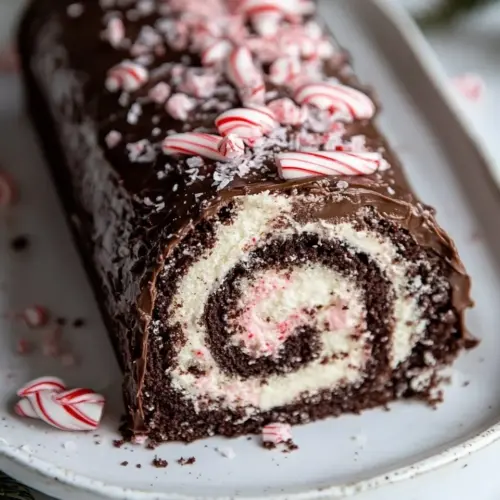
Chocolate Peppermint Cake Roll
Chocolate Peppermint Cake Roll is a festive, creamy chocolate sponge rolled with a tangy cream cheese and crushed peppermint filling, finished in a glossy chocolate ganache. The combination of airy cake, silky filling, and crunchy candy makes it an easy showstopper for holiday gatherings and cozy winter dinners. Make it ahead to simplify entertaining and still impress your guests.
Equipment
- Jelly Roll Pan
- Parchment Paper
- Electric Mixer
- wire cooling rack
- Saucepan
- Mixing Bowls
Ingredients
- 4 large eggs, separated Separate eggs and use yolks to enrich batter while beating whites until stiff peaks form to provide lift and lightness to the cake roll.
- 1/2 cup + 1/3 cup granulated sugar, divided Measure divided granulated sugar to sweeten both the cake batter and the meringue-like egg whites, aiding structure and caramelization during baking.
- 1 teaspoon vanilla extract Add vanilla extract to enhance and round out the chocolate and peppermint flavors, contributing aromatic depth to both cake and filling.
- 1/2 cup all-purpose flour Sift all-purpose flour into the batter to provide structure and crumb; gently fold to avoid deflating whipped egg whites for a tender roll.
- 1/3 cup unsweetened cocoa powder Incorporate unsweetened cocoa powder to deliver concentrated chocolate flavor and a darker color while absorbing some moisture in the batter.
- 1/2 teaspoon baking powder Combine baking powder to give a mild rise and help the cake maintain a light, airy texture while baking and rolling.
- 1/4 teaspoon baking soda Include baking soda to react with acidic components if present, promoting additional lift and a softer crumb in the cake.
- 1/8 teaspoons salt Sprinkle a pinch of salt to balance sweetness and enhance the overall flavor profile by sharpening the chocolate and peppermint notes.
- 1/3 cup water Stir water into the batter to adjust consistency, dissolve cocoa and sugar, and help create a smooth, spreadable cake batter.
- 8 ounces cream cheese Soften cream cheese and blend into the filling to create creamy tanginess and stability, making a rich contrast to the sweet chocolate.
- 1/4 cup butter Soften butter and beat into the cream cheese filling to add richness, smoothness, and a spreadable texture for easy assembly of the roll.
- 1 cup powdered sugar Sift powdered sugar into the filling to sweeten and thicken the cream cheese mixture, creating a smooth, pipeable consistency.
- 1/2 teaspoon peppermint extract Stir peppermint extract into the filling to impart concentrated mint flavor, complementing the chocolate and crushed mints for a festive profile.
- 20 starlight mint candies, crushed Crush starlight mint candies into the filling to provide crunchy texture and bright peppermint flecks that perfume the cream cheese mixture.
- 1/2 cup heavy whipping cream Whip heavy cream to medium peaks and fold into the filling or topping to lighten texture and add airy richness for a balanced mouthfeel.
- 1 cup semi-sweet chocolate chips or 3 oz. semi-sweet baking chocolate Melt semi-sweet chocolate chips or baking chocolate to create a ganache or drizzle that adds glossy chocolate intensity and stability to the cake.
- starlight mint candies, crushed for topping Sprinkle crushed starlight mint candies over the finished cake roll as a crunchy, decorative topping that reinforces peppermint flavor and visual appeal.
Instructions
- Preheat oven to 375 degrees F. Grease a 15 x 10-inch jelly-roll pan; line with parchment paper. Grease and flour paper.: Warmth fills the kitchen as the oven climbs to 375 degrees F , and that faint scent of heating metal signals readiness. It's important the pan is well greased and the parchment pressed into corners so batter spreads smoothly. If the paper is not greased the cake can stick, so take an extra moment to oil and dust it. A common mistake is skipping the parchment or not securing it, which can cause the sponge to tear when removed.
- Beat egg whites in large bowl until soft peaks form; gradually add 1/2 cup granulated sugar, beating until stiff peaks form.: As you whisk, listen for the change from liquid swoosh to a thicker, muffled sound, and watch the egg whites turn glossy. Soft peaks will bend at the tip, then after adding the first 1/2 cup granulated sugar they will stand up firm and shiny. This is critical because the air trapped here provides lift. Overbeating is a typical error, it will dry the whites and make folding difficult and deflate the batter.
- Beat egg yolks and vanilla in medium bowl on medium speed of mixer 3 minutes. Gradually add remaining 1/3 cup granulated sugar; continue beating 2 additional minutes.: The yolks should become paler and slightly thickened, with a creamier texture and a sweet, rich aroma of vanilla . Adding the second portion of granulated sugar slowly helps dissolve it into the yolks, creating a silky component for the batter. If the yolks look grainy, you may have added sugar too quickly; keep beating until smooth and cohesive.
- Stir together flour, cocoa, baking powder, baking soda and salt; add to egg yolk mixture alternately with water, beating on low speed just until batter is smooth.: When the dry mix of all-purpose flour , cocoa , baking powder , baking soda , and salt meets the yolks, the batter will take on a chocolatey aroma and deepen in color. Adding the water alternately keeps the batter fluid enough to spread without overmixing. Mix on low until just smooth, because overworking develops gluten and will toughen the sponge.
- Gradually fold chocolate mixture into beaten egg whites until well blended. Spread batter evenly in prepared pan.: Folding is a quiet, deliberate motion you should see rather than hear. The batter should look marbled at first, then uniform and airy, with tiny suspended bubbles. Use a rubber spatula and a gentle under-and-over motion, turning the bowl as you go. If you stir too vigorously you will deflate the beaten air and the cake will be dense instead of tender.
- Bake 14 to 16 minutes or until top springs back when touched lightly in center and a toothpick inserted comes out clean.: The oven will fill with warm chocolate scent, and the top should feel slightly springy. The center giving back when touched tells you the crumb has set. A toothpick coming out clean is the final check. Avoid overbaking, which can dry the sponge and make it brittle when you try to roll it.
- Allow cake to cool in the pan for ONE minute.: That one minute lets steam settle so the cake won't immediately collapse when moved. The surface will still be warm and pliable, which is the window for safely lifting it out. Skipping this brief rest increases risk of tearing when you lift the cake.
- Lift the parchment paper and hot cake out of the pan and onto a flat (heat-safe) surface. Immediately, while the cake is hot, starting at one of the short ends, use your hands to gently and slowly roll the cake (and parchment paper!) all the way up.: The cake should feel warm and soft as you roll; this warmth prevents cracking. Rolling with the parchment keeps the spiral neat and trains the cake to hold shape. If you wait until it is cold the cake may fracture, so be decisive during this step.
- Allow the rolled up cake to cool completely, on top of a wire cooling rack. (Setting it on a wire rack allows it to cool underneath the roll, and keeps the cake from sweating).: Placing the roll on a wire cooling rack encourages even air circulation so it cools without condensation forming. The roll should cool to room temperature, firming slightly. Cooling on a flat surface can trap moisture and make the exterior soggy, which will complicate filling.
- Transfer to the fridge to cool for an additional 30 minutes.: Refrigeration chills the roll and makes it easier to handle when you unroll and fill. The texture becomes more stable and the filling will set better later. If you skip chilling the cake may be too soft to unroll without damage.
- While the cake roll is cooling in the fridge, mix the cream cheese, butter, powdered sugar and peppermint extract together with an electric mixer until fluffy and smooth.: The mixture will change from lumpier to silky, and the aroma of peppermint extract will brighten the room. Beat until light and spreadable; this creates a filling that balances tang and sweetness. Undermixing can leave lumps, while overbeating may warm the filling too much, making it runny.
- Gently stir in desired amount of crushed peppermint candies, to taste. Save a handful for sprinkling on the ganache, at the end, if desired.: The crushed starlight mint candies provide textural contrast and pops of peppermint. Stirring them in by hand keeps the filling smooth while distributing crunch. If you add too many, the filling can become difficult to spread evenly, so balance is key.
- Once the cake roll is cooled completely, unroll it very carefully. Gently smooth the filling in an even layer over the cake.: The unrolled sponge should be cool and slightly firm to the touch. Use a spatula to spread the filling to the edges, aiming for an even coating so the spiral looks uniform when re-rolled. Rushing here can cause tearing or uneven distribution.
- Roll up the cake, without the parchment paper. (If you see it start to stick at all to the paper you can use a butter knife gently scrape along the bottom edge of the cake as you roll it up, to help release it.): As you re-roll, the spiral should compress gently. The filling will press into the cake creating a neat swirl. If the cake resists, pause and check that there are no sticky spots; using the knife tip can free edges without tearing the sponge.
- Cover with plastic wrap and refrigerate for at least 1 hour.: Chilling firms the filling and sets the shape so slices hold together cleanly. The cold also mellows flavors and makes cutting easier. Not chilling long enough can yield sloppy slices that fall apart when plated.
- Heat heavy cream in a saucepan until hot. Pour over chocolate and stir continuously until the chocolate is melted and smooth.: When the heavy whipping cream is hot but not boiling, pouring it over the semi-sweet chocolate lets you whisk a glossy ganache. The mixture should be shiny and flowing, with a deep chocolate aroma. If the cream is too cool the chocolate may seize; if it is too hot it can change texture. Stir until silky.
- Allow the ganache to cool for several minutes to give it time to thicken up a little.: Cooling slightly helps the ganache cling to the roll without running off. You want pourable but viscous ganache so it forms a thin, glossy coating. Pouring when it is too hot will make it thin and messy, and too cool will make it lumpy.
- Gently spoon/pour the chocolate ganache over the top of the peppermint roll. Sprinkle additional chopped peppermint candy on top, if desired.: A slow pour creates a smooth shell; the ganache should cascade and settle with a soft sheen. Scatter reserved crushed starlight mint candies for festive sparkle and contrast. If you pour too quickly the ganache can pool unevenly, so work with a steady hand.
- Refrigerate for at least 20 minutes before serving.: Chilling the finished roll sets the ganache and improves sliceability. The cake will firm and present clean slices that show the spiral clearly. Serving too soon risks messy, soft slices.
- Store in the fridge, covered, for up to three days.: Kept cold and wrapped, the roll maintains its texture and flavor for several days. Proper storage prevents drying out. Leaving it uncovered will dry the cake and dull the ganache.
Notes
- Make ahead flexibility: You can prepare the cake roll completely and refrigerate it for one to two days before serving, which is ideal for holiday planning. Alternatively, bake and roll the cake in parchment and refrigerate it rolled for up to one day before filling and adding the ganache. This helps distribute workload and reduces day of stress. When chilled rolled, the cake retains moisture and becomes easier to handle during final assembly.
- Freezing option: If you want to freeze for longer storage, assemble the cake and filling but skip the ganache. Wrap tightly and freeze for up to two to three months. Thaw overnight in the refrigerator, add ganache the next day, and serve. This method helps preserve texture and prevents the ganache from weeping during thawing.
- Temperature checks: Ensure the ganache is warm enough to pour but cooled slightly to thicken for better coverage. Too hot and it will slide off the roll, too cool and it will clump. Aim for a glossy, slightly viscous pour for a picture perfect finish.
- Even candy crush: Crush peppermint candies in a sealed bag using a rolling pin to get a range of sizes. Smaller bits incorporate into the filling while larger shards make a pleasing garnish. Avoid pulverizing into dust, which can make the filling grainy and overly sweet.
- Knife care: Use a long, sharp knife chilled in the fridge between slices for smooth, neat cuts. Wipe the blade between each slice to keep edges clean and presentable, especially when serving to guests.