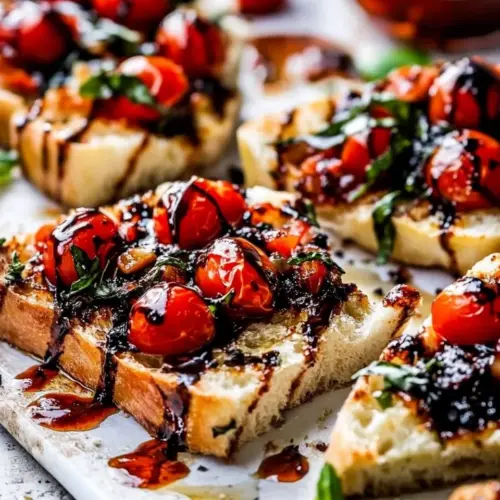
Caprese Garlic Bread
Caprese Garlic Bread is a crispy, cheesy slice topped with blistered grape tomatoes, fresh basil, and a glossy balsamic glaze. Creamy mozzarella melts over buttery ciabatta while garlic and parsley add savory depth, making this an easy weeknight dinner or crowd pleasing appetizer. Make it for summer gatherings because it is quick, vibrant, and irresistibly shareable.
Equipment
- Oven
- Skillet
- Small Saucepan
Ingredients
- 1 teaspoon olive oil Lightly coats bread or vegetables to prevent sticking and to add a fruity, slightly peppery flavor; useful for sautéing garlic before assembling the dish. Adds moisture to toasted bread and helps carry other flavors across the loaf.
- 2 teaspoons garlic minced, 2 large cloves garlic Finely flavors the dish with a pungent, aromatic bite; mincing releases oils that infuse olive oil and butter for a robust savory base. Provides depth to both the tomato topping and the garlic butter spread.
- 1 cup grape tomatoes halved Provides bright, juicy acidity and fresh sweetness when halved, contributing texture and color contrast to the assembled bread. Releases flavorful juices when mixed with basil and salt, balancing the cheese and balsamic components.
- 1/2 cup fresh basil leaves stems removed, finely sliced or shredded Adds an aromatic, slightly peppery herbal freshness when stems are removed and leaves are thinly sliced; helps lift the rich cheese and tomato flavors. Serves as a classic Caprese element that brightens each bite and enhances presentation.
- 1 pinch salt optional Enhances and balances the sweetness and acidity of tomatoes and balsamic components with a small amount of seasoning; optional to adjust to personal taste. Helps draw out tomato juices and unify the overall flavor profile.
- 1 cup fresh mozzarella cheese slice thinly into rounds, or shredded mozzarella cheese Melts into a creamy, milky layer that provides rich, gooey texture and mild saltiness when sliced thin or shredded and broiled. Acts as the primary melty binding element that contrasts with crisp toasted bread and fresh toppings.
- 1 loaf Ciabatta sliced into 8 slices Provides the crunchy, chewy base for the dish when sliced into portions; ciabatta holds up well to toppings and toasting without becoming soggy. Offers a rustic texture and airy crumb ideal for absorbing garlic butter and balsamic reduction.
- 1 cup balsamic vinegar Reduces to a sweet, tangy glaze when simmered with sugar to make a balsamic reduction; supplies concentrated acidity and complex sweetness to finish the dish. Adds a glossy, flavorful drizzle that complements tomatoes and mozzarella.
- 1/4 cup sugar Combines with balsamic vinegar to create a syrupy reduction that balances acidity with sweetness; dissolves during simmering to produce a caramelized glaze. Helps thicken and sweeten the balsamic for a concentrated finishing sauce.
- 1/2 cup butter Creates a rich, spreadable base when melted and mixed with garlic; adds buttery flavor and helps toast the bread to golden perfection. Enhances mouthfeel and provides a comforting richness that complements fresh toppings.
- 2 cloves garlic minced Imparts an additional layer of fresh pungency when minced and incorporated into the butter or topping; reinforces garlic flavor throughout the recipe. Works well mixed into the spread or sprinkled on top before toasting for aromatic impact.
- 2 tablespoons fresh parsley chopped Contributes bright herbaceousness and color when chopped and mixed into butter or sprinkled over the finished bread; balances richness with freshness. Provides a subtle clean finish and aroma that complements basil and garlic.
- 1 pinch salt to taste Adjusts seasoning to personal preference when added sparingly to the tomato and cheese components; balances sweetness and acidity. Used to taste to enhance overall flavor without overpowering the fresh ingredients.
Instructions
- Preheat your oven to broil or grill setting on medium heat.: As you heat the oven you will notice a faint warmth in the air, and the racks will begin to glow gently when the element is ready. This higher heat source is crucial because it melts the mozzarella rapidly while crisping the top of the ciabatta without drying it out. One thing to avoid is placing the slices too close to the element, which can char the edges before the cheese softens; position the rack in the middle to upper third for even results. You will also want to let the oven preheat fully so the first batch receives consistent heat rather than a slow ramp that affects texture.
- Heat oil in a skillet or pan over medium-high heat. Sauté the tomatoes and basil; cook until the tomatoes are slightly blistered and soft. Add the garlic and cook until fragrant (30 seconds).: When the oil shimmers and becomes aromatic, the tomatoes will begin to sizzle and soften, releasing sweet juices that create a concentrated, jam like scent. The basil will wilt and perfume the pan, while the brief hit of minced garlic should be added last so it remains bright; overcooking garlic at this stage will make it bitter and dry. Listen for gentle popping as the tomato skins blister, and watch for the color shift from pale to deeper red, which signals the right moment to remove from heat. A common pitfall is crowding the pan, which steams the tomatoes rather than blistering them, so use a skillet that gives them space.
- Spread the garlic butter over each slice of bread and top with 1 slice of cheese (or just enough to cover the bread).: When you brush the softened, aromatic butter onto the ciabatta , you should feel the bread yield slightly as it absorbs the fat, and the surface will take on a glossy sheen. The heat from the butter helps to pull the garlic aroma into the crumb. Placing a thin layer of mozzarella on top creates a barrier that melts into a tender sheet rather than sinking into the bread. Be careful not to overload with butter, since too much can make the slices soggy rather than crisping the edges. Dab excess butter from the plate before baking.
- Broil (grill) until the cheese has melted.: Under the broiler you will hear a soft bubbling as the mozzarella loosens into an elastic, glossy blanket, and the bread edges will become golden and lightly crisp. Keep the oven door slightly ajar only if you need to observe, otherwise monitor through the window because the transformation happens fast under direct heat. The visual cue to pull them is when the cheese is uniformly melted and begins to show the faintest hint of golden spots. Avoid leaving them unattended, as broiling can quickly shift from perfect to overdone.
- Top bread with tomatoes, season with salt (if needed) and drizzle over the glaze.: As you spoon the warm tomato and basil mixture onto the melty cheese , the contrast between warm bread and bright topping will be immediately obvious in aroma and texture. A light sprinkle of salt will elevate the tomato sweetness and balance the glaze, but taste first because the other elements might supply enough seasoning. Drizzle the balsamic glaze in a slow, steady stream so it forms glossy ribbons rather than pooling too much in one spot. One mistake to avoid is piling on the tomato so high that the slices become difficult to handle; aim for a harmonious stack that stays elegant.
- Pour vinegar into a small, nonstick saucepan. Bring to a boil over medium heat while stirring occasionally until the glaze coats your spoon and thickens to a syrupy consistency, (it will also be reduced by half). Remove from the stove and allow to cool. Makes 1/2 cup glaze.: As the balsamic vinegar and sugar simmer, the aroma will deepen into a rich, sweet tang, and steam will rise in a fragrant ribbon from the pan. The transformation from thin liquid to glossy glaze is visible and tactile when it coats the back of a spoon and leaves a trail when you drag your finger through it. Stir gently to prevent the sugars from scorching on the pan sides, and watch closely toward the end because the mixture thickens quickly. Letting it cool will thicken it further and make it easier to control when drizzling. A common error is boiling too rapidly, which can turn the sugars bitter, so use moderate heat and patience.
Notes
- Use room temperature mozzarella to help it melt quickly and evenly without cooling the bread when you place it on top.
- Pat tomatoes dry if very juicy to avoid excess moisture that can make the bread soggy; gently blot with a paper towel before halving and sautéing.
- Brush edges with butter only so they get extra crisp without saturating the center, giving you a nice contrast between crust and crumb.
- Watch the glaze closely near the end as it can go from syrupy to burnt in moments, reduce on medium heat and test by coating a spoon.
- Assemble just before serving so the topping stays fresh and the bread retains its crispness, especially if hosting a gathering.