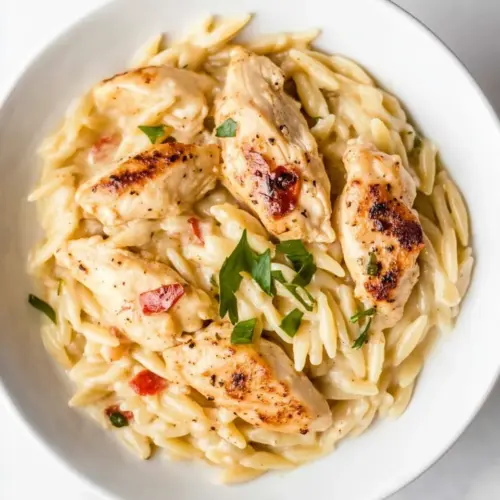
Cajun Chicken Orzo
Cajun Chicken Orzo is a creamy, comforting, easy weeknight dinner that balances spicy Cajun seasoning with bright lemon and rich parmesan cheese. Tender shredded chicken and plump orzo swim in a silky sauce, making it both satisfying and quick to pull together. Make it when you want bold flavor without a lot of fuss.
Equipment
- Pot
- Spoon
Ingredients
- 1 tablespoon olive oil Sauté to provide a flavorful cooking fat that helps brown aromatics and prevents sticking while adding a fruity, mild richness to the dish.
- 2 tablespoons butter Melt to add creamy richness and a slightly nutty depth that enhances the sauce body and helps deglaze the pan for extra flavor.
- 1/2 medium onion chopped Chop finely to contribute sweet, savory aromatics that build the flavor base when softened and caramelized during cooking.
- 3 cloves garlic minced Mince finely to release pungent, aromatic oils that boost savory depth and complement the spices and tomatoes in the sauce.
- 1/4 cups un-dried tomatoes Dice or chop to introduce concentrated, sweet-tart tomato flavor and chewy texture that intensifies as it simmers with the orzo.
- 1/2 tablespoon Cajun seasoning see note Season generously to impart smoky, spicy, and herbaceous notes that define the dish’s bold Cajun profile and elevate the chicken and pasta.
- 1 cup uncooked orzo pasta Cook until al dente to serve as the tender pasta base that absorbs flavors from the broth and cream, providing pleasing bite and body.
- 2 cups low sodium chicken broth Simmer to infuse the orzo with savory depth and salt balance, creating a flavorful liquid that the pasta soaks up for a cohesive sauce.
- 1 teaspoon lemon juice Squeeze in to brighten and balance richness with a tangy pop that cuts through the cream and enhances overall flavor complexity.
- 1 cup heavy whipping cream Pour in to create a luxuriously smooth, rich sauce that coats the orzo and combines with cheese for a creamy mouthfeel.
- 2 cups cooked shredded rotisserie chicken Shred and fold in to add ready-cooked protein with moist texture and savory meatiness that complements the spicy, creamy orzo.
- 1/2 cup freshly grated parmesan cheese Grate finely to contribute salty, umami complexity and help thicken and enrich the sauce while providing a nutty, savory finish.
Instructions
- Add the oil, butter, and onion to a pot over medium-high heat. Sauté the onion for 3-4 minutes.: You should hear a gentle sizzle as the olive oil and butter warm and the diced onion begins to soften. The smell will shift from sharp to sweet and mellow, with the kitchen filling with a warm, savory aroma. Visually the onion will turn translucent and the edges will start to soften and become glossy. This stage develops foundational flavor by allowing natural sugars in the onion to blossom, which supports the spices later. A common mistake is using too high heat, which browns or burns the onion too fast; if you see dark edges, lower the heat and stir more often. Keeping the pan at medium high lets moisture escape but still cooks quickly, creating a tender bite instead of raw crunchy pieces.
- Add the garlic, sun-dried tomatoes, Cajun seasoning, and orzo to the pot. Cook for 2-3 minutes, stirring often.: Right away the aroma will intensify as the minced garlic hits the hot fat, offering a savory perfume that signals flavor bloom. The sun dried tomatoes will soften and release concentrated tomato essence, while the orzo will toast slightly and turn a shade deeper, lending a nutty note. This quick cook infuses the orzo with flavor so the pasta absorbs more than plain liquid later. Pay attention to constant stirring, because toasted garlic can brown quickly and become bitter. If you notice any burnt bits on the pan, reduce heat and gently scrape them up to reincorporate the flavor without grit.
- Stir in the chicken broth, lemon juice, and cream. Once it starts to bubble, continue cooking for 10 minutes, uncovered, stirring fairly often. You will probably need to turn the heat down a bit (to medium or even medium-low). It should gently bubble vs. furiously boil, and you don't want the liquid to reduce too much before the pasta has cooked.: The moment the liquid hits the pot you will see steam and the surface will ripple with tiny bubbles. The smell becomes richer and more rounded as the heavy whipping cream emulsifies with broth, and a faint citrus brightness from the lemon juice will lift the aroma. Keep the pot at a gentle simmer so the orzo cooks evenly without the liquid reducing too quickly, which ensures tender pasta and a creamy sauce. Stirring often prevents sticking and promotes even cooking; if the sauce is evaporating faster than the orzo is absorbing, lower the heat and cover briefly or add a splash more broth. A frequent error is keeping the heat too high so the outside of the pasta gets mushy while the center remains undercooked, so use gentle bubbling as your guide.
- Stir in the chicken and parmesan.: As you fold in the shredded rotisserie chicken , you will feel the pot cool slightly, then the mixture will settle into a cohesive, creamy texture as the parmesan cheese melts. The cheese adds a silky sheen and subtle nuttiness, while the chicken brings savory body and temperature contrast. This step is crucial for integrating flavors without overcooking the pre cooked chicken ; if you leave it on high heat too long, the meat can dry out. Watch for the sauce to look glossy and slightly thicker, and taste for seasoning because the parmesan cheese and Cajun seasoning may have already contributed salt.
- Take the pot off the heat, and cover it for 3-5 minutes or until it has thickened up to your liking.: Once removed from direct heat, steam trapped under the lid will finish cooking the orzo gently and allow the sauce to bind and thicken. You will notice the texture shift from loose to a clingy, velvety sauce that coats each grain of orzo , and aromas will become more concentrated. Resting also evens out temperature and helps flavors marry. A common oversight is skipping the covered rest, which can leave the sauce runnier than intended; if that happens, simply recover and wait a little longer. Use a fork to check consistency after resting, and if it is thicker than you prefer, stir in a splash of broth to loosen it.
Notes
- Seasoning saltiness: Many Cajun blends vary widely in salt content, so taste the sauce before adding extra salt and choose low sodium broth when possible.
- Pasta texture: Aim for slightly al dente orzo, because it will continue to soften during the covered rest, preventing a mushy final dish.
- Temperature control: Maintain a gentle simmer after adding liquids; too high and the top will reduce before the orzo cooks, too low and the pasta will take much longer to finish.
- Rescue strategies: If the orzo is undercooked and liquid is low, add small amounts of warm broth and continue cooking; if the sauce is too thin, cover and rest until it thickens.
- Cheese integration: Use freshly grated parmesan cheese rather than pre grated for smoother melting and better flavor.