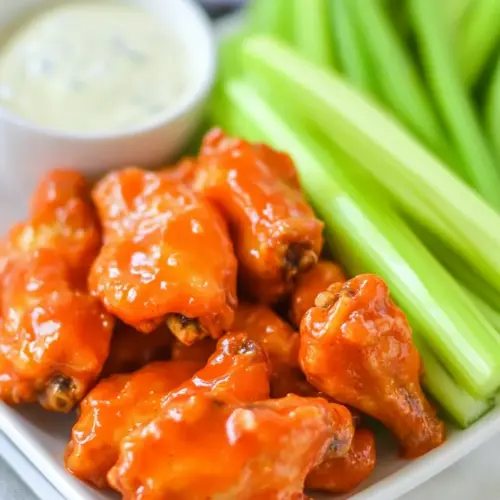
Buffalo Wings
Buffalo Wings bring crispy, golden fried chicken tossed in a glossy, tangy hot sauce and butter glaze. This easy crowd pleaser delivers bold flavor and a satisfying crunch, ideal for an easy weeknight dinner or game day party. Simple pantry ingredients and straightforward technique make it a go to recipe you'll want to make again and again.
Equipment
- Heavy pot
- Thermometer
- Shallow Dish
- Tongs
- Saucepan
Ingredients
- vegetable oil, for frying Used for deep or shallow frying to achieve crispy skin; heats to the proper temperature to cook wings evenly and prevent sogginess. Adds a neutral flavor that lets the sauce and seasonings stand out while providing the medium for browning.
- 1 -2 cups all-purpose flour Coats wings to create a light, crisp exterior when fried; helps absorb seasonings and promotes even browning. Can be seasoned with salt and pepper or spices to enhance texture and flavor of the crust.
- 24 chicken wings, thawed if frozen Provides the primary protein and base of the dish; wings should be thawed and patted dry to ensure proper frying and sauce adhesion. Offers rich, juicy meat that pairs well with spicy and buttery sauces.
- 1 (12-ounce) bottle hot sauce Forms the spicy component of the sauce with vinegar-based heat characteristic of Buffalo wings; combines with butter and Worcestershire to create a balanced sauce. Can be adjusted for heat level depending on brand or personal preference.
- 1/2 cup unsalted butter Adds richness and mellows the heat when melted into the hot sauce to create a smooth, glossy coating for the wings. Supplies fat that carries flavor and helps sauce adhere to the fried surface.
- 1 tablespoon Worcestershire sauce Enhances savory depth and umami when mixed into the sauce; balances acidity and heat with a subtle tangy, fermented note. Small amount rounds out flavor and complements butter and hot sauce for a more complex finish.
Instructions
- Fill a heavy pot with 2–3 inches oil and heat over medium-high heat to 350–375 degrees F.: You will hear the oil barely ripple as it approaches the correct temperature, and a quick breadcrumb test should sizzle energetically on contact. Getting the oil into this narrow band matters, because oil that is too cool soaks into the coating making it greasy, while oil that is too hot will brown the exterior before the chicken is cooked through. A common mistake is crowding the pot, which drops the temperature suddenly. If that happens, let the oil recover back to the target range before adding more pieces.
- While oil is heating, place flour in a shallow dish and dredge wings in the flour, making sure to coat all sides of the wings.: As you dust each wing you will feel the flour cling to the skin, creating a thin, even blanket that will fry crisp. The surface should look uniformly pale and slightly textured. This light coating helps seal in juices and creates the satisfying crack when you bite into the finished wing. Avoid overcoating, because a thick paste of flour can lead to a cakey crust. If your hands get clumpy, shake off excess flour and spread wings in a single layer while you work.
- Working in batches, add wings to hot oil and cook until golden brown, 5–7 minutes. Drain on a paper towel–lined plate.: You will hear the loud sizzle as each piece hits the oil, and the sound will soften as a golden crust forms. Look for an even, deepening golden color, and watch the surface for shrinking where the skin tightens. Internal juices should run clear when pierced, and the surface will feel firm to the touch. Resist the urge to flip constantly, let each side develop color for a couple of minutes before turning. A common pitfall is frying too many at once which lowers oil temperature and results in pale, greasy wings, so keep batches modest for even cooking.
- While frying wings, combine hot sauce, butter and Worcestershire sauce in a saucepan over medium heat and cook until combined and heated through.: After frying, the wings will release tiny spatters as they rest, and the paper towel will wick away excess oil so the crust stays crisp. You will notice the aroma shift to a roasted, savory note as steam escapes. Letting wings rest briefly ensures they finish carrying their crisp texture rather than steaming and softening. One mistake is piling wings too high which traps steam, so arrange them in a single layer while they cool slightly.
- Toss fried wings in sauce, making sure to coat all sides. Serve warm with ranch dressing.: As the butter melts into the hot sauce you will see the mixture become glossy and slightly thickened, releasing a warm, tangy steam. Whisk gently until the sauce is homogenous so the heat disperses evenly across each wing. This step matters because a well emulsified sauce clings and creates that classic lacquered finish. Avoid boiling vigorously which can separate the butter; keep it at a gentle simmer for best results.
- Toss fried wings in sauce, making sure to coat all sides.: When you transfer the wings into a bowl with the sauce, you will hear a soft glug and see a shiny coat quickly form. Use tongs to lift and turn each piece so the sauce spreads evenly and every bite is balanced. The residual heat helps the sauce set slightly, yielding a glossy finish. A common error is to pour sauce over a crowded tray which leads to uneven coverage, so toss in a spacious bowl and work in small batches for uniformity.
- Serve warm with ranch dressing.: Serving while hot ensures the contrast between crisp skin and saucy glaze is at its peak, and the cool, creamy dressing provides a soothing counterpoint to the heat. Arrange wings on a platter with napkins nearby and offer the dressing on the side so diners can choose how much to add. Letting wings sit too long before serving will mellow the crunch, so plate them promptly for best results.
Notes
- Maintain steady oil temperature — Use a thermometer and keep the oil between 350 and 375 degrees F, because this range produces a crisp exterior while ensuring the chicken cooks through without becoming greasy.
- Dry wings before coating — Pat the chicken completely dry to help the flour adhere, which leads to a more consistent and crunchy finish.
- Work in batches — Frying a few wings at a time prevents the oil temperature from dropping, which is essential for even browning and texture.
- Gently emulsify the sauce — Melt the butter into the hot sauce over moderate heat while stirring so the sauce becomes glossy and cohesive.
- Double check doneness — Look for a deep golden color and clear juices when pierced, signs that the chicken is fully cooked and juicy inside.
- Serve immediately — The crispness is at its best right after tossing in sauce, so plate and serve while the wings are still hot.