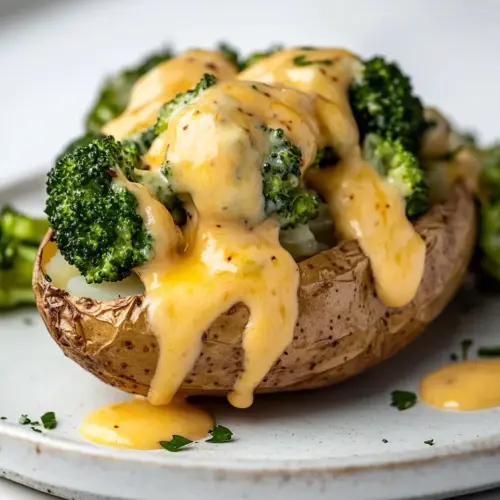
Broccoli And Cheese Baked Potato
Broccoli And Cheese Baked Potato is a creamy and comforting dish with crispy baked potato skins, tender roasted broccoli, and a rich cheddar cheese sauce. This easy weeknight dinner is both satisfying and quick to assemble, offering a delicious blend of textures and savory flavors. Make it for a simple family meal that feels special, and enjoy how easily it stretches to feed four.
Equipment
- Baking Sheet
- Small Saucepan
- Whisk
- Fork
Ingredients
- 4 russet potatoes washed and dried Bake four russet potatoes until tender to provide a sturdy, fluffy base that holds toppings well and contrasts with creamy broccoli and cheese.
- 2 tablespoons olive oil divided Divide two tablespoons of olive oil to coat potato skins for crispness and to sauté broccoli lightly, enhancing flavor and texture in two different steps.
- Salt and pepper to taste Season with salt and pepper to taste to amplify natural potato and broccoli flavors, balancing the richness of the cheese sauce without overwhelming it.
- 2 broccoli crowns cut into florets Cut two broccoli crowns into florets to create bite-sized pieces that steam or sauté quickly, adding color, nutrition, and a fresh contrast to the creamy cheese.
- 1 1/2 tablespoons unsalted butter Melt one and a half tablespoons unsalted butter to form the rich, smooth fat foundation of the cheese sauce, allowing flour to cook without extra saltiness.
- 1 1/2 tablespoons all-purpose flour Whisk one and a half tablespoons all-purpose flour into melted butter to create a roux that thickens the milk into a velvety cheese sauce with no lumps.
- 1 cup milk Warm one cup milk gradually to incorporate into the roux and build a creamy, cohesive base for the cheddar, controlling sauce thickness and flavor.
- 1/8 teaspoon paprika Sprinkle one eighth teaspoon paprika to lend a subtle smoky color and gentle warmth that complements the cheese without dominating the dish.
- 1/4 teaspoon garlic powder Add one quarter teaspoon garlic powder to introduce savory depth and a hint of aromatic pungency that enhances the overall flavor profile of the sauce.
- 1/4 teaspoon onion powder Stir in one quarter teaspoon onion powder to contribute mild sweetness and umami, rounding out the cheese sauce’s savory notes for better balance.
- Pinch of salt for cheese sauce Include a pinch of salt for cheese sauce to fine-tune seasoning during preparation and ensure the sauce brings out the cheddar’s full flavor.
- 1 cup shredded cheddar cheese Fold in one cup shredded cheddar cheese to create a rich, melty topping that binds the broccoli and potatoes together with sharp, creamy character.
Instructions
- Preheat your oven to 400°F. Poke each potato several times with a fork so steam can escape. Coat the potatoes with 1 tablespoon of olive oil, ensuring to rub the oil evenly, then season with salt and pepper. Arrange the potatoes on a baking sheet.: When you open the oven and slide the pan in, you should immediately notice a gentle warmth that promises even roasting. The steady heat helps the potato skin crisp while the interior cooks to a tender, fluffy texture. If the oven is not fully preheated, the cooking time will extend and the skins may not brown properly. A common mistake is placing the potatoes into a cold oven, which leads to longer bake times and a denser interior.
- Bake the potatoes until they are fork-tender, about 45-55 minutes.: The small punctures allow trapped steam to release during baking, preventing any bursts and ensuring even cooking. As the potato heats, you might hear faint pops of escaping steam, and the skins will tighten and dry slightly. Failing to poke holes can cause ruptures, which creates a mess and uneven texture inside the potato .
- Toss the broccoli florets with the remaining 1 tablespoon olive oil. During the final 15 minutes of baking, add the broccoli to the baking sheet.: Massaging the olive oil and seasoning into the skins promotes browning and flavor. Rub until the skins have a glossy sheen, that visual cue tells you they are ready for the oven. Uneven coating leads to blotchy browning and spots where the skin stays pale and soft.
- In the meantime, melt the butter in a small saucepan over medium heat. Stir in the flour and cook for about 1 minute. Gradually whisk in the milk until the mixture thickens.: Give each potato some breathing room so hot air can circulate and cook them uniformly. Placing them directly on the sheet and not crowding ensures crisp skins all around. Crowding the pan traps steam and produces softer, less appealing skins.
- Add the paprika, garlic powder, onion powder, and a pinch of salt. Mix in the shredded cheddar cheese and stir until the sauce becomes smooth and creamy.: You will know they are done when a fork slides into the center with little resistance, and the exterior feels light when lifted. The smell is earthy and warming, and the skins will look shrunken slightly from the roasted interior. Rushing this step yields undercooked, waxy centers that do not fluff well.
- Take the potatoes out of the oven. Cut each one open, carefully fluff the insides with a fork, and generously drizzle the cheese sauce on top, followed by the broccoli. Serve while warm.: The broccoli benefits from that quick high heat at the end, developing toasted tips and a bright green color. The sizzling of the florets on the hot sheet brings a faint caramelized scent that complements the savory cheddar cheese . Adding them too early can over roast them until they become mushy rather than pleasantly tender crisp.
- In the meantime melt the butter in a small saucepan over medium heat: As the butter melts, it should foam gently and give off a rich, creamy aroma. This sets the stage for the roux which thickens the sauce. If the heat is too high the butter can brown quickly and change the desired mild flavor profile.
- Stir in the flour and cook for about 1 minute: Cooking the flour with the melted butter removes the raw taste and creates a smooth base. You should see it turn slightly glossy and smell pleasantly nutty without darkening. Undercooking the roux leaves a noticeable raw flour taste, while overcooking gives a darker, nuttier note that shifts the sauce flavor.
- Gradually whisk in the milk until the mixture thickens: Pouring in the milk slowly while whisking prevents lumps and yields a silky sauce. It will steam gently as it heats and begin to thicken into a coating consistency that clings to the whisk. If you add the milk too quickly the sauce can become lumpy, which is the most common issue at this stage.
- Add the paprika garlic powder onion powder and a pinch of salt Mix in the shredded cheddar cheese and stir until the sauce becomes smooth and creamy: The aroma evolves as the spices bloom, and the melted cheddar cheese transforms the base into a glossy, velvety sauce. You should see it become homogenous and silk like; that is the cue that it is ready. Adding cold cheese straight from the fridge can temporarily firm the sauce, so remove from heat and stir until it regains its smoothness.
- Take the potatoes out of the oven Cut each one open carefully fluff the insides with a fork and generously drizzle the cheese sauce on top followed by the broccoli Serve while warm: Opening the baked potatoes releases a comforting steam and the scent of roasted starch. Fluffing the interiors creates pockets for the sauce to settle, and the contrast between crisp skin creamy filling and tender roasted broccoli is the final harmony. Waiting too long to serve cools the sauce and reduces the textural contrast that makes this dish delightful.
Notes
- Try different baking sizes Adjust the baking time slightly if your potatoes are much larger or smaller, and always test with a fork to ensure a fluffy interior.
- Keep sauce velvety If the cheese sauce tightens too much off heat, stir in a tablespoon of warm milk to loosen it and restore a smooth texture before serving.
- Evenly sized broccoli Cut the broccoli into uniform florets so they roast evenly and reach tender crisp doneness at the same moment.
- Preheat the oven fully Ensure the oven reads the correct temperature before placing the potatoes in, as an under preheated oven lengthens baking time and impacts skin crispness.
- Season in layers Lightly season both the potato skins and the cheese sauce so every bite has balanced savory notes without overwhelming saltiness.