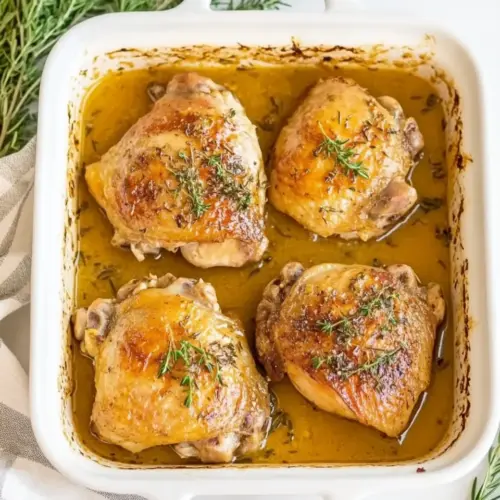
Braised Chicken Thighs
Braised Chicken Thighs deliver crispy skin, tender meat, and a bright lemon garlic sauce that is both cozy and refined. This easy weeknight dinner balances savory browned notes with fresh citrus and herbs, making it a family favorite. It’s a reliably impressive dish to make when you want comfort food that still feels special.
Equipment
- Oven-safe skillet
- Baking Dish
- Whisk
Ingredients
- 2 tablespoons olive oil Heat and enrich the pan, providing a medium for browning and carrying flavor throughout the dish. Adds a fruity, slightly bitter background that complements roasted and braised flavors and helps prevent sticking during searing.
- 6 chicken thighs bone-in skin-on Provide rich, juicy protein with skin for browning and bones for deep savory flavor when braised. Release collagen and gelatin as they cook low and slow, contributing body and mouthfeel to the finished sauce.
- 1 teaspoon fine sea salt Season early to enhance overall flavor and help proteins retain moisture while cooking; dissolves into liquids for even distribution. Balances savory elements and brings out natural flavors in both the meat and aromatics.
- 1 teaspoon fresh ground black pepper Season with a pungent, peppery kick that brightens and contrasts rich, fatty components during browning and braising. Cracks or grinds release volatile oils that elevate the dish’s savory profile and add subtle heat.
- 1 small yellow onion diced Provide a sweet, aromatic base when diced and sautéed, softening to contribute depth and natural sweetness to the braising liquid. Caramelizes slightly with heat, building savory-sweet complexity that supports the chicken.
- 2 cups low sodium chicken broth Supply a savory cooking liquid that deglazes the pan and gently simmers the chicken, extracting and concentrating flavors. Using low sodium allows control over seasoning and prevents the finished dish from becoming overly salty.
- 2 lemons juiced Add bright acidity that cuts through richness and helps tenderize the meat when juiced into the braising liquid. Imparts a fresh citrus aroma and balances the dish by lifting flavors and adding brightness.
- 6 garlic cloves peeled and smashed OR minced Infuse pungent, savory aromatics that mellow with cooking to add depth and complexity; smashed cloves release oils quickly while minced releases more slowly. Contribute both sharpness and sweetness depending on how long they braise.
- 3 sprigs thyme Introduce earthy, herbaceous notes that release subtle oils during braising, enhancing the savory profile of the sauce. Tie aromatic components together and complement both chicken and citrus with gentle, fragrant undertones.
- 1 sprig rosemary Contribute a piney, resinous aroma that perfumes the braising liquid and pairs well with thyme and citrus. One sprig adds concentrated herb flavor without overwhelming, releasing its fragrant oils during the simmer.
- 1 tablespoon cornstarch Thicken the braising liquid when mixed into a slurry and simmered, creating a glossy sauce that clings to the chicken. Provides body and helps concentrate flavors while stabilizing the finished pan sauce.
Instructions
- Preheat oven to 350°F. Heat the oil in a large oven-safe skillet over medium heat.: As the oven warms you should notice the smell of warm air and a steady hum from the element, which creates an even environment for the braise to finish. Preheating ensures the internal temperature rises predictably once the skillet goes in, giving you consistent doneness. A common mistake is skipping preheat, which can extend cook time and result in uneven texture.
- Season your chicken on both sides with the salt and pepper. Place the chicken skin down into the skillet and cook until the chicken skin browns. Flip the chicken and cook for an additional two minutes. Transfer the chicken to a plate and set aside.: You will see the olive oil shimmer and maybe see faint ripples, and when it is ready a drop of water will sizzle on contact. Heating properly prevents sticking and promotes a crisp, golden skin. If the oil smokes heavily lower the heat to avoid bitter, burnt flavors.
- Add the onion to the skillet and cook until it has softened. Stir in the chicken stock, lemon juice, garlic cloves, thyme and rosemary.: When you season, the salt will slightly moisten the surface and the pepper will create a fragrant coating that browns. Press the seasoning onto the skin gently, then place the thighs skin side down so you hear an immediate sizzle. Rushing the sear leads to pale skin and less flavor development.
- Add the chicken back in, skin side up. Bake for 40 to 45 minutes until the chicken is fall-apart tender. Transfer the chicken to a plate and set aside.: Listen for a steady sizzle and watch the skin transform to deep golden brown with rendered fat pooling at the edges, that smell of roasted fat and Maillard notes is crucial. Browning develops savory complexity that cannot be replicated in the oven alone. Turning too soon prevents a proper crust from forming.
- Whisk the cornstarch into the pan over medium heat. Continue cooking until the sauce has thickened. Serve the chicken with the sauce and enjoy.: After flipping you should notice the underside warming and tightening slightly, and a faint caramel aroma as it gains color. This quick second sear seals juices and adds another layer of texture. If you leave it much longer the skin can overcook and the meat may dry at the edges.
- Transfer the chicken to a plate and set aside: Resting briefly prevents the meat from continuing to cook in the hot pan and lets you clear room for the aromatics. The plate will hold rendered juices, which you can return to the pan if you like. Crowding the plate can trap steam and soften the skin.
- Add the onion to the skillet and cook until it has softened: As the onion sweats it will lose translucency and sweet notes will emerge, filling the kitchen with a gentle, savory scent. Use a wooden spoon to scrape up the browned bits, which are flavor gold. If you brown the onion too quickly without stirring you risk burning it and introducing bitterness.
- Stir in the chicken stock, lemon juice, garlic cloves, thyme and rosemary: When the cold chicken broth and lemon hit the hot pan you will hear a lively hiss and the aroma will brighten, lifting the heavier roasted notes. The herbs will perfume the liquid, and the garlic will begin to soften and release flavor into the braise. Adding all at once integrates flavors, but adding cold liquid incrementally can help control splatter.
- Add the chicken back in, skin side up: Arrange each thigh so the skin faces up, which allows the skin to stay exposed and crisp while the meat bathes in the braising liquid. You will see gentle bubbling at the edges as the liquid simmers around the thighs, and the surface will steam lightly. Nesting the pieces too close can cause uneven cooking, so leave a little space.
- Bake for 40 to 45 minutes until the chicken is fall-apart tender: During the bake you will notice the sauce reducing and thickening, and the aroma will meld into a rich, tangy-scented steam. The meat should pull away from the bone easily and feel tender to the touch. Overcooking can dry the thinner ends, while undercooking will leave the interior too firm.
- Transfer the chicken to a plate and set aside: Letting the cooked thighs rest allows juices to redistribute and keeps the skin from getting soggy immediately. The plate will collect any escaping juices, which you can incorporate back into the sauce. Avoid stacking the pieces, or steam will soften the crisped skin.
- Whisk the cornstarch into the pan over medium heat: Begin by mixing the cornstarch into a small amount of cool liquid to form a slurry, then pour it into the hot pan where you will hear a faint bubbling as the sauce reacts. Stirring continuously prevents lumps and encourages the sauce to take on a glossy sheen that clings to the meat. If you add cornstarch straight to the hot sauce it can clump and create an uneven texture.
- Continue cooking until the sauce has thickened: Watch the sauce reduce to a consistency that coats a spoon, and notice the scent intensify as flavors concentrate. This finishing step transforms the braise into a silky glaze that enhances each bite. If you overreduce, the sauce can become too salty or pasty, so remove from heat when it coats the back of a spoon.
- Serve the chicken with the sauce and enjoy: Plate the thighs, spoon the glossy sauce over them, and enjoy the contrast of crisp skin and tender meat with fragrant, bright notes. The final presentation should look warm and inviting, the sauce pooling slightly under each piece. Serving straight from the skillet keeps the dish warm and communal.
Notes
- Brown the skin thoroughly before braising to develop deep savory flavor and render fat that bastes the meat. Aim for a rich golden brown not a dark burn, and adjust heat if the skin darkens too fast.
- Use low sodium broth so you control the final seasoning as the sauce reduces. Taste near the end and only add salt if needed to avoid an overly salty finish.
- Juice lemons fresh for the brightest acidity; bottled juice lacks fresh citrus oils that lift the sauce. Add the juice with the broth so it mellows while cooking.
- Smashed garlic mellows into sweet undertones while minced garlic gives a sharper presence. Choose based on how prominent you want garlic in the finished sauce.
- Don’t overcrowd the pan when searing, or the thighs will steam instead of browning. Sear in batches if necessary for an even golden crust.
- Finish in the oven for even doneness rather than relying solely on stovetop simmering, which can produce uneven results on thicker cuts.