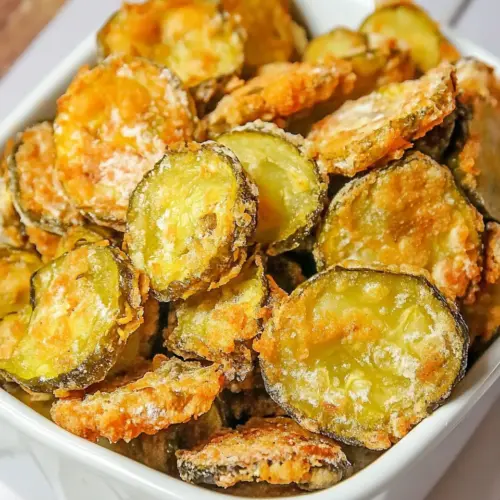
Air Fryer Fried Pickles
Air Fryer Fried Pickles deliver crispy, tangy bites with a seasoned flour crust that browns beautifully in an air fryer. This easy snack is savory, slightly smoky, and perfect for parties or a quick late night treat. With minimal oil and simple pantry spices, it makes a fast, crowd pleasing option you will want to make again and again.
Equipment
- Air Fryer
- Paper towels
- Medium Bowl
Ingredients
- 2 cups sliced dill pickles Provide a crisp, tangy base and deliver the characteristic briny crunch that defines fried pickle snacks; sliced dill pickles contribute moisture that helps batter adhere and adds a bright contrast to fried seasonings. Patting them dry before coating reduces excess liquid so oil now crisps the exterior instead of steaming it, yielding a crunchy bite. Choose firm slices to maintain texture through the air fryer cycle.
- 1 cup all-purpose flour Create a dry coating and binding layer that turns into a golden, crispy crust when air fried; all-purpose flour adds structure and lightness to the breading mix. Use even dredging to ensure each pickle slice receives consistent coverage for uniform browning. Adjust flour amount slightly if coating seems too thin or too thick to maintain texture balance.
- 1 tablespoon garlic powder Deliver savory depth and a mild aromatic garlic note that complements the pickles' acidity; garlic powder disperses evenly through the flour for balanced flavor. Incorporate it into the dry mix so each piece picks up subtle pungency without fresh garlic's moisture. Use measured amounts to avoid overpowering the other spices.
- 1 tablespoon onion powder Contribute a sweet, mellow onion flavor and help round out the spice blend; onion powder offers background savory tones that enhance overall seasoning. Mixing it into the flour ensures consistent distribution so every slice tastes uniform. Opt for finely ground powder to avoid gritty texture in the coating.
- 1 teaspoon smoked paprika Add a warm, smoky complexity and a subtle color boost to the breading; smoked paprika brings depth without adding heat. Sprinkle it into the dry mix to balance the tang of the pickles and the sharpness of other spices. Use smoked paprika for a nuanced roasted flavor profile.
- 1 tablespoon Cajun spice Provide bold, zesty seasoning with regional spice complexity that elevates the overall flavor; Cajun spice introduces savory, peppery, and aromatic elements to the crust. Blend it thoroughly with the flour so the coating has consistent seasoning and a pronounced savory kick. Adjust quantity to control the mixture's intensity.
- 1/8 teaspoon cayenne pepper Introduce sharp heat to brighten the seasoning blend and add a light, lingering spice on the finish; cayenne pepper increases warmth without altering texture. Use sparingly when combined with Cajun spice to achieve balanced heat that complements the tangy pickles. Measure carefully to avoid overwhelming other flavors.
- Olive oil Help promote even browning and create a crisp outer texture when applied lightly; olive oil assists in conducting heat across the coating during air frying. Toss or brush coated pickles with a small amount to encourage golden color while maintaining a lighter fry compared to deep frying. Choose a neutral or mild-flavored olive oil to avoid imparting strong fruity notes.
Instructions
- Preheat air fryer to 400 degrees F.: Warm, hot air is essential for rapid surface browning that produces crunch while keeping the interior tangy. You should smell a faint toasty hum from the unit as it reaches temperature, which tells you the circulation is ready. If you skip preheating, the coating may absorb oil and cook unevenly, resulting in a limp finish. A common mistake is overcrowding the basket before it reaches the target heat, which reduces crisping power.
- Drain sliced pickles on paper towels.: After blotting, the surface should feel slightly tacky but not wet, and you may see tiny beads of brine. Drying prevents steam from building under the coating, which would make the crust soggy. The why here is simple, moisture is the enemy of crispness. People often underestimate how much water comes from jarred pickles , so be patient and press gently to remove excess liquid.
- In a medium bowl, mix together flour and spices.: As you whisk, the aroma of garlic, onion, and smoked paprika will bloom, signaling an even distribution. This dry blend ensures each slice gets balanced seasoning without pockets of spice. If you rush this step, you may end up with clumps of seasoning that burn in the air fryer and create bitter spots. Sifting or stirring thoroughly prevents uneven flavor and texture.
- Coat sliced pickles with the flour mixture and arrange them in a single layer in the air fryer. Work in batches if needed.: When the flour clings evenly, the slices will look matte rather than patchy. Lay them with space around each piece so hot air circulates freely and the surfaces crisp uniformly. Crowding traps steam and yields soft centers, which is the most common error at this stage. If you notice flour falling off, gently press the coating so it adheres better before cooking.
- Spray with a cooking spray or drizzle with a bit of olive oil.: Lightly misting or drizzling adds the fat needed for browning, and you should see a faint sheen on the coating. The oil helps Maillard reactions create golden color and that irresistible crunch. Applying too much will make the pieces greasy rather than crisp, so use a measured touch. If you only have a bottle, use a spoon to distribute small amounts and spread it thinly with your fingers or tongs.
- Cook for 10 minutes then flip them over and cook for an additional 5 minutes.: In the first cook, you will hear a soft crisping sound, and the edges will start to turn golden. After flipping, the other side should mirror that color and the aroma will shift toward toasted spices and browned starch. This two stage approach gives even color on both sides while preventing burning. A common pitfall is leaving the basket closed without checking, which can allow some pieces to go from golden to overly dark quickly. If any pieces seem to brown fast, reduce the final cook time by a minute or two and check more frequently.
Notes
- Pat dry before coating: Ensure the pickles are well dried so the flour clings instead of turning pasty.
- Work in small batches: Overcrowding reduces airflow and produces soggy results, so cook in shifts for even crispness.
- Use a light spray of oil: A thin mist or a teaspoon spread evenly browns the coating without making it greasy.
- Press coating gently: After dredging, press the flour mix onto the slices to improve adhesion and reduce flaking during cooking.
- Watch the final minutes: The difference between golden and burned can be just a minute, so check often toward the end of the cook time.
- Try adding cornstarch: Mixing a little cornstarch with the flour helps create an extra-crispy crust as noted in the recipe notes.