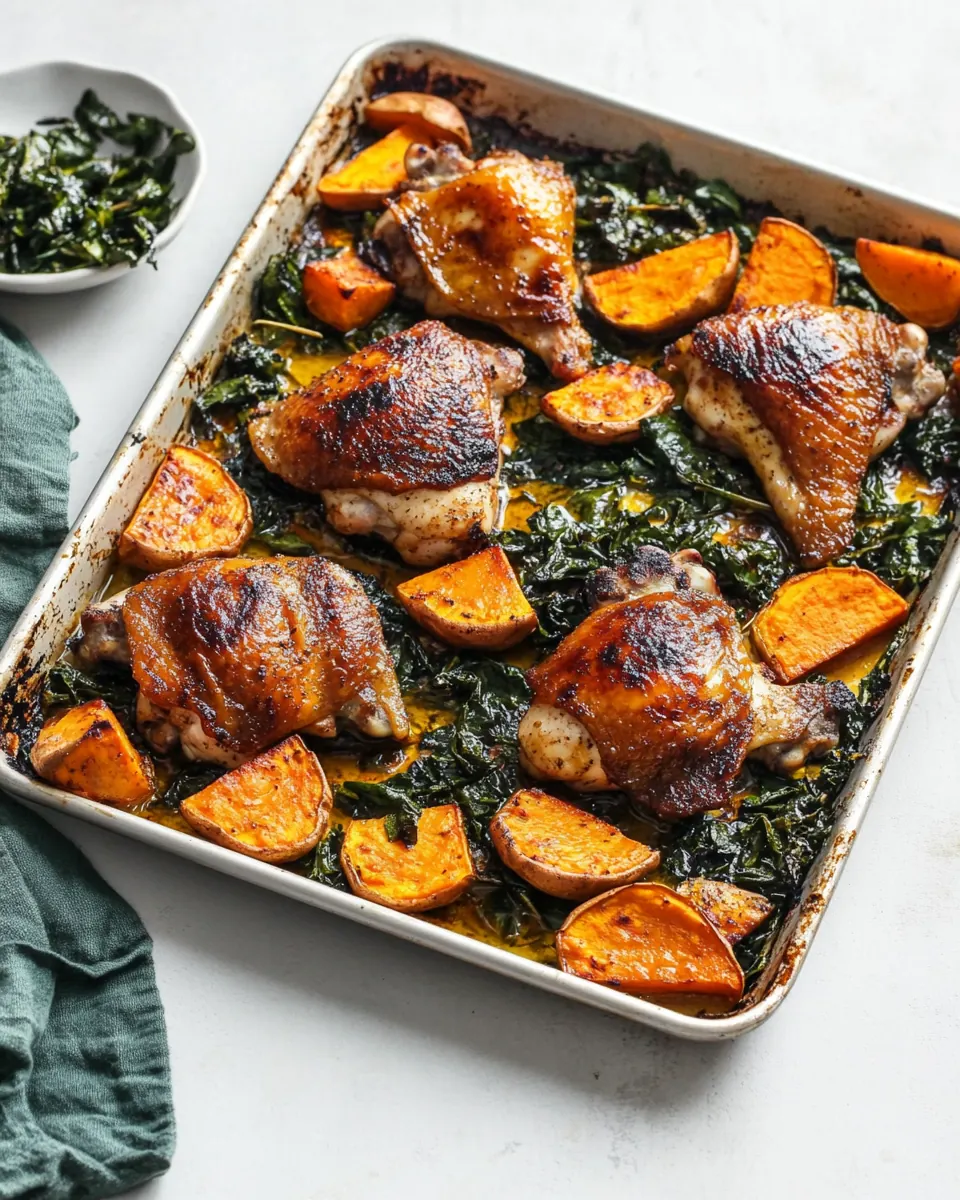
Spicy Sheet Pan Chicken Thighs and Sweet Potatoes
Spicy Sheet Pan Chicken Thighs and Sweet Potatoes came into my weeknight rotation the night I needed something bold and unfussy after a long day in the kitchen teaching a class on layering flavors. I remember pulling a sheet pan from the oven and feeling proud that a dish this unpretentious could make the whole house smell like comfort and heat at once. I had grocery bags on the counter, a tired mind, and a craving for something hearty that would not demand babysitting, and this recipe answered with smoky, tangy, and lightly sweet notes that felt like a small celebration.
That evening I tucked the sweet potatoes among wedges of red onion, sprinkled minced garlic and fresh grated ginger, and nestled in bone on, skin on chicken pieces. The Thai red curry paste I used was the secret handshake here, turning simple roasted vegetables and meat into a coherent melody of flavors. I also tossed raw chopped kale in the remaining dressing halfway through roasting so it would wilt, crisp up at the edges, and pick up every last bit of sauce from the pan.
What keeps me coming back is how forgiving this roast is. I can scale it up for friends, or pull it together solo and still get the juicy, caramelized skin I long for. The dish is rustic enough to serve straight from the sheet pan, the kind of meal where everyone digs in, forks clacking against the rim while conversation flows. Over time I learned simple tweaks to coax more caramel from the sweet potatoes and deeper color on the chicken skin, and those small adjustments make the dinner feel deliberate without adding effort.
Recipe Snapshot
60 mins
10 mins
50 mins
Medium
450 kcal
American
Paleo, Gluten-Free
Dinner
Sheet pan, Mixing bowl, Measuring spoons
What Sets This Spicy Sheet Pan Chicken Thighs and Sweet Potatoes Apart
Roasting That Sings
I love how roasting at a fairly high temperature transforms both vegetables and meat without fuss. The hot oven encourages the sugars in the sweet potatoes to caramelize, giving a sweet savory contrast to the spiced marinade on the chicken. You get crispy edges and juicy centers all at once, which makes the whole plate sing.
One Pan, Less Clean Up
One of my favorite things about Spicy Sheet Pan Chicken Thighs and Sweet Potatoes is the minimal cleanup. Everything cooks together so the pan captures those fond bits, which become part of the dish. I find myself smiling at how a single pan can produce so much flavor, and I never miss extra pots.
Bold Flavor From Little Work
The curry paste, lemon juice, and a touch of maple syrup combine into a quick marinade that delivers layers of flavor with almost no effort. I appreciate recipes that respect my time but still give me complexity on the plate. This balance makes it perfect for busy evenings when I still want to impress.
Flexible and Friendly
We can swap pieces or double the quantities for guests, and the technique remains the same. I often adjust textures by cutting the sweet potatoes a touch thicker for a heartier bite, or thinner if I want more caramelized edges. That flexibility means the recipe fits weeknight routines and casual dinner parties equally well.
Healthy and Satisfying
Finally, I adore how this dish pairs protein, starchy veg, and greens in a single pan. The public often overlooks how simple it is to get a complete meal with bright flavors and nourishing ingredients. It feels like home food with an adventurous twist brought by the red curry and ginger.
Ingredient List for Spicy Sheet Pan Chicken Thighs and Sweet Potatoes
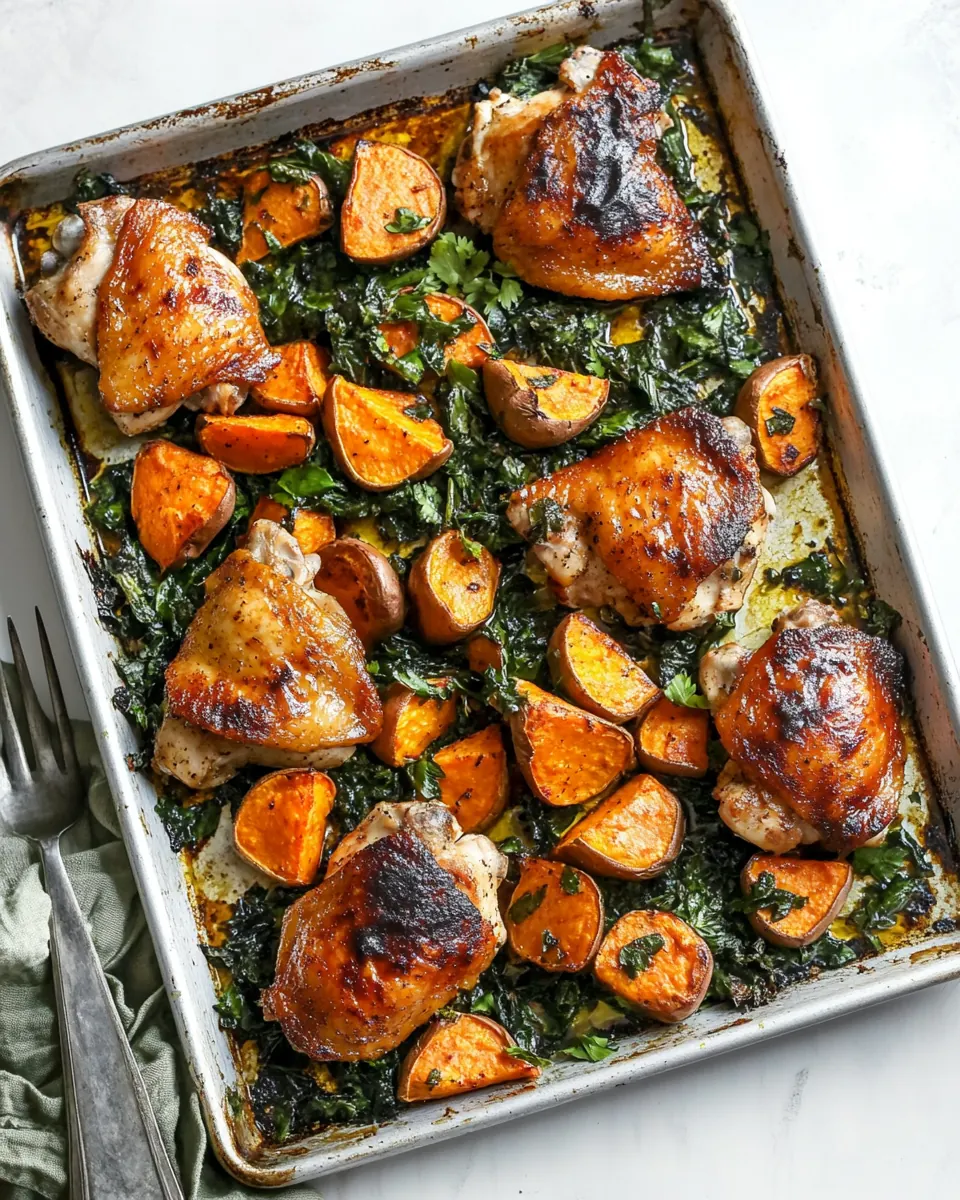
These ingredients are chosen to work in concert for texture and flavor. The key players are the sturdy sweet potatoes that caramelize, the aromatic trio of garlic, ginger, and red onion that build savory depth, and the umami packed red curry paste that ties the whole pan together. The chicken contributes richness and juicy mouthfeel while the kale adds a green counterpoint that wilts into the sauce.
- 1 pounds sweet potatoes about 2 medium, cut into wedges: Peel and cube into wedges to provide a sweet, starchy base that roasts crisply and caramelizes at the edges, balancing spicy and savory flavors in the sheet pan.
- 1 medium red onion cut into wedges: Slice into wedges to add a mild, sharp bite that softens and caramelizes when roasted, contributing color and aromatic sweetness to the dish.
- 2 large garlic cloves minced: Mince finely to release pungent, savory heat that infuses the oil and sauce, boosting depth and aromatic complexity throughout the chicken and vegetables.
- 1 inch knob fresh ginger peeled and minced (about 1 tablespoon): Peel and mince into small pieces to lend bright, peppery warmth and a citrusy bite that complements the curry paste and balances sweetness.
- Olive oil: Use to coat vegetables and chicken for even roasting and to act as a medium for dispersing spices and aromatics, aiding caramelization and mouthfeel.
- Sea salt: Season generously to enhance and balance flavors, helping to draw out moisture for better caramelization while uplifting both savory and sweet components.
- 2 teaspoons Thai red curry paste see note: Spoon and stir into the oil and aromatics to contribute concentrated, layered heat and fragrant red chili and spice notes that define the dish's profile.
- 2 tablespoons fresh lemon juice: Squeeze fresh to add bright acidity that cuts through richness, lifts flavors, and helps create a balanced glaze when combined with the maple and curry paste.
- 1 tablespoon maple syrup: Drizzle to introduce rounded sweetness and a glossy finish, helping to caramelize edges and mellow the curry's heat for a harmonious glaze.
- 1 whole chicken separated into parts (see note): Break down into parts to allow even cooking and maximum flavor exposure; skin-on pieces roast to crispness while staying juicy and absorbing marinades.
- 1 bunch Lacinato Tuscan or Dinosaur kale, thick stems removed and roughly chopped: Chop roughly after removing thick stems to provide a tender, earthy green that wilts when roasted or tossed with hot pan juices, adding color and nutritional balance.
Cooking Instructions for Spicy Sheet Pan Chicken Thighs and Sweet Potatoes
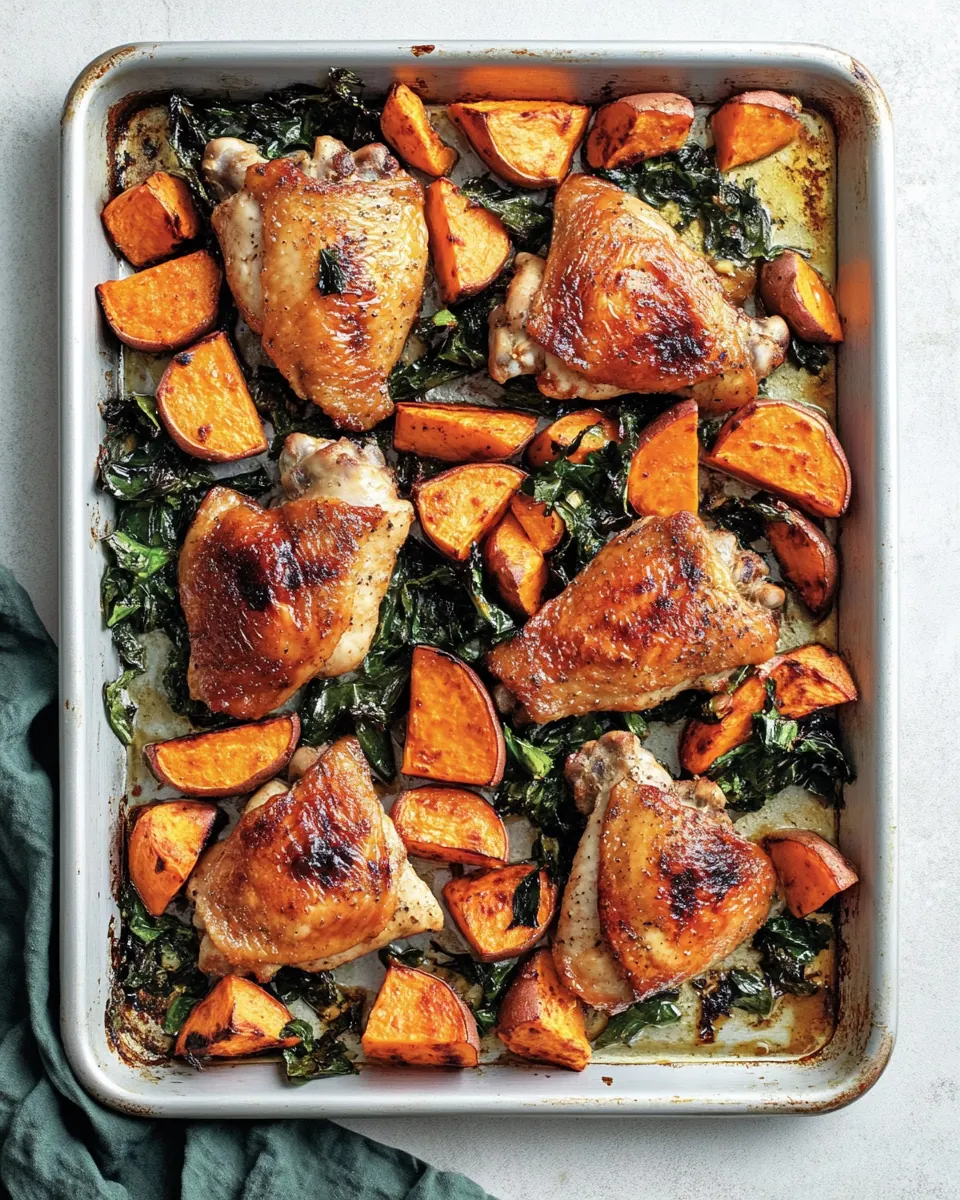
The following steps guide you through a straightforward roast that balances charred edges and juicy meat. Read each step before starting, and keep a close eye on the pan toward the end of cooking to catch those golden cues. This method rewards patience and attention to sensory signals.
- Preheat the oven to 425 degrees F.: As the oven warms you will notice a dry, hot air that promotes browning when the food hits the sheet pan; this high temperature is critical because it encourages rapid caramelization of the sweet potatoes and crisping of the chicken skin. The why here is simple, high heat converts sugars on the surface into browned, flavorful compounds quickly, sealing juices inside the meat. A common mistake is skipping full preheating, which leads to pale, leathery skin and steamed vegetables rather than roasted ones. Listen for the oven's cycle settling; the steady hum signals it is ready, and preheating for at least 10 to 15 minutes ensures consistent heat.
- On a large rimmed baking sheet, toss the sweet potatoes, red onion, garlic and ginger with 1 tablespoon of olive oil and 1/2 teaspoon salt. Arrange in an even layer on the sheet pan.: You will feel the oil lubricating each piece as you toss, making the aromatics glisten and smell brighter; the thin film of oil helps the surfaces brown and prevents sticking. Proper spacing matters, because crammed vegetables steam instead of roast, so give each wedge a little room to breathe. If pieces touch, they will still cook, but you will lose some crispness. A frequent oversight is unevenly sized pieces; aim for uniform wedges so they finish at the same moment. The visual cue you're after is a single layer with small gaps between pieces, not a pile.
- In a small mixing bowl or one-cup measure, whisk together the curry paste, lemon juice, maple syrup, 2 tablespoons olive oil and 1/2 teaspoon salt until combined.: As you whisk, the mixture should emulsify into a glossy, slightly thick dressing with flecks of paste visible. The aroma will brighten as the lemon cuts through the paste; this balance is what makes the sauce cling to the chicken . The reason for whisking is to combine oil and acid so they coat evenly, which helps with even browning and flavor distribution. Overmixing is not an issue here, but under-mixing leaves pockets of paste which can scorch in hot spots. The texture you want is smooth and spreadable, not watery.
- Arrange the chicken pieces in an even layer on top of the vegetables. Drizzle the chicken with half the red curry mixture and using your hands (or a brush for the squeamish) rub the marinade all over the meat. Transfer the sheet pan to the oven and roast for 40 minutes, or until the skin is beginning to brown and the chicken has released some juicy goodness.: As the pan enters the oven you may hear a faint hiss as the oil hits the hot sheet, and shortly after the kitchen will fill with fragrant spice. The initial roast sets the Maillard reactions in motion, creating color and flavor on the chicken skin; this is essential for the savory, slightly crisp exterior. Use your senses, watching for the skin to darken and listening for gentle popping as fat renders; that's a sign of progress. A typical error is turning the pan too often, which interrupts browning; avoid opening the oven repeatedly. If juices run clear and the internal texture yields slightly when poked, that indicates readiness for the next step.
- While the chicken roasts, prep the kale. In a large mixing bowl, combine the chopped leaves with the remaining red curry mixture. Toss until fully coated.: Handling the kale with the dressing softens the leaves and tames bitterness, while the oil helps the leaves crisp slightly in the oven later. The sensory signal here is the leaves glossy and fragrant, no longer dry; they should feel supple but not soggy. The reason we dress the kale now is so the flavors have a chance to meld and for the acid to start breaking down the fibrous texture. Overdressing can make the kale limp before it roasts, so measure thoughtfully and toss just until coated.
- Remove the chicken from the oven and nestle the marinated kale among the other vegetables (if it covers the chicken, no worries). Return to the oven and cook for another 10 minutes, or until the kale is wilted and the top leaves are beginning to crisp.: When you pull the pan back into the heat you will see steam lift and the aromas intensify; the kale will soften and develop slightly crisped edges where it contacts the hot metal. This final blast of heat essentially finishes the vegetables while the kale absorbs concentrated pan flavors. The why: adding the kale late protects its texture, preserving some chew while still allowing edge crisping. A frequent slip is adding it too early, which can turn it to mush; this timing protects its bright flavor and keeps it interesting on the plate.
- Serve the chicken straight from the pan for a rustic presentation. Coconut rice makes a nice accompaniment, but is not necessary.: The final scene is glossy pieces of chicken with browned skin atop caramelized wedges and flecks of crisped kale . Serving from the sheet pan keeps those fond-rich juices accessible and makes plating effortless. The sensory payoff is a chorus of textures, from crispy edges to tender meat, and the smell of warm spices lingering in the air. A common mistake is letting the chicken rest too briefly; a short resting period of a few minutes helps redistribute juices without cooling the pan too much.
Change It Up
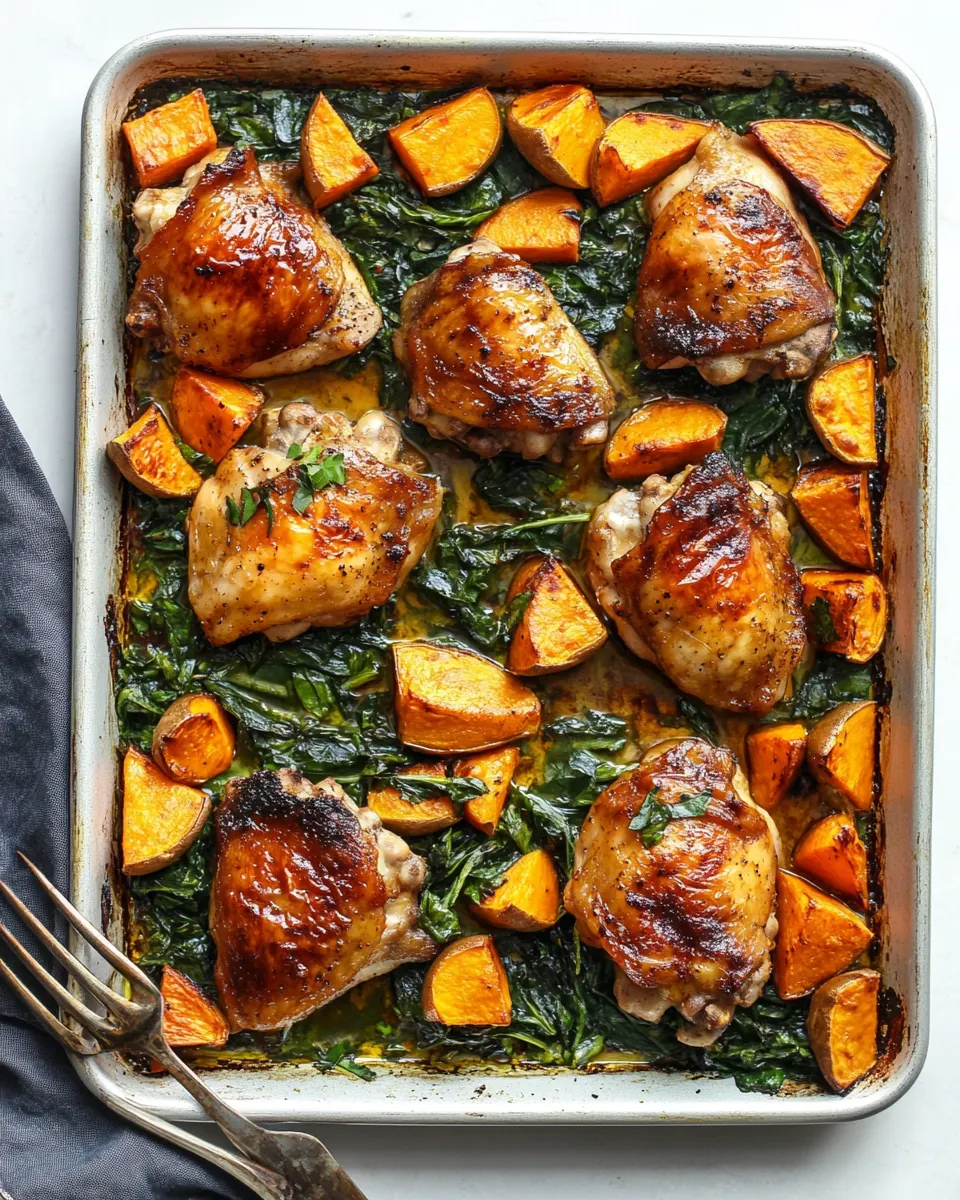
If you want to experiment, there are simple swaps and adjustments that keep the spirit of the recipe while changing the final texture or heat level. Below are actionable tips you can follow to adapt the dish for different tastes and occasions.
- Swap the curry paste: Try Moroccan harissa or sambal olek in the same quantity for a different spice profile, noting that heat and salt levels may vary, so taste and adjust as needed.
- Make it Whole30 friendly: Omit the maple syrup and choose a compliant red curry paste to keep the bright flavors without added sweeteners.
- Adjust sweetness: If you want more caramelization on the sweet potatoes, increase the maple syrup slightly and cut the wedges a bit smaller so more surface area browns.
- Control the heat: Reduce the amount of curry paste by half if you prefer milder spice, or add an extra teaspoon for guests who love heat.
- Use different greens: If you cannot find Lacinato kale, baby spinach or chard can be added at the same late stage, though cooking times may vary slightly.
- Double roast for crispness: After the final 10 minutes, switch the oven to broil for a minute or two to intensify browning, watching closely to avoid burning.
What Complements This Spicy Sheet Pan Chicken Thighs and Sweet Potatoes
This dish pairs well with simple sides that let the spicy, sweet, and savory flavors shine. Think neutral starches or light, cooling salads to balance the boldness on the plate. Below are several serving ideas, occasions, and storage tips arranged so you can choose what fits your meal.
- Serve with coconut rice: The gentle sweetness and creaminess of coconut rice complements the curry notes and soaks up pan juices beautifully.
- Light green salad: A crisp salad with a simple lemon vinaigrette refreshes the palate when the chicken and sweet potatoes are richly spiced.
- Casual dinners: This recipe works well for weeknight family meals where easy cleanup and bold flavors are appreciated.
- Entertaining: Roast on two pans for a crowd and serve family style straight from the oven for a relaxed party vibe.
- Storage: Refrigerate leftovers in an airtight container for up to four days; reheat in a 350 degree F oven to restore crispness, or enjoy cold in a salad the next day.
- Seasonal pairing: The warmth of the spices and roasted sweet potatoes make this ideal for cooler months like fall, when hearty, oven driven meals feel right.
FAQ
Conclusion
This recipe stands out because it turns a single sheet pan into a layered, flavorful dinner that balances sweet, spicy, and savory notes. Try it the next time you want a hands off meal that still feels special, with caramelized sweet potatoes, crispy chicken skin, and a bright, spiced finish. It’s approachable, flexible, and ideal for busy evenings when you want a satisfying plate without fuss. Share it family style or keep it for yourself, either way it delivers comforting, bold flavors with minimal cleanup.
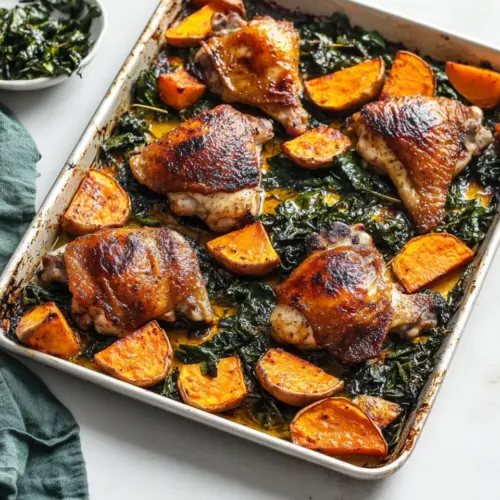
Spicy Sheet Pan Chicken Thighs and Sweet Potatoes
Equipment
- Sheet Pan
- Mixing Bowl
- Measuring Spoons
Ingredients
- 1 pounds sweet potatoes about 2 medium, cut into wedges Peel and cube into wedges to provide a sweet, starchy base that roasts crisply and caramelizes at the edges, balancing spicy and savory flavors in the sheet pan.
- 1 medium red onion cut into wedges Slice into wedges to add a mild, sharp bite that softens and caramelizes when roasted, contributing color and aromatic sweetness to the dish.
- 2 large garlic cloves minced Mince finely to release pungent, savory heat that infuses the oil and sauce, boosting depth and aromatic complexity throughout the chicken and vegetables.
- 1 -inch knob fresh ginger peeled and minced (about 1 tablespoon) Peel and mince into small pieces to lend bright, peppery warmth and a citrusy bite that complements the curry paste and balances sweetness.
- Olive oil Use to coat vegetables and chicken for even roasting and to act as a medium for dispersing spices and aromatics, aiding caramelization and mouthfeel.
- Sea salt Season generously to enhance and balance flavors, helping to draw out moisture for better caramelization while uplifting both savory and sweet components.
- 2 teaspoons Thai red curry paste see note Spoon and stir into the oil and aromatics to contribute concentrated, layered heat and fragrant red chili and spice notes that define the dish's profile.
- 2 tablespoons fresh lemon juice Squeeze fresh to add bright acidity that cuts through richness, lifts flavors, and helps create a balanced glaze when combined with the maple and curry paste.
- 1 tablespoon maple syrup Drizzle to introduce rounded sweetness and a glossy finish, helping to caramelize edges and mellow the curry's heat for a harmonious glaze.
- 1 whole chicken separated into parts (see note) Break down into parts to allow even cooking and maximum flavor exposure; skin-on pieces roast to crispness while staying juicy and absorbing marinades.
- 1 bunch Lacinato Tuscan or Dinosaur kale, thick stems removed and roughly chopped Chop roughly after removing thick stems to provide a tender, earthy green that wilts when roasted or tossed with hot pan juices, adding color and nutritional balance.
Instructions
- Preheat the oven to 425 degrees F.: As the oven warms you will notice a dry, hot air that promotes browning when the food hits the sheet pan; this high temperature is critical because it encourages rapid caramelization of the sweet potatoes and crisping of the chicken skin. The why here is simple, high heat converts sugars on the surface into browned, flavorful compounds quickly, sealing juices inside the meat. A common mistake is skipping full preheating, which leads to pale, leathery skin and steamed vegetables rather than roasted ones. Listen for the oven's cycle settling; the steady hum signals it is ready, and preheating for at least 10 to 15 minutes ensures consistent heat.
- On a large rimmed baking sheet, toss the sweet potatoes, red onion, garlic and ginger with 1 tablespoon of olive oil and 1/2 teaspoon salt. Arrange in an even layer on the sheet pan.: You will feel the oil lubricating each piece as you toss, making the aromatics glisten and smell brighter; the thin film of oil helps the surfaces brown and prevents sticking. Proper spacing matters, because crammed vegetables steam instead of roast, so give each wedge a little room to breathe. If pieces touch, they will still cook, but you will lose some crispness. A frequent oversight is unevenly sized pieces; aim for uniform wedges so they finish at the same moment. The visual cue you're after is a single layer with small gaps between pieces, not a pile.
- In a small mixing bowl or one-cup measure, whisk together the curry paste, lemon juice, maple syrup, 2 tablespoons olive oil and 1/2 teaspoon salt until combined.: As you whisk, the mixture should emulsify into a glossy, slightly thick dressing with flecks of paste visible. The aroma will brighten as the lemon cuts through the paste; this balance is what makes the sauce cling to the chicken . The reason for whisking is to combine oil and acid so they coat evenly, which helps with even browning and flavor distribution. Overmixing is not an issue here, but under-mixing leaves pockets of paste which can scorch in hot spots. The texture you want is smooth and spreadable, not watery.
- Arrange the chicken pieces in an even layer on top of the vegetables. Drizzle the chicken with half the red curry mixture and using your hands (or a brush for the squeamish) rub the marinade all over the meat. Transfer the sheet pan to the oven and roast for 40 minutes, or until the skin is beginning to brown and the chicken has released some juicy goodness.: As the pan enters the oven you may hear a faint hiss as the oil hits the hot sheet, and shortly after the kitchen will fill with fragrant spice. The initial roast sets the Maillard reactions in motion, creating color and flavor on the chicken skin; this is essential for the savory, slightly crisp exterior. Use your senses, watching for the skin to darken and listening for gentle popping as fat renders; that's a sign of progress. A typical error is turning the pan too often, which interrupts browning; avoid opening the oven repeatedly. If juices run clear and the internal texture yields slightly when poked, that indicates readiness for the next step.
- While the chicken roasts, prep the kale. In a large mixing bowl, combine the chopped leaves with the remaining red curry mixture. Toss until fully coated.: Handling the kale with the dressing softens the leaves and tames bitterness, while the oil helps the leaves crisp slightly in the oven later. The sensory signal here is the leaves glossy and fragrant, no longer dry; they should feel supple but not soggy. The reason we dress the kale now is so the flavors have a chance to meld and for the acid to start breaking down the fibrous texture. Overdressing can make the kale limp before it roasts, so measure thoughtfully and toss just until coated.
- Remove the chicken from the oven and nestle the marinated kale among the other vegetables (if it covers the chicken, no worries). Return to the oven and cook for another 10 minutes, or until the kale is wilted and the top leaves are beginning to crisp.: When you pull the pan back into the heat you will see steam lift and the aromas intensify; the kale will soften and develop slightly crisped edges where it contacts the hot metal. This final blast of heat essentially finishes the vegetables while the kale absorbs concentrated pan flavors. The why: adding the kale late protects its texture, preserving some chew while still allowing edge crisping. A frequent slip is adding it too early, which can turn it to mush; this timing protects its bright flavor and keeps it interesting on the plate.
- Serve the chicken straight from the pan for a rustic presentation. Coconut rice makes a nice accompaniment, but is not necessary.: The final scene is glossy pieces of chicken with browned skin atop caramelized wedges and flecks of crisped kale . Serving from the sheet pan keeps those fond-rich juices accessible and makes plating effortless. The sensory payoff is a chorus of textures, from crispy edges to tender meat, and the smell of warm spices lingering in the air. A common mistake is letting the chicken rest too briefly; a short resting period of a few minutes helps redistribute juices without cooling the pan too much.
Notes
- Swap the curry paste: Try Moroccan harissa or sambal olek in the same quantity for a different spice profile, noting that heat and salt levels may vary, so taste and adjust as needed.
- Make it Whole30 friendly: Omit the maple syrup and choose a compliant red curry paste to keep the bright flavors without added sweeteners.
- Adjust sweetness: If you want more caramelization on the sweet potatoes, increase the maple syrup slightly and cut the wedges a bit smaller so more surface area browns.
- Control the heat: Reduce the amount of curry paste by half if you prefer milder spice, or add an extra teaspoon for guests who love heat.
- Use different greens: If you cannot find Lacinato kale, baby spinach or chard can be added at the same late stage, though cooking times may vary slightly.
- Double roast for crispness: After the final 10 minutes, switch the oven to broil for a minute or two to intensify browning, watching closely to avoid burning.
