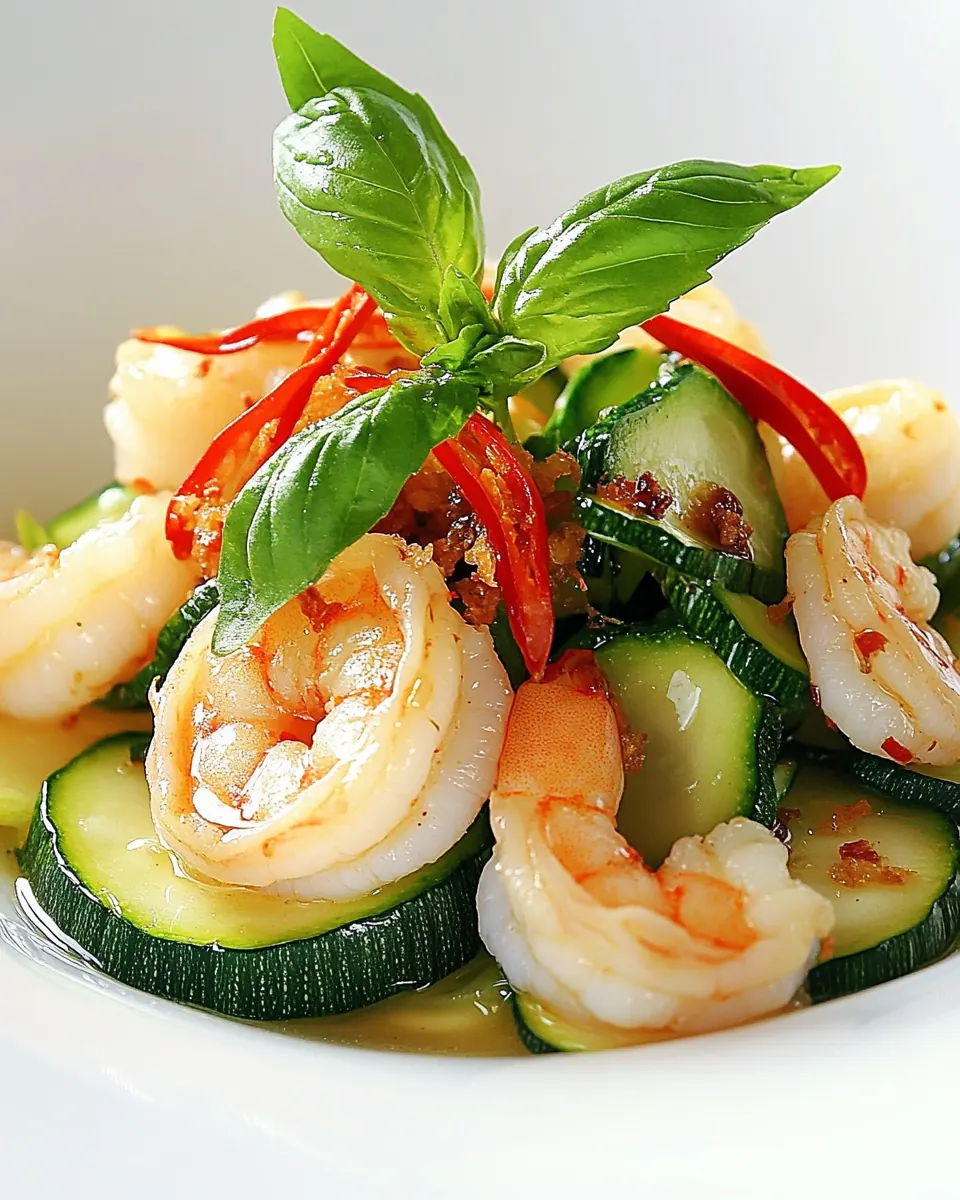
Shrimp and Zucchini Stir Fry
Shrimp and Zucchini Stir Fry is the kind of meal I reach for on hot summer evenings when I want something fast, bright, and utterly satisfying. The first time I tossed sweet shrimp with tender, slightly crisp zucchini and finished it with shards of crackling, fried basil, I remember how the kitchen filled with the scent of garlic and toasted sesame, and how everyone at the table kept stealing bites while the dish was still sizzling.
That night I learned a few simple truths about quick cooking. Keeping the shrimp dry and giving each piece room to sear makes all the difference. Preparing the crispy basil first, while the shrimp brines, frees up time and keeps the rhythm calm instead of frantic. I love how the bright green of the zucchini and the deep, glossy sheen of the stir sauce make a humble pan feel celebratory. Each ingredient plays a tidy role, and because this is mostly pan work, cleanup is kind to my after-dinner energy levels.
Recipe Snapshot
22 mins
15 mins
7 mins
Easy
250 kcal
Asian
Vegan, Gluten-Free
Dinner
Wok or large saute pan, Medium bowl, Paper towels, Tongs or spatula
Why This Shrimp and Zucchini Stir Fry Is a Winner
Fast weekday magic
I adore how Shrimp and Zucchini Stir Fry transforms a tired weeknight into something lively in under half an hour. The shrimp cooks in just moments, and the crisp tender zucchini keeps the dish feeling fresh rather than heavy. For busy nights when you want an easy weeknight dinner, this comes together with minimal fuss and maximum payoff.
Texture contrast that wows
The secret joy here is the contrast between the plump, juicy shrimp, the snappy zucchini, and the shattery, almost brittle fried basil. I love tossing everything at the last moment so the crispy leaves remain intact on top. That crunchy accent turns a simple stir fry into something memorable, and it makes every bite feel layered.
Bright, balanced flavors
This recipe balances salt, a touch of sweetness, and an umami note from the light soy sauce. A whisper of sesame oil links the flavors with its toasty aroma. I always appreciate a dish that tastes complex without requiring dozens of ingredients, and this one proves you can get depth from a handful of pantry staples.
Minimal equipment, maximal reward
You don’t need a fancy setup to nail this. A wok or large saute pan, a bowl for brining, and tongs or a spatula are all it takes. Because the technique is straightforward, it’s a great recipe to teach to a friend or to pull out when you want a showstopper that won’t steal your evening.
Flexible and seasonal
I reach for this recipe in summer when zucchinis are abundant and herbs are vibrant. It’s flexible enough to slot into a quick lunch, light dinner, or an informal summer gathering. The flavors feel clean and seasonal, which is why I come back to it again and again.
Everything You Need for Shrimp and Zucchini Stir Fry
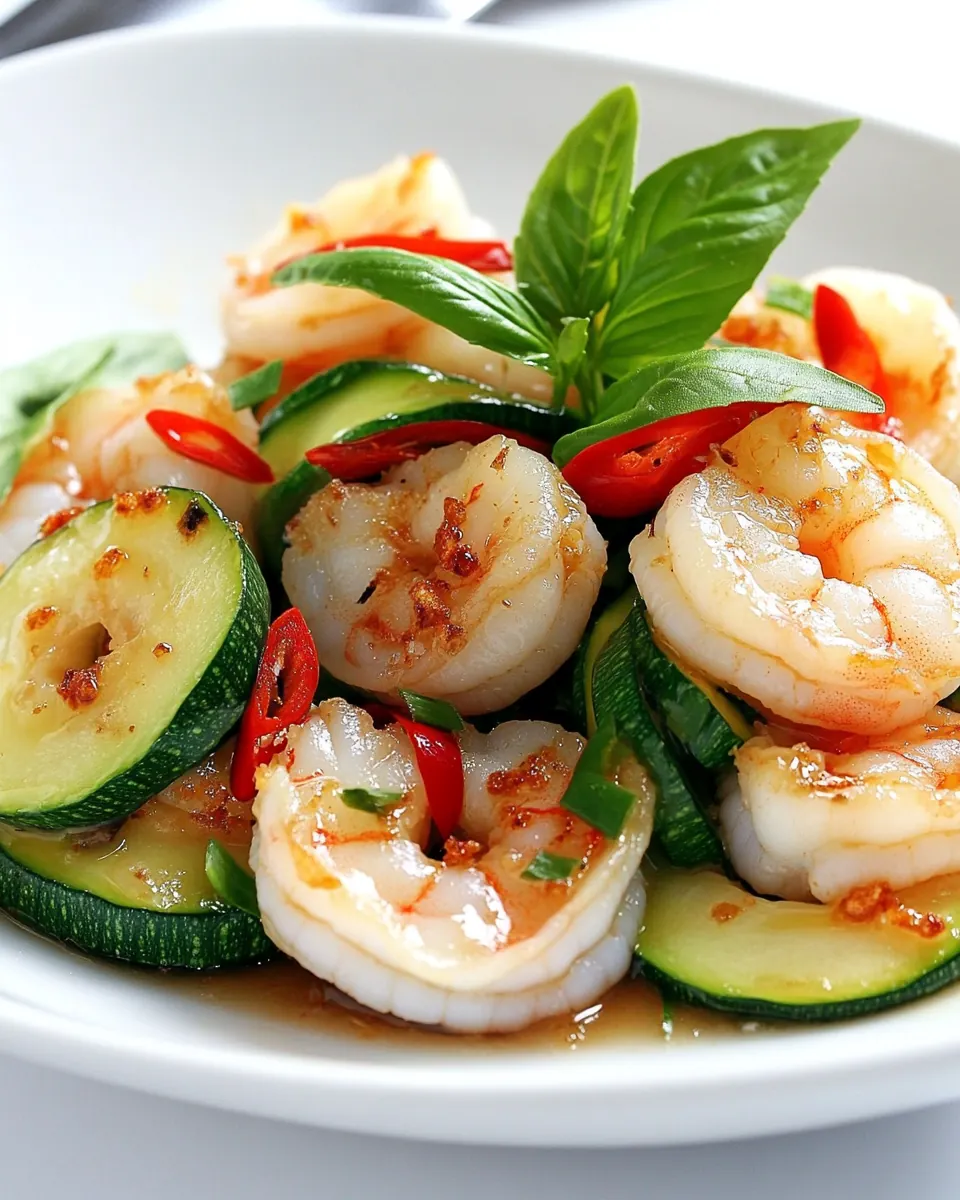
These ingredients are all about harmony and speed. The key players, shrimp and zucchini, carry texture and substance, while modest seasonings and oil build a quick, glossy sauce. Crisp fried basil provides the dramatic finish, and small touches like cornstarch and sesame oil help with mouthfeel and flavor binding.
- 1/2 pounds shrimp shelled, deveined: Provide tender, briny protein that cooks quickly and absorbs the stir-fry flavors; pat dry before cooking to ensure proper searing and prevent steaming. Season lightly and add near the end of cooking to avoid overcooking and maintain a firm, succulent texture.
- 1 1/4 teaspoons salt (kosher or sea salt) divided: Enhance overall seasoning balance and aid in drawing out moisture from vegetables and shrimp; divide use between initial seasoning and finishing taste adjustment. Use kosher or sea salt for a clean flavor and dissolve it when added to sauces or marinades.
- 1/2 teaspoon cornstarch: Lightly thicken marinades or sauces and help the salt adhere to the shrimp; dissolve in a small amount of liquid before tossing with seafood. Provide a glossy finish to the stir-fry sauce when combined with heat.
- 1/4 teaspoon Asian sesame oil: Impart a concentrated nutty aroma in small amounts to elevate the dish; add sparingly as a finishing touch to avoid overpowering other flavors. Combine with other oils during cooking for subtle sesame character.
- 2 tablespoons cooking oil like canola, peanut, vegetable: Create the high-heat cooking medium for stir-frying, allowing quick searing and even browning; choose neutral oils for a clean flavor that won’t compete with aromatics. Use enough to coat the wok or pan to prevent sticking and promote rapid cooking.
- 1 fresh chili pepper sliced: Add vibrant heat and aromatic fruitiness when thinly sliced; include seeds for extra spiciness or remove them for milder flavor. Sauté briefly to mellow sharpness while still retaining color and bite.
- 2 teaspoons minced garlic: Provide a pungent, garlicky backbone to the stir-fry; mince finely so it releases flavor quickly and evenly during high-heat cooking. Add early in the oil to infuse the cooking fat, taking care not to burn it to avoid bitterness.
- 2 cups sliced zucchini about 2 medium: Contribute tender-crisp vegetable texture and mild flavor that soaks up sauces; slice uniformly for even cooking and quick stir-frying. Cook briefly until just tender to retain slight bite and fresh color.
- 2 teaspoons light soy sauce: Introduce savory umami depth to the sauce; add during cooking to meld with other seasonings and enhance overall flavor complexity. Use light soy sauce for a subtle saltiness without darkening the dish excessively.
- 1/4 teaspoons sugar: Balance savory and salty elements with a touch of sweetness for a rounded flavor profile; dissolve into the sauce to harmonize acidic or spicy components. Use sparingly to avoid cloying taste while smoothing harsh edges.
- 1/2 teaspoon Asian sesame oil: Bring a toasty, aromatic accent that complements basil and sesame flavors; add a small amount to finish the dish to preserve its fragrance. Layer into the sauce or drizzle at the end for a pronounced sesame note without overwhelming other ingredients.
- 1 cup fresh basil leaves: Introduce fresh, herbaceous brightness and a peppery undertone that contrasts cooked elements; add toward the end of cooking or as a garnish to preserve leaves’ aroma. Tear or chiffonade lightly to release oils and distribute flavor evenly.
- 4 tablespoons cooking oil like canola, peanut or vegetable: Provide additional neutral oil for finishing or increasing cooking capacity in the pan; use to adjust frying temperature and prevent overcrowding. Add as needed to maintain high heat and ensure quick, even cooking throughout the stir-fry.
Instructions for Shrimp and Zucchini Stir Fry
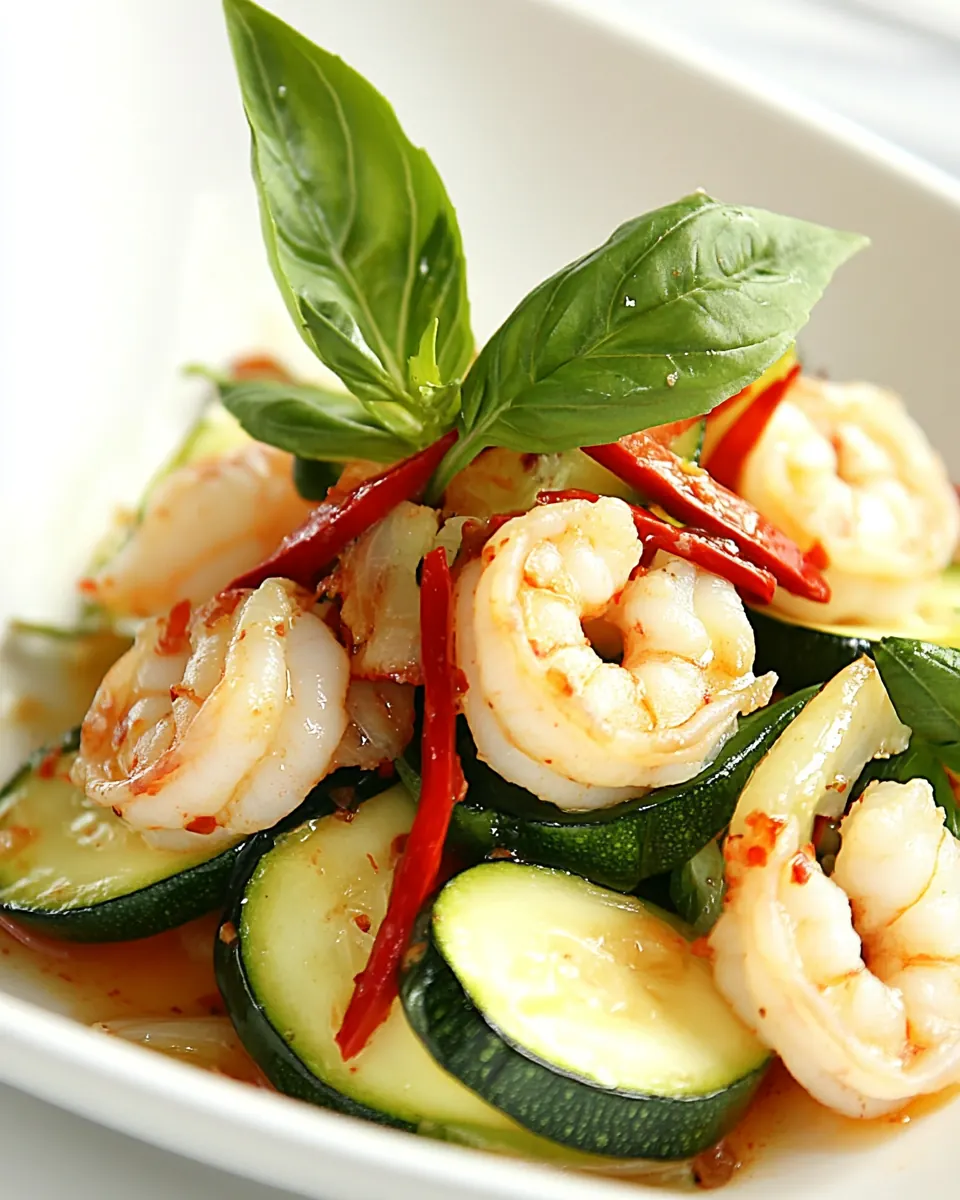
I like to work in a relaxed, staged way with stir fries so each element finishes perfectly. Start with the brine and the crispy basil, then move to searing the shrimp, and finish with the quick toss of aromatics and zucchini. Keep heat high and your movements decisive.
- Fill a medium bowl with just 1 teaspoon of salt, ice and water. Add the shrimp and let soak for 15 minutes. While brining, proceed to next step to make crispy basil.: The moment the shrimp hits the cold salty bath you will notice the water take on a faint sweet scent, as the brine firms the flesh and draws out impurities. This short soak tightens the texture so the shrimp sears instead of collapsing, and it also seasons through. A common mistake is over brining, which will make the shrimp overly salty and mealy, so stick to the fifteen minute window. After draining, pat thoroughly with paper towels, because any lingering water will steam the shrimp in the pan and prevent the desired crisp edges.
- To make the crispy basil: Wash and pat very dry the basil leaves. The leaves MUST be very dry, or the oil will splatter. Add 4 tablespoons cooking oil to the wok or a small saute pan. When the oil is hot and shimmering (but not smoking quite yet), add in a single basil leaf to test. Deep fry the basil leaves in batches, and letting them cool on a plate with paper towels to absorb the excess oil.: Wash and pat very dry the basil leaves. The leaves MUST be very dry, or the oil will splatter. Add 4 tablespoons cooking oil to the wok or a small saute pan. When the oil is hot and shimmering (but not smoking quite yet), add in a single basil leaf to test. Deep fry the basil leaves in batches, and letting them cool on a plate with paper towels to absorb the excess oil. : When you fry the first leaf you will hear a rapid, light crackle and see it immediately change color and texture, becoming almost translucent. That sound and sight tell you the oil is at the right temperature. Fry in small batches so the oil temperature does not plunge, otherwise the leaves will become greasy rather than crisp. Use tongs or a spider to lower leaves gently and remove them once they crisp in a few seconds. A frequent error is crowding the pan, which traps steam and yields limp herbs; so work in quick successive batches and blot on paper towels to drain excess oil.
- Back to the brining shrimp…. Drain and pat very dry on paper towels. Empty the bowl, wipe the bowl dry and return the shrimp, the remaining 1/4 teaspoon salt, sesame oil and cornstarch. Stir to coat the shrimp.: After the brine step, drying the shrimp is essential because moisture prevents browning. Tossing with the cornstarch gives each piece a subtle velvety layer that crisps when it meets the hot oil, while the sesame oil brings aromatic depth. Stir just until evenly coated; overcoating makes a gummy crust, so err on the lighter side. If pieces feel tacky, they are ready to sear—too much cornstarch will clump during cooking, so measure carefully.
- Heat a wok or large saute pan over high heat until a bead of water sizzles and evaporates on contact. Add the cooking oil, swirling to coat the wok. Add the shrimp and immediately give each shrimp its own space on the wok, so that they aren't touching. Let fry, untouched for 1 minute. Flip shrimp and let fry for an additional minute, or just cooked through. Remove from wok, leaving as much oil in wok as possible.: When you test with a water bead, listen for a rapid sizzle and watch it vanish instantly; that tells you the pan is hot enough. Giving each shrimp space ensures even searing and prevents steaming, which is why I let them sit untouched to form a golden crust. The sound will change to a firmer sizzle as the crust forms. Flipping once preserves juiciness. Avoid overcooking here since shrimp will toughen quickly; they are done when opaque and slightly firm to the touch. Transfer them to a plate to rest briefly so they do not continue to cook in the pan.
- You should still have 1 tablespoon of cooking oil in the wok. If not, add more cooking oil. Return the heat to medium-high and let the oil heat up. Add in the chili pepper and garlic and fry until fragrant, about 15 seconds. Add in the zucchini slices and stir fry for 1-2 minutes, tossing every 15 seconds, until zucchini is just barely soft in the middle but still firm on the outer edge.: The moment the garlic hits the hot oil the kitchen will fill with a warm, toasty aroma, but it browns extremely fast so watch it closely. Quick tossing keeps the zucchini cooking evenly, producing a tender center and a slightly seared exterior. Listen for a lively sizzle that signals the pan is doing its job. If you let the garlic burn, it will taste bitter and ruin the dish, so reduce heat immediately if you see dark flecks. Keep the vegetable pieces similar in thickness so they finish uniformly.
- Pour in the stir fry sauce to the wok. Add back into wok the cooked shrimp. Toss everything together to allow the sauce to coat the shrimp and the zucchini. Top the dish with crispy basil.: As the sauce hits the hot wok it should bubble and thicken slightly, coating the zucchini and shrimp with a glossy sheen. Tossing quickly ensures every piece picks up flavor and the sauce reduces just enough to cling without pooling. You will notice an instant gloss and a soft hiss as moisture evaporates, concentrating flavor. A common slip is adding the sauce too early, which can steam the ingredients and leave the liquid thin, so bring the sauce in at this finishing stage. Finish by scattering the fried basil on top so it stays crisp and adds that final aromatic pop.
Variations to Try
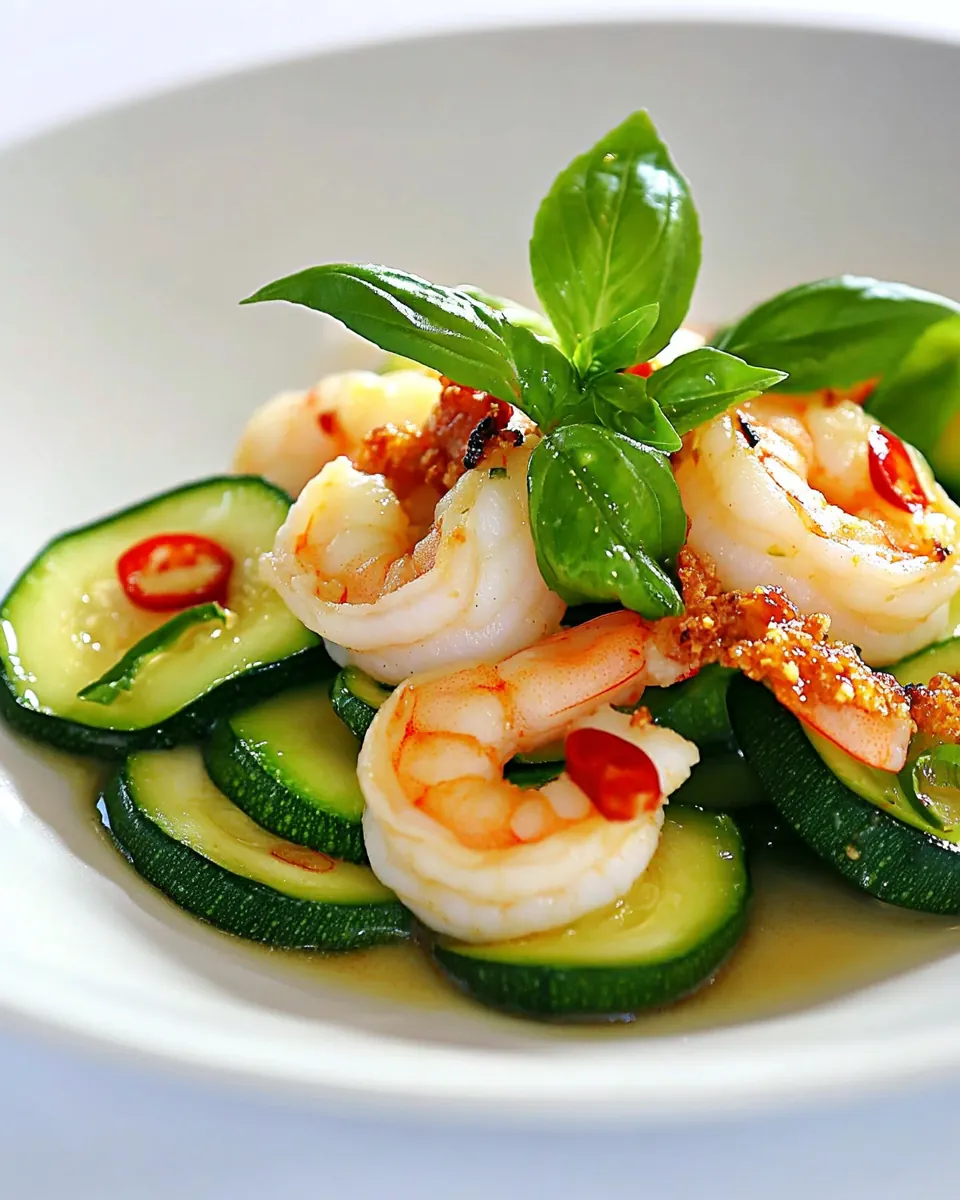
I like experimenting with small swaps to shift the mood of this stir fry while keeping the technique intact. Below are ideas that respect the original structure, each starting with a bolded phrase to highlight the change.
- Play with aromatics — Swap the fresh chili for sliced scallions for a milder fragrant lift, adding them at the same stage as the garlic so they soften without burning.
- Double up on herbs — Try adding torn basil into the toss briefly, then finishing with the fried leaves for layered basil flavor, keeping most of the basil crispy.
- Adjust the seasoning — If you prefer a slightly sweeter profile, increase the sugar by a small pinch and taste as you go so the sauce remains balanced.
- Make it extra crunchy — Sprinkle toasted sesame seeds just before serving for an added nutty crunch that complements the fried basil texture.
- Starch it up — Serve the stir fry over plain steamed rice or a bed of lightly dressed noodles to turn it into a fuller, heartier meal while preserving the bright flavors.
What to Serve With Shrimp and Zucchini Stir Fry
This dish sits well in many contexts, from casual weeknights to light summer dinners. Think about serving options that complement its bright, umami forward profile and crispy herb finish. Here are detailed serving suggestions in list form.
- Steamed white rice — A simple bowl of steamed rice soaks up the glossy sauce and makes the meal more filling, perfect for a family dinner.
- Lightly dressed noodles — Tossed with a splash of sesame oil and a pinch of salt, noodles create a relaxed base that carries the stir fry flavors well.
- Green salad — A crisp leafy salad with a citrus vinaigrette provides a refreshing counterpoint to the savory stir fry, ideal for warm weather meals.
- Casual lunch — Serve the stir fry in a grain bowl format for a quick midday meal, layering rice, the stir fry, and a scattering of fresh herbs.
- Summer gatherings — This recipe scales well for small gatherings where you want something fast and vibrant, pairing it with light sides and chilled drinks.
- Storage tips — Cool the stir fry to room temperature then store in an airtight container in the refrigerator for up to two days. Reheat gently over medium heat to preserve texture; avoid microwaving too long or the shrimp will toughen.
- Seasonal pairing — In summer, serve with a side of grilled vegetables or a simple tomato salad to keep the menu fresh and bright.
FAQ
Conclusion
This Shrimp and Zucchini Stir Fry stands out for its speed, bright flavors, and that irresistible crunchy basil finish. Its combination of tender shrimp, crisp tender zucchini, and aromatic sesame notes comes together quickly, making it perfect for busy weeknights or light summer dinners. Give it a try; the method is forgiving, the ingredients are straightforward, and the result feels far more special than the effort required. I hope it becomes one of your reliable, go to dishes when you want flavor without fuss.
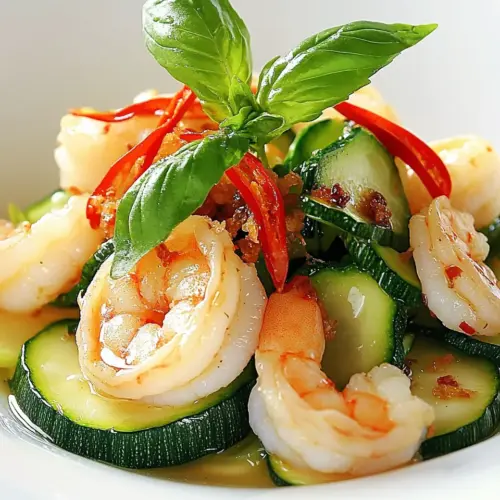
Shrimp and Zucchini Stir Fry
Equipment
- Wok or Large Sauté Pan
- Medium Bowl
- Paper towels
- Tongs or spatula
Ingredients
- 1/2 pounds shrimp shelled, deveined Provide tender, briny protein that cooks quickly and absorbs the stir-fry flavors; pat dry before cooking to ensure proper searing and prevent steaming. Season lightly and add near the end of cooking to avoid overcooking and maintain a firm, succulent texture.
- 1 1/4 teaspoons salt (kosher or sea salt) divided Enhance overall seasoning balance and aid in drawing out moisture from vegetables and shrimp; divide use between initial seasoning and finishing taste adjustment. Use kosher or sea salt for a clean flavor and dissolve it when added to sauces or marinades.
- 1/2 teaspoon cornstarch Lightly thicken marinades or sauces and help the salt adhere to the shrimp; dissolve in a small amount of liquid before tossing with seafood. Provide a glossy finish to the stir-fry sauce when combined with heat.
- 1/4 teaspoon Asian sesame oil Impart a concentrated nutty aroma in small amounts to elevate the dish; add sparingly as a finishing touch to avoid overpowering other flavors. Combine with other oils during cooking for subtle sesame character.
- 2 tablespoons cooking oil like canola, peanut, vegetable Create the high-heat cooking medium for stir-frying, allowing quick searing and even browning; choose neutral oils for a clean flavor that won’t compete with aromatics. Use enough to coat the wok or pan to prevent sticking and promote rapid cooking.
- 1 fresh chili pepper sliced Add vibrant heat and aromatic fruitiness when thinly sliced; include seeds for extra spiciness or remove them for milder flavor. Sauté briefly to mellow sharpness while still retaining color and bite.
- 2 teaspoons minced garlic Provide a pungent, garlicky backbone to the stir-fry; mince finely so it releases flavor quickly and evenly during high-heat cooking. Add early in the oil to infuse the cooking fat, taking care not to burn it to avoid bitterness.
- 2 cups sliced zucchini about 2 medium Contribute tender-crisp vegetable texture and mild flavor that soaks up sauces; slice uniformly for even cooking and quick stir-frying. Cook briefly until just tender to retain slight bite and fresh color.
- 2 teaspoons light soy sauce Introduce savory umami depth to the sauce; add during cooking to meld with other seasonings and enhance overall flavor complexity. Use light soy sauce for a subtle saltiness without darkening the dish excessively.
- 1/4 teaspoons sugar Balance savory and salty elements with a touch of sweetness for a rounded flavor profile; dissolve into the sauce to harmonize acidic or spicy components. Use sparingly to avoid cloying taste while smoothing harsh edges.
- 1/2 teaspoon Asian sesame oil Bring a toasty, aromatic accent that complements basil and sesame flavors; add a small amount to finish the dish to preserve its fragrance. Layer into the sauce or drizzle at the end for a pronounced sesame note without overwhelming other ingredients.
- 1 cup fresh basil leaves Introduce fresh, herbaceous brightness and a peppery undertone that contrasts cooked elements; add toward the end of cooking or as a garnish to preserve leaves’ aroma. Tear or chiffonade lightly to release oils and distribute flavor evenly.
- 4 tablespoons cooking oil like canola, peanut or vegetable Provide additional neutral oil for finishing or increasing cooking capacity in the pan; use to adjust frying temperature and prevent overcrowding. Add as needed to maintain high heat and ensure quick, even cooking throughout the stir-fry.
Instructions
- Fill a medium bowl with just 1 teaspoon of salt, ice and water. Add the shrimp and let soak for 15 minutes. While brining, proceed to next step to make crispy basil.: The moment the shrimp hits the cold salty bath you will notice the water take on a faint sweet scent, as the brine firms the flesh and draws out impurities. This short soak tightens the texture so the shrimp sears instead of collapsing, and it also seasons through. A common mistake is over brining, which will make the shrimp overly salty and mealy, so stick to the fifteen minute window. After draining, pat thoroughly with paper towels, because any lingering water will steam the shrimp in the pan and prevent the desired crisp edges.
- To make the crispy basil: Wash and pat very dry the basil leaves. The leaves MUST be very dry, or the oil will splatter. Add 4 tablespoons cooking oil to the wok or a small saute pan. When the oil is hot and shimmering (but not smoking quite yet), add in a single basil leaf to test. Deep fry the basil leaves in batches, and letting them cool on a plate with paper towels to absorb the excess oil.: Wash and pat very dry the basil leaves. The leaves MUST be very dry, or the oil will splatter. Add 4 tablespoons cooking oil to the wok or a small saute pan. When the oil is hot and shimmering (but not smoking quite yet), add in a single basil leaf to test. Deep fry the basil leaves in batches, and letting them cool on a plate with paper towels to absorb the excess oil. : When you fry the first leaf you will hear a rapid, light crackle and see it immediately change color and texture, becoming almost translucent. That sound and sight tell you the oil is at the right temperature. Fry in small batches so the oil temperature does not plunge, otherwise the leaves will become greasy rather than crisp. Use tongs or a spider to lower leaves gently and remove them once they crisp in a few seconds. A frequent error is crowding the pan, which traps steam and yields limp herbs; so work in quick successive batches and blot on paper towels to drain excess oil.
- Back to the brining shrimp…. Drain and pat very dry on paper towels. Empty the bowl, wipe the bowl dry and return the shrimp, the remaining 1/4 teaspoon salt, sesame oil and cornstarch. Stir to coat the shrimp.: After the brine step, drying the shrimp is essential because moisture prevents browning. Tossing with the cornstarch gives each piece a subtle velvety layer that crisps when it meets the hot oil, while the sesame oil brings aromatic depth. Stir just until evenly coated; overcoating makes a gummy crust, so err on the lighter side. If pieces feel tacky, they are ready to sear—too much cornstarch will clump during cooking, so measure carefully.
- Heat a wok or large saute pan over high heat until a bead of water sizzles and evaporates on contact. Add the cooking oil, swirling to coat the wok. Add the shrimp and immediately give each shrimp its own space on the wok, so that they aren't touching. Let fry, untouched for 1 minute. Flip shrimp and let fry for an additional minute, or just cooked through. Remove from wok, leaving as much oil in wok as possible.: When you test with a water bead, listen for a rapid sizzle and watch it vanish instantly; that tells you the pan is hot enough. Giving each shrimp space ensures even searing and prevents steaming, which is why I let them sit untouched to form a golden crust. The sound will change to a firmer sizzle as the crust forms. Flipping once preserves juiciness. Avoid overcooking here since shrimp will toughen quickly; they are done when opaque and slightly firm to the touch. Transfer them to a plate to rest briefly so they do not continue to cook in the pan.
- You should still have 1 tablespoon of cooking oil in the wok. If not, add more cooking oil. Return the heat to medium-high and let the oil heat up. Add in the chili pepper and garlic and fry until fragrant, about 15 seconds. Add in the zucchini slices and stir fry for 1-2 minutes, tossing every 15 seconds, until zucchini is just barely soft in the middle but still firm on the outer edge.: The moment the garlic hits the hot oil the kitchen will fill with a warm, toasty aroma, but it browns extremely fast so watch it closely. Quick tossing keeps the zucchini cooking evenly, producing a tender center and a slightly seared exterior. Listen for a lively sizzle that signals the pan is doing its job. If you let the garlic burn, it will taste bitter and ruin the dish, so reduce heat immediately if you see dark flecks. Keep the vegetable pieces similar in thickness so they finish uniformly.
- Pour in the stir fry sauce to the wok. Add back into wok the cooked shrimp. Toss everything together to allow the sauce to coat the shrimp and the zucchini. Top the dish with crispy basil.: As the sauce hits the hot wok it should bubble and thicken slightly, coating the zucchini and shrimp with a glossy sheen. Tossing quickly ensures every piece picks up flavor and the sauce reduces just enough to cling without pooling. You will notice an instant gloss and a soft hiss as moisture evaporates, concentrating flavor. A common slip is adding the sauce too early, which can steam the ingredients and leave the liquid thin, so bring the sauce in at this finishing stage. Finish by scattering the fried basil on top so it stays crisp and adds that final aromatic pop.
Notes
- Play with aromatics — Swap the fresh chili for sliced scallions for a milder fragrant lift, adding them at the same stage as the garlic so they soften without burning.
- Double up on herbs — Try adding torn basil into the toss briefly, then finishing with the fried leaves for layered basil flavor, keeping most of the basil crispy.
- Adjust the seasoning — If you prefer a slightly sweeter profile, increase the sugar by a small pinch and taste as you go so the sauce remains balanced.
- Make it extra crunchy — Sprinkle toasted sesame seeds just before serving for an added nutty crunch that complements the fried basil texture.
- Starch it up — Serve the stir fry over plain steamed rice or a bed of lightly dressed noodles to turn it into a fuller, heartier meal while preserving the bright flavors.
