Sheet Pan Pesto Chicken with Asparagus Tomatoes and Walnuts
Sheet Pan Pesto Chicken with Asparagus Tomatoes and Walnuts is one of those weeknight heroes I turn to when I want a meal that tastes like I fussed all evening, but truly came together in minutes.
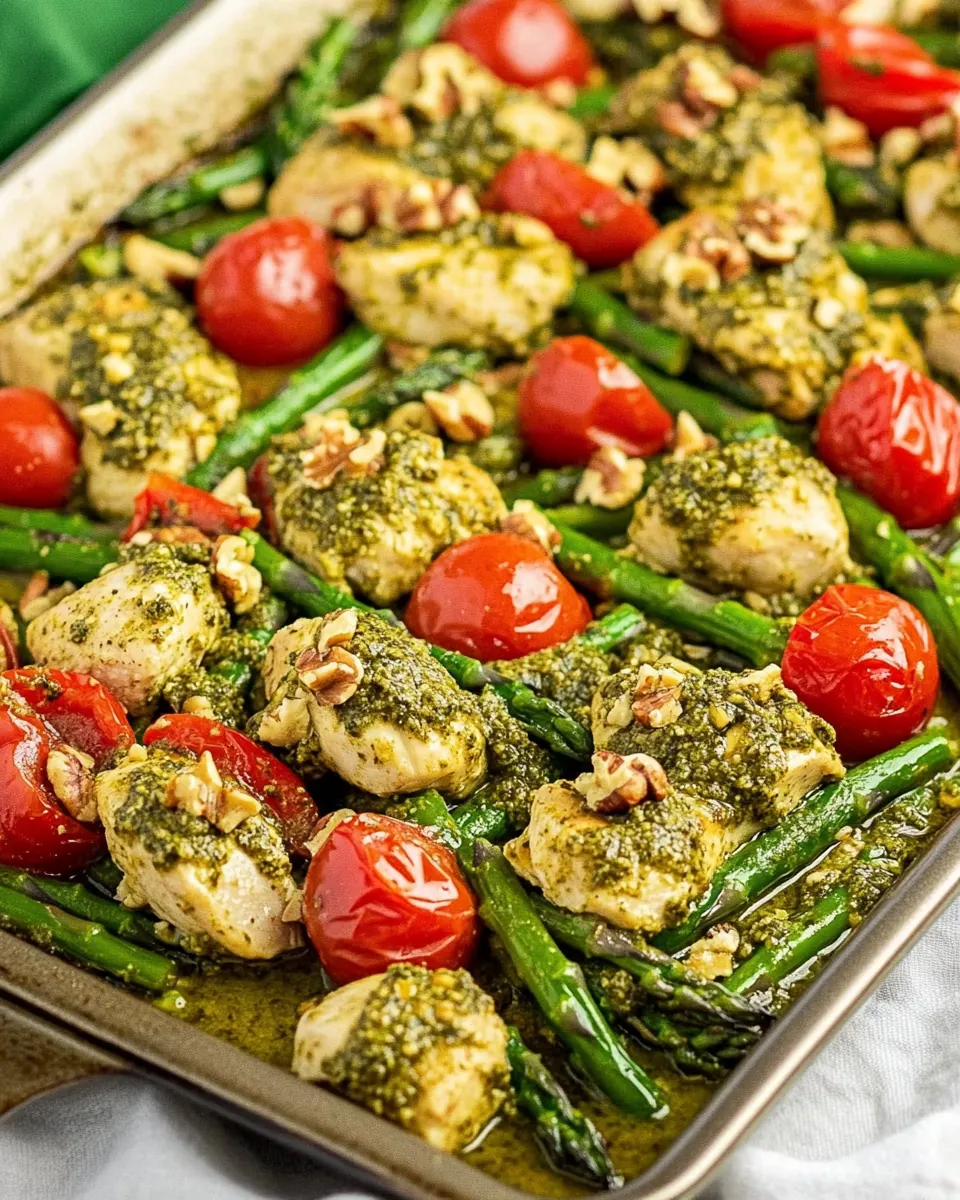
The first time I made this Sheet Pan Pesto Chicken with Asparagus Tomatoes and Walnuts I was exhausted from a long day and staring at a fridge of good intentions. I had a mound of fresh basil, a bag of crunchy walnuts, and a handful of grape tomatoes that needed saving. I decided to toss everything onto a single sheet, trusting the oven to do the heavy lifting. As it roasted, the kitchen filled with a bright, herbaceous aroma that felt like spring itself. The chicken browned at the edges, the asparagus softened without losing its snap, and the tomatoes burst with a sweet pop when pierced.
That night the simple interplay of textures surprised me most. The pesto clung to the warm chicken, the toasted walnuts added an earthy crunch, and the tomatoes lent juiciness that turned each bite into a tiny celebration. Over time I tweaked little things, like trimming the asparagus to the right thickness and saving a drizzle of extra pesto for serving. Every time I serve Sheet Pan Pesto Chicken with Asparagus Tomatoes and Walnuts to friends they ask for the recipe, and I love that it feels fancy while remaining utterly approachable.
Recipe Snapshot
35 mins
15 mins
20 mins
Medium
450 kcal
Italian
Gluten-Free, Paleo
Dinner
Food processor, Rimmed baking sheet, Parchment paper, Instant read thermometer, Spatula
Why Try This Sheet Pan Pesto Chicken with Asparagus Tomatoes and Walnuts
Fast cleanup, big flavor
I adore recipes that let me focus on people rather than pans, and this Sheet Pan Pesto Chicken with Asparagus Tomatoes and Walnuts delivers. Because everything cooks together on one rimmed baking sheet, you get concentrated flavors without a sink full of dishes. The oven concentrates the pesto, lightly toasting the walnuts and caramelizing the tomatoes, producing a layered taste that feels more complex than the effort required.
Balanced textures in every bite
What keeps me coming back is the contrast. The tender, juicy chicken pairs with bright, slightly crisp asparagus, while the roasted tomatoes release sweet juices that mingle with oily, herbaceous pesto. Then the sprinkled walnuts add a toasted crunch that elevates each forkful. Textural contrast is what makes this feel like a complete dish rather than a simple roast.
Customizable and forgiving
I’ve made this with smaller or larger chicken pieces, and it still turns out well. The recipe is forgiving because the pesto protects the chicken from drying out and the vegetables are sturdy enough to handle oven time without turning to mush. If you like, you can shift the ratio of pesto to veggies or reserve some to spoon over at the table for a fresher finish.
Seasonal and vibrant
This recipe sings in spring, when basil is fragrant and asparagus is at its best. The green colors and bright flavor profile make it feel celebratory without fuss. For casual family dinners or a weekend lunch with friends, it’s reliably impressive and fresh tasting.
Make ahead friendly
I often prepare the pesto in advance to speed assembly. Having that ready means dinner comes together in under 30 minutes once the oven is hot. The ability to prep a component ahead of time is a small convenience that makes weeknights feel calmer and more in control.
Recipe Ingredients for Sheet Pan Pesto Chicken with Asparagus Tomatoes and Walnuts
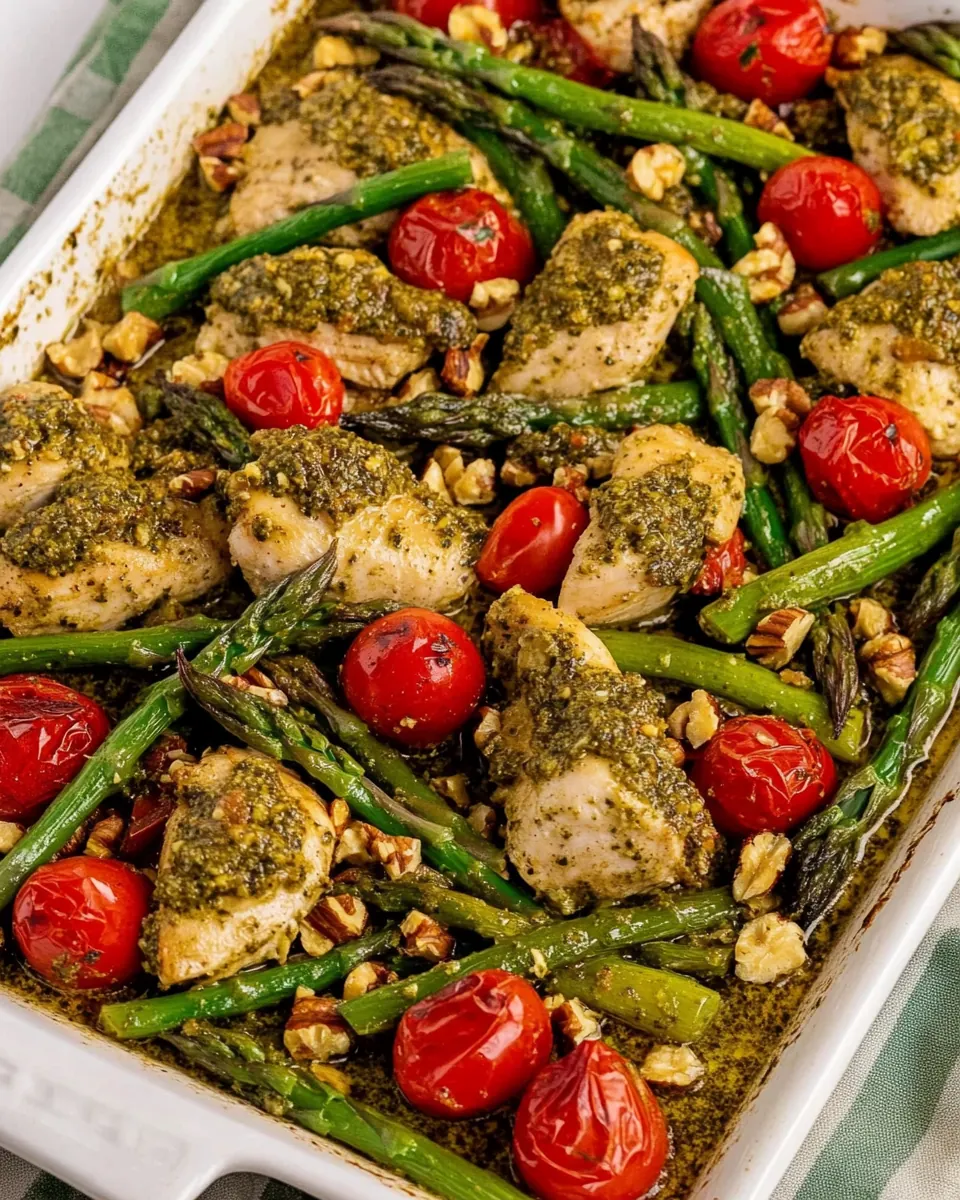
These ingredients are a study in harmony. The basil provides aromatic lift, the parmesan adds salty richness, and the walnuts bring toasty texture. The chicken soaks up the pesto while the asparagus and grape tomatoes contribute vegetal brightness and juicy bursts. Together they create a balanced sheet pan meal that is both simple and layered.
- 1 1/2 cup (48 g) packed fresh basil leaves: Provide aromatic herbal base and vibrant green color while binding oils and nuts into a cohesive pesto; finely packed leaves yield concentrated basil flavor that brightens the whole dish and complements the chicken and vegetables.
- 1/4 cup Fishers Walnuts Halves and Pieces: Add earthy crunch and rich, slightly bitter nuttiness when pulsed into the pesto; halves and pieces contribute texture contrast and toasted depth to balance the bright basil and parmesan.
- 1/4 cup finely shredded parmesan cheese: Impart salty, umami-rich savory notes and creamy texture to the pesto when finely shredded; melts smoothly into the oil and nuts to create a cohesive, flavorful sauce that enhances the chicken's savory profile.
- 2 cloves garlic, peeled: Introduce pungent, aromatic heat and savory complexity when minced into the pesto; garlic helps emulsify the oil and intensifies the overall flavor without overpowering the basil and cheese.
- 1/2 cup olive oil: Provide a silky mouthfeel and carry fat-soluble flavors throughout the pesto; olive oil emulsifies with cheese and nuts to create a glossy sauce that coats chicken and vegetables evenly during roasting.
- Salt and freshly ground black pepper: Season and balance flavors to enhance brightness, reduce bitterness, and elevate savory components; salt and freshly ground pepper bring out the pesto's herbs and the natural sweetness of tomatoes and asparagus.
- 1 1/2 lbs boneless skinless chicken breasts, diced into 1-inch pieces: Supply lean protein and a neutral canvas for the pesto to cling to when diced; small, uniform pieces cook quickly and evenly on a sheet pan, absorbing flavors while maintaining juicy texture.
- 1 lb asparagus (don't use thick spears), tough ends trimmed and discarded remaining diced into 1 1/2-inch pieces: Offer tender green vegetable texture and mild grassy flavor when trimmed and diced; appropriately sized spears roast evenly, adding freshness and a slight snap that complements the pesto-coated chicken.
- 1 pint fresh grape tomatoes (2 cups): Contribute juicy sweetness and burstable acidity as a fresh counterpoint to the rich pesto; grape tomatoes roast to concentrate flavors and add bright, poppable morsels throughout the sheet pan.
- 1/2 cup Fishers Walnuts Halves and Pieces: Provide additional crunchy nut topping and toasted flavor when sprinkled over the finished dish; halves and pieces add texture contrast and reinforce the walnut character already present in the pesto.
Putting Together Sheet Pan Pesto Chicken with Asparagus Tomatoes and Walnuts
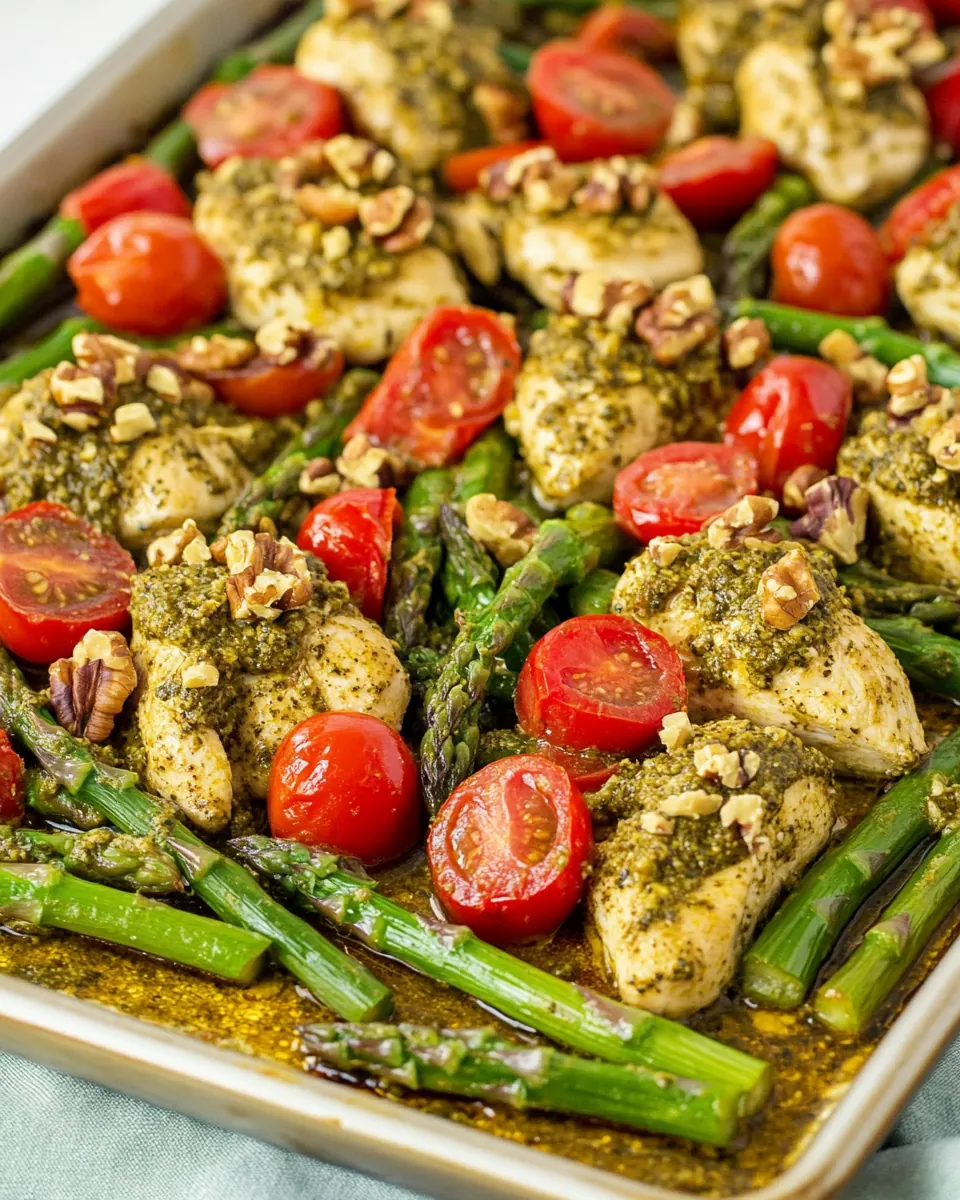
Bringing this dish together is straightforward, and the sheet pan approach means the oven does most of the work. Below I expand each direction into rich, sensory steps so you can follow along confidently and avoid common pitfalls.
- For the pesto, add basil leaves, 1/4 cup walnuts, parmesan and garlic to a food processor. Pulse until coarsely chopped.: You will hear a coarse grinding and see the basil transform from leafy to a rough paste, the aroma of basil and garlic hitting your nose and brightening the kitchen. This coarse texture is ideal because it lets pockets of walnut and parmesan remain noticeable, giving the pesto interest when roasted. The noise will shift from loud pulses to a more continuous hum as pieces break down. A common mistake is overprocessing until the mixture becomes too smooth and oily, which can make the pesto thin and less substantial on the chicken . If your processor smells warm, pause and scrape down the sides to keep the mixture cool and green.
- Add olive oil, season with salt and pepper to taste and pulse until everything is finely chopped and well combined. Set aside.: As you stream in the olive oil , the blend will glossy up and the aromas will mellow into a cohesive sauce. Taste for seasoning because the parmesan already contributes saltiness, so adjust carefully. The sheen of oil indicates a successful emulsion, and the sound will settle into a steady whirr. Avoid adding too much oil which can weigh down the pesto and prevent it from clinging to the chicken . Letting the pesto rest a few minutes allows flavors to meld before it meets heat.
- Preheat oven to 400 degrees F.: Before the sheet pan goes in, make sure the oven is fully up to temperature so the chicken sears rather than slowly steams. At 400 degrees F the exterior will brown while juices stay inside, and vegetables will roast until tender. Preheating ensures predictable timing; putting the pan into a cooling oven leads to longer cook times and potentially dry meat. If your oven runs hot or cool, use an oven thermometer to confirm accuracy.
- Line a rimmed 18 by 13-inch baking sheet with a sheet of parchment paper or spray with non-stick cooking spray.: A rimmed sheet keeps juices contained while parchment makes cleanup effortless and prevents sticking. When the surface is prepared, you'll notice less sticking and easier tossing of ingredients. If you skip this step, juices can scorch onto the pan which makes cleaning harder and can create bitter aromas. Use a sheet with rims to collect released tomato juices so you can drain them if needed.
- Place chicken and asparagus on sheet pan, pour over 1/4 cup of the basil pesto.: When the chicken and asparagus hit the pan, arrange them so they sit in a single layer for even heat exposure; pouring 1/4 cup pesto will tint and lightly coat the pieces. You should see a glossy green sheen and smell fresh herbs. The visual cue of coated pieces indicates pesto coverage. Be careful not to overload with pesto at this stage, which can prevent proper browning; you can always add more later for brighter herb flavor.
- Season chicken and asparagus with salt and pepper and toss everything to evenly coat.: Tossing distributes seasoning and ensures each bite is balanced, creating a mix of savory and herbaceous flavors. When you toss, you will hear gentle clinks as pieces move and see pesto redistribute into nooks and crevices. A common error is uneven seasoning, leaving some pieces bland; take a moment to taste and adjust. Uniformly coated pieces roast more evenly and pick up better color.
- Spread into an even layer (don't let chicken pieces overlap) and roast in preheated oven for 10 minutes.: The even layer is crucial so heat circulates uniformly, giving chicken edges a caramelized finish while the interiors stay juicy. You will hear light sizzling and begin to smell a nutty basil scent as surfaces brown. If pieces overlap, cooking will be inconsistent and some bites may remain underdone. Use a spatula to nudge pieces apart if they crowd, and resist the urge to open the oven often, which can drop temperature and extend cook time.
- Remove from oven, carefully drain off excess liquid from one corner if needed (use a spatula as a guard to keep the ingredients from falling).: After the first roast you'll notice juices pooled on the pan from the chicken and tomatoes. Draining prevents the ingredients from stewing and helps the second roast brown rather than steam. The aroma at this point is richer and slightly toasted. Be cautious while draining to avoid losing pieces; use a spatula as a shield. If you skip draining, your final texture may be soggier with less pronounced browning.
- Add tomatoes, toss everything and return to oven and continue to roast until chicken is cooked through (larger pieces should be 165 degrees in center), about 8 – 12 minutes longer.: Introducing the grape tomatoes at this stage invites them to blister and release sweet juices that mingle with pesto without dissolving completely. You'll hear occasional pops as their skins burst and smell a concentrated tomato sweetness. Use an instant read thermometer to confirm the chicken reaches 165 degrees at the center. The error to avoid is adding tomatoes too early which causes them to collapse and lose their pleasant burst; timing keeps them plump and flavorful.
- Remove from oven, spoon over another 1/4 cup of the pesto and toss (or just add the 1/4 cup to individual servings). Sprinkle in walnuts.: At removal, spooning extra pesto reawakens bright herbal flavors that the oven slightly mellowed, and tossing distributes warm sauce over everything. The sound will be gentle as walnuts fall into place and the look will become more glossy and vibrant. Adding nuts here preserves crunch, because if they roast too long they can become soft or bitter. Avoid stirring too vigorously which can mash tomatoes; gentle tossing protects texture.
- Serve immediately with more pesto if desired (or just reserve remaining pesto in refrigerator for another use – it can be frozen also).: Serving right away gives you the best texture contrast between warm chicken and crisp walnuts, and the aroma is at its peak. If you have leftover pesto, refrigerate for up to a week or freeze in small portions for later. A common mistake is letting the dish sit too long which softens the vegetables and dulls the fresh basil flavor, so plate promptly for the best experience.
Recipe Variations about Sheet Pan Pesto Chicken with Asparagus Tomatoes and Walnuts
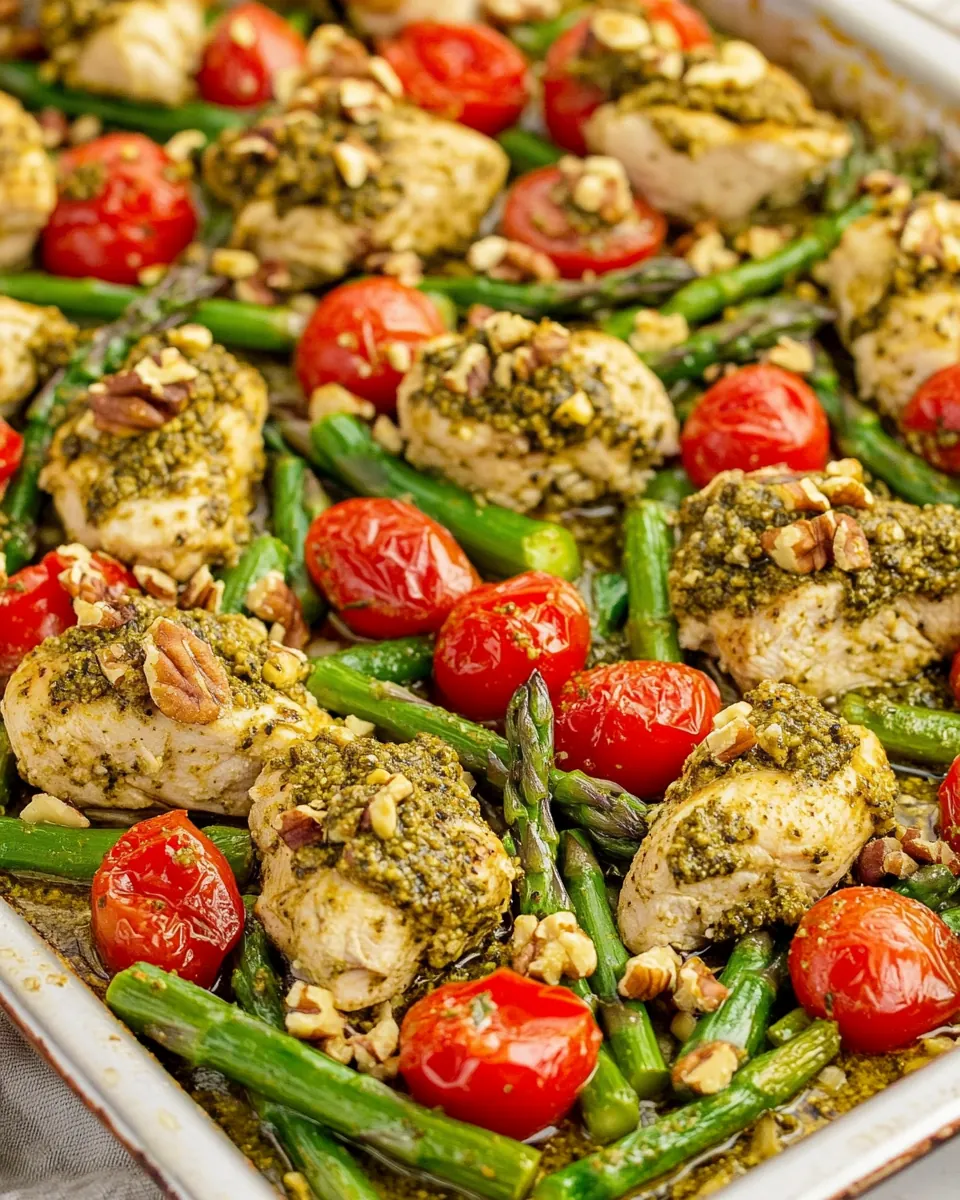
This dish adapts well, and a few thoughtful variations can suit personal tastes or pantry limits. Below are practical, tested tips to help you tailor the recipe while maintaining its essential character.
- Swap nuts: If you prefer a milder nuttiness, try substituting the walnuts with toasted almonds in the pesto and as a topping for a subtly different crunch and flavor profile.
- Pesto shortcut: If short on time, use store bought pesto but brighten it with a squeeze of lemon and an extra tablespoon of fresh chopped basil so it tastes freshly made.
- Adjust chicken size: For faster cooking, dice the chicken smaller; for juicier results, use slightly larger pieces and check temperature for doneness to avoid overcooking.
- Vegetable swaps: If asparagus is out of season, substitute thin green beans or broccolini that roast well at 400 degrees F; ensure similar size for even cooking.
- Make ahead pesto: Prepare the pesto up to a week in advance and store it chilled, or freeze in ice cube trays for convenient single use portions.
Pairing Suggestions for Sheet Pan Pesto Chicken with Asparagus Tomatoes and Walnuts
This recipe pairs with a variety of sides and occasions, and the suggestions below help you present it beautifully for different meals. Think about balance, texture, and the atmosphere you want to create.
- Light starch: Serve the dish over cooked rice or buttered noodles to soak up the pesto and tomato juices, creating a comforting, family friendly meal.
- Simple salad: Pair with a crisp green salad dressed lightly with lemon and olive oil to contrast the warm, nutty flavors on the sheet pan.
- Casual weeknight: For an easy dinner, serve with warm crusty bread to mop up the flavorful pan juices and finish plates cleanly.
- Alfresco spring lunch: This feels right for a spring lunch outdoors, accompanied by a platter of sliced seasonal fruit and chilled sparkling water for freshness.
- Storage tips: Refrigerate leftovers in an airtight container for up to three days; reheat gently in a 350 degrees F oven to maintain texture and avoid sogginess.
FAQ
Conclusion
This Sheet Pan Pesto Chicken with Asparagus Tomatoes and Walnuts stands out because it marries fresh herbal pesto with roasted textures and a speedy, one pan method. The combination of tender chicken, crisp asparagus, burst tomatoes, and toasted walnuts creates a satisfying balance of flavors and mouthfeels. I encourage you to try it on a busy night when you want something that feels thoughtful yet comes together quickly. It’s a dependable recipe that looks and tastes like effort was made, while keeping cleanup minimal and the table relaxed.
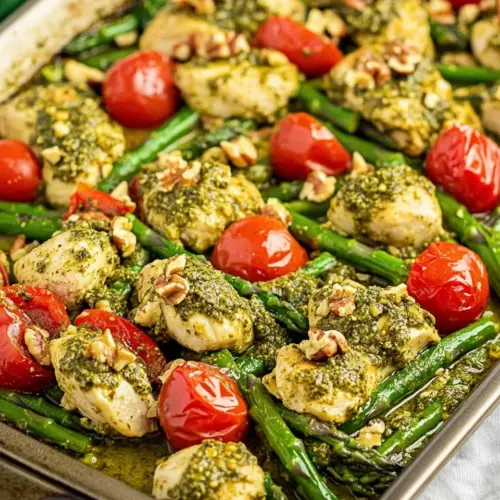
Sheet Pan Pesto Chicken with Asparagus Tomatoes and Walnuts
Equipment
- Food Processor
- Rimmed Baking Sheet
- Parchment Paper
- Instant read thermometer
- Spatula
Ingredients
- 1 1/2 cup (48 g) packed fresh basil leaves Provide aromatic herbal base and vibrant green color while binding oils and nuts into a cohesive pesto; finely packed leaves yield concentrated basil flavor that brightens the whole dish and complements the chicken and vegetables.
- 1/4 cup Fishers Walnuts Halves and Pieces Add earthy crunch and rich, slightly bitter nuttiness when pulsed into the pesto; halves and pieces contribute texture contrast and toasted depth to balance the bright basil and parmesan.
- 1/4 cup finely shredded parmesan cheese Impart salty, umami-rich savory notes and creamy texture to the pesto when finely shredded; melts smoothly into the oil and nuts to create a cohesive, flavorful sauce that enhances the chicken's savory profile.
- 2 cloves garlic, peeled Introduce pungent, aromatic heat and savory complexity when minced into the pesto; garlic helps emulsify the oil and intensifies the overall flavor without overpowering the basil and cheese.
- 1/2 cup olive oil Provide a silky mouthfeel and carry fat-soluble flavors throughout the pesto; olive oil emulsifies with cheese and nuts to create a glossy sauce that coats chicken and vegetables evenly during roasting.
- Salt and freshly ground black pepper Season and balance flavors to enhance brightness, reduce bitterness, and elevate savory components; salt and freshly ground pepper bring out the pesto's herbs and the natural sweetness of tomatoes and asparagus.
- 1 1/2 lbs boneless skinless chicken breasts, diced into 1-inch pieces Supply lean protein and a neutral canvas for the pesto to cling to when diced; small, uniform pieces cook quickly and evenly on a sheet pan, absorbing flavors while maintaining juicy texture.
- 1 lb asparagus (don't use thick spears), tough ends trimmed and discarded remaining diced into 1 1/2-inch pieces Offer tender green vegetable texture and mild grassy flavor when trimmed and diced; appropriately sized spears roast evenly, adding freshness and a slight snap that complements the pesto-coated chicken.
- 1 pint fresh grape tomatoes (2 cups) Contribute juicy sweetness and burstable acidity as a fresh counterpoint to the rich pesto; grape tomatoes roast to concentrate flavors and add bright, poppable morsels throughout the sheet pan.
- 1/2 cup Fishers Walnuts Halves and Pieces Provide additional crunchy nut topping and toasted flavor when sprinkled over the finished dish; halves and pieces add texture contrast and reinforce the walnut character already present in the pesto.
Instructions
- For the pesto, add basil leaves, 1/4 cup walnuts, parmesan and garlic to a food processor. Pulse until coarsely chopped.: You will hear a coarse grinding and see the basil transform from leafy to a rough paste, the aroma of basil and garlic hitting your nose and brightening the kitchen. This coarse texture is ideal because it lets pockets of walnut and parmesan remain noticeable, giving the pesto interest when roasted. The noise will shift from loud pulses to a more continuous hum as pieces break down. A common mistake is overprocessing until the mixture becomes too smooth and oily, which can make the pesto thin and less substantial on the chicken . If your processor smells warm, pause and scrape down the sides to keep the mixture cool and green.
- Add olive oil, season with salt and pepper to taste and pulse until everything is finely chopped and well combined. Set aside.: As you stream in the olive oil , the blend will glossy up and the aromas will mellow into a cohesive sauce. Taste for seasoning because the parmesan already contributes saltiness, so adjust carefully. The sheen of oil indicates a successful emulsion, and the sound will settle into a steady whirr. Avoid adding too much oil which can weigh down the pesto and prevent it from clinging to the chicken . Letting the pesto rest a few minutes allows flavors to meld before it meets heat.
- Preheat oven to 400 degrees F.: Before the sheet pan goes in, make sure the oven is fully up to temperature so the chicken sears rather than slowly steams. At 400 degrees F the exterior will brown while juices stay inside, and vegetables will roast until tender. Preheating ensures predictable timing; putting the pan into a cooling oven leads to longer cook times and potentially dry meat. If your oven runs hot or cool, use an oven thermometer to confirm accuracy.
- Line a rimmed 18 by 13-inch baking sheet with a sheet of parchment paper or spray with non-stick cooking spray.: A rimmed sheet keeps juices contained while parchment makes cleanup effortless and prevents sticking. When the surface is prepared, you'll notice less sticking and easier tossing of ingredients. If you skip this step, juices can scorch onto the pan which makes cleaning harder and can create bitter aromas. Use a sheet with rims to collect released tomato juices so you can drain them if needed.
- Place chicken and asparagus on sheet pan, pour over 1/4 cup of the basil pesto.: When the chicken and asparagus hit the pan, arrange them so they sit in a single layer for even heat exposure; pouring 1/4 cup pesto will tint and lightly coat the pieces. You should see a glossy green sheen and smell fresh herbs. The visual cue of coated pieces indicates pesto coverage. Be careful not to overload with pesto at this stage, which can prevent proper browning; you can always add more later for brighter herb flavor.
- Season chicken and asparagus with salt and pepper and toss everything to evenly coat.: Tossing distributes seasoning and ensures each bite is balanced, creating a mix of savory and herbaceous flavors. When you toss, you will hear gentle clinks as pieces move and see pesto redistribute into nooks and crevices. A common error is uneven seasoning, leaving some pieces bland; take a moment to taste and adjust. Uniformly coated pieces roast more evenly and pick up better color.
- Spread into an even layer (don't let chicken pieces overlap) and roast in preheated oven for 10 minutes.: The even layer is crucial so heat circulates uniformly, giving chicken edges a caramelized finish while the interiors stay juicy. You will hear light sizzling and begin to smell a nutty basil scent as surfaces brown. If pieces overlap, cooking will be inconsistent and some bites may remain underdone. Use a spatula to nudge pieces apart if they crowd, and resist the urge to open the oven often, which can drop temperature and extend cook time.
- Remove from oven, carefully drain off excess liquid from one corner if needed (use a spatula as a guard to keep the ingredients from falling).: After the first roast you'll notice juices pooled on the pan from the chicken and tomatoes. Draining prevents the ingredients from stewing and helps the second roast brown rather than steam. The aroma at this point is richer and slightly toasted. Be cautious while draining to avoid losing pieces; use a spatula as a shield. If you skip draining, your final texture may be soggier with less pronounced browning.
- Add tomatoes, toss everything and return to oven and continue to roast until chicken is cooked through (larger pieces should be 165 degrees in center), about 8 - 12 minutes longer.: Introducing the grape tomatoes at this stage invites them to blister and release sweet juices that mingle with pesto without dissolving completely. You'll hear occasional pops as their skins burst and smell a concentrated tomato sweetness. Use an instant read thermometer to confirm the chicken reaches 165 degrees at the center. The error to avoid is adding tomatoes too early which causes them to collapse and lose their pleasant burst; timing keeps them plump and flavorful.
- Remove from oven, spoon over another 1/4 cup of the pesto and toss (or just add the 1/4 cup to individual servings). Sprinkle in walnuts.: At removal, spooning extra pesto reawakens bright herbal flavors that the oven slightly mellowed, and tossing distributes warm sauce over everything. The sound will be gentle as walnuts fall into place and the look will become more glossy and vibrant. Adding nuts here preserves crunch, because if they roast too long they can become soft or bitter. Avoid stirring too vigorously which can mash tomatoes; gentle tossing protects texture.
- Serve immediately with more pesto if desired (or just reserve remaining pesto in refrigerator for another use - it can be frozen also).: Serving right away gives you the best texture contrast between warm chicken and crisp walnuts, and the aroma is at its peak. If you have leftover pesto, refrigerate for up to a week or freeze in small portions for later. A common mistake is letting the dish sit too long which softens the vegetables and dulls the fresh basil flavor, so plate promptly for the best experience.
Notes
- Swap nuts: If you prefer a milder nuttiness, try substituting the walnuts with toasted almonds in the pesto and as a topping for a subtly different crunch and flavor profile.
- Pesto shortcut: If short on time, use store bought pesto but brighten it with a squeeze of lemon and an extra tablespoon of fresh chopped basil so it tastes freshly made.
- Adjust chicken size: For faster cooking, dice the chicken smaller; for juicier results, use slightly larger pieces and check temperature for doneness to avoid overcooking.
- Vegetable swaps: If asparagus is out of season, substitute thin green beans or broccolini that roast well at 400 degrees F; ensure similar size for even cooking.
- Make ahead pesto: Prepare the pesto up to a week in advance and store it chilled, or freeze in ice cube trays for convenient single use portions.