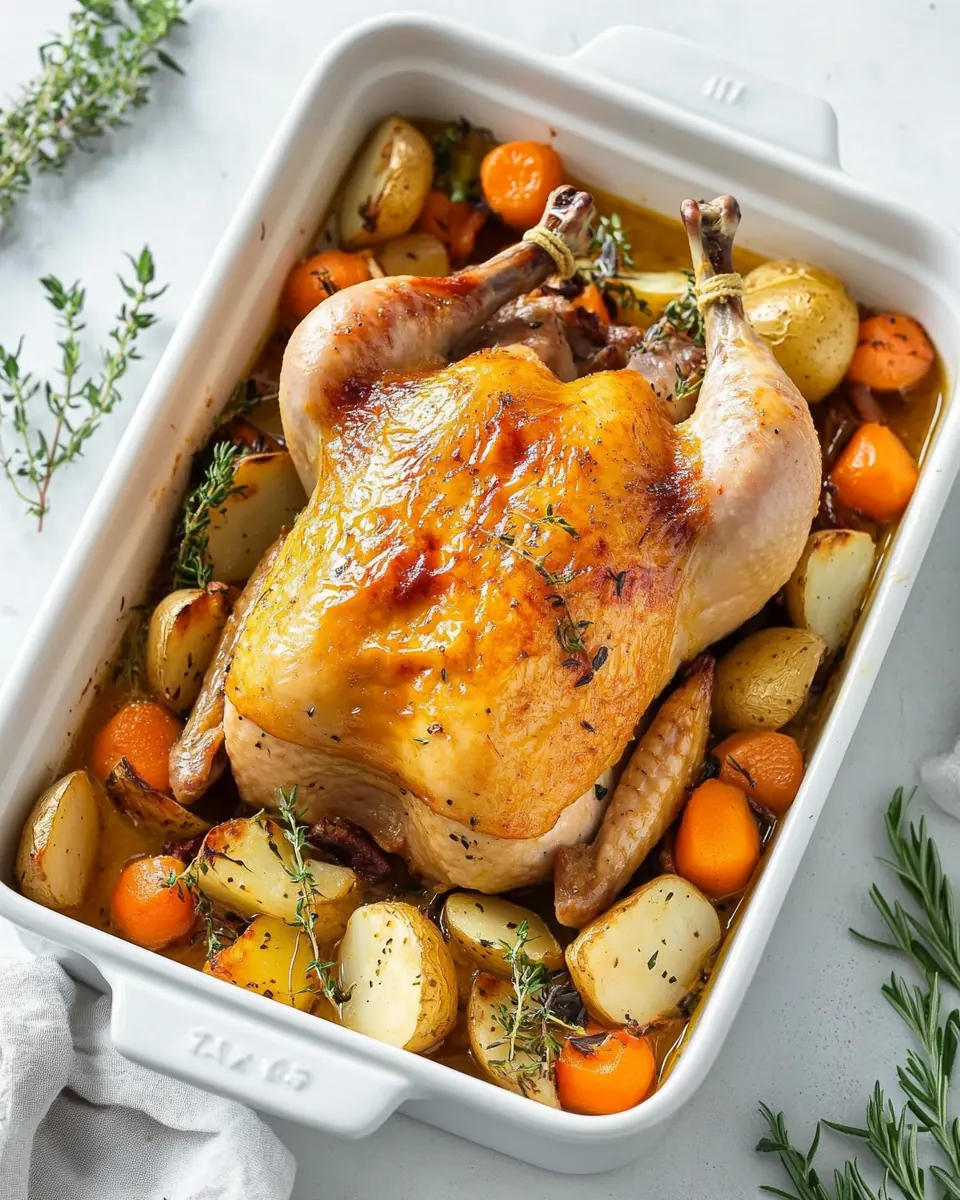
Roast Chicken With Vegetables and Potatoes
Roast Chicken With Vegetables and Potatoes is the kind of meal I turn to when I want comfort without fuss. The first time I roasted a whole bird with root vegetables I was nervous about timing and whether the potatoes would be done at the same moment as the chicken. Over the years I learned to trust a hot oven and simple seasoning, and now this recipe is my reliable weeknight hero when I need something hands off yet impressive.
I remember a chilly evening in fall when I carried the roasting pan out to the table, the kitchen humid and fragrant from the oven steam. My partner paused mid sentence and said the house smelled like a restaurant. That quiet moment of satisfaction, when everyone reaches for a fork and conversation slows because the food is speaking for itself, is why I keep this on rotation. The blend of roasted potatoes, sweet carrots, and the caramelized edges of onion alongside a golden chicken is simple, honest cooking.
What I love most is how forgiving this dish is. You can tweak herbs or let it roast a bit longer for extra browning, and it still delivers. I often make a double batch of vegetables to have leftovers for sandwiches the next day. This recipe has become my go to for casual dinners and small gatherings, because it gives you time to be present with guests instead of tied to the stove. When I serve it, people always comment on the crisp skin and the juicy meat, and I tell them the secret is patience and high heat.
Recipe Snapshot
1 hr 50 mins
15 mins
95 mins
Medium
500 kcal
American
Paleo, Whole30
Dinner
Roasting pan, Oven, Large bowl, Meat thermometer
What Sets This Roast Chicken With Vegetables and Potatoes Apart
Reliable, comforting flavor
I love this recipe because it produces consistent results, night after night. The combination of a well roasted chicken and oven caramelized vegetables gives you savory depth, with browned bits that add a toasty note. I find this method especially comforting in fall, when hearty, warm meals are what I crave.
Minimal fuss, maximum payoff
We all have those busy evenings when lengthy prep is impossible. This dish only asks for a little hands on time to rub the chicken and toss the potatoes and carrots in oil and herbs. Then the oven does the heavy lifting, and you can relax or prepare a quick salad while it roasts. That hands off period is invaluable to me, and I appreciate that it still looks impressive on the table.
Balanced, whole meal in one pan
Putting the chicken and vegetables together means you get protein, starch, and vegetables all in one tray. The vegetables soak up juices from the bird while roasting, which deepens their flavor and makes cleanup easier. I often tell friends this is the easiest way to get a full plate without juggling multiple pots.
Great for gatherings and leftovers
I turn to this when hosting because it scales well and is simple to rehearse. Leftover roasted potatoes make excellent breakfast hash, and the carved chicken reheats beautifully. I enjoy the versatility, from casual family dinners to a small dinner party.
Herb driven but flexible
The fresh rosemary and thyme here are the unsung heroes, brightening the roasted flavors without masking them. If I want bolder taste I increase the herbs, or if I need to pivot I use whatever fresh herbs I have on hand. This flexibility makes the dish approachable for cooks at every level.
Shopping List for Roast Chicken With Vegetables and Potatoes
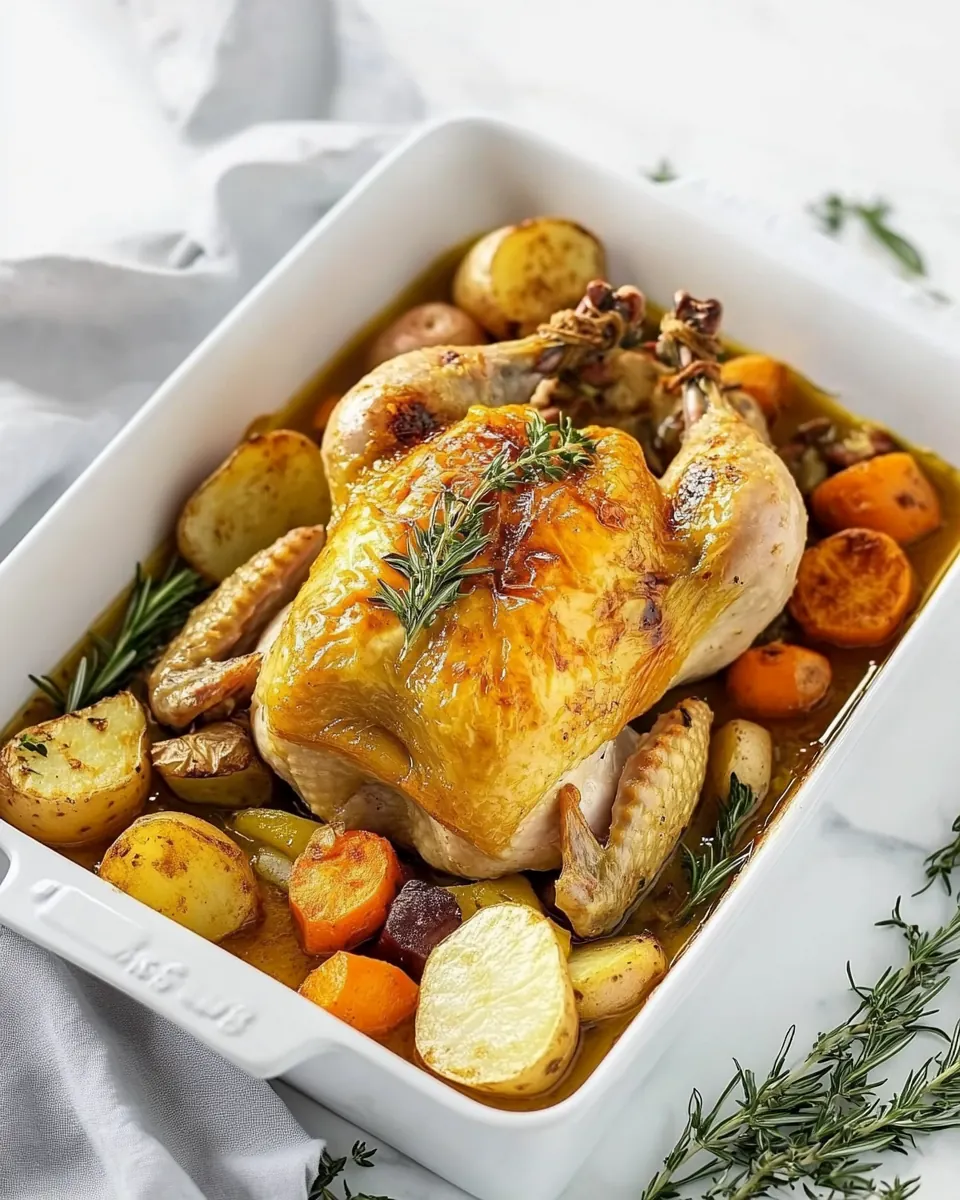
These ingredients are focused on simplicity and harmony. The philosophy is to let quality basics sing: a whole chicken for juicy meat and crispy skin, starchy potatoes to soak up pan juices, and hearty root vegetables for sweetness and texture. The fresh herbs are the finishing touch that tie everything together.
- 1 whole chicken about 4 pounds: Season and roast to provide the main protein and centerpiece for the meal; truss or tuck the wings for even cooking and allow resting time after roasting to retain juices.
- 2 tablespoons olive oil: Coat vegetables and chicken lightly to help promote browning and crisp skin; drizzle over potatoes and vegetables so they absorb flavor and render aromatics.
- Salt and freshly ground black pepper: Season liberally to enhance overall flavors and balance richness; add to both the cavity and exterior to taste and adjust at the end for final seasoning.
- 4 medium Yukon Gold potatoes quartered: Offer a starchy base that soaks up pan juices and becomes crisp at the edges when quartered; hold shape well during roasting and provide comforting texture.
- 6 medium carrots peeled and cut into 1-inch pieces: Add sweetness and body to the roast while contributing color contrast; cut into uniform pieces so they cook evenly alongside potatoes.
- 1 large onion quartered: Provide savory depth and caramelized flavor when roasted; quartered pieces release sweetness and meld with pan juices for a richer sauce.
- 4 cloves garlic minced: Infuse mellow pungency and aromatic depth when minced and scattered under the skin or among vegetables; softens in the oven and flavors juices.
- 1 lemon halved: Brighten and add acid to cut through richness when halved and roasted or squeezed; roasted lemon adds subtle sweetness and fragrant oil to the pan.
- 2 tablespoons fresh rosemary chopped: Contribute piney, resinous aroma and savory herbal notes when chopped and sprinkled over the chicken and vegetables; works well mixed with oil for a herb rub.
- 2 tablespoons fresh thyme chopped: Introduce floral, woodsy fragrance and gentle savory flavor when chopped and used with the rosemary; pairs with lemon and garlic to enhance roasted components.
Preparation Steps for Roast Chicken With Vegetables and Potatoes
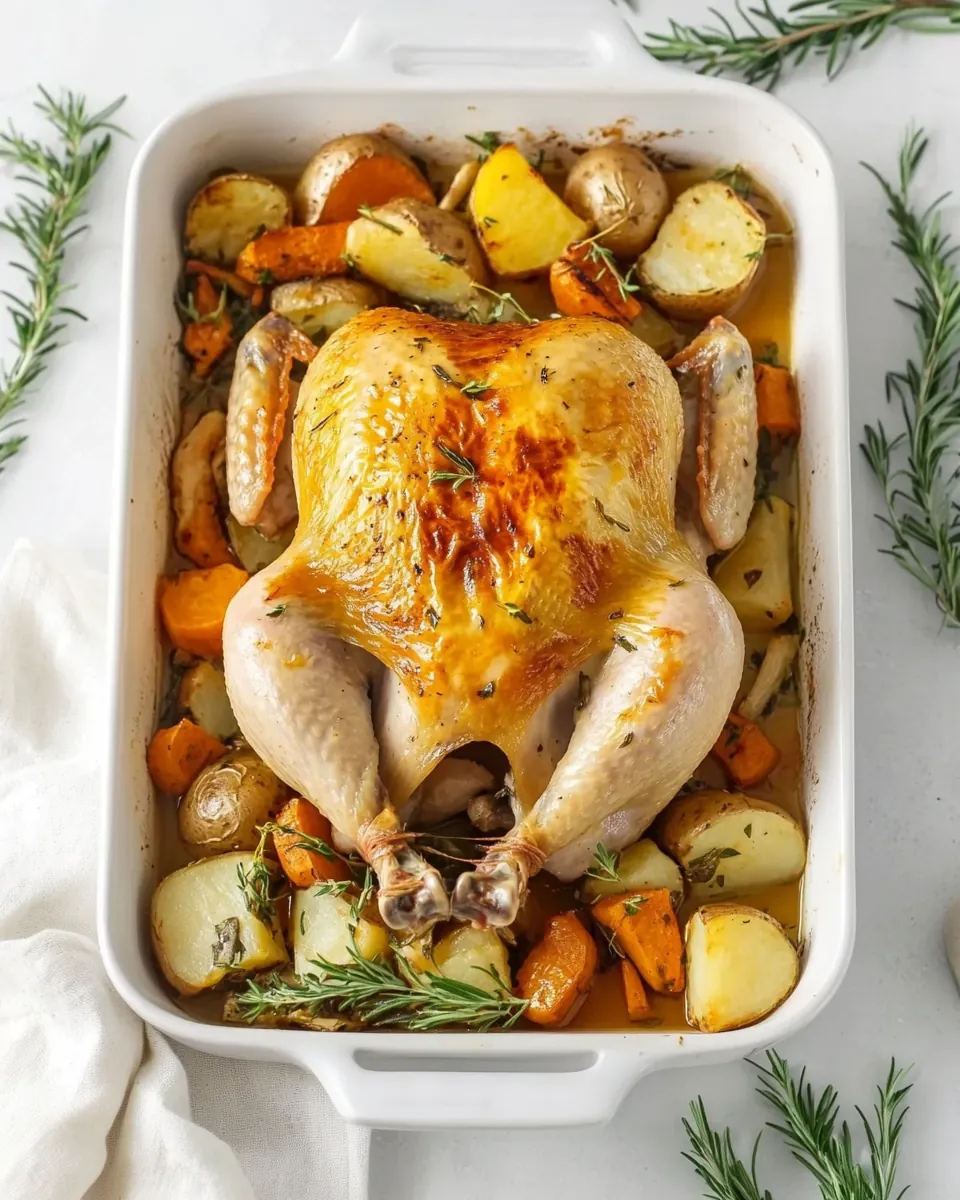
These steps guide you through timing and technique to produce a golden chicken and evenly roasted vegetables. I walk you through sensory cues so you can trust what you see, smell, and hear at each stage.
- Preheat the oven to 400°F.: You will notice the kitchen warming as the oven reaches temperature, and a well preheated oven is crucial for crisp skin and caramelized vegetables. Preheating ensures the chicken begins browning immediately, creating a Maillard reaction that gives deep color and flavor. A common mistake is putting the bird into a cold oven which leads to pale skin and uneven cooking; avoid this by waiting until the oven signals it is fully up to heat. The sound is subtle, mostly the oven fan adjusting, and the smell is neutral until the food begins to roast.
- Rub the chicken with 1 tablespoon of olive oil, salt, and pepper. Place the chicken in a large roasting pan.: As the oil and seasonings are massaged into the skin you should see a glossy sheen, which helps with even browning. The salt starts pulling moisture to the surface, creating those crisp pockets that make skin irresistible. Positioning the chicken in a roomy pan allows air to circulate so the skin browns on all sides, and juices drip into the pan to flavor the vegetables. A misstep here is under seasoning or crowding the pan, which prevents crisping and yields steamed rather than roasted textures.
- In a large bowl, toss the potatoes, carrots, onion, and garlic with 1 tablespoon of olive oil, salt, pepper, rosemary, and thyme. Arrange the vegetables around the chicken in the roasting pan.: When you toss the vegetables the oil will make them glisten and help herbs cling, which leads to even browning and concentrated flavors. Smell the herbs as you mix them with the potatoes and carrots ; they should smell fresh and fragrant, hinting at the savory notes to come. Arrange them in a single layer around the bird so each piece gets direct heat. A common error is overcrowding or piling the vegetables which traps steam and prevents crisp edges, so spread them out as much as your pan allows.
- Squeeze the lemon halves over the chicken and vegetables and place the squeezed lemon halves into the chicken cavity.: Pressing the lemon releases bright juice that hits the hot pan and lifts flavors, while the squeezed halves in the cavity give a subtle, fragrant steam as the bird roasts. You may catch a sharp citrus scent when you squeeze, which contrasts nicely with the savory aroma beginning to develop. One tip is to avoid adding too much juice directly on the skin which can impede browning; a quick squeeze is enough to add brightness. The cavity lemon adds aromatic moisture from the inside as the chicken cooks.
- Roast in the preheated oven for about 95 minutes, or until the chicken is golden brown and the internal temperature reaches 165°F.: During roasting you will hear occasional pops and the pan will sizzle as juices bubble, while smells will change from raw to richly roasted. Look for a deep golden brown on the skin and bubbling juices from the pan that smell savory and slightly sweet from caramelized vegetables. The internal temperature check at the thickest part of the thigh ensures safety and juiciness. Overcooking dries the meat, and undercooking is unsafe, so use a reliable thermometer. If the vegetables are browning too quickly, tent the bird loosely with foil and let the interior catch up.
- Let the chicken rest for 10 minutes before carving. Serve the chicken with the roasted vegetables.: Resting lets the juices redistribute so the meat is tender and not watery when carved, and you'll notice a hush as the pan cools and steam eases off. The skin will remain crisp while the interior firms slightly, making carving cleaner and more composed. A common oversight is carving immediately which loses flavorful juices onto the cutting board; patience yields moist slices and a prettier presentation. Serve the chicken alongside the vegetables while warm, and enjoy the layered aroma and textures.
Tips and Variations
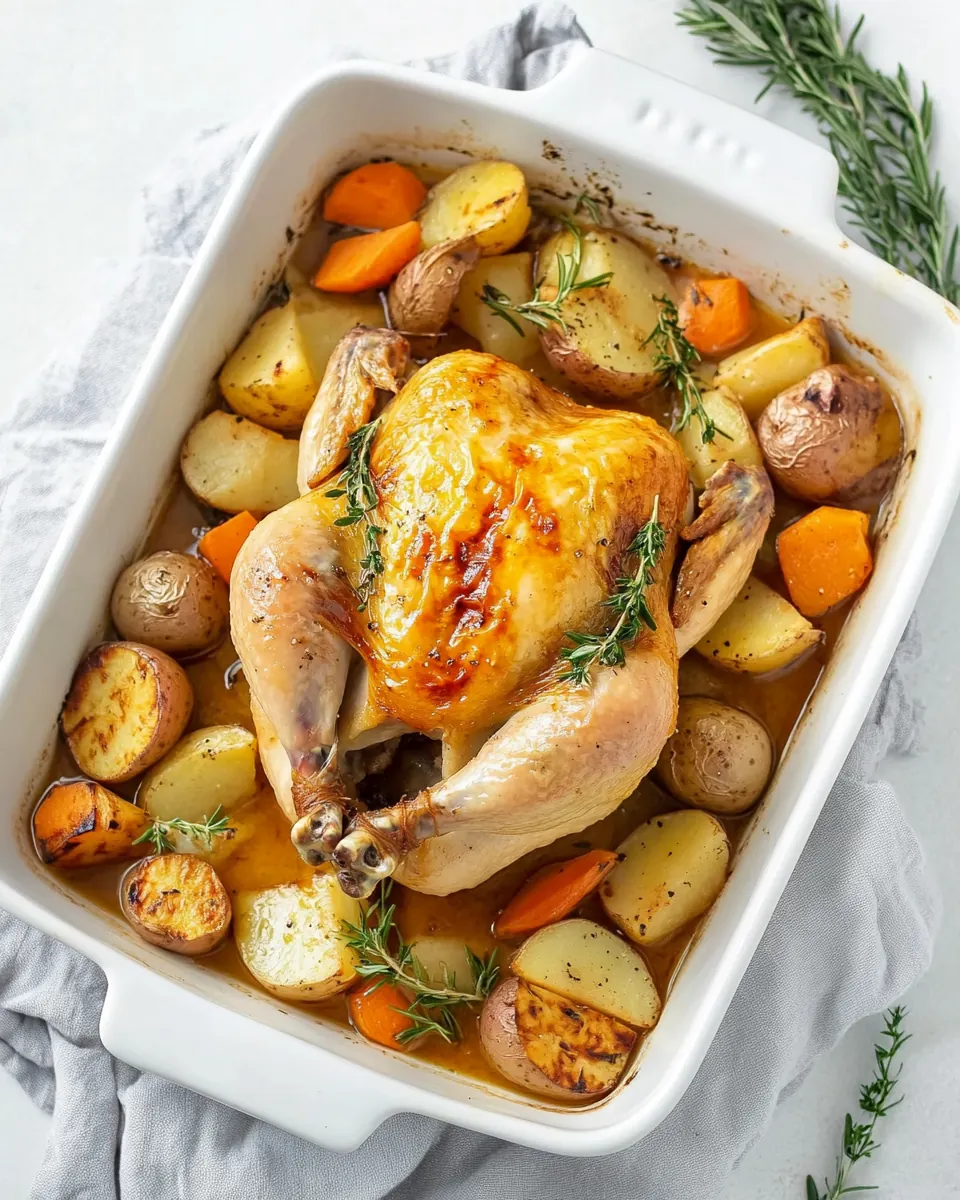
This recipe is flexible, and small adjustments can change the profile from rustic to bright. Below are practical ideas I use to adapt the dish without complicating the process.
- Herb intensity Increase or decrease the amount of fresh herbs to match your preference, keeping the balance between rosemary and thyme so they complement rather than overpower the chicken.
- Vegetable size Cut all vegetables to similar sizes so they roast uniformly; if you prefer softer carrots, cut them smaller but be mindful of timing with the potatoes.
- Oil choice While the recipe calls for olive oil, any oil with a moderate smoke point works; the key is even coating to promote browning and prevent sticking.
- Resting patience Allow the chicken to rest uncovered for ten minutes to let juices settle, resisting the urge to carve immediately which can cause dry slices.
- Pan positioning Use the center rack of the oven for the most even heat distribution; placing the pan too high or low can lead to uneven browning of the skin and vegetables.
Serving Options for Roast Chicken With Vegetables and Potatoes
This roast makes for a comforting main course and works well in many contexts from casual family dinners to special occasion meals. Below are serving ideas and storage suggestions presented as a list so you can pick what suits your occasion.
- Family dinner Carve the chicken at the table and spoon roasted vegetables onto each plate for a warm, communal meal.
- Casual gathering Serve family style on a large platter with lemon wedges so guests can add brightness to their portions.
- Leftover sandwiches Use carved chicken and roasted potatoes in a rustic sandwich or wrap for an easy next day lunch.
- Make ahead Roast the bird and vegetables a few hours early, then reheat gently in a low oven to preserve crispness before serving.
- Storage Refrigerate leftovers in airtight containers for up to three days, separating meat from vegetables to retain texture, and reheat in a moderate oven to refresh crisp edges.
- Occasions This dish suits weeknight dinners, fall gatherings, or any time you want a hearty, one pan meal that feeds a small group without complicated prep.
FAQ
Conclusion
What makes this Roast Chicken With Vegetables and Potatoes special is its combination of simple technique and reliable, comforting results. It yields golden skin, juicy meat, and vegetables that soak up savory pan juices, creating a full meal with minimal fuss. I hope you give it a try on a cool evening when you want something nourishing and satisfying. Share it with family or keep the leftovers for an easy next day meal, and enjoy the warm, homely flavors it brings to your table.
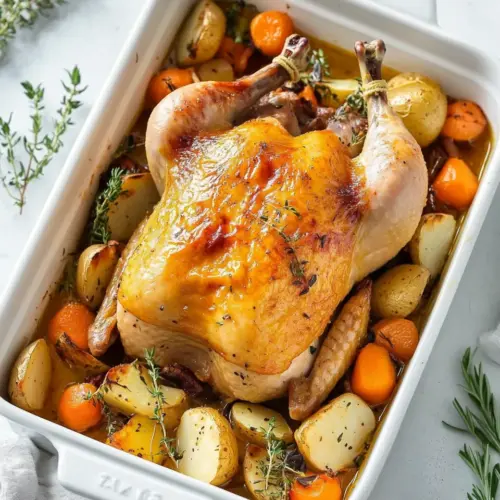
Roast Chicken With Vegetables and Potatoes
Equipment
- Roasting Pan
- Oven
- Large Bowl
- Meat Thermometer
Ingredients
- 1 whole chicken about 4 pounds Season and roast to provide the main protein and centerpiece for the meal; truss or tuck the wings for even cooking and allow resting time after roasting to retain juices.
- 2 tablespoons olive oil Coat vegetables and chicken lightly to help promote browning and crisp skin; drizzle over potatoes and vegetables so they absorb flavor and render aromatics.
- Salt and freshly ground black pepper Season liberally to enhance overall flavors and balance richness; add to both the cavity and exterior to taste and adjust at the end for final seasoning.
- 4 medium Yukon Gold potatoes quartered Offer a starchy base that soaks up pan juices and becomes crisp at the edges when quartered; hold shape well during roasting and provide comforting texture.
- 6 medium carrots peeled and cut into 1-inch pieces Add sweetness and body to the roast while contributing color contrast; cut into uniform pieces so they cook evenly alongside potatoes.
- 1 large onion quartered Provide savory depth and caramelized flavor when roasted; quartered pieces release sweetness and meld with pan juices for a richer sauce.
- 4 cloves garlic minced Infuse mellow pungency and aromatic depth when minced and scattered under the skin or among vegetables; softens in the oven and flavors juices.
- 1 lemon halved Brighten and add acid to cut through richness when halved and roasted or squeezed; roasted lemon adds subtle sweetness and fragrant oil to the pan.
- 2 tablespoons fresh rosemary chopped Contribute piney, resinous aroma and savory herbal notes when chopped and sprinkled over the chicken and vegetables; works well mixed with oil for a herb rub.
- 2 tablespoons fresh thyme chopped Introduce floral, woodsy fragrance and gentle savory flavor when chopped and used with the rosemary; pairs with lemon and garlic to enhance roasted components.
Instructions
- Preheat the oven to 400°F.: You will notice the kitchen warming as the oven reaches temperature, and a well preheated oven is crucial for crisp skin and caramelized vegetables. Preheating ensures the chicken begins browning immediately, creating a Maillard reaction that gives deep color and flavor. A common mistake is putting the bird into a cold oven which leads to pale skin and uneven cooking; avoid this by waiting until the oven signals it is fully up to heat. The sound is subtle, mostly the oven fan adjusting, and the smell is neutral until the food begins to roast.
- Rub the chicken with 1 tablespoon of olive oil, salt, and pepper. Place the chicken in a large roasting pan.: As the oil and seasonings are massaged into the skin you should see a glossy sheen, which helps with even browning. The salt starts pulling moisture to the surface, creating those crisp pockets that make skin irresistible. Positioning the chicken in a roomy pan allows air to circulate so the skin browns on all sides, and juices drip into the pan to flavor the vegetables. A misstep here is under seasoning or crowding the pan, which prevents crisping and yields steamed rather than roasted textures.
- In a large bowl, toss the potatoes, carrots, onion, and garlic with 1 tablespoon of olive oil, salt, pepper, rosemary, and thyme. Arrange the vegetables around the chicken in the roasting pan.: When you toss the vegetables the oil will make them glisten and help herbs cling, which leads to even browning and concentrated flavors. Smell the herbs as you mix them with the potatoes and carrots ; they should smell fresh and fragrant, hinting at the savory notes to come. Arrange them in a single layer around the bird so each piece gets direct heat. A common error is overcrowding or piling the vegetables which traps steam and prevents crisp edges, so spread them out as much as your pan allows.
- Squeeze the lemon halves over the chicken and vegetables and place the squeezed lemon halves into the chicken cavity.: Pressing the lemon releases bright juice that hits the hot pan and lifts flavors, while the squeezed halves in the cavity give a subtle, fragrant steam as the bird roasts. You may catch a sharp citrus scent when you squeeze, which contrasts nicely with the savory aroma beginning to develop. One tip is to avoid adding too much juice directly on the skin which can impede browning; a quick squeeze is enough to add brightness. The cavity lemon adds aromatic moisture from the inside as the chicken cooks.
- Roast in the preheated oven for about 95 minutes, or until the chicken is golden brown and the internal temperature reaches 165°F.: During roasting you will hear occasional pops and the pan will sizzle as juices bubble, while smells will change from raw to richly roasted. Look for a deep golden brown on the skin and bubbling juices from the pan that smell savory and slightly sweet from caramelized vegetables. The internal temperature check at the thickest part of the thigh ensures safety and juiciness. Overcooking dries the meat, and undercooking is unsafe, so use a reliable thermometer. If the vegetables are browning too quickly, tent the bird loosely with foil and let the interior catch up.
- Let the chicken rest for 10 minutes before carving. Serve the chicken with the roasted vegetables.: Resting lets the juices redistribute so the meat is tender and not watery when carved, and you'll notice a hush as the pan cools and steam eases off. The skin will remain crisp while the interior firms slightly, making carving cleaner and more composed. A common oversight is carving immediately which loses flavorful juices onto the cutting board; patience yields moist slices and a prettier presentation. Serve the chicken alongside the vegetables while warm, and enjoy the layered aroma and textures.
Notes
- Herb intensity Increase or decrease the amount of fresh herbs to match your preference, keeping the balance between rosemary and thyme so they complement rather than overpower the chicken.
- Vegetable size Cut all vegetables to similar sizes so they roast uniformly; if you prefer softer carrots, cut them smaller but be mindful of timing with the potatoes.
- Oil choice While the recipe calls for olive oil, any oil with a moderate smoke point works; the key is even coating to promote browning and prevent sticking.
- Resting patience Allow the chicken to rest uncovered for ten minutes to let juices settle, resisting the urge to carve immediately which can cause dry slices.
- Pan positioning Use the center rack of the oven for the most even heat distribution; placing the pan too high or low can lead to uneven browning of the skin and vegetables.