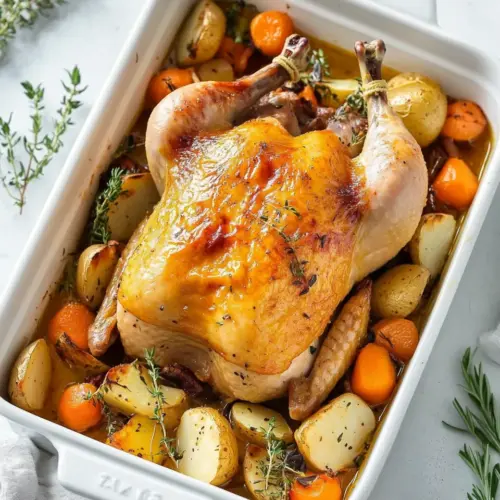
Roast Chicken With Vegetables and Potatoes
Roast Chicken With Vegetables and Potatoes is a comforting, easy weeknight dinner with crispy skin, tender meat, and perfectly caramelized vegetables. This one pan roast blends savory herbs, roasted potatoes, and sweet carrots for a balanced, hearty meal that’s ideal for fall dinners or small gatherings. Make it for a simple, impressive dinner that yields delicious leftovers.
Equipment
- Roasting Pan
- Oven
- Large Bowl
- Meat Thermometer
Ingredients
- 1 whole chicken about 4 pounds Season and roast to provide the main protein and centerpiece for the meal; truss or tuck the wings for even cooking and allow resting time after roasting to retain juices.
- 2 tablespoons olive oil Coat vegetables and chicken lightly to help promote browning and crisp skin; drizzle over potatoes and vegetables so they absorb flavor and render aromatics.
- Salt and freshly ground black pepper Season liberally to enhance overall flavors and balance richness; add to both the cavity and exterior to taste and adjust at the end for final seasoning.
- 4 medium Yukon Gold potatoes quartered Offer a starchy base that soaks up pan juices and becomes crisp at the edges when quartered; hold shape well during roasting and provide comforting texture.
- 6 medium carrots peeled and cut into 1-inch pieces Add sweetness and body to the roast while contributing color contrast; cut into uniform pieces so they cook evenly alongside potatoes.
- 1 large onion quartered Provide savory depth and caramelized flavor when roasted; quartered pieces release sweetness and meld with pan juices for a richer sauce.
- 4 cloves garlic minced Infuse mellow pungency and aromatic depth when minced and scattered under the skin or among vegetables; softens in the oven and flavors juices.
- 1 lemon halved Brighten and add acid to cut through richness when halved and roasted or squeezed; roasted lemon adds subtle sweetness and fragrant oil to the pan.
- 2 tablespoons fresh rosemary chopped Contribute piney, resinous aroma and savory herbal notes when chopped and sprinkled over the chicken and vegetables; works well mixed with oil for a herb rub.
- 2 tablespoons fresh thyme chopped Introduce floral, woodsy fragrance and gentle savory flavor when chopped and used with the rosemary; pairs with lemon and garlic to enhance roasted components.
Instructions
- Preheat the oven to 400°F.: You will notice the kitchen warming as the oven reaches temperature, and a well preheated oven is crucial for crisp skin and caramelized vegetables. Preheating ensures the chicken begins browning immediately, creating a Maillard reaction that gives deep color and flavor. A common mistake is putting the bird into a cold oven which leads to pale skin and uneven cooking; avoid this by waiting until the oven signals it is fully up to heat. The sound is subtle, mostly the oven fan adjusting, and the smell is neutral until the food begins to roast.
- Rub the chicken with 1 tablespoon of olive oil, salt, and pepper. Place the chicken in a large roasting pan.: As the oil and seasonings are massaged into the skin you should see a glossy sheen, which helps with even browning. The salt starts pulling moisture to the surface, creating those crisp pockets that make skin irresistible. Positioning the chicken in a roomy pan allows air to circulate so the skin browns on all sides, and juices drip into the pan to flavor the vegetables. A misstep here is under seasoning or crowding the pan, which prevents crisping and yields steamed rather than roasted textures.
- In a large bowl, toss the potatoes, carrots, onion, and garlic with 1 tablespoon of olive oil, salt, pepper, rosemary, and thyme. Arrange the vegetables around the chicken in the roasting pan.: When you toss the vegetables the oil will make them glisten and help herbs cling, which leads to even browning and concentrated flavors. Smell the herbs as you mix them with the potatoes and carrots ; they should smell fresh and fragrant, hinting at the savory notes to come. Arrange them in a single layer around the bird so each piece gets direct heat. A common error is overcrowding or piling the vegetables which traps steam and prevents crisp edges, so spread them out as much as your pan allows.
- Squeeze the lemon halves over the chicken and vegetables and place the squeezed lemon halves into the chicken cavity.: Pressing the lemon releases bright juice that hits the hot pan and lifts flavors, while the squeezed halves in the cavity give a subtle, fragrant steam as the bird roasts. You may catch a sharp citrus scent when you squeeze, which contrasts nicely with the savory aroma beginning to develop. One tip is to avoid adding too much juice directly on the skin which can impede browning; a quick squeeze is enough to add brightness. The cavity lemon adds aromatic moisture from the inside as the chicken cooks.
- Roast in the preheated oven for about 95 minutes, or until the chicken is golden brown and the internal temperature reaches 165°F.: During roasting you will hear occasional pops and the pan will sizzle as juices bubble, while smells will change from raw to richly roasted. Look for a deep golden brown on the skin and bubbling juices from the pan that smell savory and slightly sweet from caramelized vegetables. The internal temperature check at the thickest part of the thigh ensures safety and juiciness. Overcooking dries the meat, and undercooking is unsafe, so use a reliable thermometer. If the vegetables are browning too quickly, tent the bird loosely with foil and let the interior catch up.
- Let the chicken rest for 10 minutes before carving. Serve the chicken with the roasted vegetables.: Resting lets the juices redistribute so the meat is tender and not watery when carved, and you'll notice a hush as the pan cools and steam eases off. The skin will remain crisp while the interior firms slightly, making carving cleaner and more composed. A common oversight is carving immediately which loses flavorful juices onto the cutting board; patience yields moist slices and a prettier presentation. Serve the chicken alongside the vegetables while warm, and enjoy the layered aroma and textures.
Notes
- Herb intensity Increase or decrease the amount of fresh herbs to match your preference, keeping the balance between rosemary and thyme so they complement rather than overpower the chicken.
- Vegetable size Cut all vegetables to similar sizes so they roast uniformly; if you prefer softer carrots, cut them smaller but be mindful of timing with the potatoes.
- Oil choice While the recipe calls for olive oil, any oil with a moderate smoke point works; the key is even coating to promote browning and prevent sticking.
- Resting patience Allow the chicken to rest uncovered for ten minutes to let juices settle, resisting the urge to carve immediately which can cause dry slices.
- Pan positioning Use the center rack of the oven for the most even heat distribution; placing the pan too high or low can lead to uneven browning of the skin and vegetables.