Rainbow Veggie Sauté
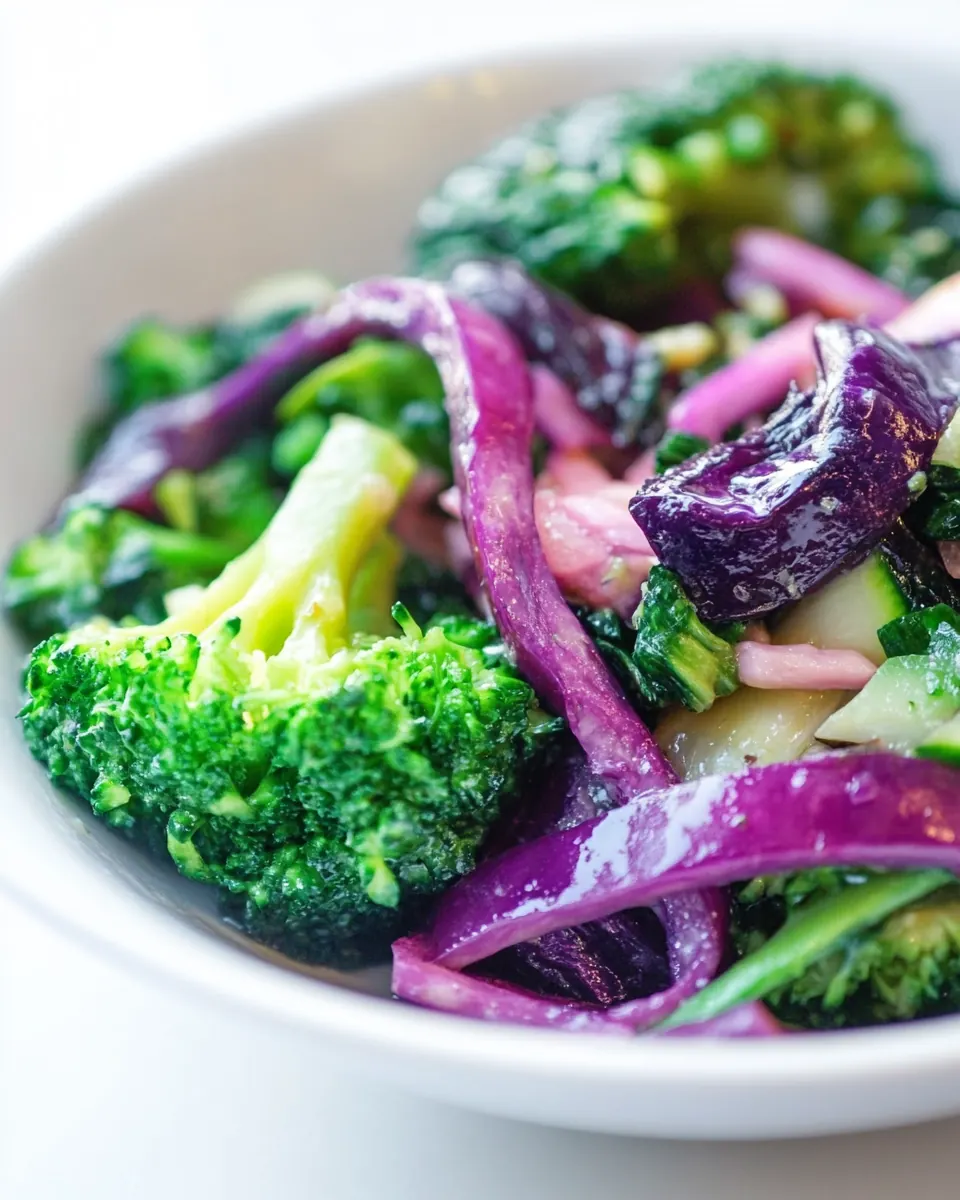
Rainbow Veggie Sauté is the kind of dish I reach for when I want vegetables that feel alive on the plate, vibrant in color and texture, and completely honest in flavor.
There’s a particular afternoon I remember, coming home after a long market run with a bag full of oddly shaped produce. I wanted something that would celebrate every bright stalk and leaf without fuss, so I tossed everything into a skillet and let the heat do the rest. That first panful became my go to when I need a fast, nourishing meal that still tastes like care went into it.
Over time I learned little things that change this from simply good to genuinely memorable, from the moment I heat the oil to the final wilt of the greens. I love how the cabbage keeps a bite, how the asparagus snaps if you don’t overcook it, and how a splash of broth brings the mix together like an orchestra. This recipe is also forgiving, so it works when you are rushed or want to impress without sweating every step.
Recipe Snapshot
25 mins
10 mins
15 mins
Easy
150 kcal
American
Paleo, Vegan
Dinner
Large Skillet, Spatula
The Beauty of This Rainbow Veggie Sauté
Vibrant, Seasonal Vegetables
I always say the color of a dish tells you how fresh it is. With Rainbow Veggie Sauté, the mix of red cabbage, broccoli, asparagus, and spinach gives you a full spectrum of textures and nutrients. Each vegetable contributes something distinct, from crunch to tender leaves, so every bite feels balanced and lively.
Speed Without Sacrificing Flavor
I love fast dinners that still taste handcrafted. This sauté comes together in about a half hour, and the method locks in bright flavors. Using a quick sauté with a splash of vegetable broth lets the vegetables soften while keeping their character, so you get depth without long cooking times.
Flexible and Forgiving
I often adapt this to what I have on hand. If one veg is smaller or larger, it still works. The recipe design is forgiving, so if you slightly undercook one element it can finish with the others. I find that flexibility makes this an everyday staple rather than a special occasion recipe.
Healthy, Lean, and Satisfying
This dish is light but filling. With just a touch of olive oil and a modest amount of vegetable broth, the calories stay reasonable while the fiber and vitamins from the vegetables keep you satisfied. It is a great option for those seeking an easy weeknight dinner that still feels nourishing.
Textures That Keep You Interested
I treasure a recipe that surprises in the mouth. The contrast of soft, wilted spinach against the firmer bite of broccoli and shredded red cabbage keeps every forkful intriguing. That interplay is why I come back to this sauté again and again.
Everything You Need for Rainbow Veggie Sauté
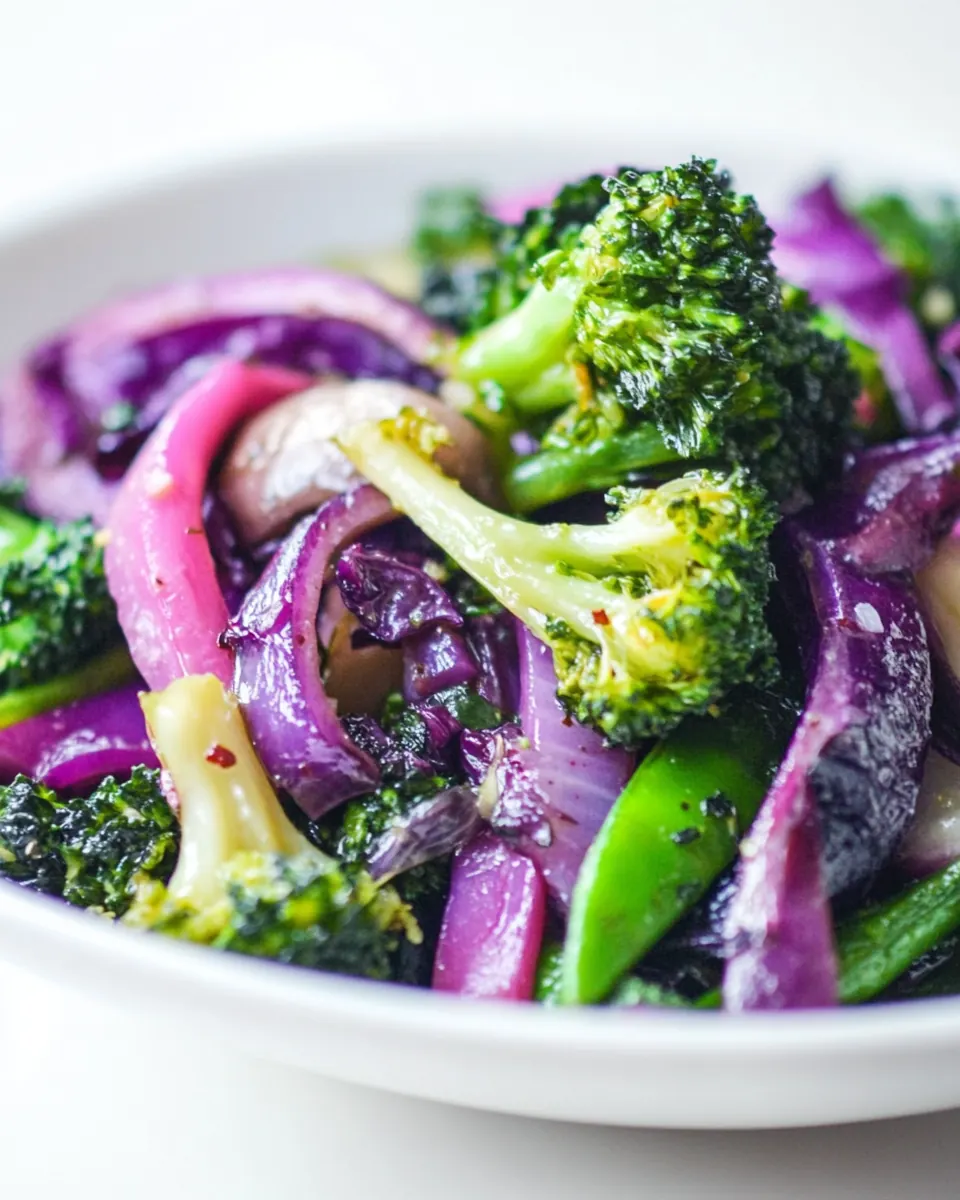
I think of these ingredients as a small ensemble where each member plays a clear role. The olive oil provides a silky cooking medium, onion builds savory depth, and the variety of vegetables deliver color, texture, and nutrition. The vegetable broth acts as a gentle deglazer that carries flavor without weighing things down, while the garlic, salt, and black pepper are the simple seasoning trio that lets the produce shine.
- 1 tablespoon olive oil: Heat gently to create a flavorful cooking medium and help vegetables brown evenly while preventing sticking.
- 1/2 cup onion chopped: Sauté until translucent to add sweetness and aromatic depth; chopping small allows even distribution through the sauté.
- 4 cups red cabbage shredded: Toss in shredded form to provide color, crunch, and a slightly peppery flavor; cook until just tender to retain texture and vibrancy.
- 2 cups broccoli florets: Add florets for a hearty, textural contrast and mild bitterness; steam-sauté until bright green and fork-tender.
- 1 bunch asparagus small, sliced: Slice thinly and sauté briefly to introduce a tender, grassy bite and seasonal freshness that complements other vegetables.
- 2 garlic cloves minced: Mince finely and cook briefly to release pungent, savory oils that boost overall aroma and flavor when introduced early.
- 1/4 teaspoons ea salt: Season sparingly to enhance and balance flavors; dissolve into the cooking liquid to permeate the vegetables evenly.
- 1/4 teaspoon black pepper: Grind or sprinkle to introduce a warm, sharp note that brightens the dish and balances richness; adjust to taste.
- 1/2 cup vegetable broth low-sodium, or water: Pour in to deglaze the pan and add moisture for gentle steaming; low-sodium broth adds savory depth without excess salt.
- 2 cups spinach chopped: Fold in chopped to wilt gently, adding tender leafy texture, a mild earthy flavor, and a boost of color at the end.
Cooking Instructions for Rainbow Veggie Sauté
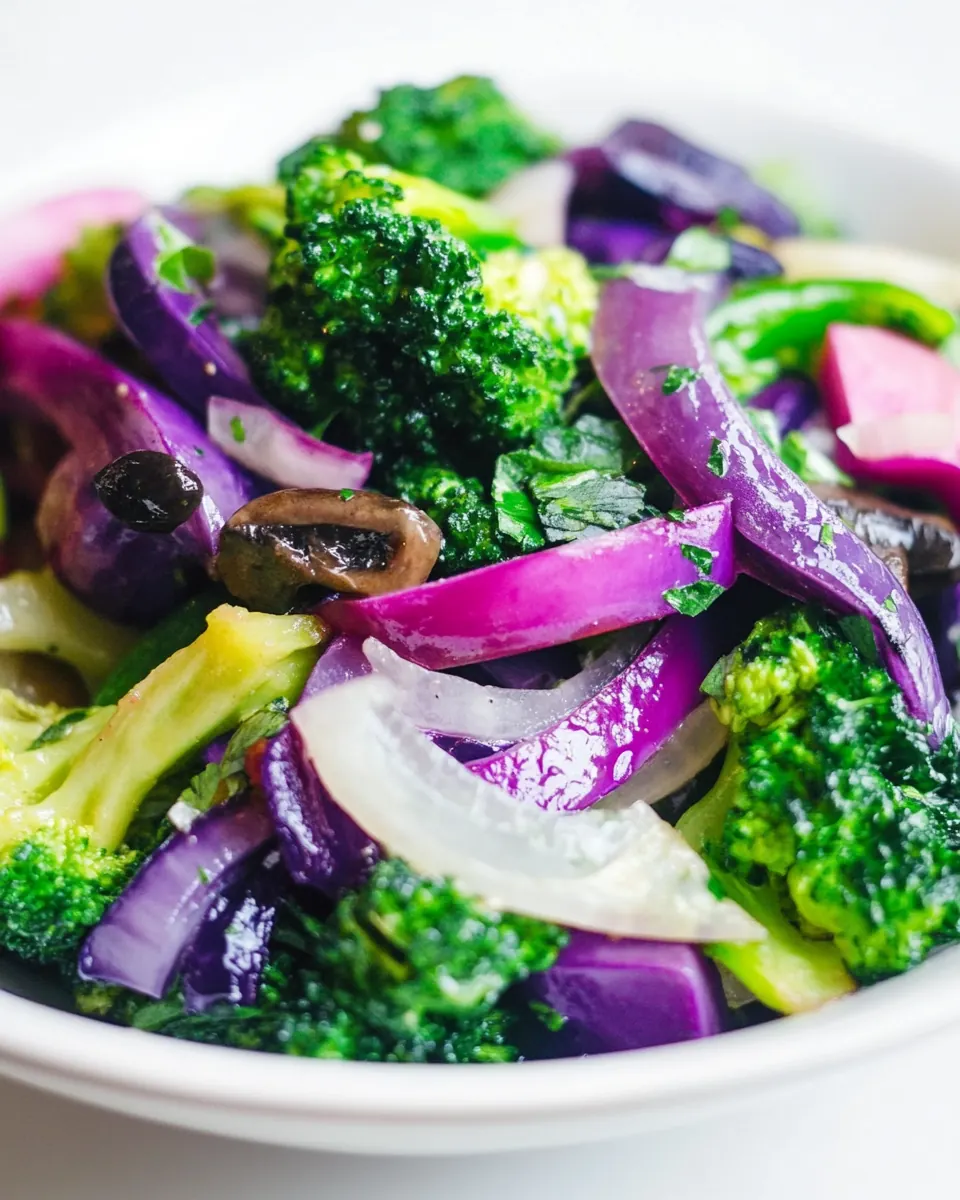
These instructions are relaxed and conversational, the sort I give when cooking with friends. Move confidently, keep an eye on the pan, and rely on smell and sight to guide you through the small adjustments. The directions are straightforward, and the sensory cues will tell you when each stage is right.
- Heat the oil in a large skillet over medium-high heat.: Warmth will radiate from the pan and you should see the oil shimmer faintly when it is ready, giving off a faint fruity scent. This step is important because a properly heated pan creates even browning and prevents sticking. Listen for a subtle sizzle when a droplet of water hits the surface, that tells you the skillet is at the right temperature. A common mistake is overheating the oil until it smokes, which can impart a bitter flavor, so lower the heat if you see heavy smoke.
- Add the onions and cook until soft, about 5 minutes. Add the cabbage, broccoli, and asparagus, and cook while stirring, until vegetables are tender, about 5 minutes. Stir in the garlic, salt, and pepper.: As the onion softens you will smell a sweet, savory aroma and notice translucent edges forming, a visual cue that it is time to add the other veg. When you add the red cabbage , broccoli , and asparagus you should hear a livelier sizzle and see steam briefly as they hit the hot oil. Stirring keeps everything cooking evenly and helps small brown spots develop, which deepen flavor. Once the vegetables have begun to tenderize, the addition of minced garlic will release a warm, toasty scent; add it then to avoid burning. A frequent error is leaving the vegetables unmoved in a small pan, which leads to uneven cooking and scorched pieces, so keep them moving and ensure even contact with the skillet surface.
- Cook for about a minute, and add the broth. Cook until broth is evaporated, about 3-4 minutes. Stir in the spinach, cook until just wilted, and serve.: In that brief minute after adding the seasoning you will notice the aromas deepen and the edges of some pieces beginning to caramelize, providing a nutty note. Pouring in the vegetable broth loosens any browned bits from the pan and creates steam that helps finish the denser vegetables without drying them out. You will see the liquid bubble and create a glossy sheen over the pieces, signaling that flavors are melding. Avoid adding too much broth at once, or the vegetables will steam rather than concentrate flavor; add the amount specified and let it reduce.
- Cook until broth is evaporated, about 3 to 4 minutes.: As the broth reduces you will hear a softer simmer and see the liquid draw down into the pan, leaving the vegetables coated in a thin, flavorful glaze. The aroma will shift from wet steam to a more roasted, concentrated vegetable scent, indicating the flavors are intensifying. This reduction is crucial because it binds the seasonings to the vegetables and prevents a watery final dish. A typical slip here is walking away too long and letting the pan dry completely, which can scorch the veg, so watch for the glossy finish and stop when the liquid has nearly vanished.
- Stir in the spinach, cook until just wilted, and serve.: When you add the chopped spinach it will collapse almost immediately, releasing a bright green steam and a delicate vegetal fragrance. The leaves should become tender and glossy within moments, folding into the other vegetables and softening the overall texture. Finishing with spinach preserves its color and prevents it from turning soggy, which is why timing matters here. An easy error is adding it too early, which leads to a limp, wet result rather than the fresh, tender finish you want; add it when the broth has nearly evaporated so it wilts fast and evenly.
Expert Tips about Rainbow Veggie Sauté
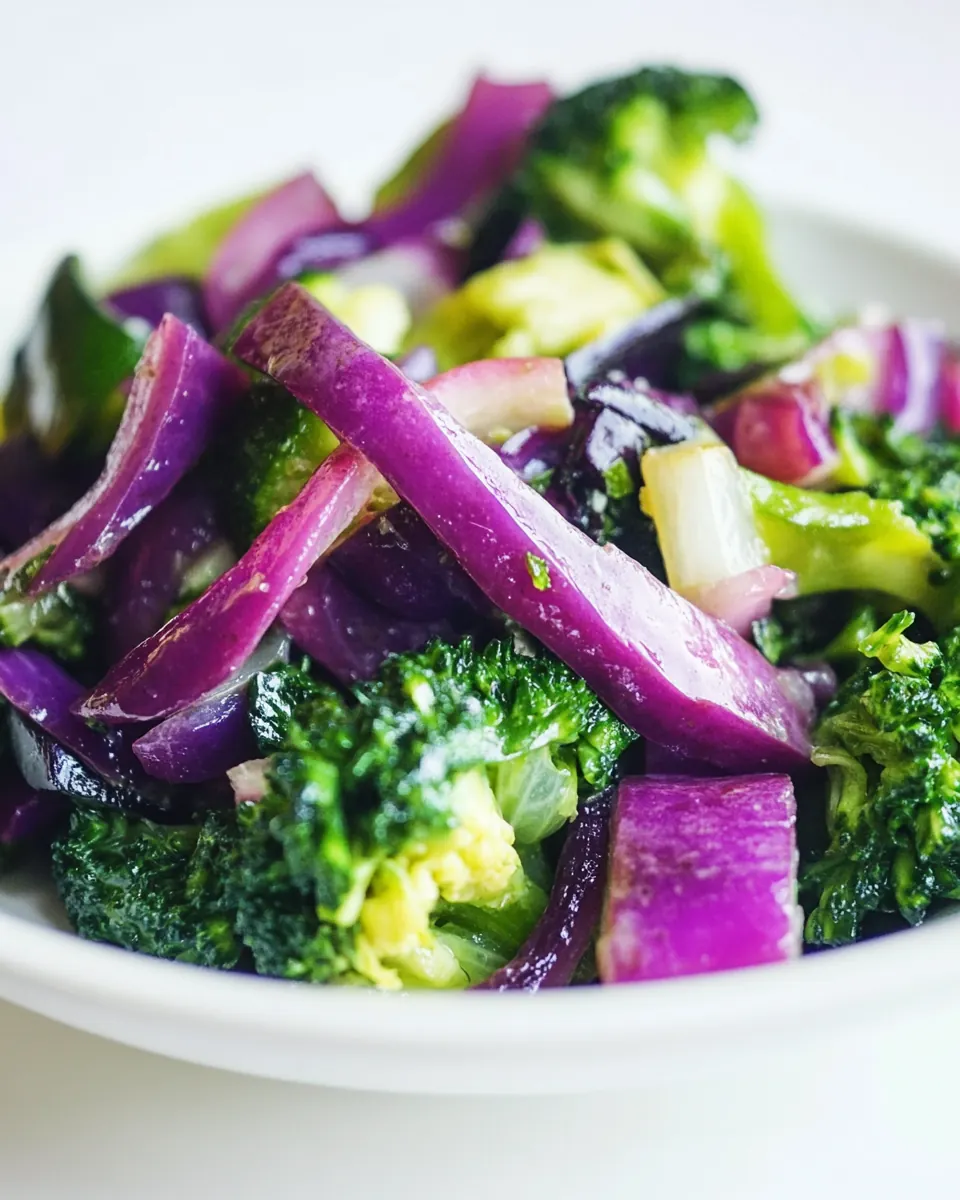
This short intro offers practical pointers to get the best outcome each time you cook this sauté. Small adjustments in heat, timing, and preparation make a big difference. Below are focused tips you can put into practice immediately.
- Heat control matters: Start with medium high heat so the skillet gets hot enough for good contact, then adjust to maintain a gentle sizzle without smoking the olive oil, which preserves clean flavors.
- Uniform cuts: Chop the onion, broccoli, and asparagus into pieces of similar size so they finish cooking at the same time, preventing some bites from being underdone while others are overcooked.
- Add delicate greens last: Stir in the chopped spinach at the very end so it wilts quickly and retains vibrant color and a light texture rather than becoming heavy and watery.
- Watch the broth reduction: Pour in only the specified half cup of vegetable broth and let it reduce until glossy, that concentrates flavor and avoids a watery finish.
- Freshly mince garlic: Use freshly minced garlic for the best aroma; add it after the firmer vegetables soften so it releases its fragrance without burning and turning bitter.
- Season gradually: Sprinkle a small portion of the salt and black pepper early, then taste at the end, because the broth will concentrate flavors and you may need less seasoning than expected.
Serving Ideas for Rainbow Veggie Sauté
This dish is versatile for many occasions. Whether you are plating it for a casual weeknight meal or offering it at a buffet, the bright vegetables fit easily into different menus and seasons. Below are detailed serving suggestions and storage notes to make the most of each batch.
- Weeknight main: Serve the sauté warm as a light main course with crusty bread and a drizzle of extra olive oil, making for an easy weeknight dinner that highlights fresh produce.
- Side dish for dinners: Offer the sauté alongside roasted proteins for a colorful accompaniment, placing the vegetables on the plate while still glossy from the broth reduction so they contrast textures on the table.
- Seasonal luncheons: Present this at a spring lunch buffet where the bright asparagus and shredded red cabbage complement other light dishes, and keep a warm pan nearby so guests can serve themselves while the vegetables are at their best.
- Ramadan iftar option: This dish warms up quickly and provides nourishing vegetables for breaking fast; serve in a communal bowl with lemon wedges for brightness and consider small portions to pair with hearty mains.
- Storage: Refrigerate leftovers in an airtight container for up to three days, and reheat gently over medium low heat to avoid overcooking the spinach and turning the vegetables limp.
- Make ahead: Partially cook the heartier vegetables and store them separately from the spinach; finish by combining and wilting the greens just before serving for freshest texture.
- Seasonal pairings: In spring, lean into fresh asparagus and early greens; in cooler months, use sturdier vegetables and allow a slightly longer reduction to concentrate flavors.
FAQ
Conclusion
This Rainbow Veggie Sauté stands out because it combines speed, vibrant color, and layered textures in a single pan. It is easy to make, forgiving in technique, and suits many meals from a solo lunch to a shared dinner. Give it a try this week, and you may find it becomes a regular whenever you want something fresh, fast, and wholesome. Enjoy the bright flavors and simple satisfaction that come from letting good vegetables shine.
Rainbow Veggie Sauté
Equipment
- Large Skillet
- Spatula
Ingredients
- 1 tablespoon olive oil Heat gently to create a flavorful cooking medium and help vegetables brown evenly while preventing sticking.
- 1/2 cup onion chopped Sauté until translucent to add sweetness and aromatic depth; chopping small allows even distribution through the sauté.
- 4 cups red cabbage shredded Toss in shredded form to provide color, crunch, and a slightly peppery flavor; cook until just tender to retain texture and vibrancy.
- 2 cups broccoli florets Add florets for a hearty, textural contrast and mild bitterness; steam-sauté until bright green and fork-tender.
- 1 bunch asparagus small, sliced Slice thinly and sauté briefly to introduce a tender, grassy bite and seasonal freshness that complements other vegetables.
- 2 garlic cloves minced Mince finely and cook briefly to release pungent, savory oils that boost overall aroma and flavor when introduced early.
- 1/4 teaspoons ea salt Season sparingly to enhance and balance flavors; dissolve into the cooking liquid to permeate the vegetables evenly.
- 1/4 teaspoon black pepper Grind or sprinkle to introduce a warm, sharp note that brightens the dish and balances richness; adjust to taste.
- 1/2 cup vegetable broth low-sodium, or water Pour in to deglaze the pan and add moisture for gentle steaming; low-sodium broth adds savory depth without excess salt.
- 2 cups spinach chopped Fold in chopped to wilt gently, adding tender leafy texture, a mild earthy flavor, and a boost of color at the end.
Instructions
- Heat the oil in a large skillet over medium-high heat.: Warmth will radiate from the pan and you should see the oil shimmer faintly when it is ready, giving off a faint fruity scent. This step is important because a properly heated pan creates even browning and prevents sticking. Listen for a subtle sizzle when a droplet of water hits the surface, that tells you the skillet is at the right temperature. A common mistake is overheating the oil until it smokes, which can impart a bitter flavor, so lower the heat if you see heavy smoke.
- Add the onions and cook until soft, about 5 minutes. Add the cabbage, broccoli, and asparagus, and cook while stirring, until vegetables are tender, about 5 minutes. Stir in the garlic, salt, and pepper.: As the onion softens you will smell a sweet, savory aroma and notice translucent edges forming, a visual cue that it is time to add the other veg. When you add the red cabbage , broccoli , and asparagus you should hear a livelier sizzle and see steam briefly as they hit the hot oil. Stirring keeps everything cooking evenly and helps small brown spots develop, which deepen flavor. Once the vegetables have begun to tenderize, the addition of minced garlic will release a warm, toasty scent; add it then to avoid burning. A frequent error is leaving the vegetables unmoved in a small pan, which leads to uneven cooking and scorched pieces, so keep them moving and ensure even contact with the skillet surface.
- Cook for about a minute, and add the broth. Cook until broth is evaporated, about 3-4 minutes. Stir in the spinach, cook until just wilted, and serve.: In that brief minute after adding the seasoning you will notice the aromas deepen and the edges of some pieces beginning to caramelize, providing a nutty note. Pouring in the vegetable broth loosens any browned bits from the pan and creates steam that helps finish the denser vegetables without drying them out. You will see the liquid bubble and create a glossy sheen over the pieces, signaling that flavors are melding. Avoid adding too much broth at once, or the vegetables will steam rather than concentrate flavor; add the amount specified and let it reduce.
- Cook until broth is evaporated, about 3 to 4 minutes.: As the broth reduces you will hear a softer simmer and see the liquid draw down into the pan, leaving the vegetables coated in a thin, flavorful glaze. The aroma will shift from wet steam to a more roasted, concentrated vegetable scent, indicating the flavors are intensifying. This reduction is crucial because it binds the seasonings to the vegetables and prevents a watery final dish. A typical slip here is walking away too long and letting the pan dry completely, which can scorch the veg, so watch for the glossy finish and stop when the liquid has nearly vanished.
- Stir in the spinach, cook until just wilted, and serve.: When you add the chopped spinach it will collapse almost immediately, releasing a bright green steam and a delicate vegetal fragrance. The leaves should become tender and glossy within moments, folding into the other vegetables and softening the overall texture. Finishing with spinach preserves its color and prevents it from turning soggy, which is why timing matters here. An easy error is adding it too early, which leads to a limp, wet result rather than the fresh, tender finish you want; add it when the broth has nearly evaporated so it wilts fast and evenly.
Notes
- Heat control matters: Start with medium high heat so the skillet gets hot enough for good contact, then adjust to maintain a gentle sizzle without smoking the olive oil, which preserves clean flavors.
- Uniform cuts: Chop the onion, broccoli, and asparagus into pieces of similar size so they finish cooking at the same time, preventing some bites from being underdone while others are overcooked.
- Add delicate greens last: Stir in the chopped spinach at the very end so it wilts quickly and retains vibrant color and a light texture rather than becoming heavy and watery.
- Watch the broth reduction: Pour in only the specified half cup of vegetable broth and let it reduce until glossy, that concentrates flavor and avoids a watery finish.
- Freshly mince garlic: Use freshly minced garlic for the best aroma; add it after the firmer vegetables soften so it releases its fragrance without burning and turning bitter.
- Season gradually: Sprinkle a small portion of the salt and black pepper early, then taste at the end, because the broth will concentrate flavors and you may need less seasoning than expected.