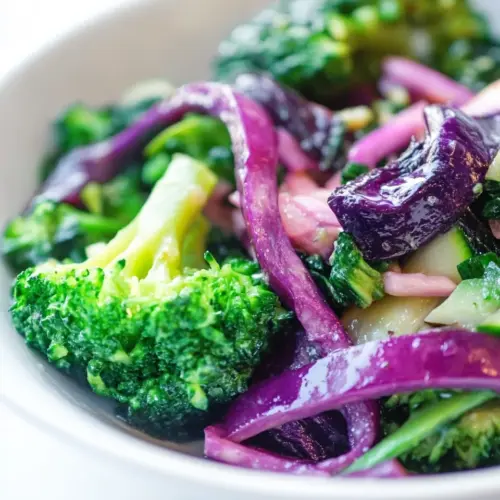
Rainbow Veggie Sauté
Rainbow Veggie Sauté brightens the table with crisp red cabbage, tender asparagus, and leafy spinach, delivering a colorful, easy weeknight dinner that is both healthy and full of texture. The quick sauté and a splash of vegetable broth concentrate flavors while keeping vegetables vibrant. Make this when you want fast, nourishing food that still feels thoughtfully prepared.
Equipment
- Large Skillet
- Spatula
Ingredients
- 1 tablespoon olive oil Heat gently to create a flavorful cooking medium and help vegetables brown evenly while preventing sticking.
- 1/2 cup onion chopped Sauté until translucent to add sweetness and aromatic depth; chopping small allows even distribution through the sauté.
- 4 cups red cabbage shredded Toss in shredded form to provide color, crunch, and a slightly peppery flavor; cook until just tender to retain texture and vibrancy.
- 2 cups broccoli florets Add florets for a hearty, textural contrast and mild bitterness; steam-sauté until bright green and fork-tender.
- 1 bunch asparagus small, sliced Slice thinly and sauté briefly to introduce a tender, grassy bite and seasonal freshness that complements other vegetables.
- 2 garlic cloves minced Mince finely and cook briefly to release pungent, savory oils that boost overall aroma and flavor when introduced early.
- 1/4 teaspoons ea salt Season sparingly to enhance and balance flavors; dissolve into the cooking liquid to permeate the vegetables evenly.
- 1/4 teaspoon black pepper Grind or sprinkle to introduce a warm, sharp note that brightens the dish and balances richness; adjust to taste.
- 1/2 cup vegetable broth low-sodium, or water Pour in to deglaze the pan and add moisture for gentle steaming; low-sodium broth adds savory depth without excess salt.
- 2 cups spinach chopped Fold in chopped to wilt gently, adding tender leafy texture, a mild earthy flavor, and a boost of color at the end.
Instructions
- Heat the oil in a large skillet over medium-high heat.: Warmth will radiate from the pan and you should see the oil shimmer faintly when it is ready, giving off a faint fruity scent. This step is important because a properly heated pan creates even browning and prevents sticking. Listen for a subtle sizzle when a droplet of water hits the surface, that tells you the skillet is at the right temperature. A common mistake is overheating the oil until it smokes, which can impart a bitter flavor, so lower the heat if you see heavy smoke.
- Add the onions and cook until soft, about 5 minutes. Add the cabbage, broccoli, and asparagus, and cook while stirring, until vegetables are tender, about 5 minutes. Stir in the garlic, salt, and pepper.: As the onion softens you will smell a sweet, savory aroma and notice translucent edges forming, a visual cue that it is time to add the other veg. When you add the red cabbage , broccoli , and asparagus you should hear a livelier sizzle and see steam briefly as they hit the hot oil. Stirring keeps everything cooking evenly and helps small brown spots develop, which deepen flavor. Once the vegetables have begun to tenderize, the addition of minced garlic will release a warm, toasty scent; add it then to avoid burning. A frequent error is leaving the vegetables unmoved in a small pan, which leads to uneven cooking and scorched pieces, so keep them moving and ensure even contact with the skillet surface.
- Cook for about a minute, and add the broth. Cook until broth is evaporated, about 3-4 minutes. Stir in the spinach, cook until just wilted, and serve.: In that brief minute after adding the seasoning you will notice the aromas deepen and the edges of some pieces beginning to caramelize, providing a nutty note. Pouring in the vegetable broth loosens any browned bits from the pan and creates steam that helps finish the denser vegetables without drying them out. You will see the liquid bubble and create a glossy sheen over the pieces, signaling that flavors are melding. Avoid adding too much broth at once, or the vegetables will steam rather than concentrate flavor; add the amount specified and let it reduce.
- Cook until broth is evaporated, about 3 to 4 minutes.: As the broth reduces you will hear a softer simmer and see the liquid draw down into the pan, leaving the vegetables coated in a thin, flavorful glaze. The aroma will shift from wet steam to a more roasted, concentrated vegetable scent, indicating the flavors are intensifying. This reduction is crucial because it binds the seasonings to the vegetables and prevents a watery final dish. A typical slip here is walking away too long and letting the pan dry completely, which can scorch the veg, so watch for the glossy finish and stop when the liquid has nearly vanished.
- Stir in the spinach, cook until just wilted, and serve.: When you add the chopped spinach it will collapse almost immediately, releasing a bright green steam and a delicate vegetal fragrance. The leaves should become tender and glossy within moments, folding into the other vegetables and softening the overall texture. Finishing with spinach preserves its color and prevents it from turning soggy, which is why timing matters here. An easy error is adding it too early, which leads to a limp, wet result rather than the fresh, tender finish you want; add it when the broth has nearly evaporated so it wilts fast and evenly.
Notes
- Heat control matters: Start with medium high heat so the skillet gets hot enough for good contact, then adjust to maintain a gentle sizzle without smoking the olive oil, which preserves clean flavors.
- Uniform cuts: Chop the onion, broccoli, and asparagus into pieces of similar size so they finish cooking at the same time, preventing some bites from being underdone while others are overcooked.
- Add delicate greens last: Stir in the chopped spinach at the very end so it wilts quickly and retains vibrant color and a light texture rather than becoming heavy and watery.
- Watch the broth reduction: Pour in only the specified half cup of vegetable broth and let it reduce until glossy, that concentrates flavor and avoids a watery finish.
- Freshly mince garlic: Use freshly minced garlic for the best aroma; add it after the firmer vegetables soften so it releases its fragrance without burning and turning bitter.
- Season gradually: Sprinkle a small portion of the salt and black pepper early, then taste at the end, because the broth will concentrate flavors and you may need less seasoning than expected.